
MyTechDailyNews General Guide: How to Make Sense of Tesla's Cybercab Asia Debut and Robotaxi Safety Data
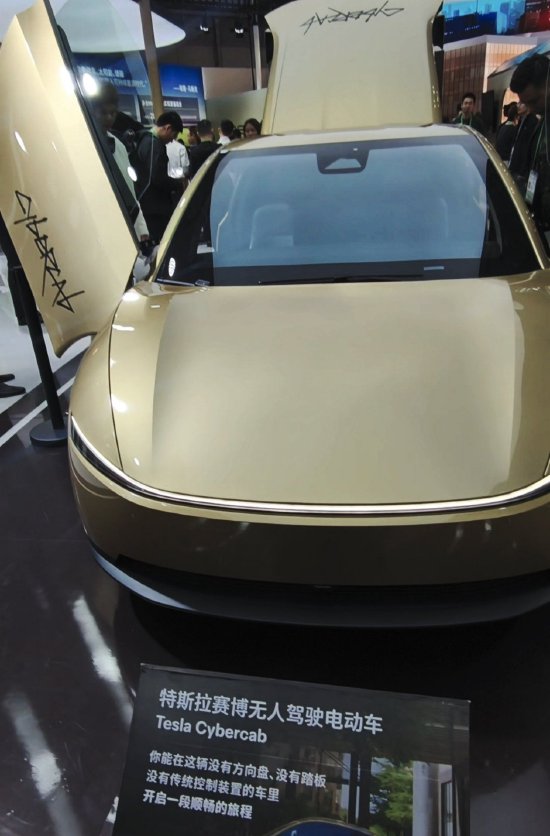
Tesla's Cybercab Asia debut at CIIE shows that robotaxis are no longer only concept cars. The key answer is simple: the event is useful because it connects a steering-free vehicle, Austin operating metrics, and a Model Y parts display, giving readers a practical checklist for judging progress without overreading marketing. The next step is to learn what each signal actually proves.
What changed at the CIIE showcase?
At the China International Import Expo in Shanghai, Tesla presented its golden Cybercab in Asia for the first time. The car has no steering wheel, no pedals and no traditional driver controls. Its display value is not just visual. It turns the Robotaxi conversation from a future promise into a public object that visitors can inspect, while placing the vehicle beside a newly launched Model Y Performance and the first public display of a Model Y exploded view. International coverage, including Xinhua's report on the Asia-Pacific debut, treated the same exhibit as a signal that Tesla wanted to show a broader mobility system rather than a single car.
How should readers interpret Tesla's Austin Robotaxi numbers?
Operational evidence is the part general readers should slow down and check. Tesla said the Cybercab began operating in Austin, United States, on September 3 this year. Within 30 days, the number of vehicles in service exceeded 300, and the fleet scale became 10 times the original level. As of October 18, Tesla said its Robotaxi fleet had driven about 5 million kilometres without a safety person inside the vehicle. The company also reported zero deployments of the vehicle's own airbags and no injuries caused by collisions it initiated.
These figures are meaningful because they are tied to dates and fleet growth. They are not, by themselves, a universal safety verdict. A better way to read them is to ask what was counted: miles, vehicles, incident definitions, and whether remote assistance counts as driverless. Tesla's Robotaxi Safety Report helps clarify part of that language. It states: “Robotaxi is driving autonomously with no safety monitor in the vehicle, including when a remote operator is assisting or has taken control.” That quote matters because it tells readers that 'driverless' can still involve a remote operator, even when no human sits inside the car.
Why a car without a steering wheel still needs safety parts
The Cybercab's missing steering column often causes the first misconception: if nobody drives it, does it still need crash protection? Tesla's public rider materials say yes. The company's Cybercab Compliance Guide, available on Tesla's website, states that “Cybercab is equipped with airbags”. The practical takeaway is that removing driver controls does not remove passive safety requirements; it simply shifts the user interface from driving to riding. For readers, this distinction is important because it explains why a vehicle that cannot be manually driven still needs seat structure, restraint systems, door behaviour and airbag logic.
Regulatory context also explains why public milestones deserve careful reading. In the United States, the National Highway Traffic Safety Administration maintains a standing general order requiring reporting of crashes involving automated driving systems. The agency says that anyone who witnesses a safety issue with an automated vehicle can report the problem to NHTSA. That reporting channel is not proof that a fleet is safe or unsafe; it is a way for regulators to collect signals from the public. When a company claims large autonomous mileage, a reader should look for both the mileage and the incident-reporting frame.
What the Model Y exploded view adds to the story
The exhibit was not only about the robotaxi. Tesla also showed a Model Y exploded view for the first time. This matters to a general technology audience because it makes the invisible engineering of a mass-market EV easier to understand. Instead of seeing a car as a complete shell, visitors can follow the relationship between body structure, battery placement and major components. For people who are not EV engineers, the lesson is practical: a strong selling point is not just software autonomy; it is also how hardware is packaged, protected, and serviceable. The display connects two ideas that are often discussed separately: the Robotaxi future and the everyday vehicle supply chain.
Common misconceptions to avoid
- A trade-show debut is not the same as market approval. The Cybercab's Asia debut at CIIE shows public exposure, not permission to operate anywhere.
- Zero airbag deployments are not the same as zero traffic contacts. The reported data says zero airbag deployments and no injuries from collisions the vehicle initiated; it does not describe every low-speed incident.
- Driverless does not always mean no human supervision. Tesla's own safety language includes remote operator assistance or control while no safety monitor sits inside the car.
- Fleet growth is not a safety rating. 10 times growth shows operational momentum, but it does not prove crashworthiness without incident definitions and third-party reporting.
A practical checklist for following robotaxi news
- Check the date: note when service started, when data ends, and whether it covers 30 days or a full operating cycle.
- Count vehicles, not just headlines: see whether the number refers to cars, rides, cities, or remote stations.
- Compare the metric: about 5 million kilometres is a scale marker; the more useful question is what counted as an incident during that period.
- Look for definitions: phrases such as 'zero airbag deployments' or 'no safety monitor' need exact meaning, not emotional interpretation.
- Watch for supply-chain clues: the Model Y exploded view and production signals can reveal whether the story is moving from display to manufacturing. Readers can compare with MyTechDailyNews coverage of Tesla's Austin night shifts and Cybertruck giving way to Cybercab capacity.
Action suggestions for readers, brands, and product teams
For ordinary readers: use robotaxi announcements as a consumer-literacy exercise. Do not ask only whether a car looks futuristic; ask what controls are removed, what safety systems remain, and which regulator collects incident reports.
For product teams: the Cybercab display is a reminder that hardware storytelling needs transparency. If you are presenting autonomous vehicles, batteries, or complex machines, an exploded view can build confidence more efficiently than abstract promises.
For mobility and marketing teams: do not build a campaign only around 'no driver.' The practical message is a system: vehicle design, rider education, remote operations, maintenance, and reporting. If a service claims driverless operation, explain how the vehicle handles boarding, egress, emergency situations, and remote takeover.
For investors and analysts: treat fleet expansion as one layer. Combine it with manufacturing readiness, regulatory filings, incident definitions, and user experience data. The CIIE showcase is public; the operating numbers are specific; the conclusion should remain conditional.
FAQ: What people ask after Tesla's Cybercab appearance
Is the Cybercab the same as a normal taxi?
No. The Cybercab shown at CIIE removes steering controls and is designed around autonomous operation. A normal taxi still assumes a human driver and manual controls.
Does the 30-day growth prove the service is safe?
It proves operational expansion: Tesla said the service started on September 3 this year in Austin and the fleet grew to over 300 vehicles within 30 days, or 10 times its original scale. Safety conclusions require incident definitions and independent reporting.
Why is Model Y shown at a robotaxi event?
Because Tesla is presenting a mobility ecosystem, not a single product. The Model Y exploded view shows body, battery and component design, while Robotaxi data shows the operational side of autonomy.
Should readers trust a company's mileage number?
Read it as a reported figure. The useful next step is to check whether the number matches public reporting definitions and whether regulators such as NHTSA have a route for crash and safety reports.