
Tesla's Austin Night Shifts Explained: Cybercab, Battery Manufacturing, and the Road to Robotaxi Scale
By Sarah Chen · MyTechDailyNews · Editorial contact: hello@techdaily.com
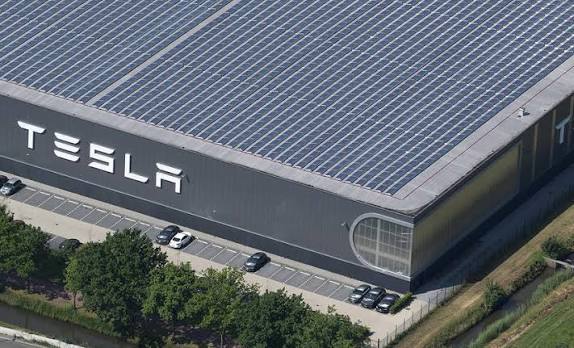
Tesla is adding night shifts in Austin for Cybercab and battery manufacturing, but Gigafactory Texas is not yet running seven days a week, 24 hours a day. Final vehicle assembly remains scheduled Monday to Thursday, while some departments work weekends. The reported day-and-night double shifts are expected to continue at least through the end of 2026.
What the Austin night shift report actually says
The report describes a widening of operating hours around Tesla's Texas manufacturing base, not a simple announcement that every line now runs nonstop. Tegtmeyer, who tracks Gigafactory Texas with drone imagery and factory-area observations, says the factory has moved toward nighttime production in parts of the site. At the same time, the key reported facts make the boundary clear: Tesla is not yet running seven days a week, 24 hours a day across the whole plant.
The strongest public evidence is hiring. Tesla official careers page listings for Austin, Texas, show Cybercab night-shift manufacturing process engineer roles, general assembly night-shift engineering technician roles, and battery manufacturing department positions tied to anode, cathode and foil coating work. The battery-related roles are described as covering four shifts. That is different from a vague claim that "the factory is bigger at night"; it points to specific teams that must be staffed during night hours.
Tesla's Texas Gigafactory, also known as Gigafactory Texas, is also the company's U.S. home for Model Y and Cybertruck. Cybercab has entered production there, and as vehicle, battery and autonomous-product output goals rise, the factory is extending more work into night hours. The reported day-and-night double shifts are expected to continue at least through the end of 2026.
Shift pattern at a glance
| Area | What is reported | What remains unconfirmed |
|---|---|---|
| Final vehicle assembly | Assembly is still organized Monday to Thursday. | Whether night shifts reach every assembly area for every model. |
| Battery manufacturing | Shift engineering roles support anode, cathode and foil coating processes across four shifts. | How many battery lines or cell programs those roles ultimately staff. |
| Cybercab production | Austin postings name Cybercab manufacturing process and general assembly night roles. | The split between service cars, test vehicles and future customer delivery units. |
| Nighttime operations | Some production and construction work can extend beyond weekday hours and into weekends. | A factory-wide switch to 24 hours a day, seven days a week operation. |
Why Tesla's careers page matters more than drone footage
Drone footage is useful for spotting parked cars, loading activity and construction progress, but job requisitions show commitments. A posting for a night-shift role means someone must be recruited, trained, scheduled, supervised and paid for that time. It also suggests that the work is expected to continue long enough to justify hiring rather than temporary overtime.
One Tesla listing for a Manufacturing Controls Engineer, Cyber Cab, Castings says candidates "must be available to work any shift-day, night, and/or weekends-to support Tesla production needs." That sentence alone does not prove that Gigafactory Texas has become a fully continuous plant. It does explain why general readers should treat shift flexibility as part of Tesla's Austin manufacturing culture, especially as the factory adds Cybercab alongside existing Model Y and Cybertruck production.
The practical lesson is that the night shift signal should be read as a layered change: Cybercab and battery process roles first, construction and support departments on weekends, and final vehicle assembly still following a narrower schedule.
Why Cybercab changes the factory clock
Cybercab is not just another model on an old line. Tesla designed it for autonomous ride-hailing, so its value depends on whether the car can be produced, approved, maintained and deployed into a live service network. That makes the Austin ramp a systems problem, not only a parts-per-hour problem.
Two external data points help frame the pressure. CNBC reported in early October 2026 that the number of Cybercabs authorized for commercial use in Texas had risen from 45 around the Austin launch to 169 after the first month. Separately, a Tesla Robotaxi update summarized by The Motley Fool on October 15, 2026, said more than 300 Cybercabs were operating in Austin, an eightfold increase in about 30 days.
Those figures do not mean every new car came from a night shift. They do show why Tesla may need a different factory rhythm. If production outruns deployment, the bottleneck becomes service authorization, fleet readiness and city expansion. If deployment accelerates, production must have enough qualified people on the clock when day-shift output is no longer enough. The reported night-shift hiring fits the second scenario.
What battery manufacturing adds to the picture
The battery manufacturing department is the quieter but more structural part of the story. Tesla official careers page listings point to roles supporting anode, cathode and foil coating processes, with positions tied to four shifts. These are upstream steps in battery production, and they influence whether vehicles, cells and related products can move through later stages with predictable timing.
Coating work is unforgiving because small variation can become a quality problem downstream. A car can sometimes wait for one missing part, but battery material processing needs stable throughput, clean-room discipline and continuous quality checks. That helps explain why "four shifts" may appear first in battery and process engineering roles instead of as a blunt claim that all manufacturing now runs 24 hours a day.
Common misconceptions
- Gigafactory Texas is now fully 24/7. The reported schedule is broader than before, but not universal. Final vehicle assembly is still described as running Monday to Thursday, while some production and construction departments can work weekends.
- All Cybercab production is for paid robotaxi rides. Cybercab is central to Tesla's robotaxi plan, but factory output can include validation cars, service fleet vehicles and future customer-delivery units. The exact mix is not the same as what riders see in Austin.
- Night shifts automatically create more available rides. A ride requires a car that has been built, inspected, authorized and placed inside a service area. Fleet growth and factory shifts are linked, but neither one guarantees the other in real time.
What readers should watch next
For general tech readers, the most useful indicators are the ones that connect factory changes to real-world access. Instead of chasing rumors about how many cars are parked outside a fence line, track three layers: hiring, deployment and delivery.
- Hiring layer: Keep an eye on Tesla official careers page roles in Austin for Cybercab, battery manufacturing and fleet support. Repeated night-shift postings are a stronger signal than a single video or anonymous claim.
- Deployment layer: Watch service maps, authorized commercial-use vehicle counts, operating hours, geofence size and whether safety drivers remain present. Those variables affect whether a rider can actually use Cybercab.
- Delivery layer: Remember that Model Y and Cybertruck demand, battery production and Cybercab expansion can share the same Texas site but move on different timelines. More night work may help one line while another still faces parts or validation constraints.
Action advice for different readers
- Robotaxi riders: Treat the night-shift story as a sign that Tesla is trying to scale capacity, not as proof that service in your city is imminent. Check official service availability before changing daily commute plans.
- Manufacturing and tech workers: If you are considering an Austin factory role, read shift language carefully. Day, night, weekend and rotating-shift availability can affect compensation, work-life balance and career path.
- Industry watchers: Compare hiring signals with state authorization records and customer-facing service updates. The most honest picture of Tesla's Cybercab ramp is the intersection of production, regulation and deployment.
Frequently asked questions
Is Tesla running Gigafactory Texas 24 hours a day?
No, not according to the reported schedule. Tesla is extending some work into nighttime hours, and the factory is described as moving toward day-and-night double shifts, but it is not yet running seven days a week, 24 hours a day across the entire site.
What still limits the night-shift claim?
The main limitation is final vehicle assembly, which is still described as operating Monday to Thursday. Other production and construction departments may extend work beyond weekday hours and into weekends, while battery-related roles are tied to four shifts.
Which Cybercab roles are showing the shift change?
Tesla official careers page listings in Austin, Texas, include Cybercab night-shift manufacturing process engineer roles and general assembly night-shift engineering technician roles. Those postings make the night-shift story more concrete than visual factory footage alone.
Why would battery manufacturing need four shifts?
Battery work includes anode, cathode and foil coating processes that require continuous staffing for throughput and quality. Four-shift coverage can help keep material processing moving even when final vehicle assembly follows a narrower schedule.
Does this mean Tesla is ready to scale Cybercab everywhere?
No. It means Tesla is preparing for a broader production and service ramp. Fleet growth in Texas has been fast, with reports showing Cybercabs authorized for commercial use rising from 45 to 169 after the first month and more than 300 operating in Austin by mid-October 2026, but city-by-city rollout still depends on operations, regulation and service reliability.
How long may the current plan last?
The reported day-and-night double shift arrangement is expected to continue at least through the end of 2026. A longer 24 hours a day, seven days a week schedule would require clearer confirmation through production updates, hiring patterns and regulatory filings.
Reference sources
- Tesla Gigafactory Texas official page
- Tesla careers listing: Engineering Technician, Cybercab, General Assembly (Night Shift)
- Tesla careers listing: Manufacturing Controls Engineer, Cyber Cab, Castings
- CNBC report on Cybercab fleet expansion in Texas
- The Motley Fool report on the eightfold Cybercab fleet increase