
Cybertruck Passes the Line to Cybercab: A Side-by-Side Look at Tesla's Next Chapter
By Sarah Chen · Tech Daily · MyTechDailyNews
Tesla will start winding Cybertruck production down at the Texas Gigafactory around the middle of next year to free up capacity for Cybercab, Elon Musk said on X on November 6 local time. The announcement reads like a product obituary, but a closer look shows a cleaner split: the truck's hardware know-how survives, while its retail business does not. For buyers, the practical question is what to do with a car that never sold at scale.
What exactly did Musk say, and what is still unknown?
The short answer: a phase-out, not a confirmed death certificate.
Musk posted on X on November 6 local time that Tesla plans to gradually end Cybertruck production at the Texas Gigafactory around the middle of next year, creating room for Cybercab volume. He gave no exact shutdown date and no detail on how existing orders will be handled. Because the Texas factory is Cybertruck's only production base, whether the model disappears entirely remains an open question.
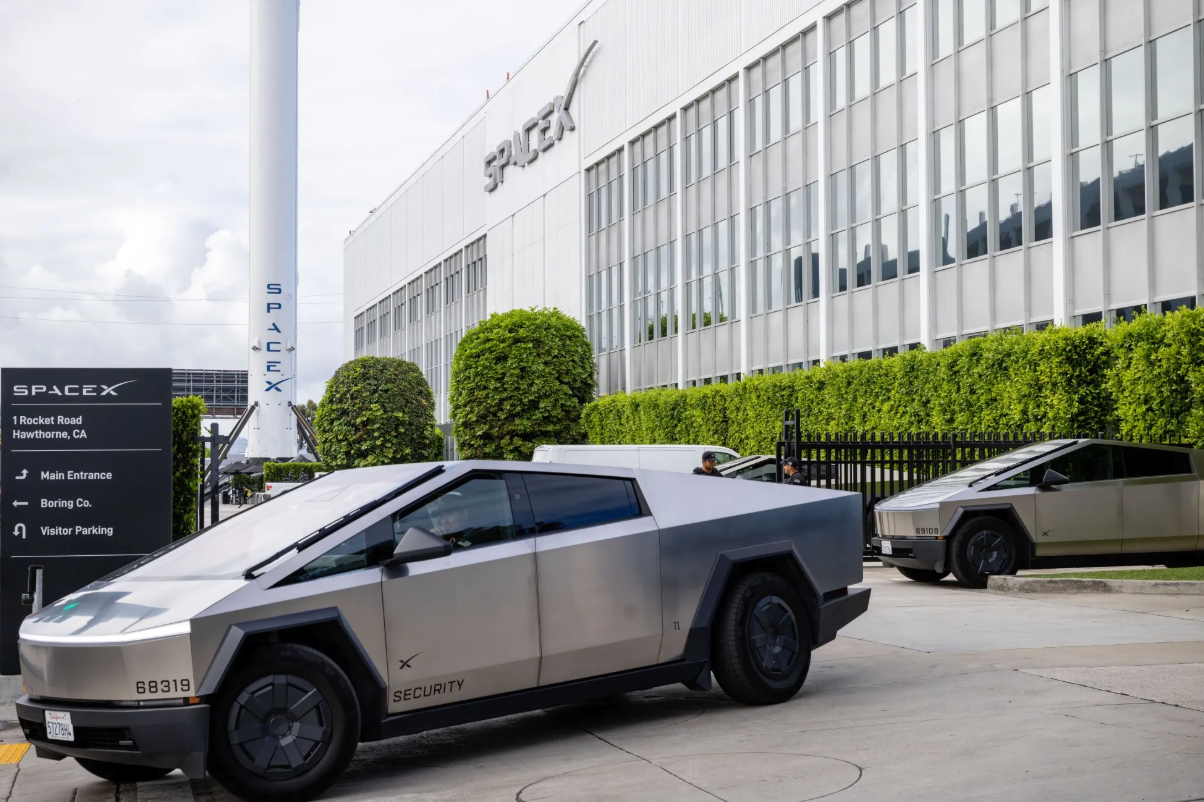
What we can read between the lines is a resource decision, not a sentiment one. Tesla's capital is moving toward a vehicle it expects to build in far greater numbers, and Cybertruck — the platform that proved several unproven technologies — is being treated as a completed experiment.
How big is the gap between the sales forecast and reality?
Conclusion first: demand ran at roughly a tenth of what was planned.
At the May 2023 shareholder meeting Musk projected Cybertruck would sell 250,000 to 500,000 units a year once fully ramped. Tesla does not break out Cybertruck deliveries; it folds them into the "other models" bucket alongside Model S and Model X. Since Model S and Model X ended production in April, media have estimated Cybertruck deliveries in the third quarter of this year at about 7,000 to 8,000 units — roughly 30,000 a year, or about 12% of the 250,000-unit planned capacity.
Third-party registration tracking paints the same picture from a different angle. Cox Automotive estimates Cybertruck sold 20,237 units in the United States in 2025, down 48% year over year, with the first quarter of this year falling to 3,519 units, a record low.
Price moves did not fix the problem either. Tesla added cheaper rear-wheel-drive and dual-motor variants to widen the funnel, then — before the wind-down news — dropped the entry trims and raised prices, pushing the Premium all-wheel-drive version up $7,500 to a $92,490 starting price. That is the opposite of what a demand-led product does: the ladder got shorter and more expensive at the same time.
Cybertruck vs Cybercab: what is actually being handed over?
Conclusion first: Tesla is transferring engineering, not customers.
The two vehicles share almost nothing at the point of sale, but a great deal under the floor. Here is the trade-off in one view.
| Dimension | Cybertruck | Cybercab |
|---|---|---|
| Who operates it | The owner, with a steering wheel | Software; no steering wheel or pedals |
| Buyer | Private consumers | Tesla's own fleet, sold per ride |
| Production base | Texas Gigafactory only | Texas Gigafactory, ramping up |
| Status this week | Wind-down around mid next year | Capacity expansion is the stated goal |
| Shared hardware | Steer-by-wire proven in volume | Inherits steer-by-wire and related systems |
| Regulatory posture | Certified as a consumer vehicle | Self-certified; under NHTSA scrutiny |
| Unit price today | Premium all-wheel-drive from $92,490 | Not a retail product yet |
| Revenue model | One sale per vehicle, plus software options | Recurring fare income per trip |
Cybertruck lead engineer Wes Morrill framed the handover as continuity rather than cancellation: the truck carried Tesla's job of proving new technology, and that life continues in Cybercab. Media reports note steer-by-wire and similar systems already appear in the Cybercab — a claim that matches what regulators describe: a car with no conventional manual controls at all.
That distinction matters for anyone reading the story as "Tesla is done with this engineering." It is not. It is done with a hardware business that capped out at roughly 20,000 US registrations a year while chasing a plan of 250,000.
How does this compare with rivals' exits?
Conclusion first: Tesla is the third North American maker to walk back a flagship EV bet in twelve months — and the only one moving sideways into mobility services.
Ford announced on December 15, 2025 that it would retire the fully electric F-150 Lightning and take a $19.5 billion charge, replacing it with an extended-range model that carries a gasoline generator (Reuters: reuters.com/business/autos-transportation/ford-retreats-evs-takes-195-billion-charge-trump-policies-take-hold-2025-12-15/). General Motors disclosed a roughly $6 billion writedown weeks later as it slowed EV output. In both cases the retreat was toward powertrains customers still buy today.
Tesla's line swap points somewhere else. On the demand side, at least, the target market is demonstrably real: Waymo was averaging about 500,000 paid robotaxi rides a week across ten US cities by September 2026, according to fleet tracking by TechCrunch (techcrunch.com/2026-09-24/waymo-is-scaling-fast-heres-what-the-fleet-data-shows/). Cybercab's Austin-area pilot is a fraction of that footprint, which is precisely why the capacity argument is being made.
Was "free up capacity" the real reason?
Conclusion first: the arithmetic behind the explanation is contested.
Some outlets questioned the "free up capacity" rationale, noting that most of the Cybertruck line is already idle and that only 463 Cybercabs were registered in Texas as of late October.
The successor also inherits red tape. After Cybercab began paid rides in Austin in early September, NHTSA opened a compliance review covering about 1,000 of the vehicles, checking whether a car with no steering wheel or pedals meets federal safety standards when Tesla self-certified it instead of seeking an exemption. NHTSA's own press page describes the step as an audit query into Tesla's self-certification of the Cybercab (nhtsa.gov/press-releases/investigation-tesla-cybercab-self-certification).
The market backdrop added pressure: on November 5 Tesla shares closed down 10.77% at $343.69, as Democrats won control of both the House and Senate, stoking worries about heavier oversight of Musk's companies and clouding the prospects for a potential Tesla-SpaceX combination.
One number hints at how thin the customer base was. S&P Global Mobility data show that in the fourth quarter of 2025, companies owned by Musk bought 1,339 Cybertrucks in total — about 19% of US registrations that quarter — with SpaceX alone taking 1,279.
What should owners, buyers and riders do now?
Conclusion first: the risk sits with resale value and service continuity, not with immediate usability.
- Current owners: keep records of any open software or build-quality claims; wind-down periods usually preserve warranty service for several years, but parts supply becomes the real watch item.
- Shoppers: treat the remaining new inventory as a negotiating opportunity, not a limited edition — depreciation on this model has already been unusually steep, with CarGurus-derived data putting first-year loss near 45%, versus roughly 20% for the average new car (reported by InsideEVs).
- Lease holders: check your maturity date against the mid-next-year production taper; contractual residual values may look generous next to the used market.
- Robotaxi watchers: the meaningful signal is NHTSA's audit query, not the Cybertruck news; its outcome shapes how fast Cybercab can scale beyond Texas.
Four misconceptions worth clearing up
- "Cybertruck is being cancelled." Only the phased end of Texas production was announced; no shutdown date or order plan was given.
- "Nobody ever bought one." Volume collapsed but was not zero: 20,237 US sales in 2025, before dropping to 3,519 in the first quarter of this year.
- "The plant flips overnight." With only 463 Cybercabs registered in Texas as of late October, the swap is a ramp, not a switch.
- "The technology dies with the truck." Steer-by-wire has already migrated to Cybercab, according to reports.
- "A cheaper version will revive demand." Tesla tried both cheaper trims and got little traction before pulling them and raising the Premium all-wheel-drive price instead.
FAQ
Is Tesla discontinuing Cybertruck?
Tesla has said it will gradually end Cybertruck production at the Texas Gigafactory around the middle of next year. Musk did not give a precise date, and because Texas is the only Cybertruck plant, a full end or a reduced runout has not been confirmed.
What happens to existing Cybertruck orders?
Musk offered no further detail on order handling. Buyers with pending configurations should confirm delivery windows and build specifications before assuming current trim levels stay available.
Why is the factory being switched to Cybercab?
The stated reason is to free up capacity for Cybercab output. Skeptics counter that much of the Cybertruck line is already idle, with only 463 Cybercabs registered in Texas as of late October.
Can ordinary customers buy a Cybercab?
Not today. The vehicles are being deployed as driverless taxis, starting with paid rides in Austin in early September, and are subject to an NHTSA compliance review covering about 1,000 units.
Will Cybertruck resale values collapse further?
That is the main financial exposure. Resale data already showed a first-year loss well above the category average, and a production wind-down typically removes the "new ones keep coming" support that keeps used prices firm.
Sources
- Reuters — Ford's EV retreat and $19.5 billion charge: https://www.reuters.com/business/autos-transportation/ford-retreats-evs-takes-195-billion-charge-trump-policies-take-hold-2025-12-15/
- NHTSA — Audit query into Tesla Cybercab self-certification: https://www.nhtsa.gov/press-releases/investigation-tesla-cybercab-self-certification
- Reuters — US regulator opens probe into nearly 1,000 Tesla Cybercabs: https://www.reuters.com/business/autos-transportation/us-auto-safety-regulator-opens-probe-into-nearly-1000-tesla-cybercabs-2026-09-04/
- TechCrunch — Waymo fleet and weekly ride volume: https://techcrunch.com/2026-09-24/waymo-is-scaling-fast-heres-what-the-fleet-data-shows/
- InsideEVs — first-year Cybertruck depreciation, based on CarGurus data
Written by Sarah Chen for Tech Daily, published in the General channel of MyTechDailyNews. For corrections, story tips or reader questions, contact hello@techdaily.com.