
MyTechDailyNews General Deep Dive: Can Silicon Valley Actually Bring Jensen Huang Back to Nvidia?
Short answer: the campaign is real, the odds are long. Silicon Valley heavyweights are lobbying to reinstall Jensen Huang as Nvidia CEO, but Washington wants a leadership overhaul, the board controls the process, and Huang owns too little of the company to overrule it. The fight now runs through an investigation, a proxy rule and Tuesday's earnings.
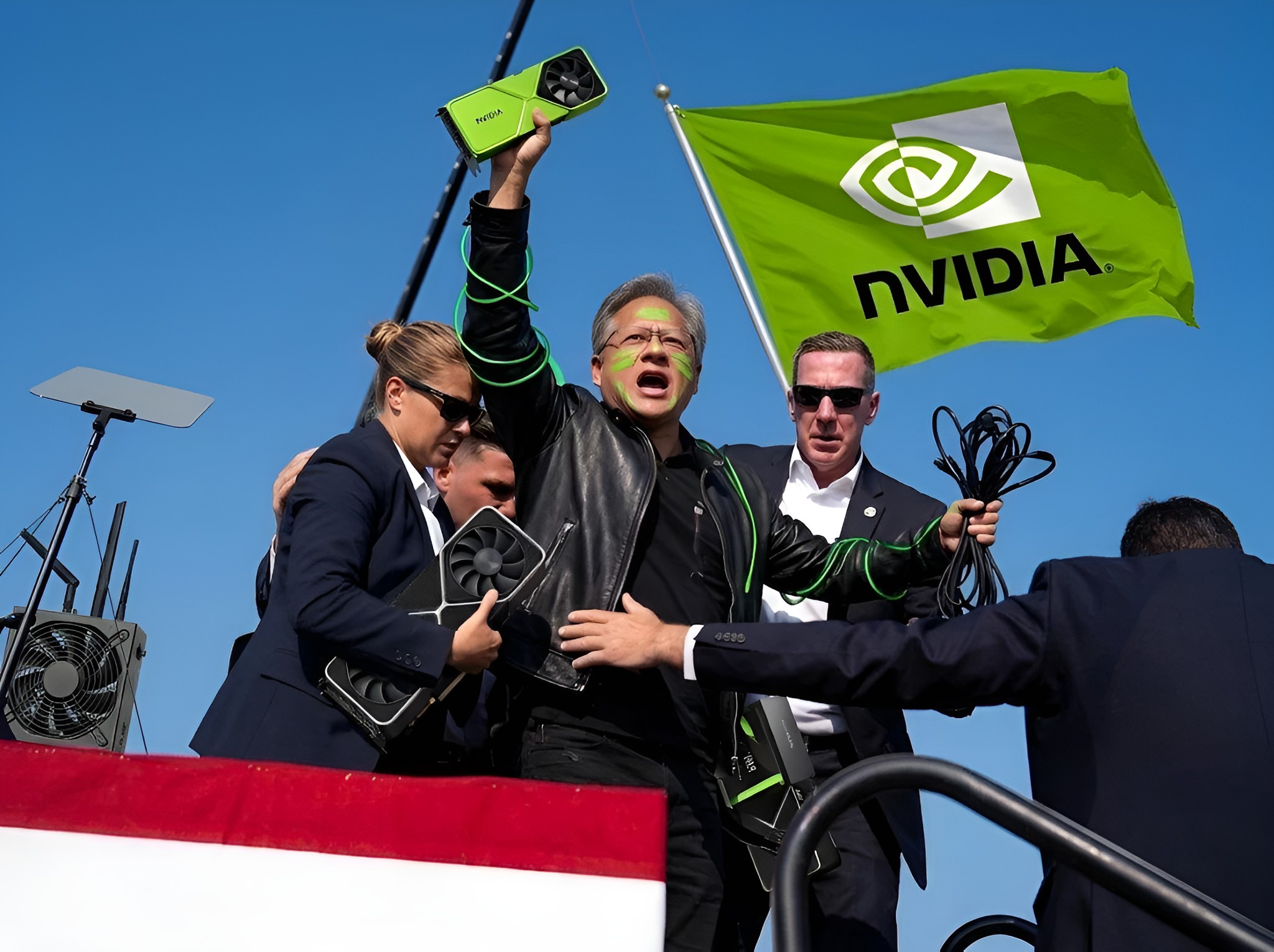
I'm Charlotte Ramirez, and I've spent the past week reading the same headlines you have — "Bring Jensen Back" signs, executives quietly organizing, a stock that no longer trades like a one-man show. My take after lining up the facts: this is less a coronation in waiting than a stress test of Nvidia's governance. Here is what is actually happening, and what it means if you follow the company or hold its shares.
What exactly is the "war room," and who is in it?
It is a lobbying network, not an official campaign — and its reach is broader than the usual fan mail. According to one of Huang's allies, a "war room" of Silicon Valley executives is being assembled to push for the former Nvidia chief executive's return and to pull the White House into the support camp. "Beyond the frontier labs, every heavyweight in tech supports Jensen Huang," the ally said, adding that the lobbying effort has Huang's own backing.
Throughout the weekend, the public clamor for Huang to return as Nvidia's chief executive kept building. Elon Musk of Tesla and SpaceX, Epic Games chief executive Tim Sweeney and a batch of other executives signed a joint open letter asking the board to "Bring Jensen Back." Employees, too: in the days since his resignation, several have publicly said they want him back and put their names to that same letter.
That mix matters. It is not just sentiment; it is founder-to-founder pressure plus an internal constituency, the two groups a board ignores at its peril.
Why does Washington want a leadership overhaul?
Because the opposition is coming from the Treasury, not from a rival chipmaker — and it is about conduct, not just succession. On Sunday, US Treasury Secretary Scott Bessent said that after Huang's departure Nvidia needs a "sweeping leadership overhaul." His framing pointed to the company's culture and to questions about sales practices, and he argued for looking outside Nvidia for the next chief executive.
The White House's stance turns a personnel decision into a policy signal. Nvidia sits at the center of US chip export policy, so who runs it intersects with compliance and with the boundary between government and the largest technology companies. That is why even Huang's backers concede the road back is steep: Washington's objections do not disappear because a petition is trending.
There is a market cost already on the ledger. On Nov. 12, the day the resignation was announced, Nvidia shares closed down 4.34%, wiping about $182 billion off its market value, according to China News Service. Investors are not just mourning a founder; they are pricing the risk that the AI strategy, supply-chain relationships and customer commitments lose their most visible champion.
Can Huang force his way back? The governance math
No — and the reason is arithmetic, not acrimony. Huang is Nvidia's largest individual shareholder but controls only about 3.6% of the vote as of March, per Nvidia's 2026 proxy statement cited by Yahoo Finance; Reuters puts the stake at roughly 3.5%. Nvidia has a single class of common stock with one vote per share, so there is no super-voting cushion to fall back on. Unlike founders who built a control lever into the share structure, he cannot outvote a board decision.
MyTechDailyNews has followed this governance angle closely, including the debate over whether super-voting shares would have changed the outcome. The short version: the same structure that made Nvidia feel founder-led also left its founder unusually exposed once the board turned against him.
| Question | What the record shows |
|---|---|
| Huang's voting stake | About 3.5%–3.6%, largest individual holder (Yahoo Finance, Reuters) |
| Share structure | One class, one vote per share — no super-voting rights |
| Can he veto the board? | No |
| Any remaining lever? | Proxy rules may let him nominate two directors (Reuters) |
What is the board actually doing right now?
Stabilizing the company and keeping the transition orderly. The board and management team led by interim chief executive Colette Kress are trying to hold the line ahead of the quarterly results due Tuesday; Nvidia has scheduled its third-quarter call for Nov. 17 at 2 p.m. PT, according to its newsroom. On Friday, reports surfaced that the board had approached Arm chief executive Rene Haas as a possible successor, though the board says a formal succession process has not started.
Behind the scenes, an independent investigation is underway. Nvidia's board brought in Wachtell, Lipton, Rosen & Katz, with former acting US attorney Joon H. Kim leading — a probe we unpacked in our explainer on the Wachtell, Lipton investigation. Its findings are likely to shape any decision on Huang's future more than the petitions do. Spokespeople for both Nvidia and Huang declined to comment on the lobbying.
Two major investors are trying to widen the board's options. Altimeter Capital founder Brad Gerstner and Atreides Management head Gavin Baker wrote to the board on Friday, urging it to "keep all options on the table, including Jensen Huang's return." Their rationale: "Jensen Huang's long leadership delivered exceptional results, and the recent events surrounding his departure have created enormous uncertainty."
One more detail most coverage skips: Reuters reported that proxy rules may allow Huang to nominate two directors. That is not a route back to the CEO office, but it is a way to keep a foothold in the boardroom — and a reminder that "out" does not mean voiceless.
Which common misconceptions should you drop?
- "Enough signatures will force the board's hand." Public pressure can shift incentives; it does not override a board's fiduciary process, especially with an investigation pending.
- "This is just OpenAI 2.0." Anthony Scaramucci, founder of SkyBridge and a former White House communications director, rejected the comparison: the Altman case was an internal governance dispute, while Huang's involves ongoing investigations. As he put it, "The FBI doesn't read petitions."
- "Huang still owns enough to call the shots." He does not — roughly 3.5% and no super-voting class.
- "The war room means the deal is done." It means a campaign exists. The board has not formally opened a succession process, and people familiar with the effort admit the obstacles are serious.
What should readers watch next? An action checklist
- Tuesday's earnings call. Results and commentary from Kress are the first real test of the "stability without Huang" argument.
- The investigation's findings. Timing and scope from Wachtell's probe will signal whether a return is even thinkable.
- Any White House statement. Bessent's "sweeping leadership overhaul" line is the clearest policy marker to track.
- Succession signals. Whether Rene Haas or another outside name moves from "contacted" to formal candidate.
- Proxy filings. If Huang nominates directors, that is the clearest sign he is playing the long game rather than waiting for a recall.
Is a Jensen Huang return worth banking on? My verdict
Here is my honest read, after weighing the personalities against the paperwork: I would not bet on a return in the near term. The ally's line about "every heavyweight in tech" is colorful, but boards do not vote by acclamation, and the combination of a federal-level investigation, Treasury's public preference for an outsider and a small voting stake is a wall, not a speed bump.
If you follow Nvidia as an investor, act on what is measurable — Tuesday's numbers, the investigation timeline and any formal board statement — not on signature counts. If you follow it as a technology story, watch whether the roadmap and customer commitments hold without the founder who personified them. That, more than any war room, will tell you what Nvidia is worth.
FAQ: the Jensen Huang return bid, answered
Why did Jensen Huang resign as Nvidia CEO?
He stepped down amid a personal scandal. One participant in the return effort put it bluntly: "An affair with a subordinate is exactly the kind of offense that gets someone fired." An independent investigation is separately examining related questions, including whether company secrets or national security were compromised, according to CNBC.
How much support does the "Bring Jensen Back" campaign have?
By Saturday, the online petition urging the board to reverse course had passed 100,000 signatures, including backing from prominent executives, according to a Financial Times-based report. Supporters also include current and former Nvidia employees.
Who could replace Jensen Huang?
Arm chief executive Rene Haas was approached as a possible candidate on Friday, but Nvidia says a formal succession process has not begun. Treasury Secretary Scott Bessent has publicly argued for an external pick.
Does Huang have any leverage left?
Limited but real: about 3.5% of the stock, the backing of major investors such as Altimeter Capital and Atreides Management, and — per Reuters — a possible proxy right to nominate two directors.
Sources
- Reuters — Huang may nominate two directors: https://www.reuters.com/legal/transactional/former-nvidia-ceo-jensen-huang-can-nominate-two-directors-company-board-filings-2026-11-17/
- Yahoo Finance — Huang's 3.6% voting stake: https://finance.yahoo.com/markets/stocks/articles/jensen-huang-holds-3-6-153500354.html
- CNBC — Wachtell, Lipton investigation: https://www.cnbc.com/2026/11/10/nvidia-wachtell-lipton-huang-affair.html
- China News Service — Nov. 12 market reaction: https://www.chinanews.com.cn/gj/2026/11-13/10731272.shtml
- Nvidia Newsroom — Q3 earnings call schedule: https://nvidianews.nvidia.com/news/nvidia-sets-conference-call-for-third-quarter-financial-results-6928873
- NetEase — petition and Washington reaction: https://m.163.com/dy/article/LBSBPNOU0514EGPO.html