
MyTechDailyNews Deep Dive: Jensen Huang's Nvidia Exit and the Super-Voting Shares Reckoning
Imagine building the company that powers the AI boom, then watching your own board show you the door. Does that prove "one share, one vote" protects investors — or that founders are sitting ducks? Short answer: Jensen Huang's resignation from Nvidia, the culmination of the board investigation into Jensen Huang, has turned a dry governance debate into a live case study, and in 2026 both sides are claiming it as proof.
I've spent years testing gadgets where the spec sheet never quite matches the feeling in your hand. Corporate governance is the same: the headline numbers look tidy, but how power actually feels in the room is messier. MyTechDailyNews breaks down what changed, why it matters to ordinary readers, and where this fight is heading.
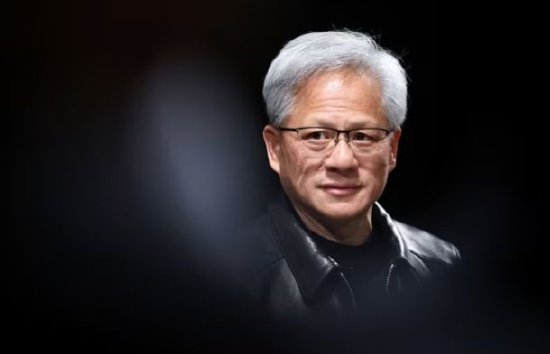
What are super-voting shares, and why didn't Huang have any?
Super-voting shares are a class of stock that gives founders or insiders more than one vote per share, letting them outvote the economic majority. Nvidia never adopted them. That single structural fact — not the personality at the top — is why this resignation landed so hard in the United States and beyond.
Double-class, or dual-class, structures are also called "super-voting shares." Under one share, one vote, every shareholder carries equal weight. The debate is about which arrangement better balances a founder's long-term vision against accountability to the people who own the stock.
Why does As You Sow say Nvidia's one-share-one-vote setup worked?
The shareholder-rights camp reads the outcome as a win for accountability. The US shareholder advocacy group As You Sow said in a statement local time on the 14th that Nvidia did not use a dual-class structure, so its board could keep effective oversight of management, and urged other companies to stick with one share, one vote.
Its chief executive Andrew Behar was blunt: "The Nvidia board investigation that ultimately led to Jensen Huang's resignation showed what genuinely effective oversight looks like." He added, "When a chief executive acts improperly, the board must have within it the power to hold that person accountable."
The group holds up Meta as its cautionary example. Mark Zuckerberg owns roughly 13% of Meta but commands about 60% of total voting rights through dual-class stock. At Meta's 2020 annual meeting, proposals on verified accounts, removing abusive images and halting false political ads drew 63.1% support among independent shareholders — yet once Zuckerberg's super-voting weight was counted, final backing collapsed to 19%.
As You Sow argues that had those measures passed, Meta might have avoided up to $17.1 billion (about 23 trillion won) in settlement exposure from youth social-media addiction lawsuits. In its telling, dual-class voting blocked shareholder demands and left both the company and its investors worse off.
Could the board really remove its own CEO? The Imperial College view
Yes — and that is the whole point, according to Purnima Luthra. The professor from the Imperial College London Business School wrote that if Nvidia had a dual-class structure, Huang's enormous power could have made the crisis worse rather than better.
"In Nvidia's case, even if Jensen Huang himself were unwilling to resign, the company's existing share structure would still allow him to be removed," she wrote. "Nvidia uses a single-class structure in which all shareholders, Jensen Huang included, have one vote per share, so the board's handling of the matter offers him little protection."
She contrasted Nvidia with founder-controlled firms such as Meta and SpaceX: "This kind of share structure makes it very difficult for shareholders to hold a strong corporate leader accountable." It is the cleanest line in the whole debate — voting power decides whether a board can act when it needs to.
Does one-share-one-vote leave founders too exposed?
The opposing camp says yes: a founder who plays the long game can be squeezed out. Jeffrey Sonnenfeld of the Yale School of Management, speaking local time on November 8, argued that Huang lacked super-voting power to lock in control.
Sonnenfeld called Huang one of the rare leaders to have delivered Nvidia's extraordinary success without dual-class protection, and said that had Huang held super-voting shares, any board attempt to remove him would have been far harder. It is a fair point about stability — and, honestly, the strongest thing the dual-class side has going for it.
What is changing in 2026? Three shifts worth watching
The tide is running against concentrated voting power, and it is coming from institutions rather than activists. Here are three developments the original headlines around this story largely skipped, and each one helps explain why this debate feels different now.
- Proxy advisers tightened the screws. ISS and Glass Lewis, the two firms that dominate proxy voting, updated their 2026 benchmark policies to treat capital structures with unequal voting rights as problematic across the board, with ISS generally recommending votes against proposals to create new dual-class stock, according to DLA Piper's policy update.
- Index gates closed years ago. Since 2017, S&P Dow Jones and FTSE Russell have restricted new multi-class listings from major indices — FTSE by requiring a minimum 5% of voting rights in public hands, S&P by barring new dual-class offerings from the S&P Composite 1500, as Harvard's corporate governance forum documented.
- Sunset provisions are the compromise. Rather than ban dual-class stock outright, many newer structures expire on a timer: time-based sunsets commonly run 3 to 20 years, with 10 and then 7 years the most frequent, per a Congressional Research Service brief.
For context, the template goes back to Google's 2004 IPO, which reserved Class B shares carrying ten votes each for founders while the public got one-vote Class A shares — a structure laid out in Google's own SEC prospectus. What began as a way to let tech founders back their own team is now the thing regulators, index makers and shareholders are quietly unwinding.
What do readers most often get wrong about this debate?
Most confusion comes from mixing up popularity with power. A founder can enjoy overwhelming support and still be removable; a founder with a small stake can be unremovable. Clearing up a few myths makes the headlines far easier to read.
- Myth: a majority vote means the founder is secure. Management authority rests on continuing support, not on the share count alone — a founder can be broadly popular and still lose a confidence vote.
- Myth: super-voting rights settle accountability questions. They change the arithmetic of a shareholder vote; they say nothing about whether disclosures were adequate or an investigation was handled properly.
- Myth: this is only about Nvidia. The same mechanics shape Meta, SpaceX and every dual-class listing a retail investor might hold.
What should you check when a governance headline breaks?
A short checklist beats a long thread. When the next founder-versus-board story lands, run through these steps before you form an opinion.
- Identify the share structure: single-class, dual-class, or sunset-bound.
- Separate economic ownership from voting power — the two are rarely the same.
- Read what the shareholder advocates and proxy advisers actually recommended.
- Check whether index eligibility is at stake, which can force real change.
- Watch for actions, not statements: board votes and disclosures matter more than PR.
FAQ
Did Nvidia have dual-class shares?
No. Nvidia used a single-class, one-share-one-vote structure, which is precisely why As You Sow and Purnima Luthra argued the board could hold management accountable.
Why is Meta the example everyone cites?
Because Mark Zuckerberg holds about 13% of the equity but roughly 60% of the votes. The 2020 shareholder meeting, where 63.1% independent support became just 19% after his votes counted, is the textbook illustration.
What would sunset provisions actually do?
They convert dual-class stock into ordinary shares after a set period — commonly 10 or 7 years — restoring one share, one vote without an immediate fight.
Does this affect ordinary investors?
Yes. Voting structure determines whether shareholder proposals on things like content moderation or executive conduct can pass, which in turn shapes the risks a company carries.
Bottom line: is one-share-one-vote worth backing?
Here is my honest verdict: on the evidence in front of us, yes — with caveats. Nvidia's single-class structure did not protect Huang from a board that had lost confidence, and that is a feature, not a bug, if you believe accountability should be real. As You Sow and Imperial College London Business School's Purnima Luthra make the cleaner case; Sonnenfeld's stability argument is legitimate but, to my eye, secondary to the ability to hold power to account.
If you own stock, stop reading governance as a personality contest and start reading the share structure. Check whether a company you hold has super-voting shares, whether a sunset clause exists, and how proxy advisers voted last season. That is the practical takeaway from Huang's exit, and it will outlast the headlines.
Reference sources
- DLA Piper — ISS and Glass Lewis 2026 benchmark policy updates: https://marketedge.dlapiper.com/2025/12/iss-and-glass-lewis-release-benchmark-policy-updates-for-2026/
- Harvard Law School Forum on Corporate Governance — S&P and FTSE Russell on multi-class shares: https://corpgov.law.harvard.edu/2017/08/05/sp-and-ftse-russell-on-exclusion-of-companies-with-multi-class-shares/
- Congressional Research Service — Dual Class Stock: Background and Policy Debate: https://www.congress.gov/crs-product/IF11992
- US SEC — Google IPO prospectus (Class A and Class B voting rights): https://www.sec.gov/Archives/edgar/data/1288776/000119312504143377/d424b4.htm