
164,000 Signatures vs. a Treasury Push: MyTechDailyNews Compares Nvidia's Three CEO Paths After Jensen Huang's Exit
If you woke up on November 16 holding Nvidia stock — or a GPU roadmap your team depends on — the question was not whether the drama is entertaining. It was: does Jensen Huang come back, and does anything about your stack change this week? My short answer after tracking the petition, the statements and the counter: the signatures are loud, but the decision still sits with the board, and the first hard datapoint arrives with the fiscal 2027 third-quarter earnings on November 17.
What the numbers actually say — and which number matters most
Here is the raw count. As of 9:15 a.m. Beijing time on November 16, the "Stand with Jensen" public letter had collected 164,000 signatures: more than 9,000 from Nvidia employees and former employees, nearly 90,000 from shareholders, and more than 60,000 other supporters. Set against Nvidia's roughly 42,000 employees, the signed employees equal about 19.3% of the workforce.
I refreshed that counter several times while writing this, and the pace is the part I find genuinely unusual. CNBC TV18 reported the petition crossing 90,000 signatures on November 14; by November 16, TechRadar counted more than 175,000, including high-profile names such as Elon Musk and Tim Sweeney. Anyone can sign a petition, so I weight the employee share higher than the total: nearly one in five employees signing with their careers attached is a different signal from 175,000 drive-by clicks.
Three camps, three trade-offs
The week produced three clearly different positions, and each one buys something at a cost. This is the comparison that actually matters:
| Camp | Who | What they want | The trade-off |
|---|---|---|---|
| Petitioners | Employees, former employees, shareholders; Musk signed publicly | Bring Huang back during the board's independent investigation, publish its scope and timeline | Strategy continuity vs. governance optics — reinstatement before findings could read as accountability skipped |
| United States Treasury | Treasury Secretary Bessent | Nvidia to search externally for a new CEO and make major adjustments | A clean break from the scandal vs. losing the founder-led identity that built CUDA and the AI infrastructure playbook |
| The board | Directors, with first-ever chair Harvey C. Jones | Run the company under interim CEO Colette Kress while the investigation continues | Deliberation buys legitimacy vs. talent-flight risk while it drags on |
Note the friction in that table: Bessent's external-hire demand and the petition's reinstatement demand point in opposite directions, and the board — which controls the outcome — has so far committed to neither. Recent reporting, including The Wall Street Journal, has indicated the board is not currently planning to restore Huang, which keeps the uncertainty wide open. The board's independent investigation, led by a former federal prosecutor, remains the process everything hangs on.
The exit that tells you more than the signatures
One departure this week deserved more attention than it got. Jiemian News reported on November 16 that Nvidia robot learning engineer Dai Shiqin (Darrell Dai) had announced his exit the day before. His stated reason was not anger; it was conviction. In his view, Huang is more than a CEO — he admired the willingness to fund future technologies with no clear short-term payoff, betting on CUDA long before the deep-learning boom and positioning Nvidia in AI before AI was everyone's business. Those bets built the infrastructure the entire AI industry now runs on. With Huang gone, Dai decided his own chapter at Nvidia should close too.
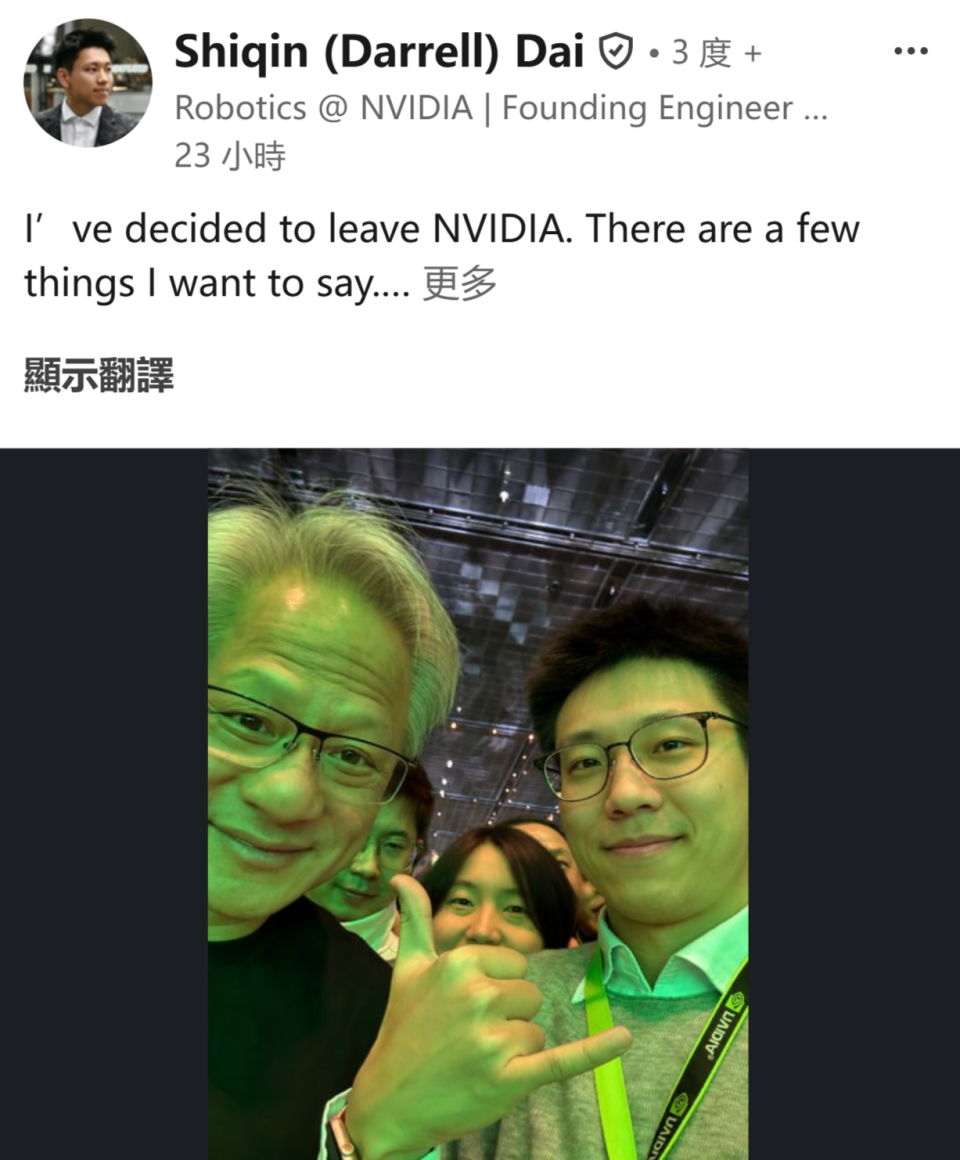
Having covered enough product cycles, I know the hierarchy of warnings: press releases are noise, signature counts are noise-plus, but a specialist choosing to leave a hot employer is signal. That is the number I would watch — not the petition total.
Who is actually running the shop right now
Colette Kress, Nvidia's CFO since September 2013, is interim CEO — while keeping her CFO duties. Per Nvidia's own announcement (reported by China News Service), she brings roughly 25 years of tech-finance experience: finance roles at Texas Instruments, 13 years at Microsoft, and senior vice president of finance for business technology operations at Cisco. The board also appointed Harvey C. Jones as its first-ever chair; in his letter to employees he argued the company's strength lies in its staff, leadership team and partner ecosystem, and that the business, customer commitments and product roadmap are expected to continue uninterrupted.
My honest read, from following this company's earnings calls for years: Kress is a steady hand, and the roadmap-continuity message is the right one for CUDA customers. But one person holding two C-suite jobs is a bridge, not a destination — the board itself said it is searching for a permanent successor among internal and external candidates.
Why November 17 is the real referendum
Nvidia reports fiscal 2027 third-quarter results on November 17 — its first earnings release since Huang's resignation. The market wants two things: whether the growth run continues, and what Kress says about strategy and operations. The stock fell 12.75% last week, so expectations are already discounted to a degree. If guidance holds and the roadmap language survives the call, the leadership question becomes a governance story rather than an operational one — at least for this quarter.
FAQ
Who signed the Stand with Jensen letter?
By 9:15 a.m. Beijing time on November 16: 164,000 total, including more than 9,000 Nvidia employees and former employees, nearly 90,000 shareholders and more than 60,000 other supporters — about 19.3% of Nvidia's roughly 42,000 employees on the employee side.
Can a petition bring Jensen Huang back?
Not by itself. Only the board can reinstate a CEO, and it is mid-investigation. Meanwhile Bessent has publicly pushed for an external hire, and recent reporting indicates the board is not currently planning his return. Treat the petition as pressure, not a decision.
Who is Colette Kress?
Nvidia's CFO since September 2013 and now interim CEO. About 25 years in technology finance before Nvidia: Texas Instruments, 13 years at Microsoft, and senior VP of finance for business technology operations at Cisco.
Does any of this affect CUDA or my AI stack?
Not today. The board's message, via chairman Harvey C. Jones, is that customer commitments and the product roadmap continue uninterrupted. The earnings call on November 17 is where you verify that claim rather than take it on faith.
What should an investor actually watch?
Three things: fiscal 2027 third-quarter guidance on November 17, what Kress says about strategy, and whether the investigation timeline gets any public definition. The 12.75% drop last week already priced in a lot of pessimism.
My call: three moves for three readers
- If you hold NVDA: do not trade the petition counter — trade the guidance on November 17. If data-center guidance and roadmap language hold, the leadership risk is a quarter-by-quarter discount, not a thesis break.
- If you build on CUDA: change nothing this week. Watch the roadmap section of the call and any successor news; a founder-led bet like CUDA does not get unwound by a hiring committee.
- If you follow governance: track the gap between Bessent's external-hire demand and the board's pace. That gap, not the signature total, tells you which way the outcome bends.
Bottom line: 164,000 people asked a fair question, and the United States Treasury asked a different one. I would treat this as a governance story with an earnings deadline — judge it on November 17, not on the drama.
Sources
- The Guardian — Jensen Huang resigns as Nvidia CEO
- TechRadar — Stand with Jensen petition gains 175,000+ signatures
- CNBC TV18 — Petition crosses 90,000 signatures (November 14)
- Entrepreneur — Nvidia board announces resignation, Kress named interim CEO
- China News Service (via Sohu) — Kress background and first board chair appointment
- ITHome — Harvey C. Jones letter to Nvidia employees
- MyTechDailyNews — Nvidia board brings in Wachtell Lipton for the investigation