
Samsung SDI or LG Energy Solution? Inside the Boston Dynamics Atlas Battery Deal | MyTechDailyNews
Short answer: Samsung SDI is expected to win most of the early battery orders for Atlas, the electric humanoid robot developed by Boston Dynamics, the robotics subsidiary of Hyundai Motor Group. According to The Elec, in reporting that landed in recent days, each Atlas is built around 70 cylindrical 2170 cells that form a pack of roughly 1.3kWh — enough for up to 4 hours of general work, about 2 hours of heavy lifting, and a self-service battery swap that takes only 3 minutes.
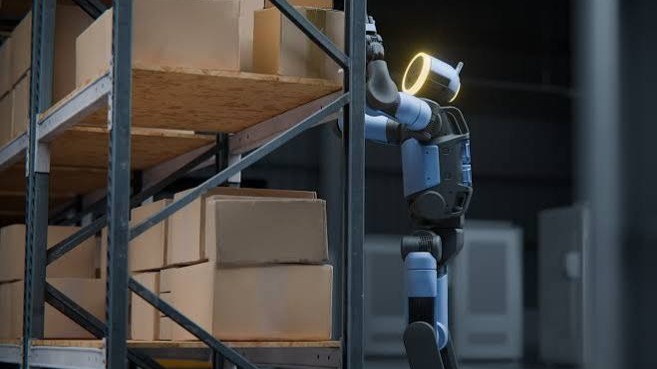
What supply arrangement did the Atlas programme actually lock in?
Conclusion first: this is a two-supplier deal with one clear front-runner. The Elec, citing industry sources, reported that Samsung SDI will supply batteries for Atlas and is expected to take the overwhelming share of initial orders. LG Energy Solution was also selected as a supplier, but because its available capacity for this programme is limited, Samsung SDI is likely to hold the leading position for a period of time.
The rest of the hardware map is equally concrete. An earlier South Korea Electronic Times report indicated that Samsung SDI plans to serve Atlas demand from its Malaysia plant, while LG Energy Solution would source from its facility in Georgia, United States. Hyundai Mobis supplies actuators and other key components. Boston Dynamics has already begun producing the product version of Atlas, and Hyundai Motor Group plans to phase the robot into automotive manufacturing tasks such as parts sequencing from 2028.
How much energy does a single Atlas robot carry?
Conclusion: Atlas is closer to a power-tool-class battery on legs than to an electric car, even though it borrows the same cell format.
| Layer | Atlas figure | Why it matters |
|---|---|---|
| Cell format | 2170 cylindrical: 21mm diameter, 70mm height | A mass-produced size already used across e-bikes, power tools and EVs, so Atlas does not depend on bespoke cells |
| Per-cell capacity | 5000mAh | High-capacity variant for its size class; more energy per physical slot in the pack |
| Cells per robot | 70 cells | Redundancy: one failed cell does not stop the robot the way one failed module can |
| Finished pack | about 1.3kWh | The whole energy budget behind 4 hours of general work or 2 hours of heavy lifting |
| Car benchmark | roughly 1.6% of the 84kWh pack in the Hyundai IONIQ 5 long-range model | Scale reference: one robot is about one-fiftieth of an EV's stored energy |
For readers who only follow cars, the comparison is the fastest way to size the story: Atlas stores about 1.6% of what a Hyundai IONIQ 5 long-range vehicle carries in its 84kWh battery. The robot's job is not range, it is duty cycle.
Why did the programme choose many small cylinders instead of one big pack?
Because cylinders are the cheapest path to a serviceable robot. Both Samsung SDI and LG Energy Solution already ship the same 21mm-by-70mm cylindrical format in volume, a point repeated in South Korean industry coverage of the humanoid battery race, which means Atlas rides existing production lines instead of a one-off chemistry.
The vendor framing is the same. In its own technical newsroom piece on robotics power, Samsung SDI argues that the "flexible form factor" of cylindrical batteries lets them adapt to robot platforms, which is why the format keeps showing up in logistics and service robots. LG Energy Solution has made the same argument for its own humanoid push, describing high-capacity, long-life 2170 cylindrical cells as the backbone of early robot deployments; the company has already been named an exclusive 2170 supplier to the service-robot firm Bear Robotics.
Samsung SDI vs LG Energy Solution: where does each one fit?
| Decision dimension | Samsung SDI | LG Energy Solution |
|---|---|---|
| Role in Atlas today | Expected to carry the majority of early shipments per The Elec | Selected as a second supplier, but capacity-limited at the start |
| Reported sourcing site for Atlas | Malaysia plant, per the earlier South Korea Electronic Times report | Georgia, United States plant, per the same report |
| Strength to buy on | Available cylindrical volume for the earliest production ramp | Localised US output, attractive if tariffs or US factory siting dominate later |
| Weakness to watch | Robot demand competes with its other cylindrical commitments | Allocation risk: a second-source slot can stay small for years |
| Best-fit scenario | First-wave pilots where you simply need robots delivered on schedule | Second-wave scaling inside US plants where supply-chain geography matters more than price |
The takeaway for anyone placing a pilot order: today the choice is not chemistry, it is queue position. Samsung SDI's capacity decides how many robots you get in the first wave; LG Energy Solution's US site decides how resilient the second wave looks if North American content rules tighten.
What do 4 hours of runtime and a 3-minute swap change on the factory floor?
Conclusion: Atlas is designed for continuous availability, not long single shifts. Published parameters say up to 4 hours in general operation and about 2 hours when the robot is hauling heavy items. When energy runs low, the robot drives itself to a workstation and swaps the pack in roughly 3 minutes; recharging that pack takes about 1.5 hours.
Turn those numbers into planning arithmetic — and note this is our own analysis from the published figures, not a vendor claim. A 4-hour runtime against a 1.5-hour charge means one charged spare is not enough: you need at least three packs in rotation per robot to keep it working without a gap. Do the same job with plugs instead of swaps and you lose a quarter of the day to charging; with the 3-minute swap, downtime falls to roughly 1% of operating time. That is the real reason a 1.3kWh pack is workable while a 1.3kWh electric car would be useless. It is the same logic that makes endurance contests for autonomous platforms so informative — see our explainer on the solar drone pushing for 100 hours of continuous flight, where recharging and payload sit in constant tension.
Weight and strength are the other half of the trade. Boston Dynamics' own Atlas materials list 56 degrees of freedom and lift capability up to 50kg, which explains why the heavy-carry figure drops the pack to about 2 hours: more actuator work per minute burns the same finite energy faster.
Why should ordinary tech readers care about 70 small cells?
Because it is the first humanoid battery specification set by a mainstream car group rather than a startup demo. Hyundai Motor Group's plan to introduce Atlas into parts sequencing from 2028 makes energy capacity, swap time and supplier share into procurement facts that other robot makers will be measured against. South Korea has become the physical-AI proving ground for exactly this reason — a beat our coverage of Nvidia's Seoul AI Day also illustrated.
The market backdrop is bullish but not instant. Morgan Stanley's Global Humanoid Model projects the humanoid sector could reach roughly $5 trillion a year with around 1 billion units in use by 2050. Some trade coverage of Hyundai's roadmap goes further on the near term, reporting an initial deployment target of more than 25,000 Atlas robots, with parts sequencing first and component assembly later — figures to treat as reported plans rather than booked orders.
Common misconceptions about the Atlas battery story
- "LG Energy Solution was rejected." It was not. Both suppliers were chosen; The Elec's point is about early volume share, not exclusion.
- "1.3kWh means Atlas is underpowered." The pack is small next to a Hyundai IONIQ 5, but the robot's availability comes from swapping in 3 minutes, not from a bigger tank.
- "The supplier is fixed for life." Plant choices and share can shift as capacity frees up; the Samsung SDI Malaysia and LG Energy Solution Georgia split reflects the situation now, not a permanent contract map.
- "Today's cells are tomorrow's cells." Samsung SDI unveiled a pouch-type all-solid-state sample aimed at physical AI devices including humanoids in March 2026, so assume at least one battery-generation change before volume production.
- "Battery news is only about the robot." Hyundai Mobis' actuator role shows the pack spec sets the thermal and duty-cycle envelope for the whole drivetrain.
What to do before the 2028 ramp: a buyer's checklist
- Ask suppliers for the cell format, not just runtime. If a robot uses 2170-style commodity cylinders, spare packs and future price drops are far easier to plan around.
- Price the swap station, not just the robot. The 3-minute self-swap only pays off if you buy charged spares and floor space for the workstation.
- Model your heaviest task. Use about 2 hours for heavy carry and 4 hours for general work; a mixed shift sits between the two.
- Confirm which plant the cells come from. Malaysia versus Georgia is a sourcing, tariff and service-distance question for any rollout outside South Korea.
- Get a second-source clause. With one supplier holding most early share, delivery risk sits with the buyer if robot demand outruns available cylindrical capacity.
- Watch for the solid-state transition. Treat battery specs as provisional through 2028, and ask what happens to existing packs and warranty terms if the chemistry changes.
Frequently asked questions
Who supplies the Atlas battery?
Samsung SDI, with LG Energy Solution also approved as a supplier. Per The Elec, Samsung SDI is expected to handle most early shipments while the project's initial demand stays limited.
What battery does Atlas use?
70 cylindrical 2170 cells — 21mm in diameter, 70mm tall, 5000mAh each — assembled into a pack of about 1.3kWh.
How long does Atlas work and how fast does it recover?
Up to 4 hours in general duty, about 2 hours during heavy lifting. Swapping a depleted pack takes around 3 minutes at a workstation; charging takes roughly 1.5 hours.
Where are the batteries made?
An earlier South Korea Electronic Times report said Samsung SDI plans to supply Atlas from its Malaysia facility, while LG Energy Solution would use its plant in Georgia, United States.
When will this reach real factories?
Boston Dynamics has started producing the product version of Atlas, and Hyundai Motor Group plans to roll it into automotive manufacturing steps such as parts sequencing from 2028.
Sources and further reading
- The Elec, the primary industry report behind the supplier story: Hyundai's Atlas Robot to Use 70 Samsung SDI Battery Cells
- Boston Dynamics official Atlas product page: Atlas
- Samsung SDI newsroom on robotics batteries: Robot Batteries Power the Era of Humanoids; solid-state sample: SAMSUNG SDI Unveils All-Solid-State Battery for Physical AI
- LG Energy Solution on humanoid cell strategy: How LG Energy Solution Is Developing Battery Solutions for Robotics
- Korea Herald on the 21700 format race: Behind Hyundai's Atlas, battery race is taking shape
- Chosun Daily on Korean cylindrical capacity: Korea battery makers boost cylindrical output
- Morgan Stanley humanoid market outlook: Humanoid Robot Market Expected to Reach $5 Trillion by 2050
- Hyundai Motor Group on the robotics race and Hyundai Mobis' actuator role: Inside the Robotics Race: Atlas Learns the Real World