
ApusNeo's 100-Hour Flight Push, Explained: A MyTechDailyNews Guide to Solar Sky-Watching Drones
By Sarah Chen | MyTechDailyNews | General
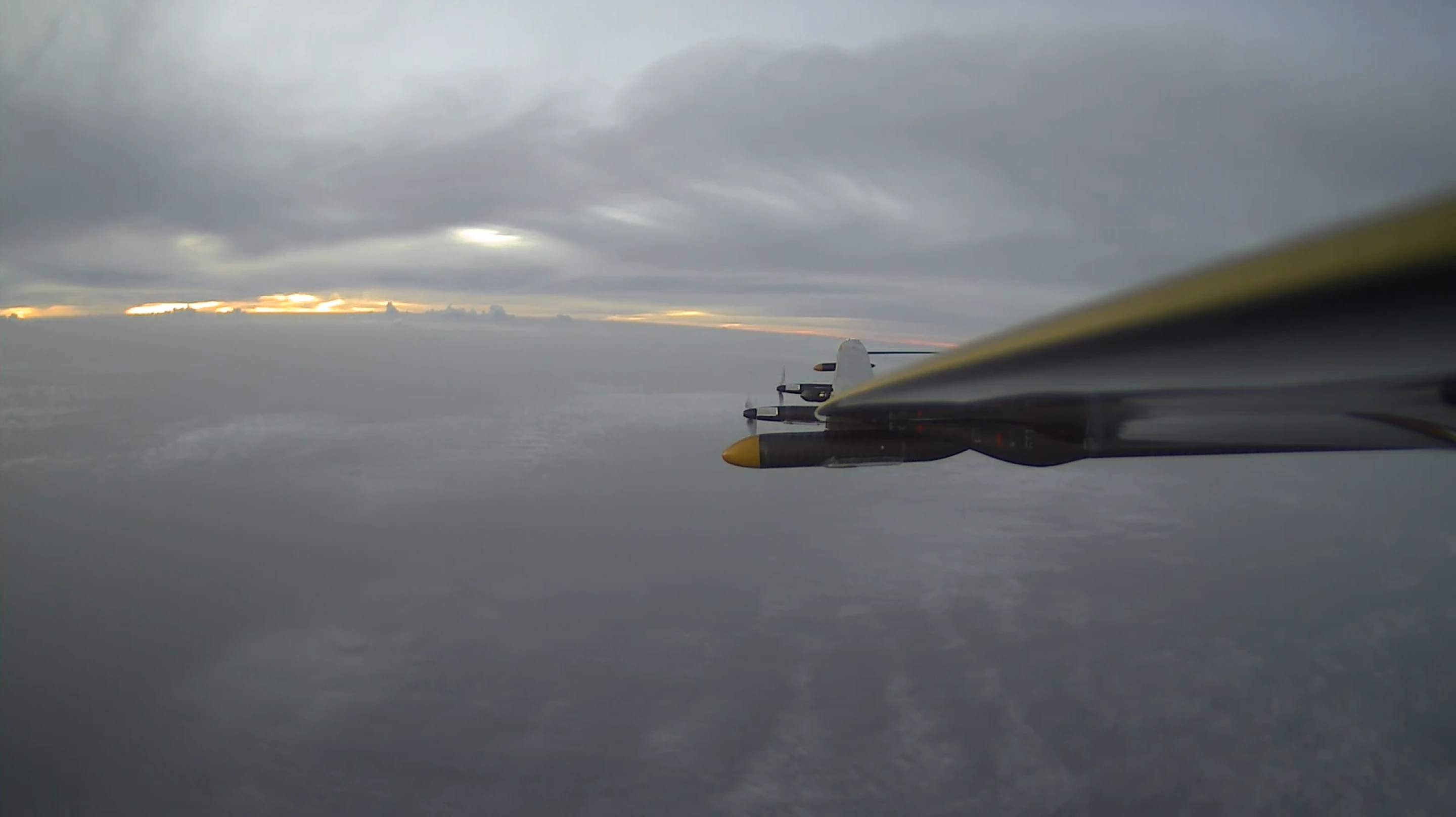
ApusNeo is a solar-powered high-altitude drone that flew 29 hours over Spain's Canary Islands on October 16 and climbed to 47,600 feet. The real headline is not the altitude but the persistence: the aircraft has since remained aloft for more than 80 hours on sunlight alone, chasing a 100-hour target. Below is what those numbers actually test, how the plane survives the night, and why a slow drone in the stratosphere matters to readers who never fly one.
Interest in this category, usually called HAPS (high-altitude platform systems), has shifted from laboratory curiosity to paid contracts. Spain's 2026 fire season, with nearly 130,000 hectares reported burned by late July according to European Forest Fire Information System figures cited in wire reporting, is exactly the kind of pressure that turns endurance demonstrations into operational missions.
What was actually tested on October 16?
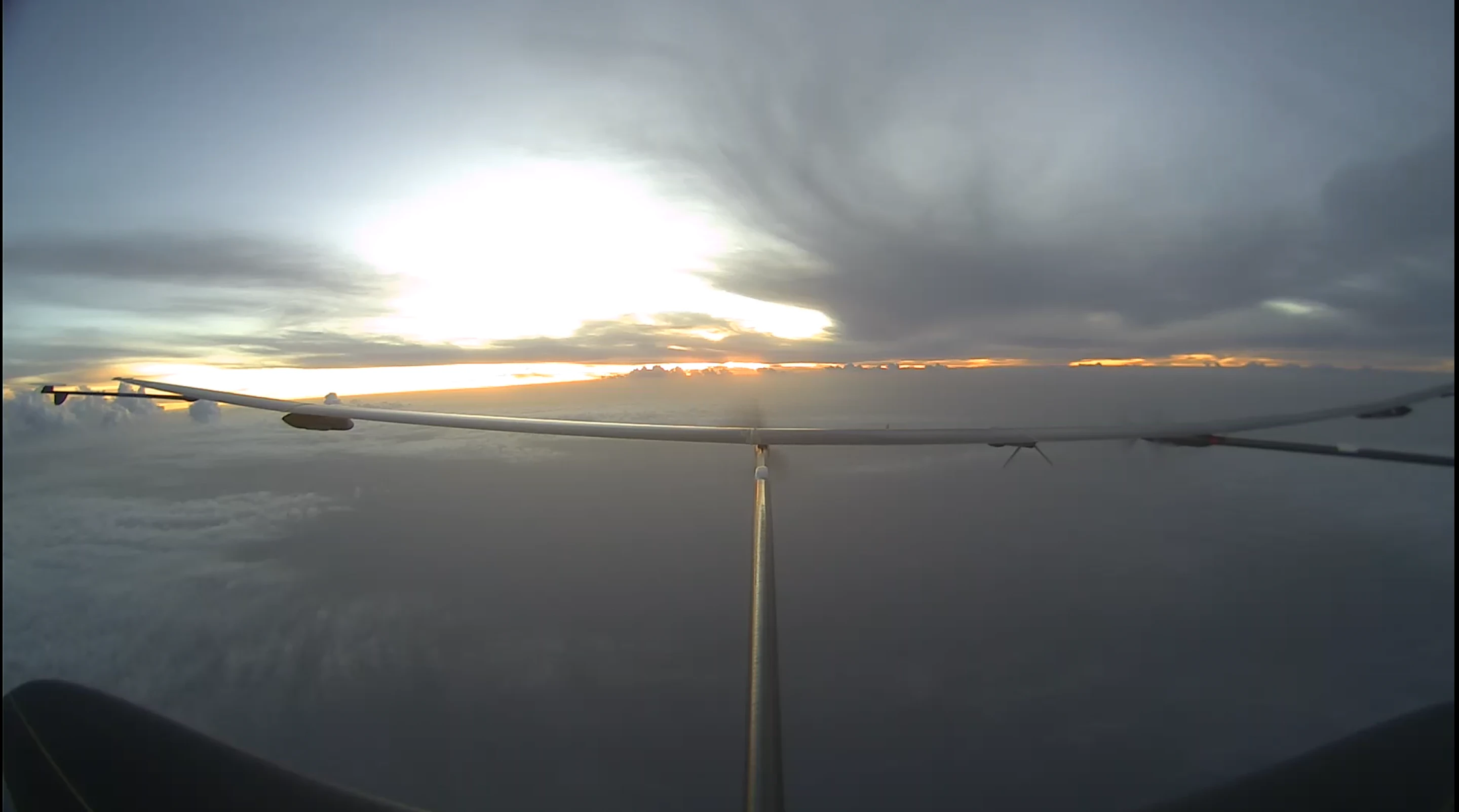
Short answer: ceiling, not duration. On October 16 the aircraft lifted off from the Canarias Stratoport for HAPS & UAS centre on the island of Fuerteventura, flew 29 hours inside coordinated local airspace and reached 47,600 feet.
- Where: Fuerteventura, in the Canary Islands, Spain — the same stratoport used for earlier campaign flights.
- How long: 29 hours continuously in this round.
- How high: 47,600 feet, roughly 14.5 kilometres.
- Who cleared it: Spanish air navigation provider ENAIRE coordinated the airspace, with a notice to airmen fixing the maximum altitude the aircraft was allowed to reach.
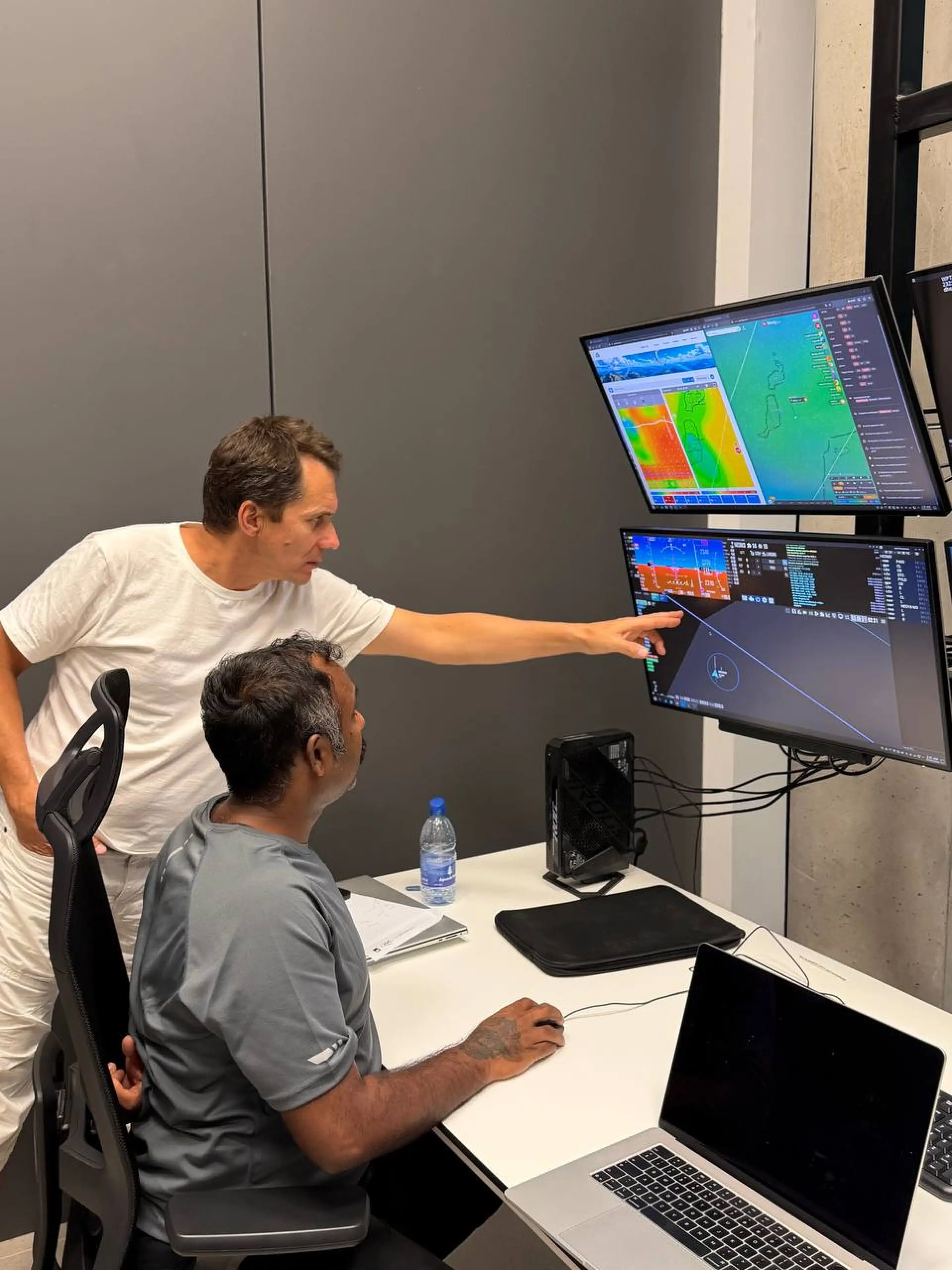
UAVOS founder and chief executive Aliaksei Stratsilatau said the aircraft still had climbing margin and that airspace conditions, not the machine, set the cap on this flight. For readers that distinction is useful: the limiting factor in this phase of the programme is regulatory and logistical, which is very different from a hardware failure.
Why the endurance ladder matters more than the height record
Fuerteventura is not a new launch site for this programme. Last December the same technology centre hosted the aircraft for ISSEC, a Spanish research project exploring how a high-altitude flying platform could stream data in real time to emergency services.
Earlier sorties chased endurance rather than altitude. Here is the sequence, in order:
- This September: two consecutive flights, of 29 hours and 52 hours.
- The latest round: continuous flight pushed beyond 80 hours.
- At the time of writing: per UAVOS' account to New Atlas, the aircraft was still airborne with more than 80 hours logged, working toward 100 hours.
- Cruise conditions: Noticias Fuerteventura reported the plane orbiting at about 30,000 feet (9,100 metres) and expected to land back at the technology centre on Saturday.
Read as a curve, 29 → 52 → 80+ hours inside a few months tells you something an altitude number does not: the energy budget and mission planning are maturing faster than the airframe. Our analysis, not a manufacturer claim, is that once a platform can plan a night on stored sunshine, the next constraints become weather windows, permits and payload weight.
How does a plane fly through the night without fuel?
The loop is simple enough to explain in five steps:
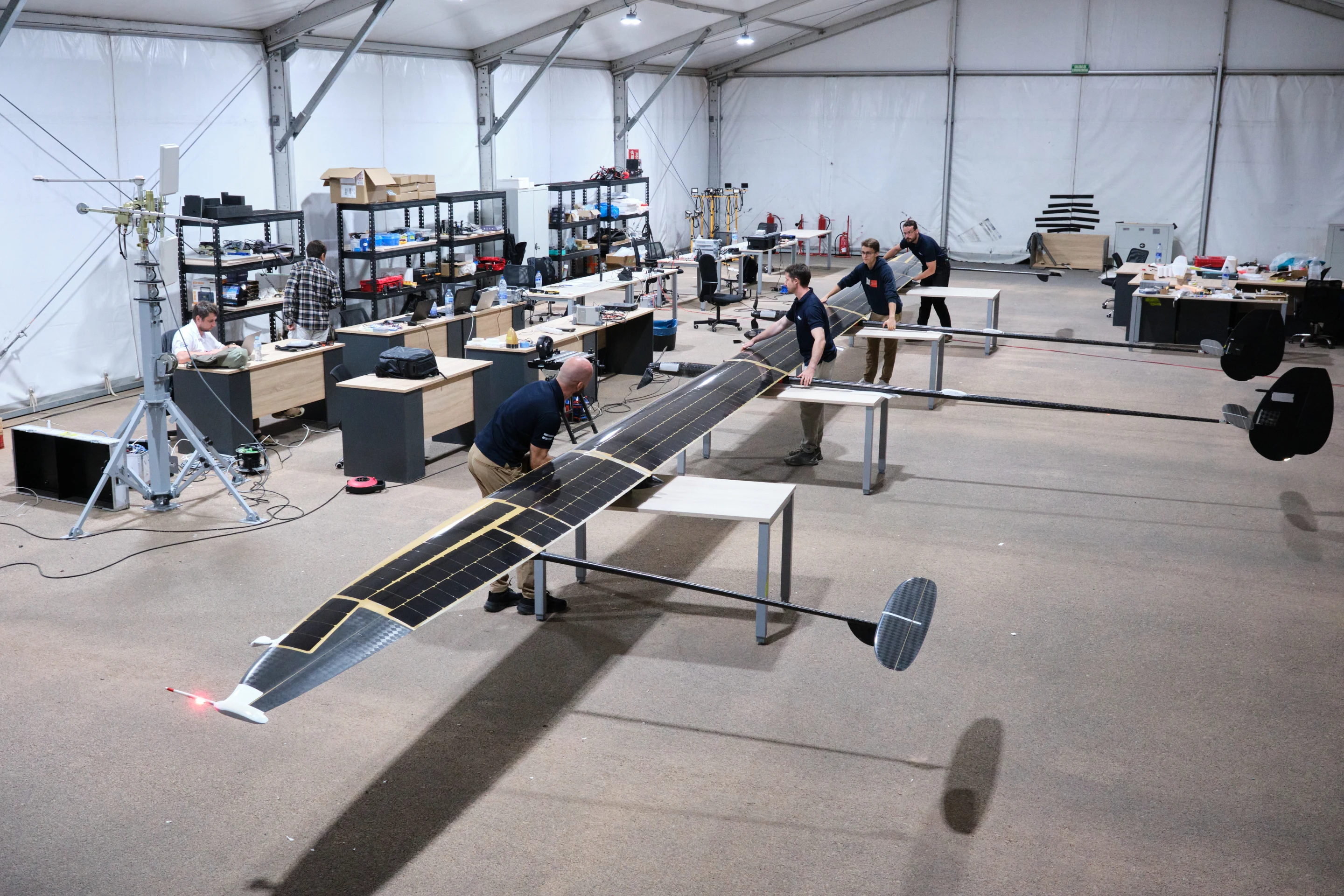
- Photovoltaic panels laminated across the wings collect sunlight.
- That power drives the electric motors directly during daylight.
- Surplus electricity is stored in on-board batteries.
- After sunset the aircraft runs on stored energy, gliding where it can to save watts.
- At dawn the cycle restarts — no landing, no refuelling.
If the daylight window is long enough, this class of aircraft can theoretically stay up for weeks. In practice endurance is not only a battery-capacity question. Season, cloud cover, solar irradiance and the aircraft's own power draw all move the number. Winter shortens the charging window, less energy is stored, and flying continuously through a full year becomes materially harder.
What is inside an 18-metre wing?
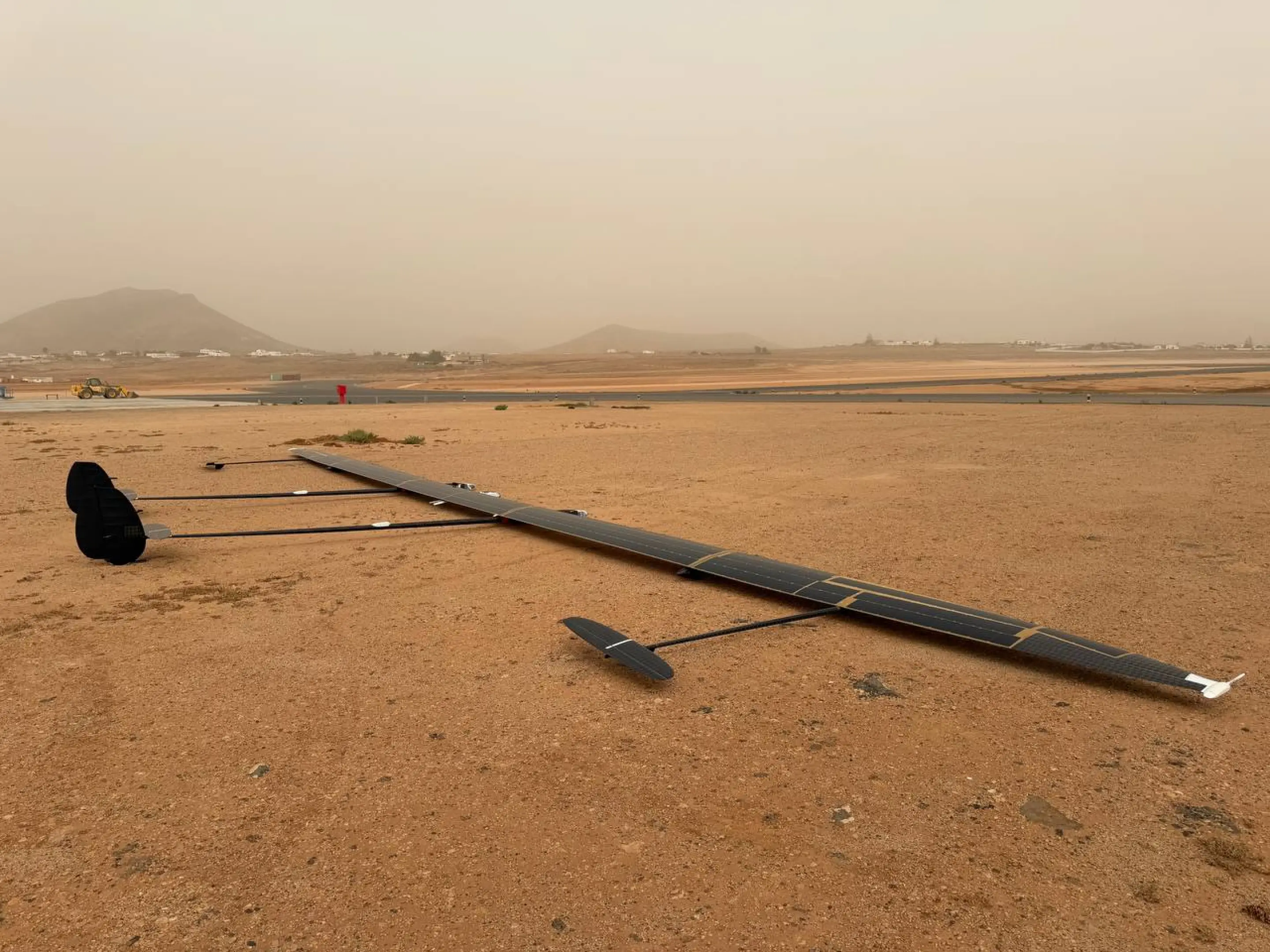
Visually, ApusNeo looks nothing like a consumer quadcopter. Its ancestor is the ApusDuo prototype unveiled in 2018, which used a tandem two-wing layout with a wingspan around 14 meters. In the redesign the rear wing was deleted and the remaining main wing was extended to 18 meters, stretching the fuselage into a long, thin flying solar array.
| Specification | Current figure | Why it matters to a buyer |
|---|---|---|
| Maximum take-off weight | About 47 kilograms | Light enough to launch from a short runway without rocket-like infrastructure |
| Usable payload (reinforced airframe) | About 3.4 kilograms | Every sensor competes for a tiny, zero-sum budget |
| This flight's payload | Earth-observation suite: high-resolution camera plus infrared sensor, with live imagery downlinked to ground | Real-time delivery, not just post-mission files, is what emergency users pay for |
Infrared matters disproportionately for fire work. An ordinary camera depends on visible smoke and open flame; a thermal sensor reads heat directly, so an abnormal hot spot can be flagged while a fire is still early and barely smoking.
Satellite, aircraft or solar drone: where does it fit?
No single platform does both wide coverage and continuous watching, which is the gap this category aims at.
- Traditional satellites cover huge areas, but a satellite in orbit normally gets only a brief look each time it passes overhead. It cannot park above one forest.
- Crewed aircraft and conventional drones can be tasked on demand, but fuel, battery capacity and crew duty hours force them back to the ground regularly.
- A solar high-altitude platform can loiter over a chosen region for days or even weeks, watching forests, cropland and coastlines continuously, then hand fire crews a live picture of how a blaze is spreading.
There is a formal line in the sand, too. The International Telecommunication Union (ITU) defines a HAPS operating band of 20 to 50 kilometres above Earth, with the platform held at a specified nominal fixed point relative to the ground — a definition reproduced in the ITU Radio Regulations and its public HAPS background note. ApusNeo's best height in this test, about 14.5 kilometres, sits below that band. Its predecessor ApusDuo reached 16,686 metres during a 2023 trial over Rwanda and flew 10.5 hours, which still fell short of the International Telecommunication Union's working height for HAPS.
The current benchmark-holder is the Zephyr solar drone developed by Airbus and now operated by AALTO: a recorded altitude of 23,195 metres and, in 2025, a continuous flight of 67 days 6 hours 52 minutes — a run AALTO confirmed ended on 28 April 2025.
Where would a four-day drone be used first?
Three areas keep coming up in programme statements, and they share one requirement: staring at the same ground for a long time without an orbit constraint.
- Wildfire watch: early thermal detection plus continuous tracking of fire fronts.
- Environmental and coastal observation: repeat imaging of the same coastline, wetland or farmland over days.
- Emergency connectivity and data relay: exactly the ISSEC line of work tested from Fuerteventura last December.
Commercial momentum is visible in the partnership layer. UAVOS is working with Mira Aerospace, the high-altitude platform company under Abu Dhabi-based Space42, to prepare ApusNeo for real missions and to fit more advanced payloads. Space42 has also run wildfire-monitoring flights for Telespazio Ibérica out of the same stratoport, which is a useful signal for ordinary readers: the money in this market currently flows to persistence and live data, not to altitude bragging rights.
Five misconceptions worth clearing up
- "It will hover forever." No. Winter light, cloud and on-board power draw cap the mission; the theoretical weeks-long stay assumes favourable daylight.
- "Higher is automatically better." Reaching the ITU's 20 to 50 kilometre band matters for spectrum and regulatory status, but monitoring and relay value can be delivered below it.
- "This replaces satellites." It replaces the revisit gap over a specific area, not global coverage.
- "It can fly whenever a fire starts." Flights remain subject to airworthiness approvals, weather and airspace availability, so operators schedule campaigns rather than guarantee instant launch.
- "More flight hours means it is ready for customers." Endurance is one metric; payload quality, data latency and recovery logistics decide whether a service can be sold.
What to watch next: a reader's checklist
- The 100-hour result. If achieved, it marks a new step in ultra-long solar flight and moves the conversation from "can it" to "how often".
- Payload upgrades. Watch what Mira Aerospace and Space42 bolt on next, and how much of the 3.4 kilogram allowance the new sensor eats.
- Height versus licence. Any move toward the ITU band changes what the platform can legally do for communications, not just how it performs.
- Fire-season evidence. Count detections that were confirmed on the ground, not flight hours — that is the metric emergency services judge.
- Everyday benefits. If these platforms become routine, readers will notice them as faster air-quality alerts, quicker wildfire maps and backup connectivity after storms, not as gadgets.
Frequently asked questions
How long did ApusNeo actually fly?
The October 16 mission ran 29 hours and reached 47,600 feet. A separate campaign pushed continuous flight past 80 hours with 100 hours as the stated goal, still airborne at the time of writing.
Why does it fly in a circle instead of going somewhere?
Loitering over one area is the point. Circling at about 30,000 feet (9,100 metres) keeps the sensors pointed at the same patch of ground and keeps the wings facing the sun.
Can it fly at night?
Yes, on electricity stored in the batteries during the day, which is why season and cloud cover matter as much as battery size.
Is ApusNeo already a HAPS under international rules?
Not by altitude. The International Telecommunication Union's definition starts at 20 to 50 kilometres, and this test topped out near 14.5 kilometres — the aircraft is best described today as a long-endurance high-altitude drone climbing toward that category.
What is the practical difference between this and Zephyr?
Maturity of scale. Zephyr's 67 days 6 hours 52 minutes in 2025 and its 23,195 metre altitude show what the category can reach; ApusNeo, 100 hours and counting, is validating whether that capability can be delivered by a lighter, cheaper aircraft with a 3.4 kilogram payload.
Sources cited in this guide
- ITU — High-altitude platform systems (HAPS) background note: https://www.itu.int/en/mediacentre/backgrounders/pages/High-altitude-platform-systems.aspx
- New Atlas on the ApusNeo 100-hour attempt: https://newatlas.com/aircraft/uavos-apusneo-haps-solar-aircraft-100-hour-flight-fuerteventura/
- AALTO on the Zephyr 67-day record: https://www.aaltohaps.com/zephyr-sets-world-record-for-longest-continuous-flight-flying-67-days-in-stratosphere/
- UAVOS press releases on ApusNeo flight tests: https://www.uavos.com/press-releases/
- Space42 on the HAPS wildfire-monitoring mission with Telespazio Iberica: https://space42.ai/en/press-release/2026/mira-aerospace-prl
- Xinhua English on Spain's 2026 fire season and EFFIS burned-area figures: http://english.news.cn/20260724/0c22bc6243b14673a44451f0a709a89e/c.html
One thing this campaign makes clear is that the interesting race in high-altitude drones is no longer about touching the edge of space. It is about whether a plane that weighs less than a loaded backpack of groceries can keep watching a valley for days, on nothing but the sun it collects that morning — and whether fire crews, farmers and coastal monitors can afford that attention as a routine service.