
OpenAI Ban Wave: A MyTechDailyNews General Guide to Saving Your ChatGPT, Codex and Pro Account
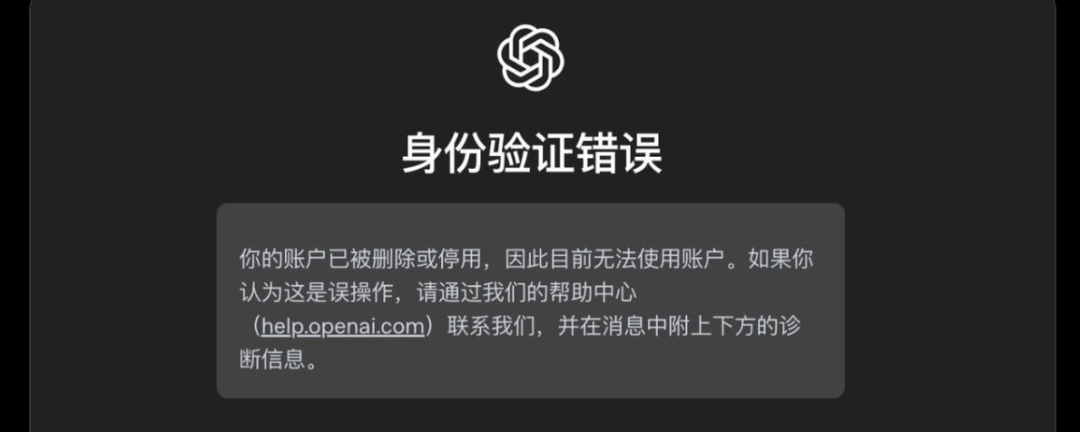
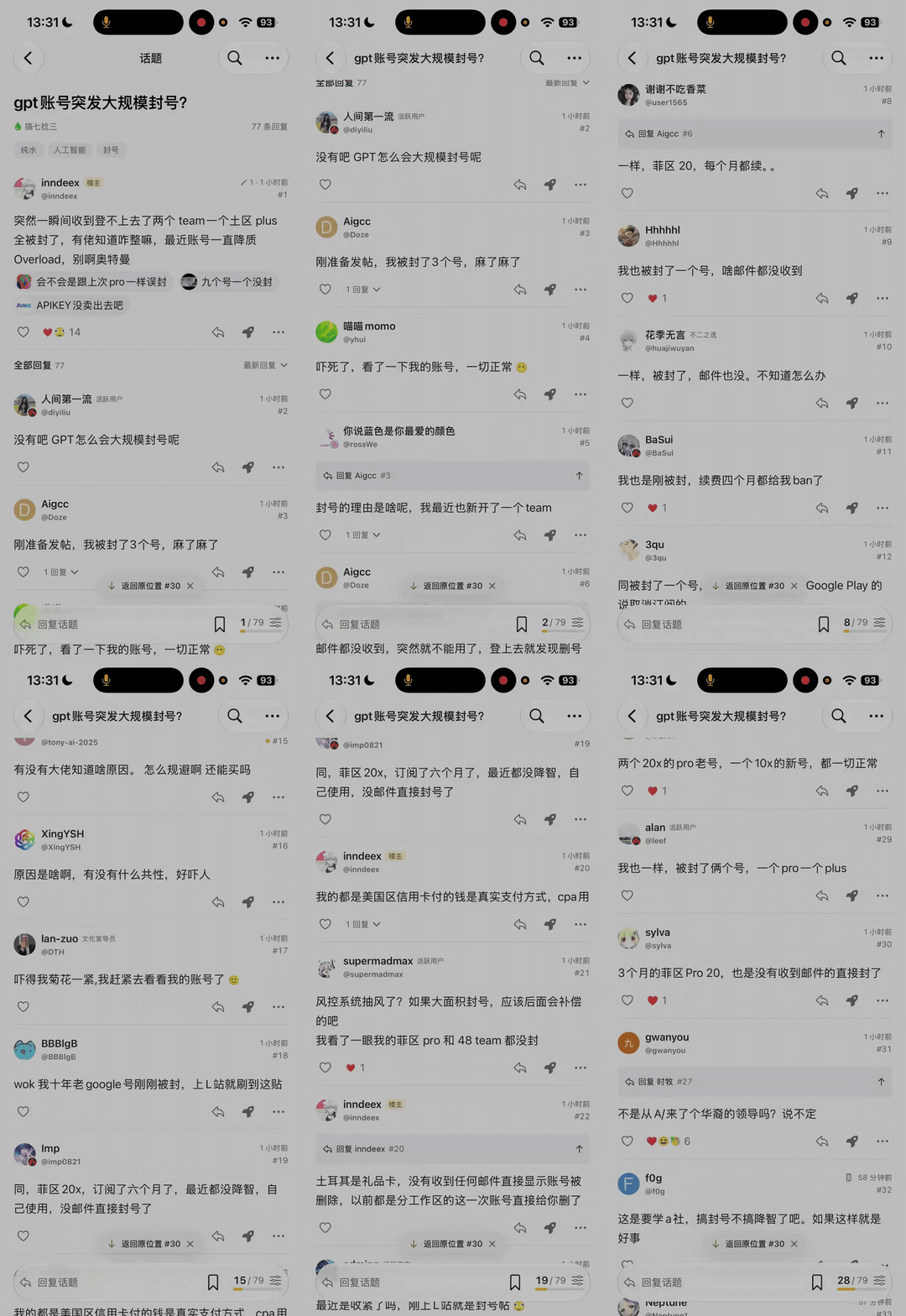
Short answer: the ban wave is the visible half of a rules change, not a one-day outage. OpenAI now caps how many paid subscriptions can sit on one card and one device, and accounts caught by enforcement usually discover it at the login screen — no warning email, no stated reason. The defence is unglamorous but effective: one card per paid account, one device footprint, conversation history exported early, and an appeal filed through the official form with the Request ID attached.
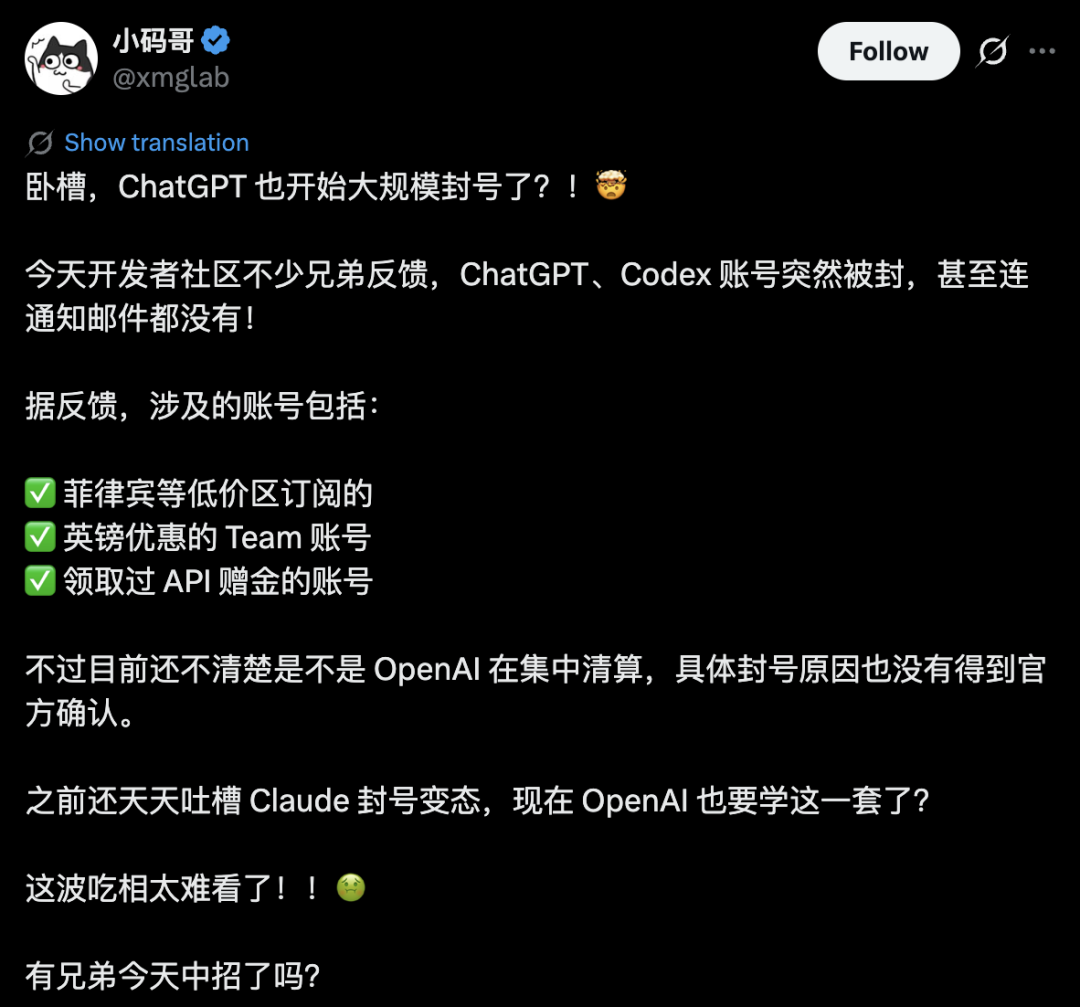
Timing adds context. Cat Wu had barely completed her move from Anthropic to OpenAI when ChatGPT began switching off accounts at scale, and the mood across user groups was one repeated line: “Please, spare us!” Owners who had renewed normally for four or five months did not consider themselves part of any risk group.
By Sarah Chen, Tech Daily — MyTechDailyNews General desk. Corrections and reader tips: hello@techdaily.com.

Which accounts are caught in the OpenAI ban wave?
Answer first: the sweep follows shared infrastructure, not spending level. Accounts that lean on the same payment card, the same hardware or the same relay as a crowd of other accounts are the ones vanishing, and a pricey subscription offers no shield.
The densest clusters are Philippines-region accounts, Turkey-region accounts, low-cost Team plans, and accounts that reach ChatGPT through a reverse proxy or an unofficial relay. Paying customers were folded in alongside them: unlike the narrower restrictions seen at Anthropic, this action covers free API accounts, Team car-pool accounts and the $200-a-month Pro tier in a single pass.

One developer described the real cost: several years of saved conversations and personal memory are now locked inside the account and cannot be pulled back out. Another watched a five-year Pro account go dark with no advance notice, no email and no reason supplied — and an appeal that produced nothing at all. In practice, the older the account, the more painful the gap: many years of accumulated context disappear in one click.
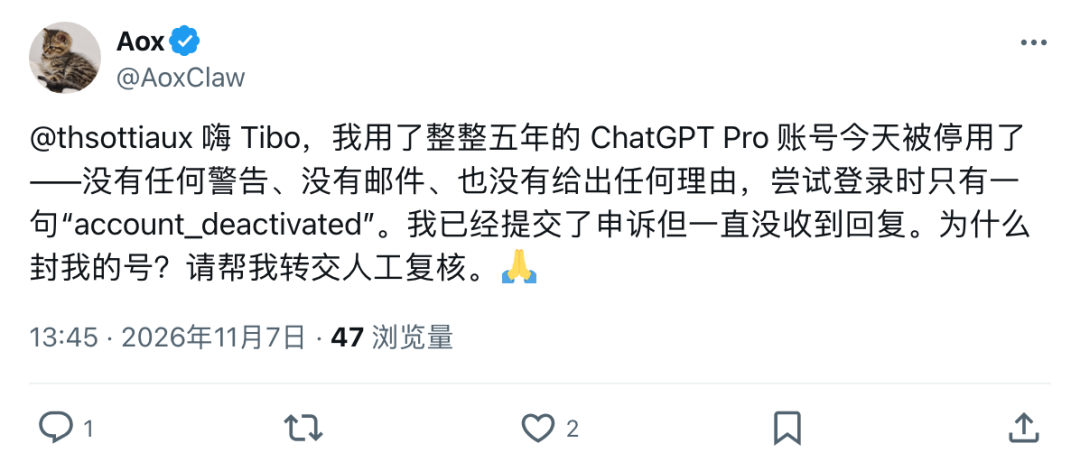
Programmers who lost sessions halfway through a code run pushed their complaints into the X comment thread of Tibo, the former OpenAI Codex lead.
Deactivation reports so far include Pro 20x, Pro, Team and Plus accounts, plus student-verified accounts.
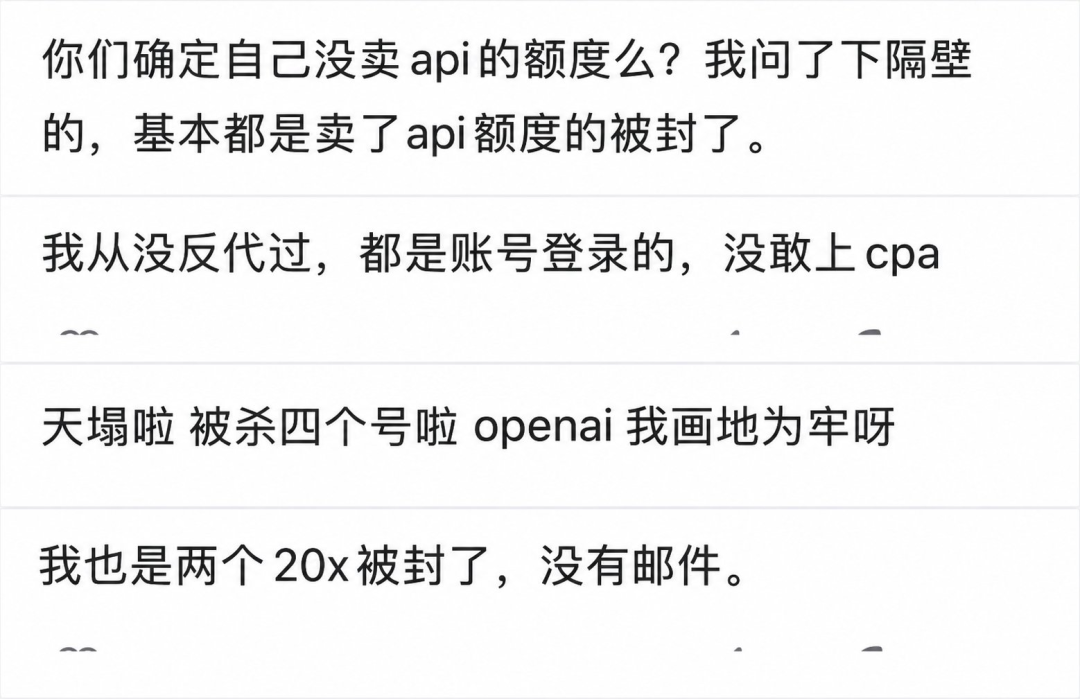
Geography alone is not the filter either: users outside the flagged regions who describe their habits as ordinary say they also lost access.

Was a payment outage behind the bans?
Two explanations circulated the same day, and they are not the same claim.
The first theory is behavioural: OpenAI is putting a ceiling on how many accounts one device can hold, to stop users free-riding on cheap plans.

The second points at billing rails. OpenAI's status page recorded a higher error rate for some commercial Mastercard cards issued in the United States. In the detail shared by users, the affected card numbers share a first six digits pattern: 544015, 546400, 543502, 543799 and 512998, with some cards beginning 513989 also involved.
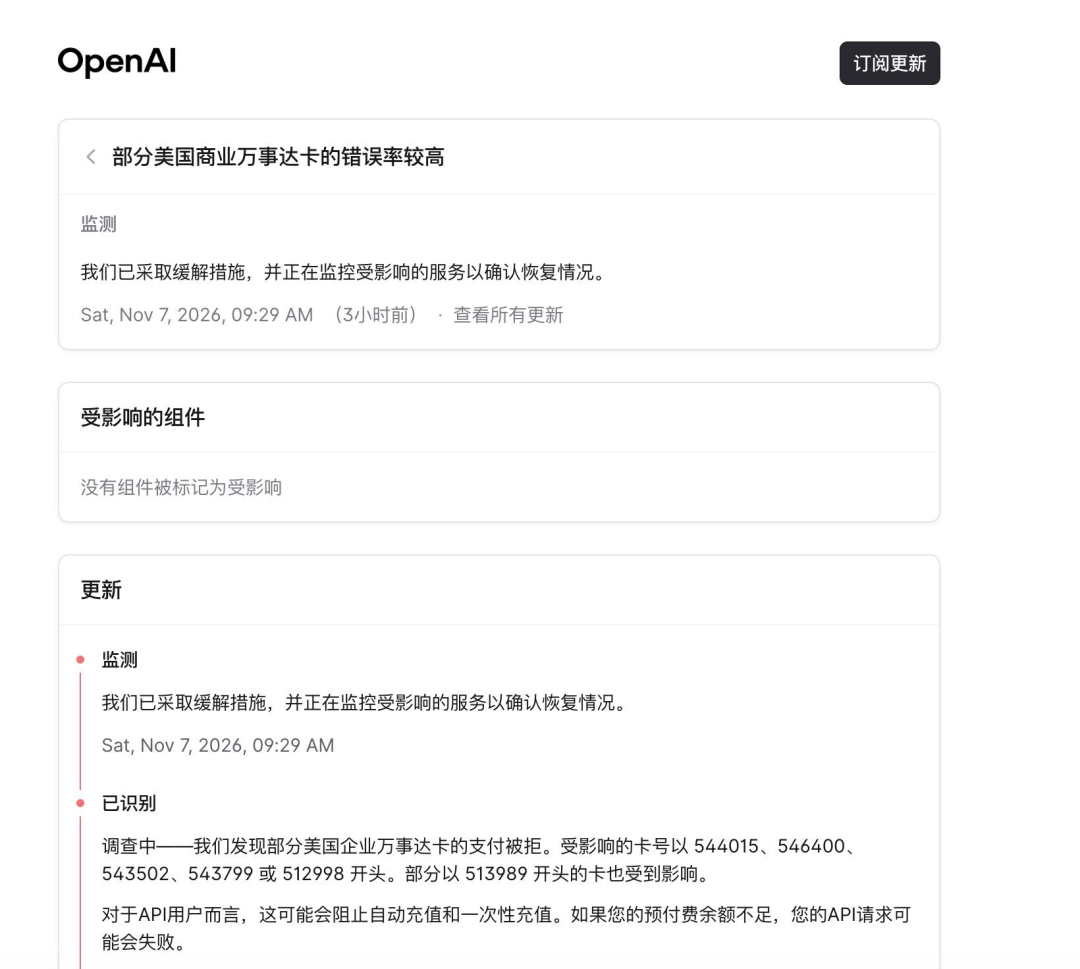
OpenAI classified that incident as a payment-channel problem and did not mention account deactivation in it.
The gap between the two stories is where readers should be careful — and this paragraph is our analysis, not an official statement. OpenAI's own help centre lists grounds for deactivation as policy violations, terms-of-service violations, security concerns or unauthorised access, repeated violations after warnings, and unfinished identity or age verification. A declined card is not on that list. Two things can happen on the same day without one causing the other, which is why “the card bug sealed the accounts” stays an open question.
How do you appeal a deactivated ChatGPT, Codex or Pro account?
Answer first: skip the dead end and file through OpenAI's official appeal form. Users who got through report that the message does not have to be sent from the registration email, which removes the most common reason appeals stall before they start.
- Open the official appeal form listed in OpenAI's help centre rather than waiting for a reply in a public thread.
- Identify the account precisely: sign-in email, plan tier (Pro 20x, Pro, Team, Plus, Go), region and roughly when the subscription started.
- Paste the Request ID — the value ringed in red in the screenshot above — since it ties your message to the specific enforcement record.
- Attach proof you can legitimately produce: identity or age verification documents for a student account, your own card statement, and a plain description of normal daily usage.
- Run recovery in parallel instead of waiting: local prompt libraries, exported project files, and a fallback tool you can use while the case is open.
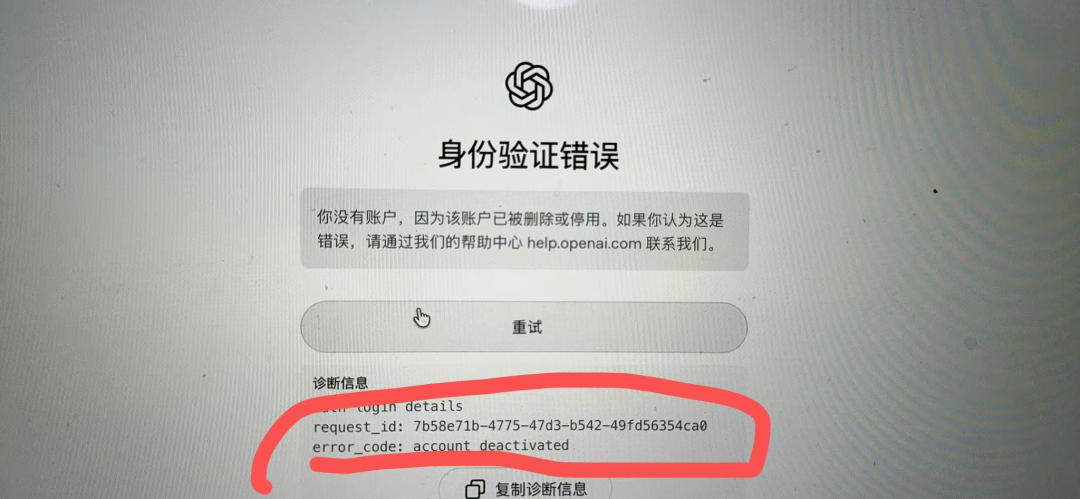
The route works often enough to try: one user recovered a student-verified Plus account this way.
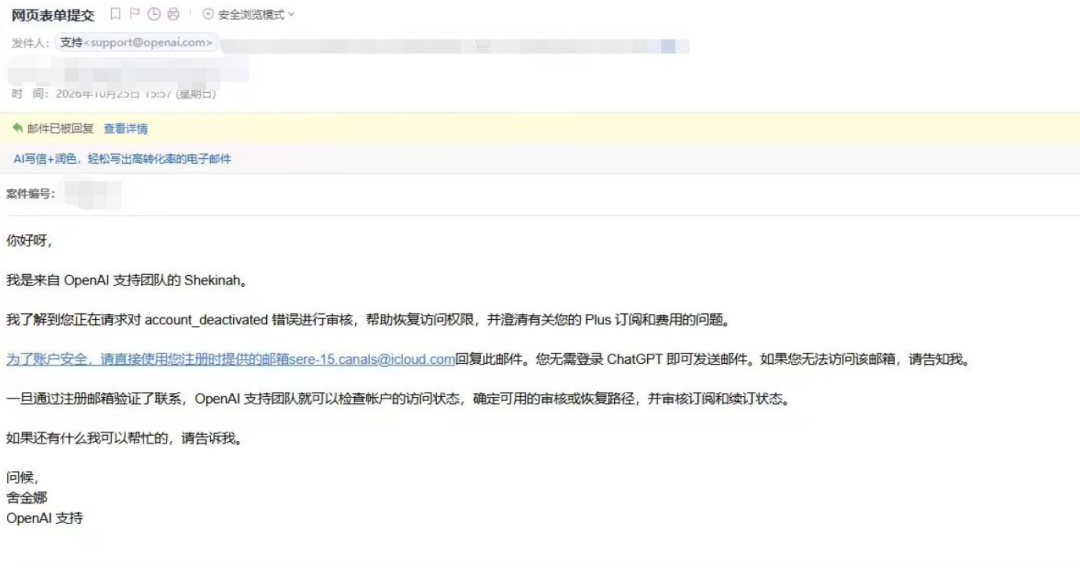
Set expectations honestly. The five-year Pro case above never came back, and OpenAI Support has said that deactivation appeals involve account-specific information and therefore cannot be reviewed in public community forums. Post volume and open-letter pressure are not leverage here.
Why now? OpenAI's three-step sequence, dated
Answer first: this was staged. OpenAI had already shut down reverse-proxy access and folded ChatGPT and Codex into one token pool before any accounts went dark. Five days ago it locked the per-device ceiling for paid accounts; the closing move is already on the calendar.
Step one — November 2: card and device quotas
An official document titled “Understanding ChatGPT card and device limits” went live five days ago, and it brings every consumer paid tier under hard quota control: Go, Plus, Pro 100, Pro 200 and Pro 500.
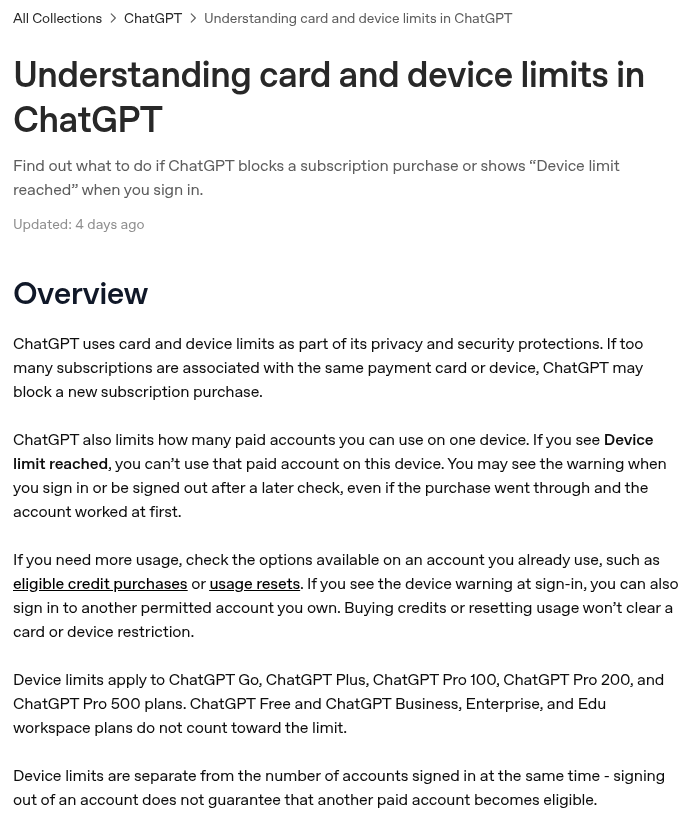
Attach too many paid subscriptions to one card or one device and checkout fails with the message “Too many subscriptions associated with this card or device”. You cannot buy your way around it.
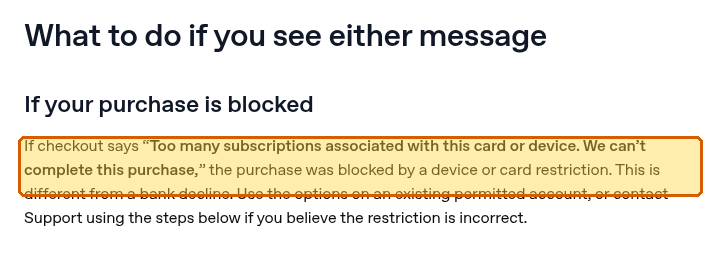
There is a matching ceiling per machine. Once “Device limit reached” appears, signing out of the older account immediately — or spending extra money on Credits — does not release the seat on that device. Together the two rules stop the trick of running several cheap accounts to pile up Codex quota, the practice users summarised as account stacking.
One detail from OpenAI's help page changes how risky your setup actually is, and most explainers skip it: the quota counts paid consumer plans only, while free accounts and Business, Enterprise and Edu workspaces sit outside the cap. A colleague's Business seat is therefore not the same exposure as three extra Plus logins on your laptop. OpenAI has presented the limits as security measures that also push more usage onto paid plans.
Step two — today: the car-pool purge
The second step landed today and targets shared access. Users who tried to glue several accounts together through an API layer or a resale-style gateway were cleared out in one batch.
Step three — late November and early December: closing the compute exits
Step three is scheduled, and it is legal rather than technical. From November 20, OpenAI's updated usage policies take effect and require third-party API gateways and model-routing middlemen to hold written authorisation, which removes the cover that unofficial relay sites operated under.
Then, starting in December, Plus, Pro and Business plans share one usage allowance across ChatGPT and Codex, with consumption measured in tokens rather than in separate per-product budgets. Anyone watching Codex usage stats knows the model mix inside that pool is not standing still, so treat the metering change as the bigger budget risk.
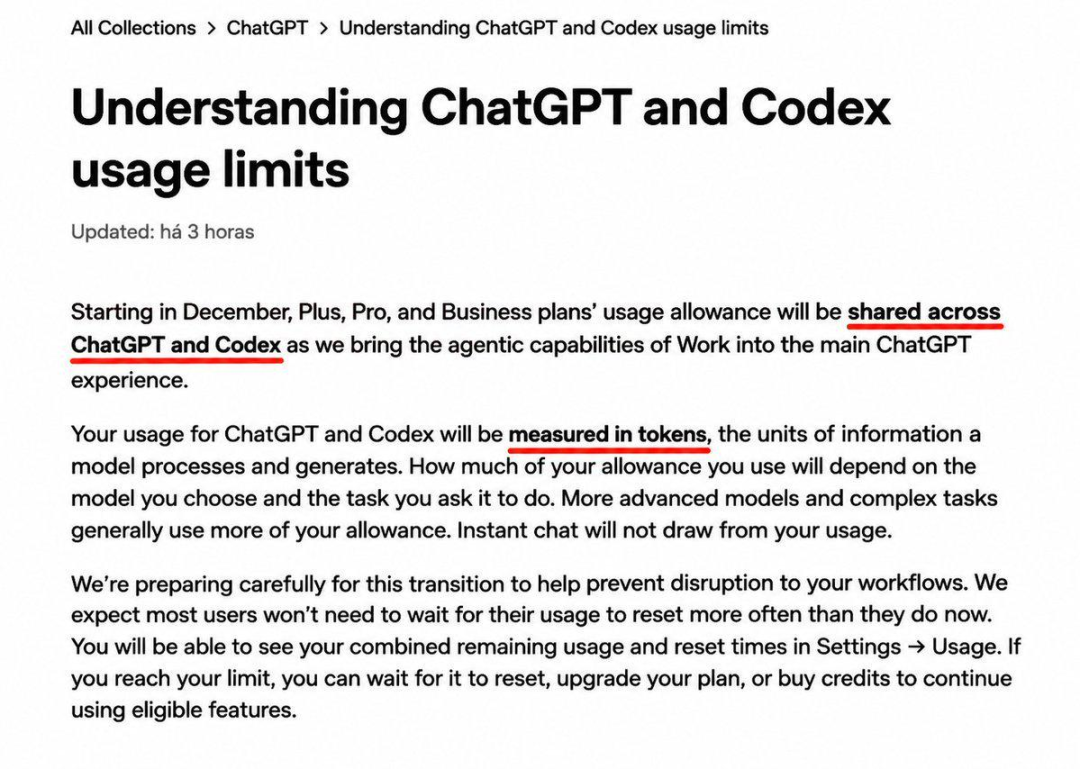
When that token pool runs empty, switching to a smaller account buys nothing: you upgrade the plan or buy official Credits. The era of informally stretching AI compute across a handful of accounts is closing.
What should you do in the next 30 days?
Treat this as routine account maintenance rather than a crisis response.
- Export conversations on a calendar, not in a panic. Sessions, custom instructions and any memory you rely on should exist somewhere you control.
- Sync Codex projects to local repositories. A deactivated login should cost you an afternoon, not a rebuild.
- Keep one card, one device and one paid account together. Mixed family, work and side-project billing on a single card is exactly the pattern the November 2 quotas read as suspicious.
- Retire proxy top-ups, shared carpools and unofficial relays. All three routes are being closed, one by policy on November 20 and one by shared metering in December.
- Measure token usage before December so you can compare the cost of upgrading a plan against the cost of a second cheap account that no longer works.
- Save the Request ID and your billing receipts in one folder, so an appeal takes ten minutes instead of a week of archaeology.
Four misconceptions that get ordinary users caught
- “I pay, so I am safe.” Pro accounts, including the $200 tier and Pro 20x, appear in the deactivation reports.
- “I signed out, so the device slot is free.” It is not, and buying Credits does not free it either.
- “My card was declined, so the card bug sealed my account.” Payment failure and policy enforcement are recorded as separate systems.
- “A second cheap account is my backup quota.” From December the allowance is shared and token-metered, and stacking is precisely what the caps were built to catch.
Frequently asked questions
What is OpenAI banning accounts for?
Publicly, OpenAI lists policy violations, terms-of-service violations, security concerns or unauthorised access, repeated violations after warnings, and incomplete identity or age verification. The clusters in this wave — shared cards, shared devices, relay access and car-pooled accounts — map onto those categories rather than onto content disputes.
Does “Device limit reached” mean I am banned?
No. It is a device-level ceiling on how many paid accounts may run there, so the account can still exist while being unusable on that machine. Signing out of another profile does not free the seat.
Which plans count toward the card and device caps?
Paid consumer tiers — Go, Plus, Pro 100, Pro 200 and Pro 500 — according to OpenAI's help page. Free accounts and Business, Enterprise and Edu workspaces are excluded from the quota.
Will OpenAI explain the decision?
Not in public. The company's support team has said appeals need account-specific details and cannot be handled on community forums, and the payment incident was described as a channel issue with no mention of bans. Affected users in this wave report receiving no reason at login.
When do the new rules fully bite?
Card and device quotas are already enforced — the guidance document appeared five days ago and the limits took hold on November 2. Gateway authorisation starts from November 20, and the shared ChatGPT plus Codex token pool arrives starting in December, in a window OpenAI has set for late November and early December.
Sources
- OpenAI Help Center, “Understanding card and device limits in ChatGPT”: https://help.openai.com/en/articles/20001559-understanding-card-and-device-limits-in-chatgpt
- OpenAI Help Center, “Understanding ChatGPT and Codex usage limits”: https://help.openai.com/en/articles/20001625-understanding-chatgpt-and-codex-usage-limits
- OpenAI Help Center, “OpenAI account closures and safety suspensions”: https://help.openai.com/en/articles/10562188-openai-account-closures-and-safety-suspensions
- OpenAI, “Usage policies” (changes effective November 20, 2026): https://openai.com/policies/usage-policies/
- The Decoder, “OpenAI is steering ChatGPT users toward more paid usage”: https://the-decoder.com/openai-is-steering-chatgpt-users-toward-more-paid-usage/
- OpenAI Developer Community, on why deactivation appeals cannot be reviewed publicly: https://community.openai.com/t/account-deactivated-appeal-rejected-without-explanation-organization-id-org-ganzcd9nbgtdyo2mnkm16uy3/1387694
Reporting and editing by the MyTechDailyNews General desk, Tech Daily. Spotted a case we should add? Write to hello@techdaily.com.