
Case Review: How Anthropic's IPO Went From a $2 Trillion Pitch to a $1.1 Trillion Argument | MyTechDailyNews
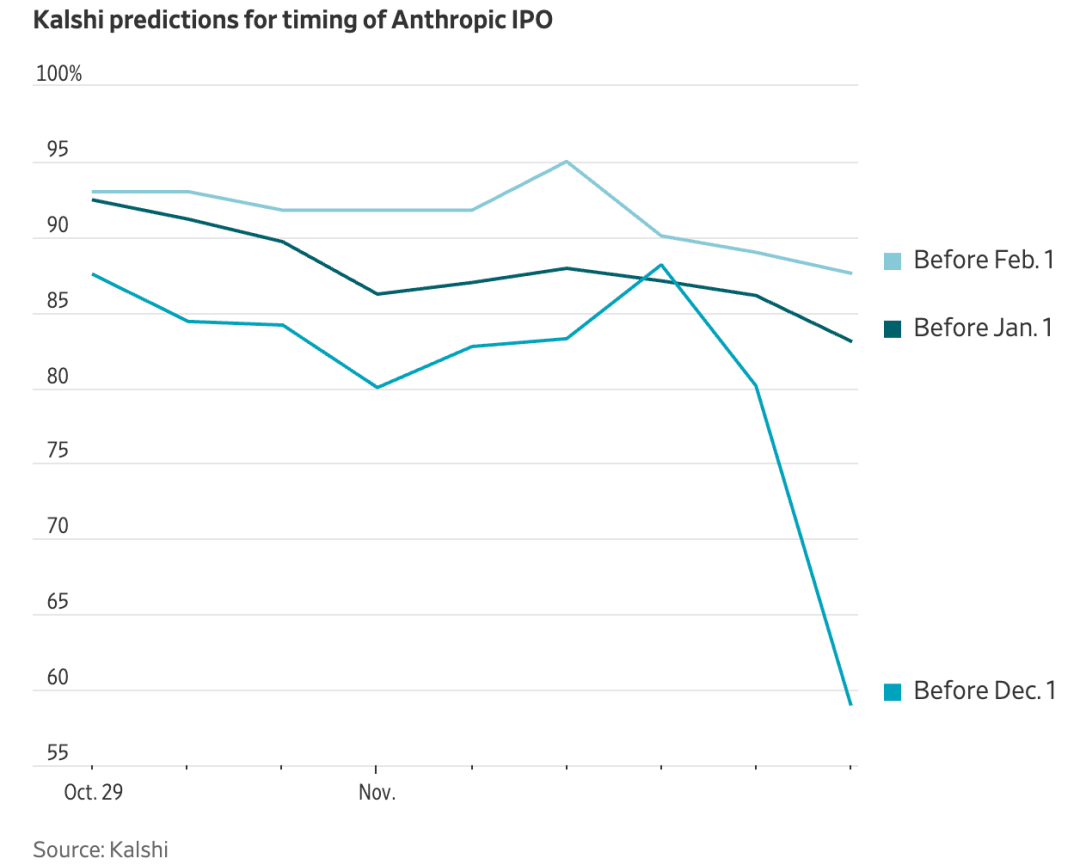
Between October 14 and November 7, Anthropic's planned listing moved from a near-certain record to an open argument about price. Three forces landed at once: quarterly growth slowed, US technology stocks sold off on November 5, and two product leaders behind Claude left for OpenAI. Traders on Kalshi now put the odds of an IPO this year at below 60%, down from close to 90%.
This MyTechDailyNews case review reconstructs the sequence, shows the arithmetic behind the repricing, and ends with lessons that apply to almost any large technology listing. The story is useful precisely because nothing has gone wrong with the product: Claude Code is still shipping, revenue is still compounding, and the company still holds a huge cash cushion. What changed was the price the market is willing to pay for that growth.
What actually changed in the Anthropic IPO case?
Short answer: the valuation, the calendar and the talent signal all moved against the deal within three weeks, and they reinforced one another.
- The price tag. Talk of about $2 trillion this September has been repriced downward in layers: about $1.5 trillion in mid-October, then $1.5 trillion to $1.6 trillion on November 2, and now discussion of $1.2 trillion to $1.3 trillion, with one investor pushing as low as $1.1 trillion.
- The calendar. On November 5, potential investors questioned whether Anthropic could start its roadshow in the week of November 9 and list within November at all — the timing risk we also tracked in our breakdown of the pressure on the pre-Thanksgiving IPO plan.
- The people signal. Claude Code lost three important members within two weeks, and two of them — former product lead Cat Wu and first growth hire Austin Lau — surfaced at rival OpenAI.
Prediction markets captured the drift fastest. According to CNBC, odds on Kalshi that Anthropic would announce a listing before December fell to 57% from more than 85% in a single week, mirroring the broader slide to below 60% from close to 90%.
How did the case unfold, day by day?
The useful thing about this timeline is that every downgrade followed a piece of disclosed information rather than a rumor.
| Date | What happened | Why it moved the price |
|---|---|---|
| October 14 | Investor day in San Francisco: Reuters reported Q3 revenue up about 45% to $16.8 billion | Growth still fast, but a sharp step down from about 145% in Q2 |
| The next day | Investors began discussing about $1.5 trillion, down from about $2 trillion | Roughly $500 billion of expected value erased before a share price existed |
| October 19 | OpenAI reportedly sped up a raise of about $30 billion at more than $1.4 trillion | Both companies compete for the same institutional wallets |
| October 22 | Switch, Nscale and SoftBank-backed SB Energy delayed listings; Nvidia-backed Firmus and Blackstone-backed AirTrunk REIT withdrew or paused | The AI listing pipeline was already thinning |
| October 30 | OpenAI's target narrowed to about $20 billion at $1.25 trillion | Private AI pricing was falling together |
| November 2 | Prospectus update: Q3 revenue $16.956 billion, up about 47%, plus $895.4 billion of long-term compute commitments | Investors wanted the valuation held at $1.5 trillion to $1.6 trillion |
| November 3 (US time) | Cat Wu announced her exit after about two years at Anthropic | The most visible face of Claude Code left mid-listing |
| Two days later | Wu joined OpenAI on core-product product management, reporting to Tibo Sottiaux; Austin Lau also announced a move to OpenAI | Knowledge that helped win enterprise users crossed to a competitor |
| November 5 | US equities sold off sharply across the AI chain | Institutions reprice new issues off existing comparables |
| November 6 | OpenAI reportedly closed a first tranche of about $11 billion; The Wall Street Journal reported Anthropic's October annualized run rate topped $80 billion | Funding momentum returned, but only partly |
| November 7 | Kalshi odds below 60%; valuation talk shifted to $1.2 trillion to $1.3 trillion | The repricing is now a live negotiation, not a forecast |
Why does a quarter growing about 45% look worse than one growing about 145%?
Because an IPO price is a bet on the slope, not on the level. Anthropic added revenue at a pace that would embarrass most software companies — up about 45% to $16.8 billion in Q3, then restated as $16.956 billion, up about 47%, in the November 2 filing — but deceleration resets the multiple investors are willing to pay.
The 2 trillion valuation floated this September lasted about a day. Reuters' account of the San Francisco investor day shows how quickly the number was re-anchored to about $1.5 trillion. That is the definition of a growth premium unwinding: the same dollars of revenue stopped being worth more dollars of valuation.
To make the gap concrete, we ran a simple comparison against the Q3 figure in the filing, annualized (roughly $67.8 billion of revenue). It is arithmetic, not a forecast:
| Valuation scenario | Implied multiple of annualized Q3 revenue | Where it entered the story |
|---|---|---|
| $2 trillion | about 29.5x | Expected only this September, and short-lived |
| $1.6 trillion | about 23.6x | Upper bound investors wanted on November 2 |
| $1.5 trillion | about 22.1x | The post-investor-day consensus |
| $1.25 trillion | about 18.4x | OpenAI's revised private-round target |
| $1.2 trillion to $1.3 trillion | about 17.7x to 19.2x | Discussion after the November 5 selloff |
| $1.1 trillion | about 16.2x | The floor proposed by some buyers |
One benchmark explains why buyers keep watching the monthly line: market tracker Sacra had Anthropic's annualized revenue near $65 billion earlier in the year, and TickerTrends tracked the run rate at $82.33 billion as of October 30 — a figure that first appeared through Wall Street Journal reporting and is still not a separate line item in the November 2 prospectus. Some investors were explicitly waiting for October revenue to judge whether growth had re-accelerated.
What did the November 5 selloff do to the bid for a trillion-dollar IPO?
It removed the reference points institutional buyers use to set a price. An IPO bid is built by looking at listed comparables; when those comparables drop double digits in a day, the bid for a new issue drops with them even if the analyst still likes the company.
On November 5, the Dow Jones Industrial Average fell 1,833 points, a loss of 3.44%. The S&P 500 dropped 4.36%, its worst day since the US tariff shock of April 2025, while the Nasdaq Composite slid 5.52%, the biggest single-day fall in 19 months. The Philadelphia Semiconductor Index lost about 12.3%, its worst day since March 2020. Nvidia fell about 9% and AMD about 17%. CoreWeave dropped about 10% and Nebius about 15%, leaving both roughly halved from their October 6 highs. Microsoft lost 3.6%, while Amazon and Alphabet each gave up 2.2%.
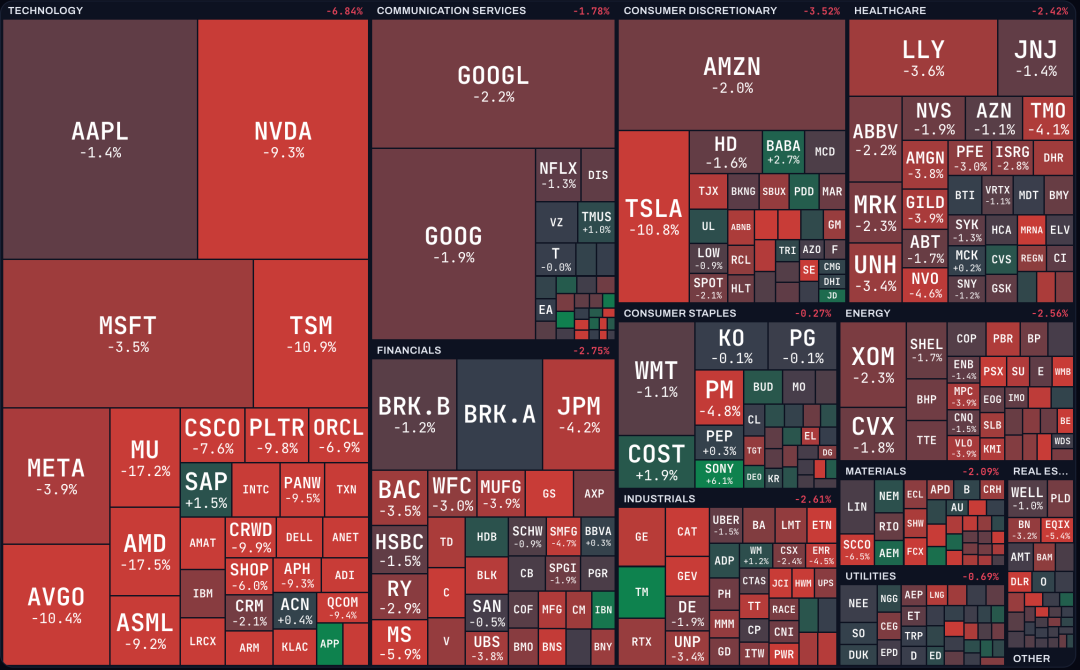
The political layer matters more than it first appears. A major trigger of the selling was concern that a newly elected US Congress and local governments would restrain AI data center construction. That fear had grounding: according to Ballotpedia, at least 49 local ballot measures touching data centers appeared across 13 states this year, and CNBC reported that voters sided with restrictions or against development in nearly every one of the roughly 41 measures decided during the midterms. UBS estimates that about 30% of the data center capacity the United States had lined up to add by 2028 could be affected by potential pause measures.
Why did two job changes sting more than a valuation cut?
Because the people who left had built the growth engine the prospectus is selling. Anthropic is reportedly planning to raise as much as $100 billion, and that pitch rests on products that win enterprise users — Claude Code chief among them.
Wu ran product for Claude Code through its move from an internal experiment to a commercial product. Back in January this year, Anthropic highlighted how Lau used Claude Code to build marketing tooling that cut creative production from 30 minutes to 30 seconds. Losing the person who commercialized the flagship coding tool and the person who built Claude's user-growth playbook, in the same fortnight as roadshow doubts, is a signal buyers cannot hedge.
Scale explains the sensitivity: market tracker Sacra estimated Claude Code's annualized revenue at about $1 billion by November 2025, rising to roughly $2.5 billion by February — a product line Wu had shepherded. Anthropic's own talent disclosure also reads awkwardly against the exits: the company said its overall "regretted attrition rate" was about 1% over the past 12 months through September 30, a statistic that does not yet include the departures since late October.
Neither person tied the move to the listing. Wu said explicitly that the ability to sell shares early was not a consideration in her decision. For a closer read on the product consequences, see our companion piece on what Cat Wu's move means for Claude Code users.
Is OpenAI faring any better in the same market?
No — and that is part of why the pressure looks structural rather than company-specific. On October 19, OpenAI was reportedly accelerating a raise of about $30 billion at a target valuation of more than $1.4 trillion, aiming to lock up investor money before Anthropic listed. By October 30, the target had shrunk to about $20 billion and the valuation to $1.25 trillion. On November 6, OpenAI was said to have completed a first tranche of about $11 billion, with the remainder still being raised.
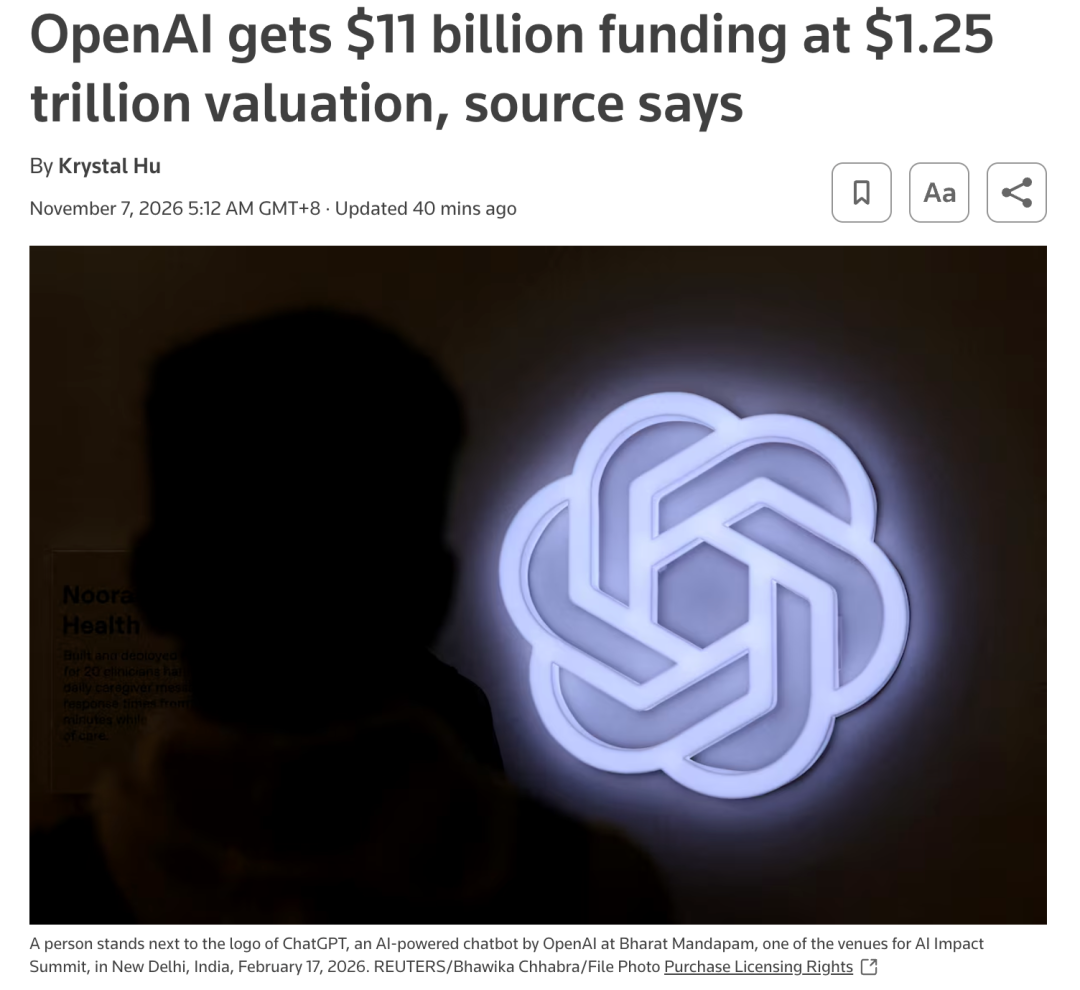
Two companies chasing the same finite pool of large-check investors, both repricing downward within eleven days of each other, is the clearest evidence that the discount is being set by the market, not by either founder.
Is a delayed IPO the same as running out of money?
This is where the case is most misunderstood: no. The latest prospectus shows about $131.9 billion in cash and short-term investments as of September 30, a buffer most listed software companies would envy. Anthropic has also not set a final offer price or listing date; the November plan came from people familiar with the matter, and the company's own filing says only that it "plans to proceed with the public offering as soon as possible after its registration statement becomes effective with the SEC."
The pressure point is the obligation side. Anthropic has signed nearly $900 billion of long-term compute purchase and lease commitments, with about $69.8 billion due by the end of September 2027. If financing costs keep rising and new capital is harder to raise, the company may have to slow expansion or renegotiate parts of that build-out — and the data centers, chip suppliers and lenders that counted on those orders would feel it too.
Where does the wider AI listing wave stand?
Anthropic is now one of the few AI names still publicly committed to listing this year. By October 22, Switch, Nscale and SoftBank-backed SB Energy had postponed; Nvidia-backed Firmus and Blackstone-backed AirTrunk REIT had withdrawn or paused. Some were reportedly unwilling to fight Anthropic for institutional attention and capital.

That scarcity keeps the deal interesting. Compared with listed chipmakers and cloud giants, frontier model developers have no public valuation reference today. If Anthropic lists, even at a discounted number, investors finally get a live benchmark for revenue growth, profitability and compute cost — which OpenAI and every other private AI company will be measured against.
What should ordinary readers take from this case?
The IPO debate is not a product story, but it touches what you buy, what you pay and how fast features arrive.
- For developers and enterprise buyers: the fight for the same talent between Anthropic and OpenAI tends to accelerate coding-agent features and pricing competition. Switching costs stay low, but multi-year compute-linked contracts deserve a closer read on counterparty risk.
- For investors: the first priced comparable changes how the whole sector is valued. Until then, a last private round mark reported near $965 billion and an IPO ask around $1.5 trillion are not the same animal.
- For anyone following AI costs: local power and water politics is now a live variable in how much capacity exists, and capacity is what keeps model prices down.
Four misconceptions this case clears up
- "A lower valuation means the business is failing." Revenue rose about 47% quarter on quarter. The multiple, not the revenue, moved.
- "A delay means a cash crunch." About $131.9 billion in cash and short-term investments says otherwise; the real question is the nearly $900 billion of commitments.
- "Prediction markets are insider information." Kalshi prices are crowd bets. They are a fast sentiment gauge, not a filing.
- "One departure changes a product roadmap." Three Claude Code members left within two weeks, but the team, the shipping record and the revenue line behind the tool all predate any single person.
Action checklist: what to watch next
- Whether a roadshow actually opens in the week of November 9 or the listing slips past November.
- The final price range: $1.5 trillion to $1.6 trillion, $1.2 trillion to $1.3 trillion, or $1.1 trillion.
- Whether the raise stays near $100 billion or is trimmed to match real demand.
- Monthly revenue disclosures and whether the growth rate re-accelerates above the Q3 curve.
- Any further regretted-attrition disclosure after late October, and any renegotiation of compute contracts maturing by the end of September 2027.
Reusable lessons for any company planning a mega-listing
- Deceleration is punished harder than weakness. A slowdown from about 145% to about 45% cost roughly $500 billion of expected value in a day, even while revenue kept climbing.
- Your price is borrowed from the market you list into. Institutions underwrite new issues against listed comparables; a 5.52% Nasdaq day repriced a deal months away.
- Key-person risk is now a pricing input. When a product lead crosses to a direct competitor during a listing window, buyers treat it as diligence.
- Public commitments need public math. Signing nearly $900 billion of compute while reporting quarterly revenue in the tens of billions invites scrutiny of the spread between the two.
- Timing beats negotiating. Some commentators argued a June listing during peak momentum would have fetched a better price than any discount won later.
FAQ: the questions readers keep asking
Has Anthropic actually gone public?
No. Neither the final offer price nor the trading date has been announced. The filing only states that the company "plans to proceed with the public offering as soon as possible after its registration statement becomes effective with the SEC." Anthropic declined to comment on the latest valuation discussions.
Why did investors cut the number from $2 trillion to $1.5 trillion?
The trigger was disclosure, not scandal. Q3 growth of about 45% versus about 145% in Q2, presented at the October 14 investor day, made buyers re-anchor — the next day the about $2 trillion assumption became about $1.5 trillion.
Does this mean Claude products will change?
Nothing in the case points to service changes. What changed is who is building: Claude Code lost three key members within two weeks, including Cat Wu and Austin Lau, both now at OpenAI.
Why do US stocks matter for a private company's price?
Because IPO bids are relative. When the Philadelphia Semiconductor Index falls about 12.3% in a day and Nvidia drops about 9%, institutions discount both their existing portfolios and the price they will pay for a new listing.
Is a delay good or bad for Anthropic's future?
Neutral in cash terms, given about $131.9 billion on hand. Bad if it means the industry's valuation logic has permanently reset — the next window is not guaranteed to be better than this one.
Reference sources
- Reuters, on the San Francisco investor day and tempered valuation expectations: https://www.reuters.com/business/finance/investors-temper-anthropic-ipo-valuation-expectations-over-revenue-growth-2026-10-15/
- CNBC, on Kalshi odds after the midterms and the AI selloff: https://www.cnbc.com/2026-11-06/anthropic-ipo-kalshi-post-midterms-ai-sell-off.html
- Ballotpedia, data center-related ballot measures in 2026: https://ballotpedia.org/Data_center-related_ballot_measures,_2026
- TickerTrends, tracking of Anthropic's October annualized run rate, citing Wall Street Journal reporting: https://blog.tickertrends.io/p/anthropics-october-arr-topped-80b
- Sacra, private-market estimates of Anthropic revenue and the Claude Code run rate: https://sacra.com/c/anthropic/