
Tesla's Shanghai Gigafactory: How Musk's 'Baby Company' Line Won 100% Ownership, and What Operators Can Copy
Musk has told the Shanghai negotiation story before, but his November 7 account adds two things a general reader can actually use: the reason Tesla refused a local partner (decision speed, not ideology), and the fact that full ownership came bundled with hard, measurable obligations. Here is the story, the policy record behind it, the numbers Tesla signed up to, and a checklist for anyone entering a restricted market.
On November 7, the 33rd Baron Investment Summit convened in New York, and Tesla CEO Elon Musk sat down with Ron Baron, founder of Baron Capital, to look back on Tesla's entry into China and the long argument over who would own the Shanghai Gigafactory. The default rule at the time was blunt: a foreign carmaker building a plant in China needed a local partner, and foreign ownership generally could not exceed 50%.
What actually happened in the Shanghai negotiation?
Musk described the talks as running for several years, with the Chinese side insisting that Tesla find a Chinese partner before a factory could be built. The reason he gave for refusing became the most quoted line of the interview: "We were just a baby company, and babies shouldn't get married — a baby walking down the aisle looks ridiculous."
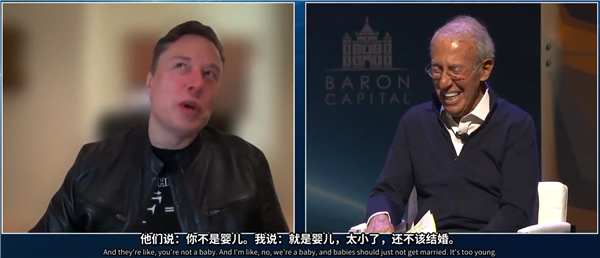
Officials answered that Tesla was not a baby. Musk kept repeating the point — we are a baby, babies should not get married, it is simply too young — and after several rounds of that exchange, Tesla was approved to own the factory outright, with no local shareholder at all.
Why did Tesla refuse a partner so stubbornly?
Musk's explanation was operational rather than political: Tesla needed to move fast and decide fast, and if every step required someone else's permission, innovation would stall. He compared sole ownership to keeping your own hands on the steering wheel — then immediately undercut the metaphor by noting that with autonomy, hands may not need to be on the wheel at all, so the comparison will not age well.
For readers outside the auto industry, this is the transferable part of the story. An equity split is usually a proxy for decision rights: what you are really negotiating is how many days a hiring decision, a price change or a supplier switch takes. Write that number down before you negotiate the percentage.
Did the joke win the deal? What the policy record shows
The line landed inside an opening that had already been announced. In April 2018 China said it would lift foreign ownership limits on new-energy vehicle makers; in July of that year Tesla signed with Shanghai; and in January 2019 the Shanghai Gigafactory broke ground as the first wholly foreign-owned passenger-car manufacturing project in the country, going on to set the "Tesla speed" benchmark by being built and delivering cars in the same year.
Lawyers Mark Schaub and Atticus Zhao of King & Wood Mallesons have noted that the auto-sector relaxation was among the headline opening-up measures announced at the Boao Forum in April 2018, and that the National Development and Reform Commission followed with a phased timetable: new-energy and special-purpose vehicles first, commercial vehicles in 2020, passenger cars in 2022. Tesla's 100% structure was therefore an early application of a published schedule, not a one-off exemption invented for a single company — a distinction that matters when you read "first ever" claims in any industry.
| When | What changed | Why it mattered |
|---|---|---|
| April 2018 | Foreign ownership cap on new-energy vehicle makers scheduled to be lifted | Created the legal path to 100% |
| July of that year | Tesla signed its agreement with Shanghai | Land, incentives and obligations agreed together |
| January 2019 | Ground broken on the Shanghai Gigafactory | First foreign wholly owned passenger-car plant |
| 2019 | Cars built and delivered within the same year | Established the "Tesla speed" reputation |
| 2022 | Passenger-car ownership cap removed for all foreign automakers | Tesla's structural edge became the industry norm |
What did Tesla commit to in exchange for full control?
Public filings make clear the concession was performance-based rather than symbolic. Documents filed with the U.S. Securities and Exchange Commission describing the agreement signed on July 10, 2018 list an annual production value target of RMB 75,000,000,000 and total tax revenue of RMB 2,230,000,000 per year once target production is reached. Financing was local as well: Reuters reported in March 2019 that Tesla had signed a 12-month facility of up to 3.5 billion yuan with lenders in China, and a consortium of Chinese banks agreed a 10 billion yuan five-year loan later that year.
The practical reading: sole ownership was purchased with output, tax and sourcing obligations. "Wholly owned" never meant "going it alone."
How does Musk frame China's market and its competition?
He was effusive: "China is great, I love China, and going there is always inspiring." He also argued that outside China, the two strongest physical hardware companies on the planet are probably SpaceX and Tesla, and pointed out that the Tesla Model Y remains the best-selling electric car in the Chinese market even with local rivals all around — an achievement he likened to "winning a land war in Asia," because Chinese automakers are, in his words, super strong.
Baron added a data point from the rival camp: a person who came over from Ford had been genuinely shaken by the build quality of Chinese cars, though he said it privately.
Is China really generating three times as much electricity as the United States?
Baron set up the AI discussion with a scale claim: China's electricity system is about three times the size of America's, adding roughly 300 GW of new generating capacity each year, close to 60% of the United States' 550 GW of total installed capacity. Musk thought the number might be a little lower, but agreed the scale is remarkable, saying: "China currently generates about 3 times as much electricity as the United States, and the trend is to reach at least 4 times, while industrial capacity roughly follows electricity generation."
Third-party data explains why these comparisons get slippery. Ember's Global Electricity Review puts China's 2025 generation at 10,573 TWh against 4,536 TWh in the United States — more than double when you measure energy actually produced, while installed-capacity and annual build-out statistics (measured in GW) generate much larger multiples. If you are judging where AI data centres and manufacturing will land over the next decade, the unit you quote matters as much as the figure.
What the factory became
Today that site has annual capacity of more than 950,000 vehicles, contributes more than half of Tesla's global deliveries, and is the company's core export base for Europe and Asia-Pacific. Tesla has since lifted the plant's parts localization rate to about 98%, according to reporting by CnEVPost on November 6, 2026 — which means the Shanghai Gigafactory's edge now rests on Chinese suppliers and cluster efficiency, not on the ownership structure that took years to win.
Four misconceptions worth clearing up
| Common belief | What the record shows |
|---|---|
| The "baby" joke won Tesla the deal | The ownership timetable was already published in April 2018; Tesla signed in July of that year |
| Foreign carmakers still need a Chinese partner at 50% | The cap was phased down to zero for passenger cars by 2022 |
| Owning 100% meant Tesla operated independently | The agreement carried annual output and tax obligations, plus locally financed construction |
| Shanghai only serves Chinese buyers | It is the export hub for Europe and Asia-Pacific and supplies more than half of global deliveries |
A practical checklist: six things to copy from this deal
- Name your red line before you negotiate. Tesla treated decision speed as non-negotiable and got a bespoke outcome. Decide which single term you will trade years of talks for.
- Ask why the other side wants you. Baron noted in the interview that Chinese authorities very much wanted Tesla to come, which is why the exception was possible. Anchor demand is leverage.
- Convert your exception into published rules. Check whether your ask already sits in a regulator's timetable — if so, you are an early applicant, not a special case, and that framing survives scrutiny.
- Budget for measurable obligations. Output targets, tax floors and local financing all came attached. Model them before you sign, not after.
- Read capacity claims by unit. TWh, GW of installed capacity and GW of annual additions are three different stories; Musk himself said the electricity figure might be a bit lower than claimed.
- Localise the supply chain early. A 98% parts localization rate, not the equity structure, is what makes the plant hard to replicate.
Frequently asked questions
Was the Shanghai Gigafactory really the first of its kind?
Yes, in the category that mattered: it was the first passenger-car assembly project in China owned 100% by a foreign automaker, a status made possible by the ownership rules China scheduled to change in April 2018 and confirmed when work began in January 2019.
Why does Musk's "baby company" argument keep making headlines?
Because it reframes a joint-venture requirement as a governance question. His claim is not that Tesla was too young to have partners, but that a partner with veto power would slow the decisions Tesla depended on — and he joked that Autopilot may eventually retire even that metaphor.
Does this change anything for a car buyer?
Indirectly, and in a visible direction: the Shanghai plant's capacity of more than 950,000 vehicles a year and its near-total parts localization are what keep the Model Y competitively priced, including in the Europe and Asia-Pacific markets it exports to.
What is the reliable way to compare China and US power capacity?
Pick one metric and stick to it. Ember's dataset measures generation in TWh; grid planners measure installed capacity in GW and annual additions in GW. Musk's own position was that China's lead is real, that the specific multiple may be lower, and that the direction — toward at least 4 times — is what matters for industrial capacity.
Is the joint-venture era over for foreign manufacturers in China?
For passenger cars, effectively yes: the caps were removed on a published schedule that ended in 2022, which is also why new "foreign first" claims now tend to be about technology, investment size or timing rather than shareholding.
Where this story is heading
The same control-versus-speed logic now shapes Tesla's next moves, and two of our recent pieces track it: the shift in factory capacity described in the Cybertruck line winding down for Cybercab expansion, and the public data Tesla brought to Tesla's Cybercab Asia debut and robotaxi safety data in Shanghai this month.
Sources referenced
- King & Wood Mallesons, "Impact of China Removal of Restrictions in Auto Sector" — NDRC phased ownership timetable: https://www.kingandwood.com/global/en/insights/latest-thinking/impact-of-china-removal-of-restrictions-in-auto-sector.html
- State Council English portal, "Equity cap in commercial vehicle JVs to be removed": https://english.www.gov.cn/policies/policywatch/202006/29/content_WS5ef93e09c6d05a0f89706519.html
- U.S. Securities and Exchange Commission, Tesla exhibit on the Shanghai investment agreement (July 10, 2018): https://www.sec.gov/Archives/edgar/data/1318605/000156459019026445/tsla-ex102_737.htm
- Reuters, Tesla credit facility with Chinese lenders (March 2019): https://www.reuters.com/article/technology/tesla-enters-into-agreement-with-chinese-lenders-for-gigafactory-idUSKCN1QO2O8/
- Ember Global Electricity Review via Our World in Data, 2025 generation figures: https://ourworldindata.org/grapher/electricity-mix
- CnEVPost, Shanghai plant parts localization at 98% (November 6, 2026): https://cnevpost.com/2026-11-06/tesla-shanghai-plant-localization-98/