
Case File: How Koito's Teardown Room Turned Chinese Lamp Prices Into the Industry Benchmark
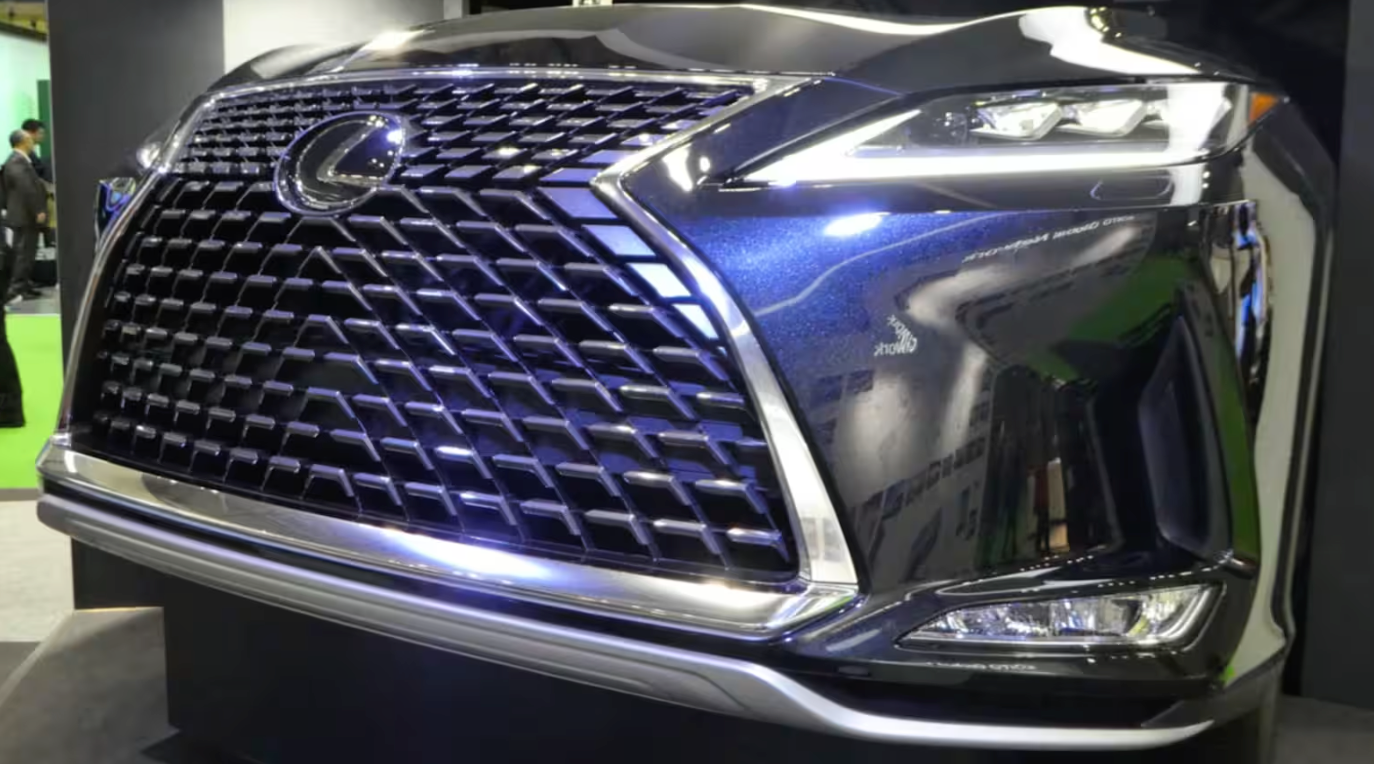
Koito Manufacturing, Japan's biggest automotive lamp maker and a longtime supplier to Toyota, has quietly repurposed its "competitor analysis room" in Shizuoka Prefecture in central Japan into a cost-dissection lab. It dismantles about 100 products every year and keeps roughly 600 headlamps collected from around the world, with Chinese units now studied first. The reason is blunt: the price of a Chinese lamp has stopped being a discount and started being the reference point.
What makes this case worth reading outside the auto-supplier niche is the response. Koito is rewriting its own design rules — shared internal parts, cheaper materials bought from China, AI in the factory and, from around 2030, AI in product development — while simultaneously shrinking its China footprint to Guangzhou and chasing new customers such as BYD and India's Tata Motors.
The case file in one table
| Dimension | What the record shows |
|---|---|
| Trigger | Teardowns of Chinese lamps, including BYD and AITO, the brand Huawei co-developed with Seres |
| Core conclusion | The gap sits in design logic, material sourcing and production method — not in labor cost alone |
| Three levers | Standardized internal parts; lower-cost plastics and resins bought from China; AI cameras, robots and design support |
| Hard numbers from the plant | About 100 products dismantled every year; about 600 headlamps archived; the next-generation light source unit cost halved via a new method |
| AI commitment | AI enters product development around 2030; design workload in fiscal 2030 to sit about 30% below fiscal 2025 |
| China footprint | Two factories in China to close, with business concentrated in Guangzhou |
Why is a Japanese lamp maker taking Chinese lamps apart?
Because price, not styling, now decides who keeps the socket. In the analysis room at Koito's flagship plant, engineers strip competitors down to record the number of LED chips, the internal structure and the materials used; a separate warehouse pushes the archive to about 600 headlamps in total. Chinese entries are no longer an exotic corner of the shelf — they are the agenda. One Koito engineer, who says he first noticed the shift in Chinese products roughly three years ago, put it plainly: "I don't understand how they can achieve this kind of price," and added, "At this rate, we are going to lose."
Executive Vice President Masami Uchiyama turned that bewilderment into instruction. "Chinese pricing has now become the industry benchmark," Uchiyama told staff, urging employees at Koito to learn from China. For a supplier whose largest customers are Japanese brands such as Toyota, the reversal is unusual: the firm that once exported process standards is now calibrating its own cost sheet against another country's quotes.
What did the teardowns find? Three levers, and none is cheap labor
The most reusable insight in this case is the diagnosis. Koito's teams concluded that the price gap was systemic rather than a single wage line — it lives in how the product is designed, what it is made of and how it is built.
Lever 1: one internal module behind many outer shapes
Historically, each vehicle model brought its own internal component designs. The redesign plan standardizes parts such as the light source unit, so lamps with completely different exterior shapes share the same internals. Bulk purchasing then does the rest: bigger orders per part, lower unit cost.
Lever 2: materials bought where they are cheaper
Koito plans to source lower-cost plastics and other products from China once quality and supply-chain reliability are confirmed. "As long as it meets our quality standards, the cheaper the better," Uchiyama said. The company has already identified a route that would halve the cost of the next-generation light source unit.
Lever 3: automation that survives a model change
At one factory in Shizuoka Prefecture, AI-equipped cameras and robots handle the movement of components. The point is not headline "lights-out" automation — it is that the line no longer has to be rebuilt every time a model changes, which is exactly where customized, low-volume products bleed money.
Koito is not alone in reading the teardowns this way. Nikkei BP has published full disassembly studies of Chinese electric models, and Japan's Chubu Bureau of Economy, Trade and Industry gathered roughly 70 central-Japan parts makers around an EV teardown exhibit, where the takeaway reported by industry media was parts commonality, integration and in-house supply rather than cheap hours. Cost-analysis firm Caresoft Global reached a similar verdict after stripping a small BYD city car: replicating it at U.S. manufacturing cost would take several times the price. Meanwhile, the pressure keeps ratcheting at the buyer's end — the Financial Times reported that BYD asked parts suppliers to cut prices by around 10% going into the following year's model cycle.
Where does AI enter the plan, and what is actually on the board?
In product development, AI is being positioned as a memory and a simulator: it pulls together past design data, current regulations and information on comparable products, then assists in creating 3D data and running performance simulations. Koito plans to bring AI into product development around 2030, and its stated target is concrete: design workload in fiscal 2030 running about 30% below fiscal 2025 levels.
Read the two halves together and the logic is coherent. Standardized parts reduce the number of designs that must be created from scratch; AI shortens the ones that remain. Design effort is where a bespoke, engineering-heavy supplier burns most of its margin.
Why is China both the model and the pressure point?
Here the case gets uncomfortable. Koito hopes these moves narrow the price gap with Chinese competitors, but in China itself the company is struggling: it has decided to close two factories and concentrate operations in Guangzhou. Most of its China sales come from Japanese carmakers, and industry data compiled by MarkLines shows the exposure — in the fiscal year ended March 2026, automotive lighting accounted for 93.5% of Koito's sales, and China generated about 6.0% of that segment, well behind the Americas. Nikkei Asia reported in September 2026 that local competition has left Japanese suppliers winning little of the new business created by Toyota's China electric push. The broader backdrop explains the asymmetry: China shipped roughly USD 51 billion of auto parts in the first half of 2026, up about 7.6% on the year, with vehicle exports topping 5 million units in the same period.
At the same time, the growth list points the other way. Koito's stated ambition is to expand business with Chinese manufacturers such as BYD and with India's Tata Motors — selling into the price-driven market it is trying to answer. How overseas carmakers restructure for China is a structural story we also unpacked in our piece on how Tesla's Shanghai Gigafactory won 100% ownership.
Why should an ordinary tech reader care?
Because lamps are no longer lamps. A modern headlight is a camera, a heat sink, a controller and a lens system in one sealed shell, and it shows up in your insurance claim. The Insurance Institute for Highway Safety found new original headlamps averaging about USD 1,400, enough to double the bill on a minor front-end hit; Allianz told insurers in 2026 that the average single headlight had climbed from EUR 708 in 2015 to EUR 1,251 in 2025. If standardization truly halves module costs, the savings can surface as lower repair prices and lower premiums — and as lamps that are easier to fix with shared parts.
The same repricing logic is visible in software: premium brands are discovering that expensive, bespoke driver-assist features do not sell, which is exactly the pattern behind our explainer on why Mercedes-Benz is replacing Drive Pilot L3 with L2++ and L4 tests.
Reusable lessons: what teams can copy from the Koito playbook
- Archive the competition physically. A standing collection (about 600 headlamps) plus a cadence (about 100 teardowns every year) turns benchmarking into data, not opinion.
- Name the gap before you fix it. "We do not understand this price" is a research brief; the answer turned out to be architecture, materials and changeover cost.
- Standardize the inside, differentiate the outside. Shared internal modules preserve design freedom where customers actually look.
- Automate changeover, not just output. The Shizuoka line wins because model switches no longer require rebuilding equipment.
- Tie AI to a measurable target. Koito's commitment is about 30% less design workload in fiscal 2030 versus fiscal 2025, not a vague "AI transformation".
Action advice for readers
- Before your next repair quote, ask whether the headlight is a sealed full assembly or a modular unit with replaceable sub-parts.
- When comparing trims on a new car, check whether adaptive or matrix lighting is bundled — it is often the line item that inflates both the sticker price and the claim.
- Watch Koito's next earnings cycle and its Guangzhou consolidation for evidence that a 30% design-workload cut is real; that single number is the test of whether Japanese suppliers can re-price themselves.
Common misconceptions about this story
- "The teardown proved Chinese lamps are cheaper because wages are lower." Koito's own conclusion was the opposite: the gap is design, sourcing and production structure.
- "Copying the design is the plan." The public record describes standardization, material substitution and process automation, not reverse-engineered clones.
- "Closing two factories means leaving China." Operations are being concentrated in Guangzhou while the company simultaneously courts Chinese customers such as BYD.
- "About 30% is a wage or price cut." In Koito's stated target it is design workload, measured against fiscal 2025.
FAQ: what readers keep asking
What exactly is Koito's competitor analysis room?
A teardown facility inside the flagship plant in Shizuoka Prefecture in central Japan, holding lamps from around the world. About 100 products are dismantled every year to check LED-chip counts, structure and materials; with a second warehouse the archive runs to about 600 headlamps.
What is the single most striking result?
A new method that would halve the cost of the next-generation light source unit, combined with the shift of internal parts to shared, standardized designs across different lamp shapes.
When does AI actually show up in Koito's products?
Around 2030 for product development, where it is expected to support 3D data creation and performance simulation. Automation using AI cameras and robots is already running at one factory.
Why did the executive quote matter so much?
Because it concedes the direction of benchmarking. When Masami Uchiyama says "Chinese pricing has now become the industry benchmark," a supplier embedded in the Toyota-centered chain is telling its own engineers to recalibrate against Chinese quotes.
Written by Sarah Chen for MyTechDailyNews.
Sources referenced
- Nikkei Asia, on Japanese suppliers losing ground in Toyota's China electric push — https://asia.nikkei.com/business/automobiles/electric-vehicles/toyota-s-china-ev-push-leaves-japanese-suppliers-in-the-cold
- MarkLines company profile with Koito's fiscal 2025 (year ended March 2026) segment and regional sales split — https://www.marklines.com/cn/top500/koito-manufacturing
- Koito Manufacturing investor disclosures — https://www.koito.co.jp/english/
- Gasgoo, citing China Association of Automobile Manufacturers and customs data on first-half 2026 parts exports — https://autonews.gasgoo.com/articles/news/parts-suppliers-flock-to-go-global-is-money-really-easier-to-make-overseas-2101181203809234945
- 36Kr report on Japanese and U.S. teardown studies of Chinese electric vehicles — https://www.36kr.com/p/3016180463137670
- Financial Times on BYD's request for roughly 10% supplier price cuts — https://www.ft.com/content/b9a02c1b-383c-48ab-a741-286f668f30df
- IIHS headlight replacement-cost findings via Repairer Driven News — https://www.repairerdrivennews.com/2018-11-29/iihs-headlights-can-carry-high-replacement-prices-after-crashes/
- Carscoops on Allianz's headlight price data — https://www.carscoops.com/2026/07/allianz-headlight-repair-costs/