
The Jensen Huang Investigation Explained: What Nvidia’s Founder Crisis Means for Your Devices and Portfolio
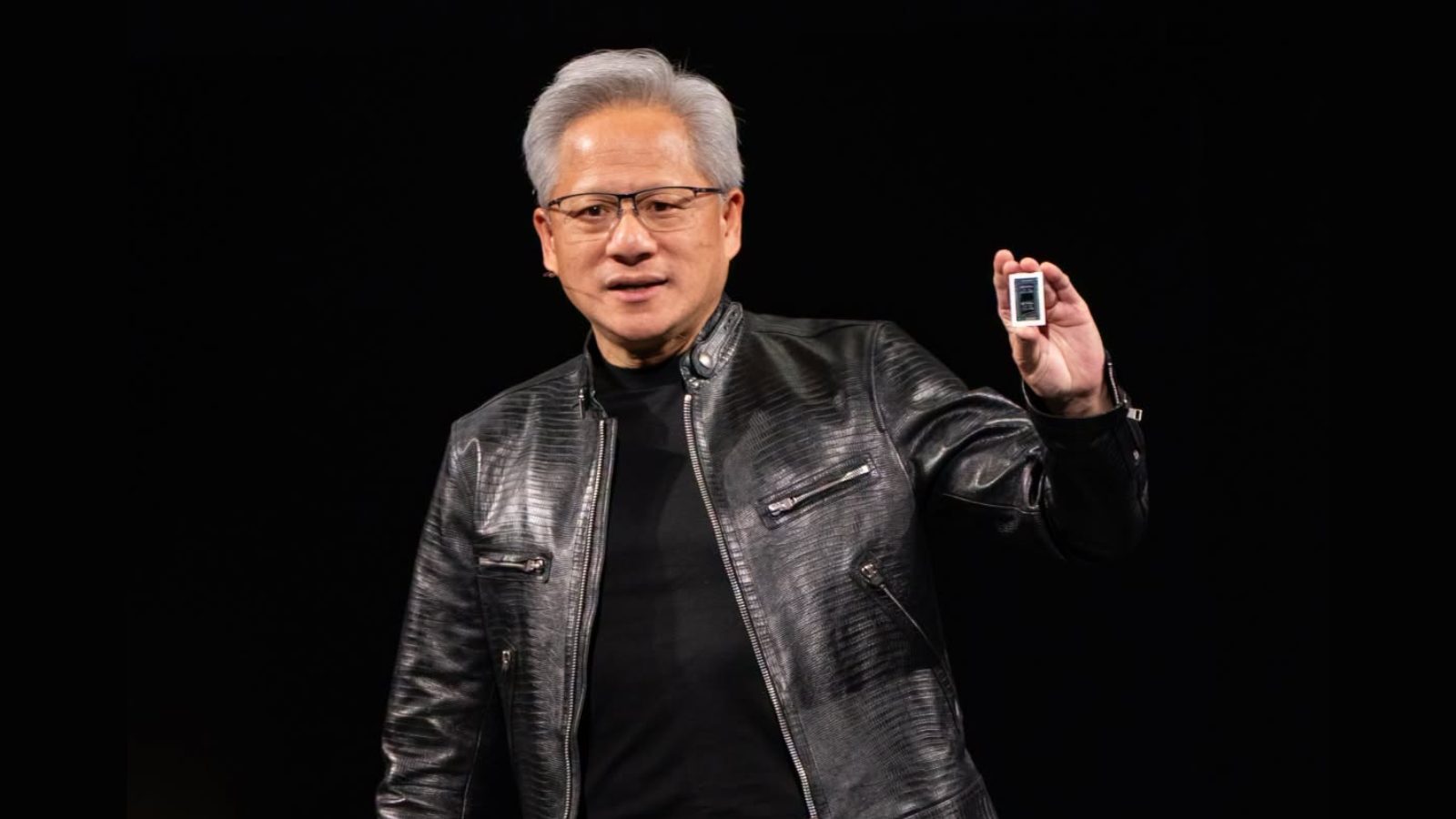
Short answer: the board of the world’s second-most valuable company has opened an independent investigation into a foreign intelligence effort that targeted its founder and chief executive, Jensen Huang, who has admitted an affair. The shares are down more than 7% as of today, erasing roughly US$250 billion. For readers who do not work at Nvidia, the useful question is narrower than the gossip: how much of a global hardware empire can safely sit on one person’s judgment?
I spent the weekend bouncing between two tabs — the Nvidia newsroom statement and one very stubborn price chart — and the gap between them is the whole story. The company says nothing was compromised. The market priced the possibility anyway. Somewhere in between sits a governance question that every tech reader, not just every shareholder, now owns a piece of.
What actually happened, in order
The sequence matters more than the headlines, so here it is straight. Once reports surfaced that Jensen Huang had been in contact with Alice Huang, the former managing director of Singaporean firm Megaspeed, a business with existing ties to Nvidia, and that media outlets described her as a Chinese spy, the board moved. On 8 November 2026 the company published a statement on its newsroom site confirming an independent investigation overseen by a committee of independent directors assisted by outside independent counsel.
Then the founder wrote to his own staff. In that memo he acknowledged an extramarital affair and apologised to his family and colleagues: “I was unfaithful to my wife. My actions hurt her and our children. There is no excuse for what I did. I am deeply sorry,” the memo read. The board’s language was equally blunt about its own limits: “The board's inquiry will examine all available information. Jensen Huang fully supports the review and has committed to cooperating with it. The board has confidence in Jensen Huang and his leadership team and will provide further updates as appropriate.”
Two details I keep coming back to. First, the company also stated it had no reason to think its secrets or national security had been compromised — an unusually specific line, because it leaves open what the inquiry is actually for. Second, Jensen Huang’s children also work on his staff, so the family fallout and the org chart overlap. That is not scandal material; it is governance material.
Is this the largest CEO scandal the market has ever had to price?
On scale, yes, and I checked the arithmetic rather than trusting the vibes. Nvidia’s stock plunged, falling more than 7% as of today and removing roughly US$250 billion from the market value of the world's second-most valuable company, BBC reported. With a market valuation of around US$4.31 trillion, the technology group remains well ahead of major rivals such as Microsoft.
Context helps. A 2018 study published in the Journal of Financial Economics, summarised by Yahoo Finance, found that shares dropped about 4% on average when the chief executive himself was the person caught in a personal-conduct scandal — roughly US$185 billion at Nvidia’s size. Yahoo Finance also calculated that Nvidia alone was worth about four times the combined market value of the nine largest companies ever hit by such a scandal, and that it accounts for nearly 7% of the S&P 500 index. That is why a private admission landed on public portfolios.
| Measure | Historical base rate | Nvidia right now |
|---|---|---|
| Share move after a CEO personal-conduct scandal breaks | About 4% on average (2018 Journal of Financial Economics study, via Yahoo Finance) | Down more than 7% as of today; intraday losses reported as deep as 8% on Monday |
| Value erased | Not comparable — no company of this size had been through it | Roughly US$250 billion wiped off, per BBC |
| Index exposure for ordinary savers | Usually negligible | Nvidia carries close to 7% of the S&P 500 (Yahoo Finance) |
| Disclosed damage to the business | Typically none | None: the board says it has no reason to believe national security or company secrets were compromised |
What happens to the leather jacket brand?
This is the part a product reviewer can actually feel. For years Jensen Huang maintained an unusually approachable public profile for a billionaire technology executive: trademark leather jacket, late-night street food stops, an endless willingness to pose with fans outside a keynote. He became a celebrity in his own supply chain while Nvidia sat at the centre of the artificial intelligence boom.
Oliver Ellerton, a director of Ellerton & Co. Public Relations, puts the trade-off cleanly. “The street food and familiar jacket make him approachable, but his reputation also rests on seeing what others miss and making good decisions under pressure. The leather jacket makes him recognisable. His judgment makes him credible,” Ellerton said.
That persona is now being displaced by temporary internet memes, and memes are a worse asset class: they are funny, shareable and utterly outside anyone’s control.

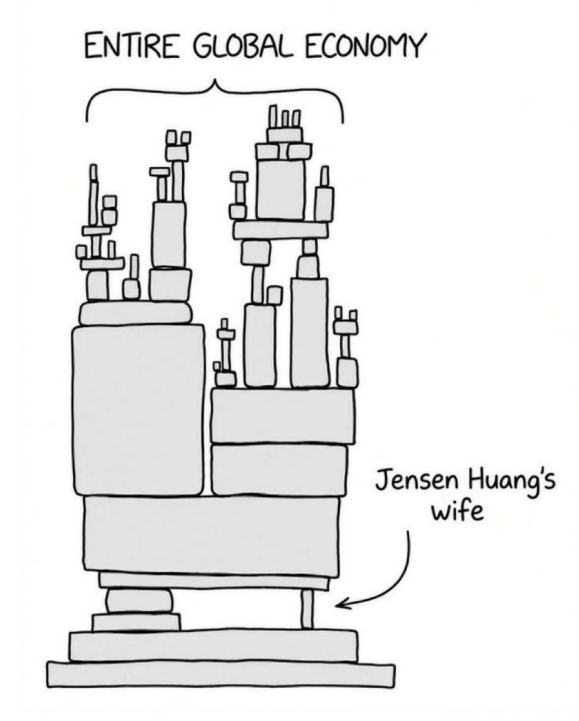
Whether Jensen Huang will be replaced is not settled, but the scandal directly challenges how his decision-making is perceived. Ellerton noted that Nvidia’s position raises the stakes, because its technology sits at the centre of the global AI race and politically sensitive arguments over access to advanced computing. That does not make other technology companies irrelevant to national security; it creates a very specific exposure here. “The more strategically important the company, the less its board can rely on personal reassurance from the founder,” Ellerton added.
Why is one person load-bearing at Nvidia?
Here is the new information I found most useful, and it is not about the affair. Bernstein analyst Stacy Rasgon has repeatedly described Nvidia as carrying extreme key-man risk: Huang is reported to have around 60 direct reports, keeps a deliberately flat structure that bypasses middle management, co-founded the company in 1993 and has run it for more than three decades, and there is no publicly groomed successor. Remarkably, Rasgon kept an outperform rating and a US$400 price target after the news broke — a call that, in his own framing, depends on Huang staying in the job. Coverage of that tension ran in Forbes. If a price target is hostage to one man remaining healthy, available and uninvestigated, that is a design flaw, not a founder tribute. Our own case file on what the inquiry means for founder control and succession risk goes further into the ownership structure.
Emma Smith, the CEO of Sandpiper Communications, thinks Jensen Huang will struggle to recover from the incident because the Nvidia board is investigating a possible spy operation.
“The fact that the New York Times started looking into Megaspeed last year and US officials have suspected Megaspeed of smuggling Nvidia’s most advanced chips into China for some time, begs the question why he didn’t suspect the same? Thus putting a very large question mark over his judgment.”
Will the verdict stick, or will the story just move on?
Three professionals read the same news and reached opposite conclusions, which is exactly how reputational risk works.
Charles Lankester, EVP of Reputation at Ruder Finn Asia, said Jensen Huang’s brand will move past the headlines.
“With very few exceptions, the majority of crises are like emergency flares fired into the sky: very hot, very bright but ultimately they very quickly burn out. I suspect this will be the case for Jensen Huang. He will not be the first CEO, or indeed, anyone, to get caught out in a relationship outside of their marriage.”
Even with Nvidia’s market capitalisation 7% off, Lankester described the decline as part of the froth and asked: “What has fundamentally changed in the business? What long-term damage will result from this?” He also suggested a protective factor: the affair was not hidden. Huang was photographed frequently with the alleged love interest, who is also named (Ms) Huang. “I would imagine in his circle, this relationship has been known for years. My forecast? The company will close ranks, the story will move on very fast and the share price will be back to where it was in days.”
Huang’s personal brand has reached a next-level status: he still appears as a 'man of the people', yet he now belongs to the global billionaire CEO’s club. Lankester’s bet is that the club forgives faster than boards do.
Does any of this touch the chip in your cart?
Not directly, and I looked for a case study rather than guessing. South Korea’s ministry said contracted GPU deliveries would hold despite the probe, which is the pattern I would expect: procurement paperwork does not re-read anyone’s marriage. On the developer side, Ellerton expects builders to keep valuing Nvidia’s technology because CUDA lock-in is a stronger daily force than a board memo.
Still, treat this as a wait-and-see, not an all-clear. If findings touch intelligence activity or export-control circumvention, the issue stops being personal. Shawn Balakrishnan, APAC partner at Penta Group, said that if findings are substantiated and involve intelligence activity or export-control circumvention, the issue moves beyond personal reputation into governance and corporate accountability. He added that everyone should not prejudge the investigation, but equally, the company’s strategic importance cannot substitute for scrutiny.
“The broader lesson is that a company needs credibility beyond its founder. A strong leadership team, independent oversight and clear standards help ensure that confidence in the business can withstand questions about the person at the top.”
Buyers who want a concrete reference point can read our report on why South Korea says Nvidia GPU deliveries hold despite the Jensen Huang probe.
What to watch next, not what to react to
- 17 November 2026. Nvidia has scheduled its third-quarter fiscal 2027 results call for Tuesday, 17 November at 2 p.m. PT (5 p.m. ET), according to the company’s investor events calendar — the first time leadership must talk about demand while the inquiry is open.
- The scope of the review. A committee of independent directors plus outside counsel is the credible version of a self-check; watch whether findings are published at all, and how much.
- Succession language. Any hint of a named second-in-command or interim structure tells you more than any apology does.
- Policy posture. Nvidia sits inside arguments over advanced computing access; a CEO under investigation is a weaker advocate in those rooms.
- Your own exposure. If you hold an index fund, you already hold a slice of this. That is information, not an instruction to trade.
Three misconceptions I keep seeing
- “The share price fell, so the business is damaged.” The board states there is no reason to believe national security information or company secrets were compromised, and no customer order has been reported cancelled. Price moves and product health are different clocks.
- “He apologised, so it is over.” An apology is the first step, not the settlement. Ellerton argues what matters is whether a founder accepts scrutiny he does not control.
- “Using the products means trusting the leader.” It does not. Buying a graphics card or holding a fund share restores nothing; customers, employees and investors each run a separate trust calculation.
How the trust gets rebuilt, if it gets rebuilt
Jensen Huang has offered an apology and pledged to cooperate with the investigation. What matters next, Ellerton said, is whether he accepts scrutiny that he does not control.
“Independent directors and investigators need the access they require, findings should be communicated as far as legally and responsibly possible, and any weaknesses identified must be addressed. He must also accept consequences if the findings warrant them.”
He expects distinct audiences to reach distinct judgments: developers may continue to value Nvidia's technology, employees will watch whether the founder faces the standards expected of everyone else, and retail investors may weigh confidence in the business against concerns about its leadership.
Charismatic founders can be enormous assets, Ellerton said. “They attract talent, explain complicated businesses and give people confidence in the future. The risk comes when admiration makes it harder for colleagues or boards to challenge them. Being exceptional at building a company does not make someone exceptional at every decision.”
For a C-suite leader, a lasting personal brand needs proof that a leader can be challenged: colleagues with real authority, independent oversight and a credible succession plan. “Particularly at a strategically important business, stakeholders need confidence in the institution as well as the individual. If a company can only reassure people by saying its founder is irreplaceable, it has just described its biggest vulnerability.”
Cynthia Chan, the Hong Kong and North Asia lead at Bud Communications, called the apology a correct first step, adding that the product roadmap and the numbers must now speak for themselves. “In business, results are the most credible form of contrition. Investors and employees will forgive a lot from a leader who keeps winning, and they will forgive very little from one who only talks about change.”
FAQ: what readers are actually asking
Is Jensen Huang still running Nvidia?
Yes. The board says it has confidence in him and his leadership team while the review runs, and the memo states he is cooperating.
Has Nvidia been found to have leaked anything?
No finding has been published. The board said it had no reason to think its secrets or national security had been compromised, and the inquiry will examine all available information.
Should I stop planning a GPU or AI-server purchase?
There is no evidence of supply disruption. Contracted deliveries are reported to continue, including South Korea’s government purchases. Watch the 17 November results call before changing hardware plans.
Why is a personal affair a company-level problem here?
Because the other person involved runs a former executive role at Megaspeed, a firm with business ties to Nvidia, and because US officials have long suspected that company of diverting advanced chips to China. The overlap between a private relationship and a customer relationship is what the review is for.
What would make this a governance story rather than a tabloid one?
Three things: published findings, a disclosed succession plan, and confirmation of whether any export-control or classified-information question arises.
My verdict
Hardware verdict: unchanged. Nothing in this week’s reporting affects what an RTX card or a data-centre rack does, and the delivery record so far supports that. Governance verdict: genuinely worrying, and it is the reason I would now describe Nvidia as a single-point-of-failure company rather than merely a well-run one. If you are buying a product, carry on comparing specs. If you are buying a story about who to trust in AI, wait for the findings — and for the day Nvidia names someone who could answer the next question in Huang’s place.
Where these facts came from
- Nvidia newsroom — Statement From NVIDIA Board of Directors, 8 November 2026
- Nvidia — conference call set for third-quarter results, 17 November 2026
- Yahoo Finance — scale of the scandal, index weight, and the 2018 Journal of Financial Economics base rate
- The Business Times — details of the 257-word internal memo
- Forbes — key-man risk, flat management structure and succession questions