
Jensen Huang vs. Gates, Bezos and Krzanich: What Decides Whether a CEO Scandal Ends the Job | MyTechDailyNews General
The short answer: Jensen Huang is still running Nvidia because the board's independent investigation targets conflict-of-interest and security exposure, not a marriage. Silicon Valley's own record supplies the rule: a CEO's private life stops being private the moment it touches company money, reporting lines or paying customers. That boundary ended Brian Krzanich's tenure at Intel in 2018; it never seriously threatened Jeff Bezos or Elon Musk.
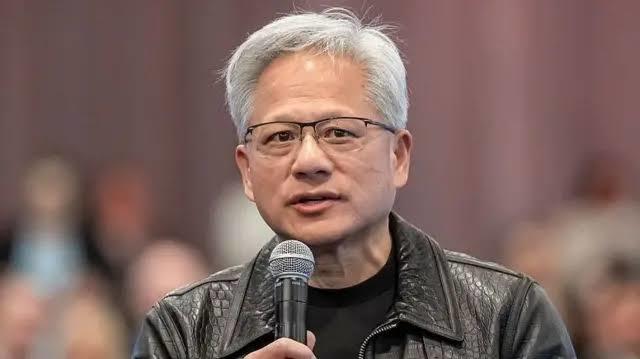
Jensen Huang.
How a family confession became a Wall Street story. In an internal note to employees on November 8, 2026, Huang admitted an affair. He said he had hurt his wife Lori, a partner of more than four decades, and their children, that no excuse existed, and that he accepted full responsibility and whatever criticism followed. The disclosure did not stop at the household door. Foreign media reported that the woman involved is Alice Huang, an executive at Megaspeed, a Singapore-based customer of Nvidia. The same day, Nvidia's board announced an independent investigation. In a compute boom where top-end GPUs are close to impossible to source, a private entanglement between the head of a trillion-dollar, globally most valuable tech franchise and an executive at one of its customers escalated into a commercial-compliance and corporate-governance event.
What is Nvidia's board actually investigating?
Conclusion first: the probe is about leverage and fair dealing, not gossip. Nvidia's board said a committee of independent directors, supported by outside counsel, would examine reporting that founder and CEO Jensen Huang had been the target of a foreign intelligence effort. The board stated it currently had no reason to believe U.S. national security or company secrets were compromised, that Huang fully supports the review and is cooperating, and that his role as CEO would not be interrupted. It also kept a public vote of confidence in Huang and his leadership team.
Why open a review at all, then? Because of where the relationship sits. Megaspeed pays Nvidia for hardware in a market where access to advanced silicon is a lifeline. Any private tie between the person who ultimately shapes allocation decisions and an executive at a customer leaves a board with two questions it cannot leave unanswered: did commercial decisions stay fair, and was the CEO exposed to pressure or coercion.
Outside reporting widens the risk picture. CNBC reported on October 10, 2025 that Singapore and U.S. officials were examining Megaspeed for possible export-control violations. The New York Times described Megaspeed as essentially a middleman that had bought Nvidia chips through the U.S. arm of Inspur, a Chinese server maker. Those are unresolved allegations, not findings, and nothing in Nvidia's own statement suggests secrets were leaked. What they explain is the speed of the board's reaction, not the guilt of anyone.

Jensen Huang and Alice Huang.
There is also a disclosure mechanism at work, and it is the least understood part of the story. Under Item 406 of the SEC's Regulation S-K, public companies must publish their code of ethics for senior executives and disclose any waiver of that code granted to a principal officer; Nasdaq's amended rules let a board committee approve such a waiver but keep a four-business-day disclosure clock. In plain terms: a board cannot quietly “let it go.” Either the conduct falls outside the ethics code, or the exception itself becomes a filing that investors can read.
Which CEO scandals survive: a seven-case scoreboard
| Case | Where private life met the business | What it cost | Job outcome |
|---|---|---|---|
| Bill Gates / Microsoft (2021 divorce, 2026 admissions) | Sensitive material held by Jeffrey Epstein; charity reputation | Foundation credibility; external review in 2026 | Remains a central figure of the Gates Foundation |
| Jeff Bezos / Amazon (2019) | No employee or customer involved; equity split only | 4% of Amazon, roughly $38 billion | Kept control and the CEO chair |
| Sergey Brin / Google (2013-2015) | Affair with a subordinate on the Google Glass team | Marriage; no equity shock thanks to a prenup | Stayed at Google |
| Elon Musk / Tesla (December 2021) | Affair with the partner of a longtime backer; Neuralink twins | A friendship and personal investments | Stayed at Tesla |
| Brian Krzanich / Intel (June 21, 2018) | Consensual relationship with an employee, banned by policy | His career | Resigned the day earnings guidance went out |
| Andy Rubin / Google (October 2018) | Mishandled internal complaint; $90 million exit package | Company-wide walkouts; policy overhaul | Long gone, legacy rewritten |
| Jensen Huang / Nvidia (November 8, 2026) | Executive at a paying customer; possible foreign-targeting exposure | Shares down about 3.4% on November 9, 2026 | Stays as CEO, under independent review |
Bill Gates: a 27-year public image and the chip held by Epstein
Before Huang, the most painful collapse of the “devoted husband” myth in tech belonged to Microsoft co-founder Bill Gates. For 27 years, Gates and his ex-wife Melinda French Gates projected the most stable charitable partnership among global tech billionaires. In May 2021 the couple announced a surprise divorce; because they had signed no prenuptial agreement, the split of as much as $130 billion in shared assets held Wall Street's breath. What lay beneath the amicable wording only surfaced in 2026.
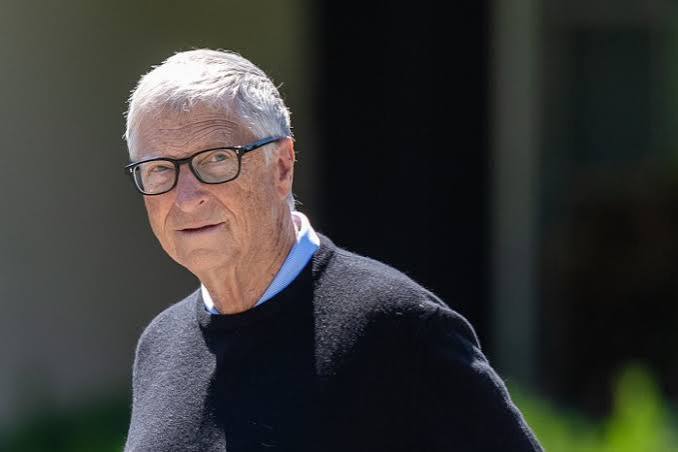
Bill Gates.
At a Gates Foundation all-staff meeting in February 2026, a 70-year-old Gates admitted wrongdoing for the first time. He acknowledged affairs with two Russian women and disclosed that during the 2021 divorce proceedings he had been accused of involvement in more than 20 affairs. On June 10, 2026, at a closed-door hearing of the U.S. House Oversight Committee on the case of the late financier Jeffrey Epstein, Gates gave a detailed account of three affairs in a judicial setting; the transcript ran to 138 pages. The women he described: Mila Antonova, a Russian bridge player he met around 2010; Karima Nigmatulina, a Massachusetts Institute of Technology-trained nuclear physicist who worked at TerraPower, a nuclear firm he backed; and Alice Jacobs Nesselrode, a Harvard medical doctor turned American health-care entrepreneur.

Bill Gates and Mila Antonova.
The business lesson sits in what came next. Gates testified that Epstein had known of his marital infidelity, had paid for Antonova's programming studies, and had tried to use that leverage to keep Gates in contact. A scandal that simmered over several years landed on the reputation of the Gates Foundation and pushed the institution to launch an external review in 2026.
Jeff Bezos: what a $38 billion headline actually cost the company
If Gates's story is a slow-burning mystery, Amazon founder Jeff Bezos's is a priced-in capital event. In 2019 a tabloid outlet exposed Bezos's affair with Lauren Sánchez, a friend of his then-wife MacKenzie Scott, ending a 25-year marriage. At the time Bezos's personal fortune stood at $137.2 billion. The divorce became one of the most expensive in commercial history: MacKenzie Scott took 4% of Amazon, worth about $38 billion, and jumped to become the world's third-richest woman.
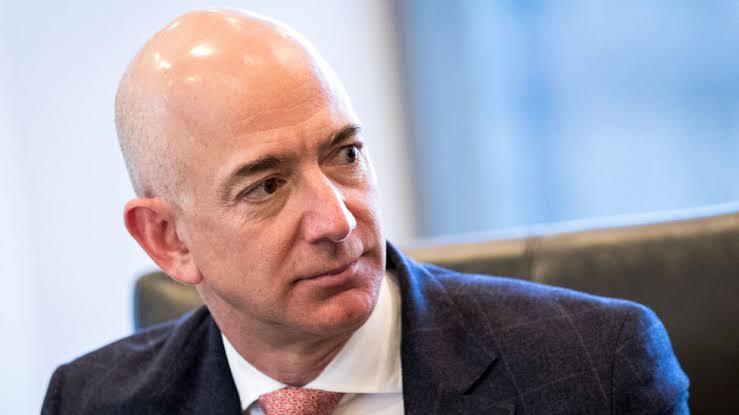
Jeff Bezos.
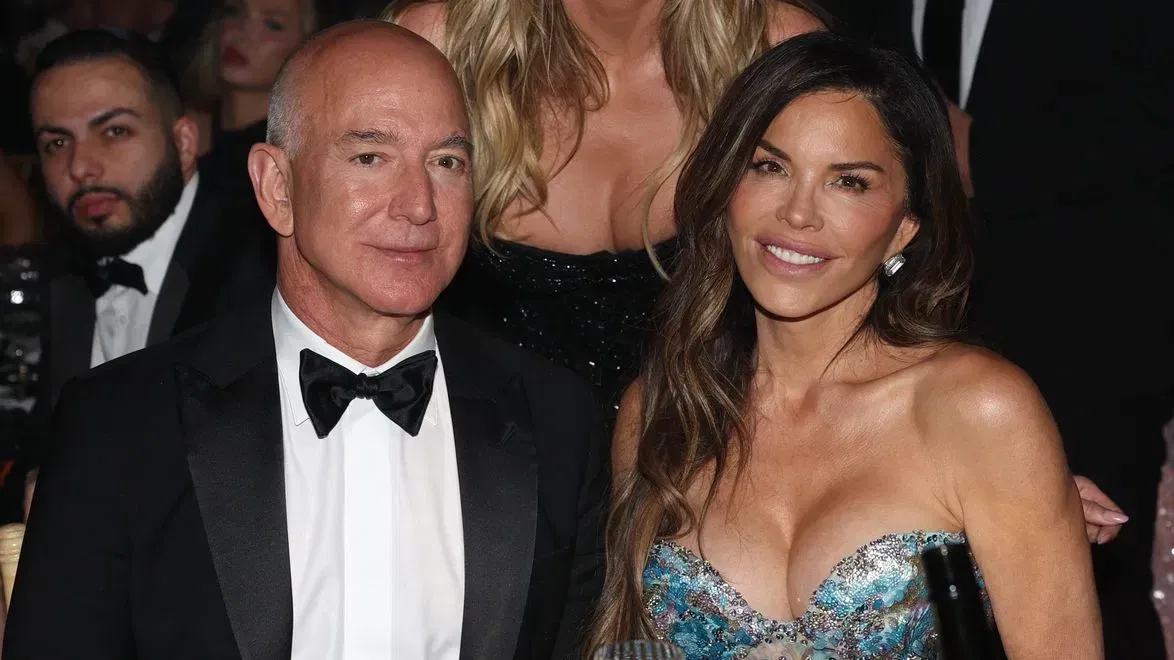
Jeff Bezos and Lauren Sánchez.
Bezos preserved control of Amazon through a carefully structured voting-rights arrangement, but that $38 billion equity split remains Wall Street's reference case for pricing a “founder moral-risk discount.” Note the asymmetry: the money left shareholders' dilution math, not the operating business — which is precisely the kind of outcome Nvidia's board is trying to avoid.
Sergey Brin and Elon Musk: when a scandal breaks a friendship, not a company
Google co-founder Sergey Brin has played both roles in this genre: the betrayer, and then the betrayed.
In 2013, Brin separated from his first wife, Anne Wojcicki, founder of the genetic-testing company 23andMe, after eight years of marriage, and the divorce was finalised in 2015. The trigger was Brin's workplace affair with Amanda Rosenberg, a woman on the Google Glass team who was also a friend of Wojcicki. Because the couple had a prenuptial agreement, Google's ownership structure took no real hit.
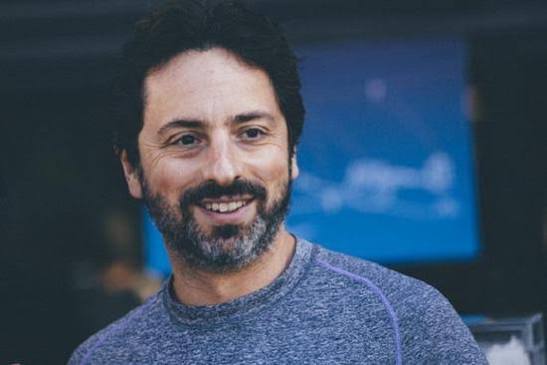
Sergey Brin.

Amanda Rosenberg.
Eight years later the boomerang came back. In early December 2021, while Brin's marriage to his second wife, Nicole Shanahan, was already strained by pandemic lockdowns and childcare pressure, The Wall Street Journal reported that Tesla CEO Elon Musk had begun a brief affair with Shanahan during Art Basel in Miami.
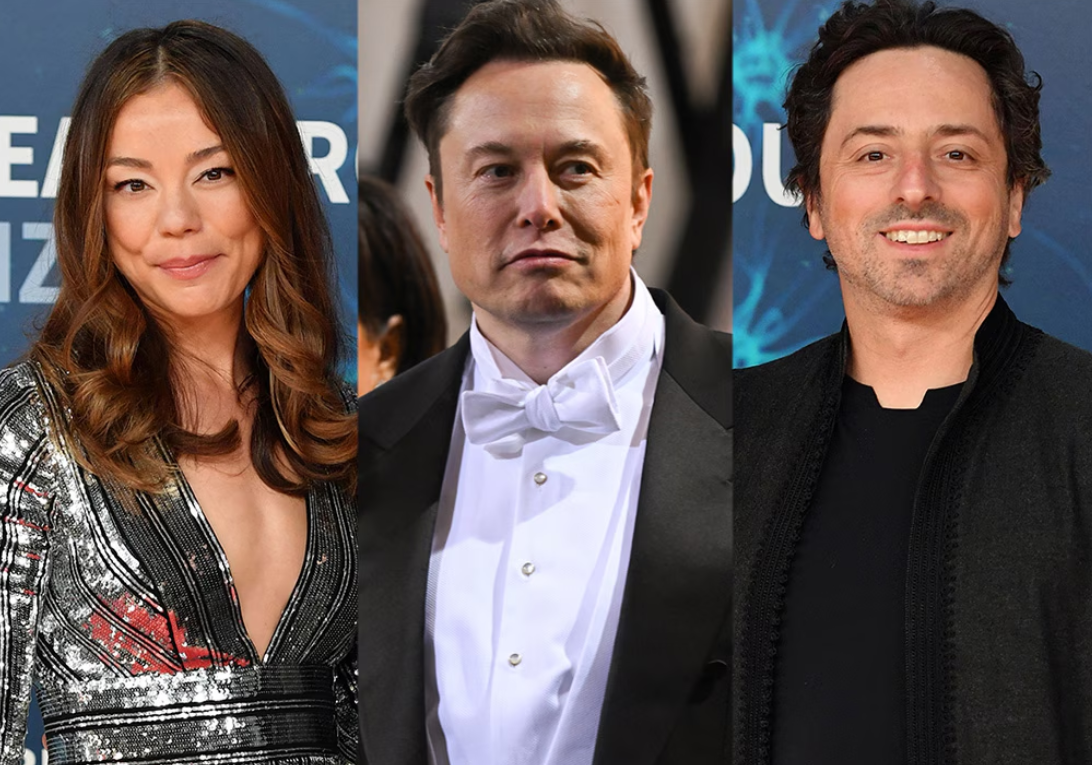
The episode destroyed the most famous friendship in tech. Musk and Brin had been close for years: during the 2008 financial crisis, when Tesla was weeks from insolvency, Brin provided the cash that kept Musk afloat, and in 2015 Musk handed Brin one of the first all-electric Tesla SUVs as a thank-you. After learning of the affair, Brin filed for divorce in January 2022 and instructed his advisers to sell his personal investments in Musk's companies. Media reported that Musk begged forgiveness on one knee at a party, while Musk himself called the coverage “nonsense” on social media; the rift between the two tech leaders never healed. Around the same period, Musk was also reported to have quietly fathered a pair of twins with a female executive at Neuralink, his brain-computer-interface company, and investors openly worried about how he allocated his attention.
Brian Krzanich and Andy Rubin: the red lines that do end careers
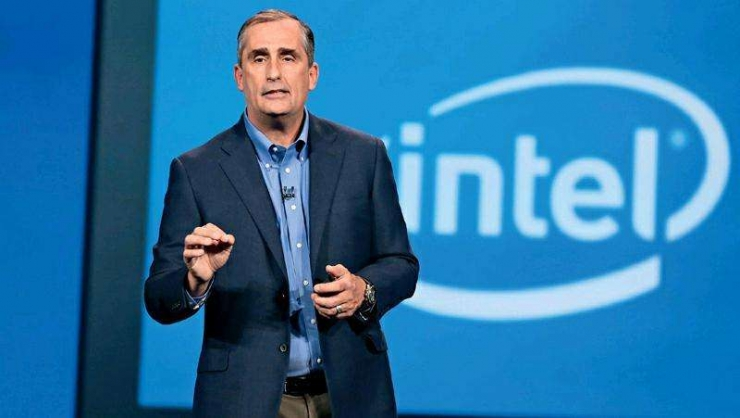
Brian Krzanich.
Same genre of headline, opposite outcome. What separates the survivors from the casualties in Silicon Valley boardrooms is almost never marital morality; it is compliance, conflict of interest and unequal power.
The clearest cautionary tale is Intel's former CEO Brian Krzanich. On June 21, 2018, Intel published its second-quarter earnings guidance and, in the same release, announced Krzanich's resignation. An internal investigation confirmed he had had an affair with one employee, on consensual terms, and that was enough. Intel's rules explicitly barred managers from intimate relationships with direct or indirect reports, so the board removed him even though the relationship had ended long before.

The woman at the centre of the Krzanich case.
Andy Rubin, the “father of Android,” fell to a different internal line. In October 2018 The New York Times published an investigation revealing that when Rubin left Google in 2014, the company had concealed allegations of misconduct involving internal employees and had paid him an exit package of as much as $90 million. The story triggered walkouts by Google staff worldwide and forced a reckoning with executive privilege and forced-arbitration clauses across the industry.
Where does the Huang case land on the risk scale? Three tests
Test 1: did the relationship touch company money? Yes — and this is what elevates it. Alice Huang's employer, Megaspeed, is a commercial customer of Nvidia. When compute is the oxygen of the AI industry, a private relationship between the executive who effectively controls allocation and a buyer's executive invites questions about the fairness of decisions. That is also why hedge-fund manager Bill Ackman's plea for empathy — “Even outstanding people make mistakes, and he has already taken full responsibility” — landed alongside, rather than instead of, a board review.
Test 2: was there a power imbalance with an employee? No evidence so far. This is the Krzanich variable, and it is the one that produced instant resignation letters at Intel. On the public record, Huang's situation does not match it, which helps explain why the board's first move was a statement of confidence rather than a succession memo.
Test 3: can the company run without this person? This is Nvidia's weakest point. Bloomberg reported on January 27, 2026 that Nvidia lacks a clear successor to its superstar CEO, and the company has no publicly disclosed succession plan or obvious heir apparent. Bernstein analyst Stacy Rasgon wrote that the revelations “highlight the considerable key man risk that Nvidia faces,” adding that Huang effectively is the company, setting long-term strategy and running most of it personally. Nvidia's flat, non-hierarchical management model — famously built around direct reports executing the CEO's decisions quickly — is an asset in a technology sprint and a liability in a governance scare.
What the market historically does (analysis, not a promise). Nvidia shares slipped roughly 3.4% on November 9, 2026 as the probe was digested. A 24/7 Wall St. review of prior board probes into CEO personal conduct tallies next-day declines of 2.4% to 10.1% in the three cases where the CEO ultimately left — Intel in 2018, McDonald's in 2019 and Wynn Resorts in 2018 — with those stocks still below their pre-scandal prices six months later; when Apple's board chose to keep Steve Jobs in 2006, the shares rose 4.9% that day. The pattern investors are trading on is not morality, it is continuity risk.
What it means for ordinary readers: deliveries, prices and your AI roadmap
For anyone building products on Nvidia hardware, the practical question is boring but important: does a governance scandal move a delivery date? So far, buyers are signalling no. Reuters reported on November 9, 2026 that Ryu Jemyung, vice minister of South Korea's science and technology ministry, told a parliamentary budget committee that contracted Nvidia GPU deliveries would proceed without disruption, noting that 10,000 GPU units funded by the country's 2025 supplementary budget had already arrived and were in use, with units planned for 2026 already under contract.
Calendars, however, do shift. Huang's daughter and Nvidia senior director Madison Huang canceled a planned Seoul visit, knocking out partner events even as Nvidia's two-day Seoul AI Day went ahead — a useful case study in reading a last-minute executive cancellation without over-interpreting it. Analysts at NH Investment & Securities argued that rivals such as AMD, and Samsung by extension, may pick up short-term attention, while stressing that Nvidia's products remain hard to substitute. The other reminder that compute supply is fragile for reasons entirely unrelated to gossip: an Nvidia hardware shipment worth about $11.4 million disappeared in transit in the United States this year, and our breakdown of that case explains why AI freight now needs escort-grade protection.
Common misconceptions about CEO scandals
- “Morality decides the outcome.” Boardrooms react to policy breaches and revenue conflicts, not to marriage vows. Krzanich lost his job over a rule; Bezos kept his despite a $38 billion price tag.
- “An investigation means the CEO did something wrong.” Nvidia's own framing is that its CEO may have been the target of a foreign intelligence effort. A review can be protective as well as disciplinary.
- “Personal drama is only the CEO's problem.” Equity splits at divorce are paid for by every other shareholder, dilution included.
- “If nothing leaks, nothing matters.” The Gates case shows the risk is leverage: secrets held by a third party can be used to influence a founder for several years.
- “One scandal changes the industry.” Nvidia's customers are still signing contracts, and delivery guidance from government buyers has not moved.
FAQ: what readers keep asking
Is Jensen Huang still CEO of Nvidia?
Yes. The board said its independent review does not interrupt his duties, and it publicly retained confidence in Huang and his leadership team.
What could actually change that?
On the governance playbook, three findings would escalate the matter: evidence that confidential or export-relevant information moved to a customer, evidence that a commercial decision was influenced by the relationship, or an ethics-code waiver that must be disclosed to investors within four business days.
Why is Megaspeed central to the story?
Because it is Nvidia's customer. Singapore and U.S. authorities have been reported examining the company over potential export-control violations, and U.S. media have described it as an intermediary in chip purchases. Those are allegations, and Nvidia's board has said there is no current reason to believe secrets were compromised.
Will this affect GPU prices or my AI project timeline?
No evidence yet. Customer-side signals, such as South Korea's confirmation that contracted deliveries continue, point to business as usual. The realistic risk is slower decision-making if the review drags, not a change in Nvidia's product roadmap.
Which past case is the closest match?
Not Intel's Krzanich case, which involved a subordinate. The nearest analogues are the “customer-adjacent” reviews, where the question is fairness of commercial treatment — the same category that made Apple's board publicly defend Steve Jobs's conduct handling in 2006.
Action checklist: five things to watch next
- Read the filings, not the timelines. Any waiver or amendment of Nvidia's executive code of ethics must be disclosed on a Form 8-K; that is the hard evidence of how the board ruled.
- Watch the scope. Whether the committee's mandate explicitly covers customer relationships and export-control exposure tells you how serious the review is.
- Look for succession language. A named successor, a president-level hire or an expanded independent-chair role would be the clearest sign the board is de-risking the “key man” problem.
- Track customer signalling. Government and enterprise buyers confirming delivery schedules is the strongest counter-indicator to a supply shock.
- Separate the two stories. Judgment questions about a marriage and compliance questions about a paying customer move markets differently; discount commentary that conflates them.
The durable lesson for readers of tech news is procedural rather than moral: Silicon Valley built trillion-dollar franchises around founders whose personal judgement is now part of the risk model. Huang's case is the most explicit test yet of whether an independent board can police that risk without breaking the engine that produced the value. This desk will keep tracking the filings, the committee's scope and any change to Nvidia's leadership disclosure.
Written by Sarah Chen, MyTechDailyNews General desk. Tips, corrections or document leads: hello@techdaily.com.
Sources and further reading
- Statement From NVIDIA Board of Directors, November 8, 2026
- CNBC: Singapore, U.S. investigate Nvidia client Megaspeed (October 10, 2025)
- The New York Times: reporting on Nvidia, Megaspeed and the foreign-intelligence claims (October 29, 2026)
- Reuters: South Korea says contracted Nvidia GPU supplies will not be affected (November 9, 2026)
- 24/7 Wall St. via Yahoo Finance: how past board probes into CEO conduct moved share prices
- Bloomberg: Nvidia lacks a clear successor for its superstar CEO (January 27, 2026)
- SEC: Disclosure Required by Sections 406 and 407 of the Sarbanes-Oxley Act