
MyTechDailyNews General: $11.4 Million NVIDIA Hardware Disappearance — How AI Freight Protection Compares
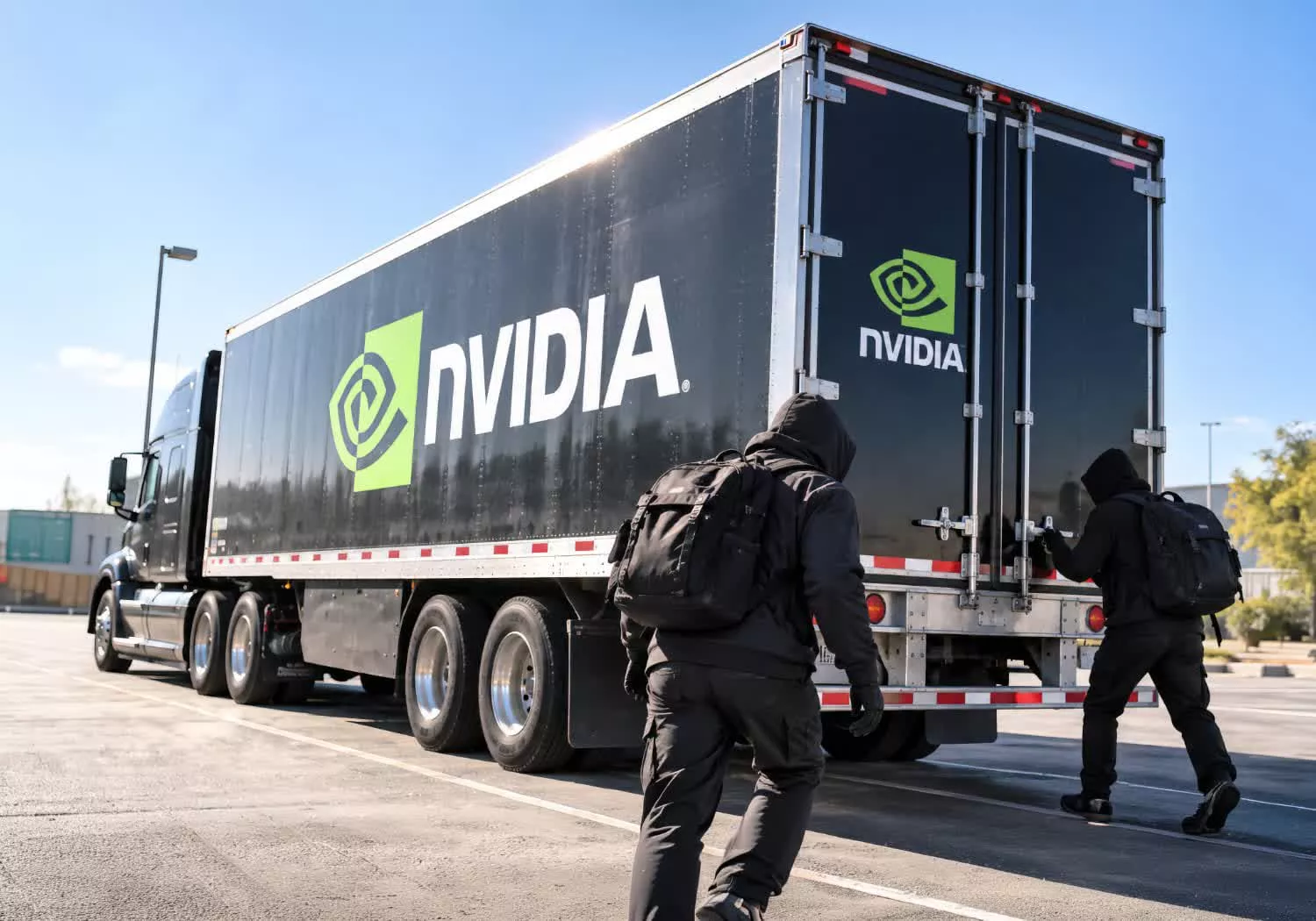
A roughly $11.4 million shipment of NVIDIA hardware vanished between Oakland and Fort Worth, showing AI infrastructure is now high-value cargo, not ordinary electronics. Police are investigating, and the case exposes a trade-off: cheaper, faster freight lanes raise exposure, while stronger verification and tracking add cost but reduce loss risk. For general tech readers, the question is whether AI supply chains can keep pace with demand.
What happened to the $11.4 million NVIDIA shipment?
California police in the United States are investigating a heist involving about $11.4 million worth of NVIDIA equipment. The shipment was supposed to move from Oakland to Fort Worth, Texas, but it never arrived. Six pallets were picked up on August 29, 2026, under the original delivery plan. The buyer confirmed only in early September that the equipment had not been delivered, then reported the loss.
As investigators retraced the move, they found the truck made multiple long stops and eventually disappeared near San Bernardino County, California. Oakland Police formally received a grand-theft report on September 13. No arrests have been announced, and the case remains open.
Which hardware went missing, and why does that change the risk?
Authorities and media have not disclosed the exact models. It is not clear whether the load contained NVIDIA GPUs, AI servers, or other data-center hardware. Still, a value of about $11.4 million suggests a substantial commercial shipment, not a routine accessory drop.
The model gap matters because protection decisions differ by hardware type. Compact accelerator cards are easier to conceal and resell; full server racks require dock space, power testing, and more handling; optical modules and cooling hardware create separate resale paths. Without a public inventory, companies should assume that any AI-related freight can become attractive if it is small enough, expensive enough, and poorly verified.
Is this theft part of a broader pattern?
Yes. NVIDIA equipment has been targeted before. In 2025, multiple commercial theft cases involving NVIDIA goods occurred in Fremont, California, United States, and Union City, with losses exceeding more than $7.5 million. Investigators suspect organized crews may first obtain vehicles in Southern California, then move into the Bay Area for planned thefts.
The methods are becoming more professional. Wired magazine reported that in two cases in California, thieves attacked or forced escort vehicles off the road by ramming and tailgating, after which the cargo truck left tracking coverage. Other crews impersonate legitimate transport firms to win high-value contracts. GPS spoofing can also hide the real position of trucks and loads, making recovery harder.
Industry data points in the same direction. Verisk CargoNet reported estimated cargo-theft losses of about $725 million across the United States and Canada in 2025. In Q2 2026, it recorded 677 incidents, down 26% from Q2 2025, while estimated losses more than doubled to $304.6 million. Supply-chain risk firm Overhaul has also said more than $150 million in AI equipment was stolen in 2026, with deception involved in 92% of high-value technology thefts. These figures complement, not replace, the local case facts.
Why is AI hardware treated like cash or precious cargo?
AI accelerators are scarce, expensive, and central to data-center expansion. U.S. export restrictions on some advanced chips and servers create price differences abroad. Olaf Groth, a professor at the UC Berkeley Haas School of Business, said some premium chips can cost about $550,000 in the U.S. market but may reach $1 million or more overseas. For criminal networks, that spread makes high-value AI hardware easier to monetize than ordinary electronics.
U.S. law enforcement has also observed that stolen devices can move through gray markets because some regions cannot buy restricted hardware through normal channels. However, there is no evidence that the missing $11.4 million shipment went to China or any particular country. The safe planning conclusion is not to assume a destination, but to treat resale motivation as the common variable.
What does the sand-trailer episode show?
In September this year, thieves targeted two trailers marked with NVIDIA and PlusAI logos, thinking they carried GPUs worth hundreds of thousands of dollars. When the trailers were opened, they found sand used to simulate cargo weight: about 20,000 pounds per trailer, or about 40,000 pounds combined. The incident does not prove that all brand-marked loads are dangerous, but it shows how quickly labels can become a targeting signal.
How do standard freight, dedicated high-value lanes, and escorted security compare?
The deeper question is whether traditional logistics standards can match the value of modern AI supply chains. As data centers absorb more spending, shipments of servers, GPUs, network switches, optical modules, liquid-cooling systems, and related materials can be worth millions, even tens of millions of dollars. A freight model designed for general merchandise can create blind spots when one pallet holds a small fortune.
| Transport setup | Best fit | Key advantage | Main trade-off |
|---|---|---|---|
| Standard commercial trucking | Low-risk accessories, bulk consumer gear, non-time-sensitive items | Lowest cost, wide carrier availability | Weaker driver vetting, less controlled stops, and limited visibility |
| Dedicated high-value freight lane | Multi-pallet server components, accelerator shipments, contract logistics | Pre-vetted carriers, sealed loads, defined pickup and delivery steps | Higher cost and fewer available partners |
| Escorted or monitored security transit | Very high-value, concentrated shipments; fragile customer commitments | Real-time intervention, evidence for police and insurers | Significant cost, scheduling lead time, and planning complexity |
| Split-shipment strategy | Large orders without escort budgets | Reduces single-point loss and slows resale | More paperwork, delivery complexity, and route coordination |
Which protection choices make the most sense for each scenario?
- Small cloud or research buyer: prioritize carrier identity checks, sealed pallets, and delivery-window verification; escort may be unnecessary if shipments are small and spaced.
- Data-center operator moving racks: compare dedicated lanes against standard freight, because dock handoff, power testing, and asset tagging create more chain-of-custody points.
- Reseller or logistics integrator: avoid visible brand labels, use split shipments, and require geofenced alerts at planned stops; deception-based losses often begin before the truck rolls.
- Insurance or risk team: document pickup, seals, driver checks, tracking logs, and stop history; the more the record shows normal freight habits, the harder it becomes to prove high-risk control.
Common misconceptions about AI hardware theft
- Misconception: theft is only a cybersecurity problem. Reality: physical transit can leak value just as easily as a network breach.
- Misconception: GPS tracking makes theft impossible. Reality: spoofing, long stops, and fake carrier identities can undermine tracking if verification is weak.
- Misconception: hiding brand names solves the issue. Reality: load patterns, pickup locations, dock behavior, and shipment size also attract attention.
- Misconception: the only risk is overseas resale. Reality: gray markets, local dismantling, and component-level resale can all be pathways.
What general tech readers should take away
Most people do not arrange freight, but the case still touches everyday technology: if AI hardware is delayed, stolen, or diverted, it can affect delivery times, repair cycles, cloud capacity planning, and confidence in supplier claims. If you are deciding how to ship AI gear safely, compare identity verification, sealed handling, geofencing, and escort options before choosing a cheaper quote.
FAQ: Questions readers ask after the NVIDIA cargo theft
Was the missing shipment confirmed to contain GPUs?
No. The public reports describe computer hardware, with NVIDIA GPUs, AI servers, or other data-center components listed as possibilities, not confirmed items.
Did police say the cargo went to China?
No. Investigators have not provided evidence that the missing $11.4 million shipment went to China or any specific country. Overseas resale remains one broad risk, not a confirmed route.
Why would thieves stop a protected truck?
Because the cargo itself can be more valuable than the truck. In some reported incidents, security escort vehicles were rammed or forced aside, allowing the main truck to leave surveillance coverage.
Can a company use one security vendor for all freight?
Not always. The better comparison is by risk tier: general freight may need only verification and seals, while concentrated AI hardware shipments may justify dedicated or escorted transport.