
MyTechDailyNews Case Review: SoftBank's $3.7 Billion Turbine Write-Down and the AI Power Trade Under Stress
The short answer: SoftBank Group's $3.7 billion write-down on natural-gas turbines is not a demand collapse — it is a reservation that stopped making sense. Read it as confirmation that AI's bottleneck has moved from chips to electricity.
My own version of this started on a call last month. Before quoting a GPU cluster, the vendor asked how many kilowatts I could guarantee. Not how many GPUs — how much power. Once you notice that ordering, the turbine story stops looking like a finance curiosity and starts looking like a supply-chain lesson you can reuse.
What Exactly Did SoftBank Group Write Off?
The write-down is $3.7 billion, taken on gas turbines amounting to several gigawatts that SoftBank Group no longer plans to take. In its report today, The Wall Street Journal frames the story around the conglomerate and its billionaire founder, Masayoshi Son, failing to capitalize on the AI boom. Heatmap frames the same facts around the machines, which is the more useful angle for anyone who is not trading the stock.
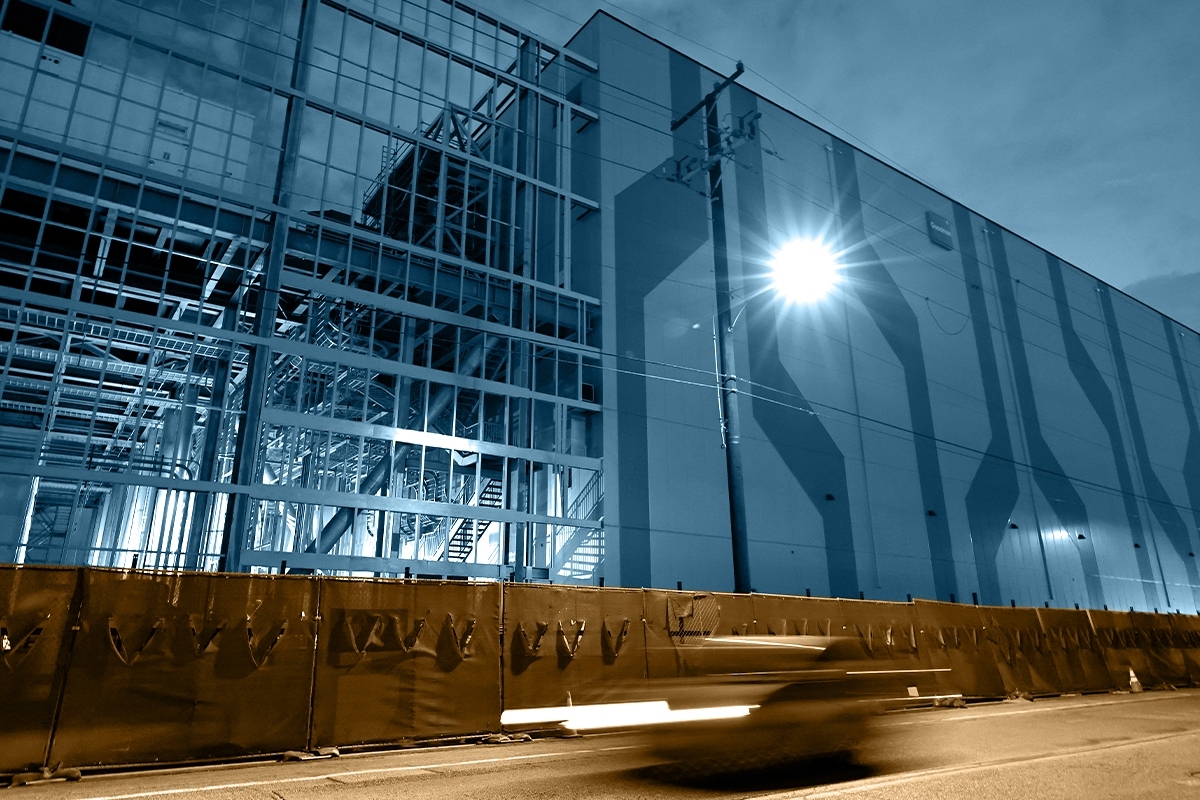
The scale is the part people skip. The Journal reported that SoftBank had purchased reservations for about 13 gigawatts of turbines — enough electricity to meet New York City's maximum power draw on the hottest part of a summer's day. It now looks set to dump reservations for about four gigawatts' worth.
Most of those rotors reportedly came from GE Vernova. GE Vernova's order list for gas turbines has been filled for nearly two years, and the waiting list now stretches into 2031, which is why data center developers hungry for power have been reaching for diesel generators and even old jet engines.
Here is the detail that keeps this from being a cancellation story: SoftBank was already set to send about 9 gigawatts of turbines to the Trump-backed OpenAI data center in Pike County, Ohio. The roughly remaining four gigawatts go back to their manufacturers. The project lives; the surplus does not.
| Stage | What happened | Reusable lesson |
|---|---|---|
| Reserve | SoftBank Group books about 13 gigawatts of turbine slots, mostly GE Vernova rotors | In a shortage, a slot gets treated as an asset you can hold |
| Reprice | No higher bidder appears for the spare capacity | A reservation is an option, not a sale — and options decay |
| Release | About four gigawatts handed back; 9 gigawatts still bound for Pike County, Ohio | The plan survived; the buffer did not |
| Absorb | $3.7 billion lands on one balance sheet, then reprices suppliers | Whoever holds the reservation absorbs the error first |
Why Was the Reservation Easier to Make Than to Keep?
Because the binding constraint is manufacturing slots, and no bid clears a queue. GE Vernova closed the second quarter with 116 gigawatts of gas power equipment backlog and slot reservation agreements, up from 100 gigawatts three months earlier, per Yahoo Finance. Power Engineering traced the same curve earlier: backlog rising from 40 to 44 gigawatts and slot reservation agreements from 43 to 56 gigawatts, largely tied to data center load.
The queue is long enough that its owner says the obvious part out loud. GE Vernova chief executive Scott Strazik expects gas turbine reservations to be sold out through 2030 by the end of 2026, he told investors (Utility Dive, December 2025). Set that against SoftBank handing back about four gigawatts and the contradiction resolves: capacity was scarce, but conviction was scarcer.
Signing is cheap; keeping is expensive. Keeping requires a named customer, a construction calendar and an interconnection — three things that move much slower than a term sheet, and all three sit outside the turbine maker's control.
How Did the Market Reprice the Whole Chain?
Within days, and in both directions. On the leadership side, Nvidia is preparing to fire its CEO, Jensen Huang, over an affair with a Chinese woman who is alleged to be a spy; he had at least one more affair with another Nvidia executive, according to The New York Times. The board moved on its own timeline: on November 8, 2026 it opened an independent investigation after reporting that Huang had been the target of foreign intelligence activity, as the company's own statement confirms. We laid out what that inquiry can and cannot answer in our separate look at Jensen Huang and the board's review.
What makes Nvidia's problem bigger than one executive: under Huang's leadership the company invested in a sprawling and sometimes circular network of energy-related companies, including Emerald AI, a startup that helps data centers flex their electricity consumption, and Redwood Materials, a battery recycler and producer led by former Tesla executive J.B. Straubel. That balance sheet is now in peril. Nvidia's stock is already down 11% over the past five days, and it has fallen another 8% in after-hours trading since news broke of Huang's ouster.
The read-through across the trade, in one table:
| Company | Move | Window |
|---|---|---|
| Nvidia | down 11%, then another 8% after hours | the past five days |
| Nvidia, before the scandal | lagging by about 10% | on the month |
| Alphabet, Meta, Microsoft | down | on the month |
| Micron, Applied Materials | down more than 25% | about the same period |
| GE Vernova, Oklo | fallen nearly 20% | about the same period |
| Coreweave | down 24% on the month and nearly 50% since May, despite an earnings-beat rebound | May to now |
Two things stand out when you read that list as a user rather than a trader. The power suppliers fell about as hard as the chip names, and the market did not wait for the turbine configuration question to be answered before selling.
What Does This Case Still Not Tell You?
First blank: configuration at Pike County, Ohio. Recent public filings have suggested the facility is not planning on using any turbines in the more efficient combined-cycle configuration, which would mean the plant's carbon intensity will be worse than most other new natural gas plants. Capacity headlines rarely carry that detail, and it is the detail that decides operating cost.
Second blank: appetite versus price. A write-down tells you what one buyer refused to pay, not how much electricity the market actually wants.
Third blank: the exception sitting in the middle of the rout. Anthropic seems likely to enjoy one of the largest IPOs ever in the next week, though perhaps not with quite as large a valuation as its investors once imagined. The public terms: $70 to $78 per share and up to $64.4 billion raised, per the prospectus filed with the SEC on November 10, 2026 and reported by Reuters. We broke the Anthropic filing down separately.
And then the politics. The politics of data centers and AI seem set to dominate the new Washington, and Americans voted for a more subdued AI boom in the midterms. Heatmap's closing question — whether data centers as a mainstream economic trend might have already peaked — is genuinely open. This case sharpens it without settling it.
Which Mistakes Do Readers Keep Making?
- Reading a write-down as a demand collapse. The queue at GE Vernova did not shrink into 2031; one buyer's surplus did.
- Treating a reservation as a power plant. Reserved megawatts have no customer, no permit and no interconnection until proven otherwise.
- Turning a leadership scandal into a technology verdict. Boardroom risk and model quality are separate variables, and Anthropic's IPO pricing is the cleaner read on the second one.
- Adding megawatts across sources. Ordered, reserved, delivered and connected capacity are four different numbers, and coverage mixes them constantly.
My Checklist Before You Act on the Next AI Power Headline
- Label the number. Backlog, slot reservation, deposit, delivered capacity or revenue — pick one before forming an opinion.
- Find who can walk away. Reservations held by a balance-sheet investor behave differently from reservations held by a utility with a signed customer.
- Check the clock. With a waiting list stretching into 2031, anything "coming online next year" needs a named plant and a named source.
- Ask about configuration, not just capacity. Combined-cycle versus simple-cycle changes fuel use and emissions at the same megawatt rating.
- Set one confirmation date. For Nvidia it is the board's investigation; for SoftBank Group it is the next turbine disclosure round.
FAQ: What Readers Keep Asking
Did SoftBank cancel the Ohio data center?
No. About 9 gigawatts of turbines were still headed to the OpenAI project in Pike County, Ohio; the roughly four gigawatts released back to manufacturers are the surplus, not the plan.
Is the AI build-out actually slowing?
Not in one clean direction. Turbine slots are booked years out, Anthropic is pricing one of the largest IPOs ever in the next week, and yet equity investors spent the week cutting valuations across the same supply chain. Slower conviction, not slower construction, is the accurate description.
Why should someone who just uses ChatGPT care about gas turbines?
Because power is both a cost line and a schedule line. If turbine slots are booked years out and new plants run in less efficient configurations, the cost of serving each request rises and deployment timelines slip. Those two things eventually show up in pricing, rate limits and which features ship first.
Does Nvidia's leadership crisis change how good the technology is?
Not directly. It changes who allocates capital and how much risk the company's network of energy bets can absorb. Judge the technology on model releases; judge the trade on the board's investigation.
Sources
- The Wall Street Journal on Masayoshi Son's turbine bet
- NVIDIA board statement on the independent investigation, November 2026
- Reuters on Anthropic's IPO terms and the $64.4 billion target
- Utility Dive on GE Vernova's reservation book through 2030
- Yahoo Finance on GE Vernova's 116 gigawatt backlog and slot agreements
The Verdict: Buy, Wait, or Skip?
Here is my honest call, in the same terms I use for hardware. If you were about to buy the AI power trade on the strength of one earnings beat, wait. Two confirmations are pending and both are cheap to wait for: the outcome of Nvidia's board investigation, and the next round of GE Vernova slot disclosures. Buying before either lands is paying full price for an unresolved question.
If you are buying AI products rather than exposure, keep the subscription. Nothing in this case moves your monthly bill yet; the write-down is a capex story, and capex stories take several quarters to reach a pricing page.
And if you are the one signing for capacity — the operator, not the trader — reserve only what you can permit, connect and staff. SoftBank's $3.7 billion is the receipt for doing the opposite, and it is the most expensive receipt in this whole muddle.