MyTechDailyNews General: Snapdragon's Cardboard Time Machine vs. the Kart Race — Which Bet Actually Sells a Laptop?
Would you rather watch a kid win a kart race because a laptop made the kart faster, or a family build a cardboard time machine together? Snapdragon's 2026 holiday campaign chose the second story, and it was the right call: Qualcomm's team rejected a product-led racing pitch in favor of an emotional family project, keeping the laptop in a supporting role.
What actually aired: a family, a cardboard machine, and a laptop in the background
The film, titled "The Gift That Changes Everything," follows a family trying to build a time machine from cardboard, with a Snapdragon-powered laptop and AI turning a child's fantasy into a shared project. It ran on broadcast, connected television and paid social in the United States and several European markets.
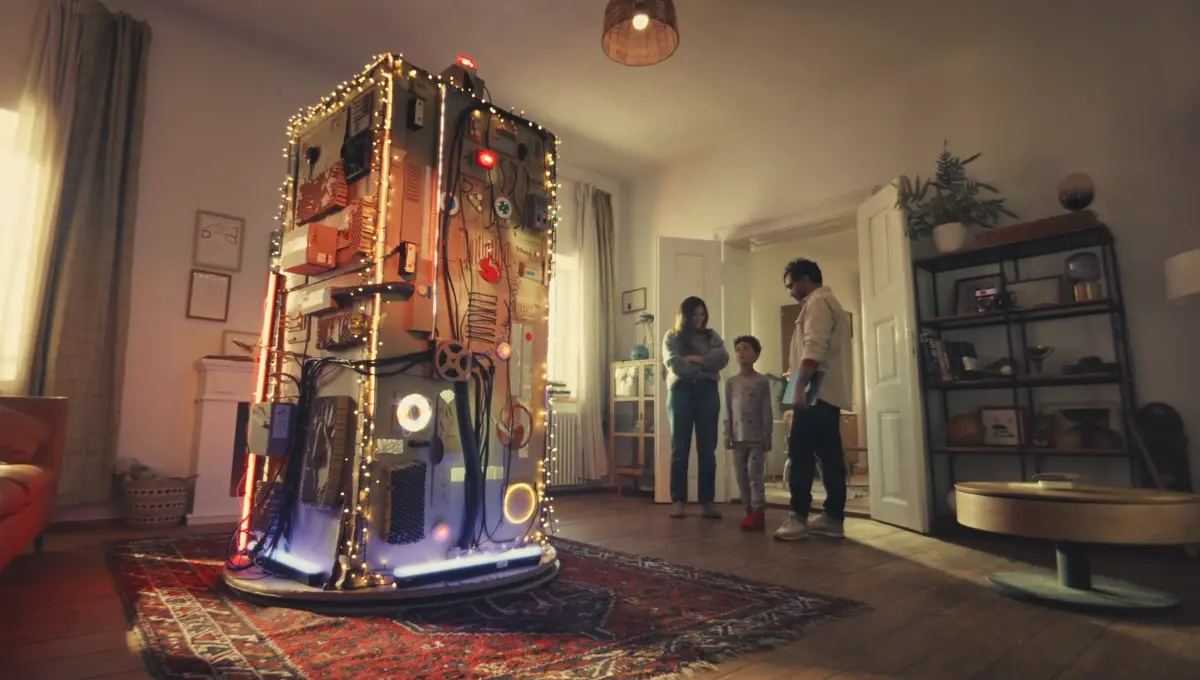
The cardboard time machine at the heart of Snapdragon's holiday film. Image: Snapdragon / 72andSunny.
The cardboard version was not the first idea on the table. An earlier draft followed two children at a kart track, with one of them on the losing side until a Snapdragon laptop, coaching from a professional driver and some computational problem-solving made the kart faster.
Kart race vs. cardboard time machine: which concept wins, and what each one costs
Put the two concepts side by side and the trade-off becomes clear: one sells the hardware, the other sells the feeling, and only one of them works on a crowded holiday feed.
| Dimension | Kart-race pitch (rejected) | Cardboard time machine (aired) |
|---|---|---|
| Core promise | Performance you can see — the laptop makes the kart faster | Wonder you can feel — the laptop helps a family build something impossible |
| Product's role | Lead actor; specs and coaching drive the plot | Supporting role; the laptop enables the family project |
| Emotional stakes | Winning the race | A child's fantasy and time together |
| Audience reach | Viewers who already care about speed and silicon | Anyone who remembers being a kid at the holidays |
| Main risk | Reads like a spec demo; casual viewers tune out | Product benefits stay implicit, so the brand link has to come from the end card |
AJ Joseph, Qualcomm's vice president and head of creative, says the time machine gave viewers something the racing story could not: a reason to care.
"The time machine had something the others didn't: the magic and wonder of being a kid at the holidays," AJ says.
The pattern repeats across the season. Apple and Raw Mango's Deepavali film shot on the iPhone 18 Pro also built its story around family ritual and light rather than camera specifications. When a product is hard to explain in under a minute, emotion is the shortcut.
Why the edit got simpler: what audience research found
The central idea was locked, but testing still forced a rewrite. AJ says the first people shown the storyboards spent far more time with them than any real viewer would give a 30-second ad. The takeaway: a story that looks appealing on paper can still lose people if too much happens too fast.
"We'd been cramming too much in," he says. Unclear elements were cut, scenes were moved and rapid edits were reduced in order to lower cognitive load and make the story easier to follow. The goal was to keep the family at the center while still letting viewers grasp how the laptop helped.
The film still had to support Snapdragon's existing "That's how" brand positioning, but each technical demonstration competed with the screen time needed to establish the characters, their goal and the payoff. For anyone marketing a complex product, the lesson is about sequencing: show enough of the product for its role to be credible, then let a comprehensible human outcome carry the story. An elaborate capability demo can read well on a storyboard and still overload a short video.
Where AI helped — and where it didn't
In the film, AI appears as part of the fictional family's creative process. It also had a separate, genuine production role.
AJ says AI was used in development for previsualization and concept exploration. Those early visuals gave the team something concrete to react to before committing, which made it easier to drop a direction that was not landing. AI also helped produce some of the 3D renderings and onscreen results.
That distinction matters: an ad about AI can all too easily become better known for how it was made than for what it says. The account from the team describes a more practical workflow — quick concept visuals that sharpen human choices, then a decision about which assets actually serve the story.
"The ideas, the taste, the emotional calls all come from people," AJ says. That is the creative principle he describes — not a measured claim that AI improves every production process. It is also more informative than a broad assertion that the advertisement was either "AI-made" or entirely untouched by AI.
The attribution fight is now industry-wide. Ogilvy and Creative Artists Agency's ECHO workflow keeps performer approval and licensing at the center of AI-generated ads — the same instinct, applied to talent instead of time machines.
30-second broadcast vs. 15 and six seconds: does length still matter?
The central idea travelled well; the executions did not stay the same. In France and Germany, the film was fully localized, including spoken dialogue, on-screen text, user-interface elements and voiceover. Social feeds received vertical cuts of 15 and six seconds.
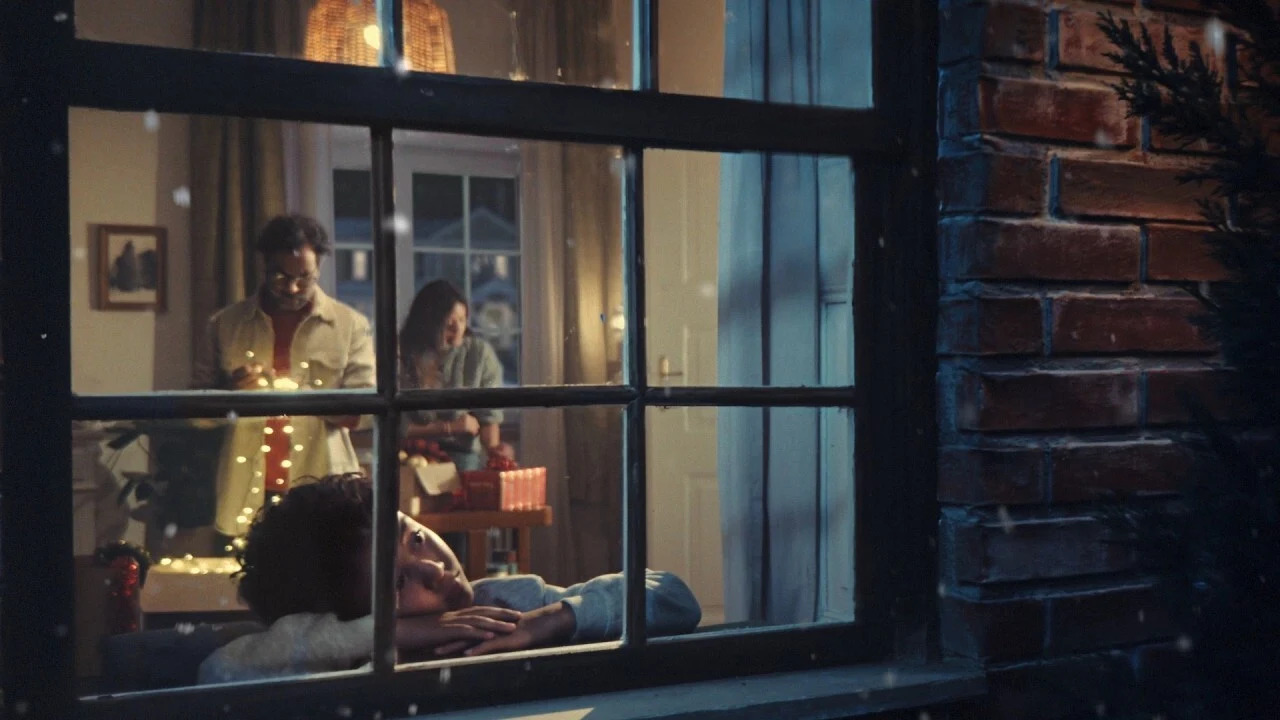
A scene from "The Gift That Changes Everything." See the campaign film and stills. Image: Snapdragon / 72andSunny.
End cards were rewritten for the placement, too. AJ points to a Best Buy promotion for an HP OmniBook 3 in a placement during Notre Dame versus Miami. Instead of forcing one call to action onto every screen, the team changed the commercial's signpost and left the family story intact.
Does the shorter cut hurt? The evidence is mixed, and it leans toward no. Kantar's Super Bowl analysis, published in February 2026, concluded that 15-second spots can hit just as hard as 30-second ones when the moment and the creative are right. Adwave's CTV benchmarks put 30-second streaming ads at a 95.92% completion rate versus 93.88% for 15-second ads — a gap, but a narrow one.
The measurement plan mixed signals on purpose. AJ says the team will use brand-lift studies across channels alongside reach, video-completion rates and social conversions. Each metric answers a different question — did people see it, watch it through, shift their view of the brand, or act?
That is a more honest test than pretending a six-second clip and a broadcast film should behave the same way.
What this means for your next laptop
The product at the center of the ad is the Snapdragon X platform, and the comparison that matters to most buyers is battery life. Best Buy lists the HP OmniBook 3 14-inch with a Snapdragon X (8-core) processor at 41+ hours of battery life, and Mashable's review of the OmniBook 3 16 measured roughly 40 hours per charge, calling it the best battery-life laptop of 2026. The 16-inch Snapdragon C version starts at $599.99.
| Platform | Battery life | AI and graphics | Compatibility | Best for |
|---|---|---|---|---|
| Snapdragon X | Longest tested (40+ hours) | NPU with Copilot+ features | Arm; some x86 apps run under emulation | Long days away from an outlet |
| Intel Core Ultra | Good, improving | NPU with Copilot+ features | Native x86 | General Windows use with the widest software support |
| AMD Ryzen AI | Competitive | Strong NPU plus GPU combination | Native x86 | Mixed AI and graphics workloads |
Before you buy:
- If you travel or work away from outlets, weight battery life highest — Snapdragon X laptops lead this comparison.
- If you depend on older or niche x86 software, test it on an Arm machine before committing.
- If AI features matter, check whether your actual apps use the NPU; the spec sheet alone will not tell you.
Common misconceptions
- "Longer ads always perform better." Kantar's 2026 analysis found that 15-second spots can match 30-second ones when the creative is right.
- "AI-made means a machine made the ad." Snapdragon's team used AI for previsualization and some 3D renderings; pacing and emotional calls stayed with people.
- "Localisation is just subtitles." France and Germany received new dialogue, on-screen text, UI elements and voiceover.
- "One call to action fits every placement." End cards were adapted for retail partners such as Best Buy rather than duplicated.
The person behind the pitch
Away from campaigns, AJ Joseph's enduring interest is dirt biking. He has ridden across the western United States, Baja and Morocco, and enjoys the mechanical work of keeping a bike running. Most of all, he says, riding lets him reach places a car cannot and spend time fully unplugged.
FAQ
What is Snapdragon's holiday film about?
A family builds a cardboard time machine with help from a Snapdragon-powered laptop and AI. The film is titled "The Gift That Changes Everything."
Why did Snapdragon reject the kart race idea?
The team had developed a story in which a Snapdragon laptop and a professional driver's coaching make a child's kart faster. AJ Joseph says it dramatized performance but lacked the emotional reason to care that the time machine provided.
How did AI help make the campaign?
AI was used for previsualization and concept exploration, plus some 3D renderings and onscreen results. AJ says the ideas, taste and emotional calls came from people.
Is the HP OmniBook 3 worth buying?
If battery life is your priority, the numbers are strong: Best Buy claims 41+ hours for the 14-inch Snapdragon X model, and Mashable measured about 40 hours on the 16-inch version. Check app compatibility first if you rely on older x86 software.
How will Snapdragon judge success?
The team plans brand-lift studies across channels alongside reach, video-completion rates and social conversions.
Sources
- LBB Online: Snapdragon Builds Christmas Time Machine in Holiday Campaign (November 2026)
- ContentGrip: Qualcomm's AJ Joseph on the Snapdragon holiday ad
- Kantar: 15-second ads match 30-second spots (February 2026)
- Mashable: HP OmniBook 3 16 review
- Qualcomm: Snapdragon X Series platform announcement
Hugo Phillips is a consumer tech reviewer covering AI PCs and the advertising that sells them.
This article is produced by ContentGrow.