
Shooting in the Dark: What Apple's Diwali Film Teaches You About Low-Light Video on the iPhone 18 Pro | MyTechDailyNews
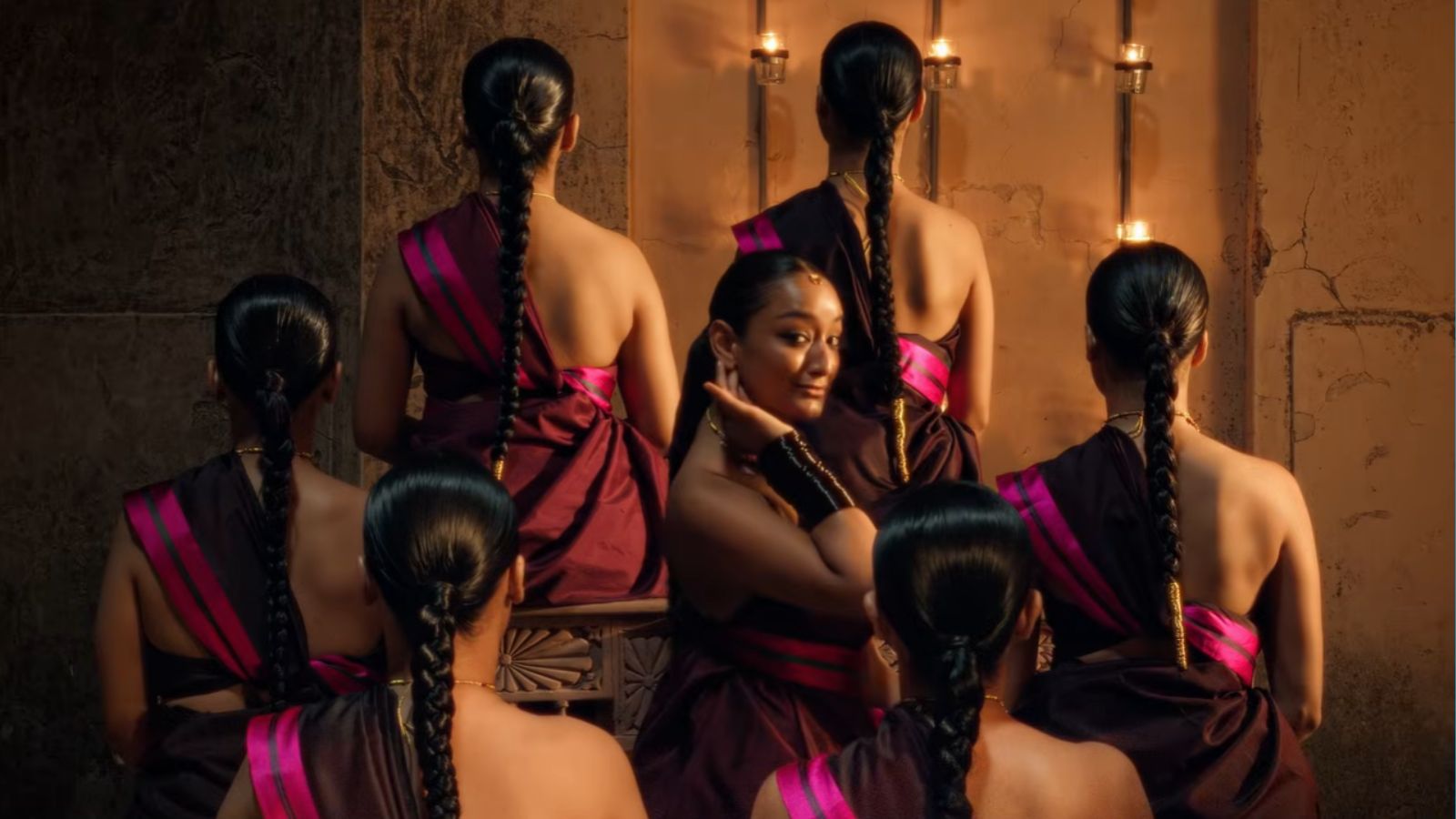
Apple's Deepavali campaign film "Step into the light" is a dance-and-textile short shot end to end on the iPhone 18 Pro inside a restored 19th-century royal palace, and it doubles as a low-light shooting tutorial. After three rewatches, my take is that the transferable skill is not the hardware but the method: pick the aperture deliberately, give the camera a stable base, and let on-device focus tracking carry the moving dancers.
If you have ever tried to film a night puja, a diyas-lit courtyard or your niece's recital on a phone and ended up with a smeary, grainy mess, this release is worth studying as a checklist rather than as an advert.
What did Apple release, and who is behind it?
Direct answer: a festival film made with contemporary Indian fashion brand Raw Mango that celebrates Deepavali through dance, fashion and the interplay between darkness and light, directed by Raw Mango founder Sanjay Garg and shot entirely on the iPhone 18 Pro at Tijara Fort, a restored 19th-century royal palace in Rajasthan, India.
Its emotional spine is a folk interpretation of Anu Malik's 1990s song "Roop suhana lagta hai" ("This form looks beautiful"), which carries a series of dance performances depicting the transition from darkness into light. Big Dance Centre performed the choreography, blending traditional and contemporary styles, with performers in vibrant garments drawn from the Indian subcontinent — Mashru, Varanasi brocades and Chanderi — the colours selected to complement the iPhone 18 Pro's finishes.
Raw Mango was founded in 2008 by Garg and is known for exploring Indian textile traditions through fashion, design and cultural experiences; this Apple collaboration follows the brand's first international runway show at London Fashion Week earlier this year. "Deepavali, for me, is the biggest festival of the year," Garg said. "It represents a change in weather where we welcome winter in the company of people we love."
Timing detail that matters if you publish around festivals: the film debuted on 4 November across Apple's global Instagram account and Apple India's YouTube channel, with a behind-the-scenes cut on Instagram Stories showing Garg's creative process. That put it a couple of days ahead of Apple's November 6 launch, so the story and the hardware news did not compete for the same attention window.
How did they keep moving dancers sharp in near-darkness?
Three things, in this order: aperture, stability and focus tracking.
Because light is central to Deepavali, the film was deliberately shot in low-light conditions to demonstrate the device's 48MP Fusion Main camera and its new variable aperture technology. Apple's own technical specifications for the iPhone 18 Pro list that 48MP main camera with aperture positions at ƒ/1.48, ƒ/1.8, ƒ/2.8 and ƒ/4.0 on a 24 mm-equivalent lens, backed by second-generation sensor-shift optical image stabilisation. PetaPixel's coverage of the same specs notes f/1.8 is the default, so the widest setting is a choice you make, not a background mode doing you a favour.
Cinematographer Janamejaya Daroz told Indian outlets that the crew "shot a lot of the film at the widest aperture, f/1.48", using shallow depth of field to pull attention onto individual dancers instead of fighting a busy fort courtyard. That is the single most copyable decision in the whole piece: in the dark, separate your subject from the scene rather than trying to keep everything legible.
The second layer is the device's smart focus tracking capabilities, which use on-device intelligence to keep performers in focus as they move through synchronised choreography, including when they leave and re-enter the frame. In my reading, that is what made a low-key dance shoot viable without a dedicated focus puller — the phone absorbed a crew job.
Two production facts from the brand's own channels and trade coverage set honest expectations: Raw Mango said the film was shot over two nights at a fort near Garg's hometown, and the work was created by TBWA\Media Arts Lab India with April Studios on production and Heckler handling post. A phone captured it; a full crew made it watchable.
Can you copy the look? Six steps before Diwali night
- Decide what the light is doing before you hit record. Deepavali 2026 falls on Sunday, 8 November (per Time and Date), so set up early and test the same hour you plan to shoot.
- Choose aperture on purpose. Widest for one dancer or one face; step toward the smaller end when a group must stay readable. That contrast is my read of the film, not an Apple recipe.
- Give the phone a base. Apple's Night mode support page tells users to keep the iPhone still on a firm surface or a tripod, and to align the on-screen crosshair when the camera detects movement.
- Lock focus on a person, not a spot. The tracking holds performers through choreography; chasing the whole group with your hands guarantees streaking.
- Respect the warm source. Flames and bulbs shift colour frame to frame, so check your skin tones on the display between takes rather than assuming the processing held.
- Steal one shot, not the whole film. Watch the behind-the-scenes cut on Instagram Stories, then rehearse a single two-minute take with the setup you saw.
Four misconceptions that make night video worse
- "Wide aperture fixes darkness." It gathers light but thins focus, so a moving group at that setting becomes blur roulette. The film works because a cinematographer and on-device tracking share the load.
- "Night mode is a video switch." Apple documents it as a stills capability that turns on when the camera detects a low-light environment, so expecting the same lift in Video is where people get frustrated.
- "A phone alone produced this." Agency, production house and post team are all credited; the iPhone 18 Pro was the capture tool, not the crew.
- "Festival ads have to demo the product." Apple hid the demo inside a 1990s song revival and a textile story, which is why the camera claims land as evidence instead of as spec sheets.
What other brands ran this Deepavali, and what to borrow
Regional campaigns this season leaned on family and connection rather than hardware, and both are useful models if you are shooting for a festival slot.
| Market | Campaign | Story focus | Practical takeaway |
|---|---|---|---|
| Malaysia | MR D.I.Y. festive film, "Two blue ticks" | The humble "good morning" message becomes a reminder to stay connected; the webfilm follows Kavya, a young woman who dismisses daily forwarded greetings from her grandmother, Paati, until an unexpected incident involving Paati's close friend makes her rethink the messages. | One repeated visual — the message thread — carries the whole emotional turn, so build your shot list around a single motif. |
| Singapore | gov.sg teamed up with integrated marketing agency DSTNCT, "Family assemble!" | A Tamil-language Deepavali film uses humour and family chaos to push Singaporeans to put screens down, following Parameshwari Paatti, who threatens to spend the festival with her friends after growing fed up with her family's constant screen time. | Comedy survives low production value; if you only have a phone and a living room, write the conflict first. |
FAQ: what readers actually ask
Was every frame really shot on an iPhone?
Apple presents it as shot entirely on the iPhone 18 Pro, with the 48MP Fusion Main camera, variable aperture and smart focus tracking named as the load-bearing features. Post-production still happened on desktop tools, per the credits.
Do I need the 18 Pro to get usable night clips?
No. Stability, light placement and a locked subject matter on any recent model; the variable aperture mainly buys you depth control that lower tiers approximate with software.
Why the 1990s song?
The folk interpretation of Anu Malik's "Roop suhana lagta hai" ties the textile story to nostalgia, letting the film sell craft and memory rather than camera settings.
Where can I watch it?
It premiered on 4 November on Apple's global Instagram account and Apple India's YouTube channel, with the behind-the-scenes film released on Instagram Stories.
My verdict: upgrade, or rehearsal?
Here is the honest part. The film convinced me that the variable aperture is a real creative lever, not marketing garnish — watching dancers stay separated from a dark courtyard is the kind of result I would normally expect from a larger sensor. What did not convince me is that the phone alone is the story: two nights on location, a cinematographer choosing f/1.48, plus a production and post house are doing the heavy lifting.
So, buying advice: if you shoot moving people in low light every festive season — dance recitals, night puja, courtyard gatherings — the iPhone 18 Pro's aperture control and focus tracking are a legitimate reason to move up. If your night footage is mostly static scenes of lamps and food, keep your current phone, buy a small tripod, and rehearse one shot per setting; the gap between the film and your feed is technique more than silicon. Watch "Step into the light", copy one composition, and only then decide whether the camera is what you are missing.
Sources referenced
- Apple — iPhone 18 Pro and 18 Pro Max technical specifications: https://www.apple.com/iphone-18-pro/specs/
- Apple Support — Use Night mode on your iPhone: https://support.apple.com/en-us/102519
- GadgetsNow / Times of India — cinematographer Janamejaya Daroz on shooting at f/1.48: https://gadgetsnow.indiatimes.com/tech-news/apples-diwali-film-step-into-the-light-puts-iphone-18-pro-camera-to-the-test/articleshow/135603909.cms
- Campaign Brief Asia — TBWA\Media Arts Lab India campaign credits: https://campaignbriefasia.com/2026-11-06/apple-and-tbwamedia-arts-lab-india-capture-diwali-in-new-shot-on-iphone-film/
- Mad About Marketing — April Studios and Heckler credits: https://madaboutmarketing.com/advertising/apple-diwali-step-into-light
- PetaPixel — Apple explains the variable aperture and default f/1.8: https://petapixel.com/2026-09-19/apple-explains-why-the-iphone-18-pro-has-a-variable-aperture/
- Time and Date — Diwali/Deepavali 2026 date in India: https://www.timeanddate.com/holidays/india/diwali
- Raw Mango official Reels — shot over two nights at a fort near Sanjay Garg's hometown: https://www.instagram.com/reel/DfbVRl7Tk1X/