
Seven Anthropic Co-Founders to Sell $1.75 Billion at IPO: What the Number Really Means
Short answer first: the founders are cashing out, not bailing out. The latest prospectus, disclosed Tuesday, shows Anthropic's seven co-founders selling $1.75 billion of stock in next week's IPO — about $250 million each at the midpoint of the price range. The number that deserves more attention is the one they are keeping: roughly 98 percent of their own shares, and control of the votes.
What did the new filing actually say?
The company itself is not going anywhere, and neither is the money it is trying to raise. Here are the figures in plain view, with the details we would check first:
- Headquarters: San Francisco. Anthropic is seeking up to $90.4 billion across the IPO and a private placement, at a valuation of about $1.4 trillion.
- Calendar: the deal is expected to price on November 18, with shares beginning to trade the next day.
- Pricing: reports on the filing put the offer range at $70 to $78 per share, so the $250 million figure is calculated at the $74 midpoint — the same filing's headline number moves with the final print.
- Wealth effect: the Billionaires Index estimates each founder's net worth at about $18 billion under this valuation.
On the selling side, the co-founders named in the filing include chief executive Dario Amodei and president Daniela Amodei, alongside Jack Clark, Jared Kaplan, Sam McCandlish, Tom Brown and Chris Olah — the seven whose names sit at the top of the document.
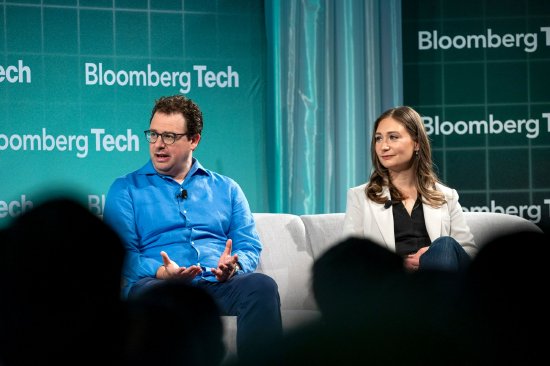
Anthropic co-founders Dario and Daniela Amodei.
How big is the sell-off compared with what the founders keep?
This is the part most coverage skipped: the $1.75 billion is a rounding error in the founders' own holdings, not a change of position. Reporting on the prospectus describes each co-founder selling about 3.38 million shares out of stakes that Fortune, reading the earlier filing, put at roughly 240 million shares per person. Do the arithmetic and each is letting go of about 1.4 percent of what they own — you keep about 98.6 percent. (That 1.4 percent figure is our own calculation from the two reported numbers, not a line in the prospectus.)
Control is protected by structure rather than by share count. CNBC reported that the seven co-founders will be the sole members of a "Founder LLC" holding 50.1 percent of the company's voting power — a single special share, rather than a stack of super-voted stock, paired with a long-term benefit trust that still elects a majority of the board. So the practical effect of the sale on governance is close to zero. If you want a feel for how much boards care about founder control right now, our case file on what the Nvidia CEO inquiry means for founder control and succession risk is the parallel worth reading.
Why does founder selling at an IPO normally worry people?
Because of the old joke: insiders sell for one of two reasons — they need the money, or they don't think the price is the real price. When the money is $250 million per person, readers jump to the second explanation.
Jay R. Ritter, professor emeritus at the University of Florida Warrington College of Business and the academic who has tracked IPOs for more than four decades, takes the less alarmist reading, per Bloomberg's reporting on Tuesday's filing. His point is that the relative size of the sale and the market's changed attitude toward insider sales make this unlikely to scare off buyers. In plain terms: when a founder sells 1.4 percent of a stake they cannot sell again for months, that is not a verdict on the company.
One caveat for readers: Ritter's public data set of U.S. listings is a useful reminder that an IPO is a pricing event first and a story second. Most of the anxiety investors feel on day one belongs to a different calendar — the lock-up.
Common misconceptions
- "Founder selling means the stock will fall." What historically hurts prices is a wave of newly unlocked shares arriving at once, not one disclosed sale at pricing.
- "They are dumping everything." The disclosed amounts are about 1.4 percent of each stake; the rest stays on the books.
- "$70–$78 is the price." It is a range. The valuation, the raise and the founders' cash-out all move until pricing on November 18.
- "More shares sold means more money raised." The base offering and the separate private placement are two different pools; conflating them inflates the record claim.
How does this offering compare with the IPOs on record?
Comparisons are tempting, but they only work if you line up like for like. The $90.4 billion headline is an IPO-plus-private-placement total; the largest pure IPOs on record are far smaller.
| Deal | Amount raised | What it was |
|---|---|---|
| Anthropic (2026) | Up to $90.4 billion (IPO + private placement) | AI lab; pricing November 18 |
| SpaceX (2026) | $75 billion base offering | Aerospace; record for a technology listing |
| Saudi Aramco (2019) | $29.4 billion including the greenshoe | Largest IPO in history |
| Alibaba (2014) | $21.8 billion | Largest U.S.-listed IPO |
Two sources keep those figures honest: Reuters' running list of the biggest share sales in history, and Bloomberg's reporting that the combined Anthropic raise would sit above SpaceX's base offering rather than replace Aramco's pure-IPO record. Read that way, the story is less about the money than about how much capital the AI sector can absorb at one time.
What to watch next, and what to do about it
If you are following this as a reader rather than a fund manager, five checkpoints cover almost everything:
- The priced number, not the range. Whether the deal prints near $70 or near $78 changes the valuation, the raise, and each founder's $250 million estimate.
- Where the valuation landed versus expectations. We have been tracking the pre-listing renegotiation here: Anthropic IPO repriced: 8 questions on the new valuation range. The reported range sits below the most optimistic $2 trillion ask but above the $965 billion of the last private round.
- Stabilization and the greenshoe. Underwriter share purchases can quietly add a few billion to the total; that is why record comparisons need a footnote.
- The first unlock. Most U.S. IPOs carry a 180-day lock-up for existing shareholders, per Investopedia's explainer. If that convention applies here, supply pressure is a spring 2027 story, not a day-one story.
- What the money is spent on. Compute commitments and the disclosed risk warnings matter more for Claude users and outsiders than any founder's cash-out does.
A small action list for regular readers: do not treat an insider sale as a sell signal without checking what percentage of the holding it represents; read the primary market page of the prospectus instead of the screenshot; and remember that in this structure, buying a share does not buy a proportional vote.
Questions readers keep asking
Are the Anthropic founders abandoning the company at the IPO?
No. They are selling roughly 1.4 percent of their stakes apiece and keeping 50.1 percent voting control through the Founder LLC described in the filing.
Why exactly about $250 million each?
Because the disclosed share count per founder is multiplied by the midpoint of the offer range. Move the price and the number moves with it.
Does $1.4 trillion mean the stock will be worth that on day one?
No. It is the valuation the company is seeking before pricing on November 18; the first real comparison is the close on the day trading begins the next day.
Should ordinary readers care at all?
Yes, but as infrastructure news rather than a trading tip. A raise of this size decides how much compute capacity, and how much of the safety and access debate, gets funded over the next several years.
Where these numbers came from
- Reuters, running list of the world's biggest IPOs — reuters.com
- CNBC on the Founder LLC voting structure and the offer range — cnbc.com
- Fortune on the seven co-founders' stakes — fortune.com
- Jay R. Ritter's IPO data page, University of Florida Warrington College of Business — site.warrington.ufl.edu
- Investopedia on IPO lock-up periods — investopedia.com
Written by Cleo Howard, Tech Daily. Corrections and tips: hello@techdaily.com.
Open question to sit with: if the market shrugs off a $1.75 billion founder sale at pricing, what does that tell us about how much insider selling the next decade of mega-listings will be able to absorb?