
Why Sequencr AI Hired a Former McCann SG CEO: What Paul Soon's Advisory Move Means for Marketing Teams
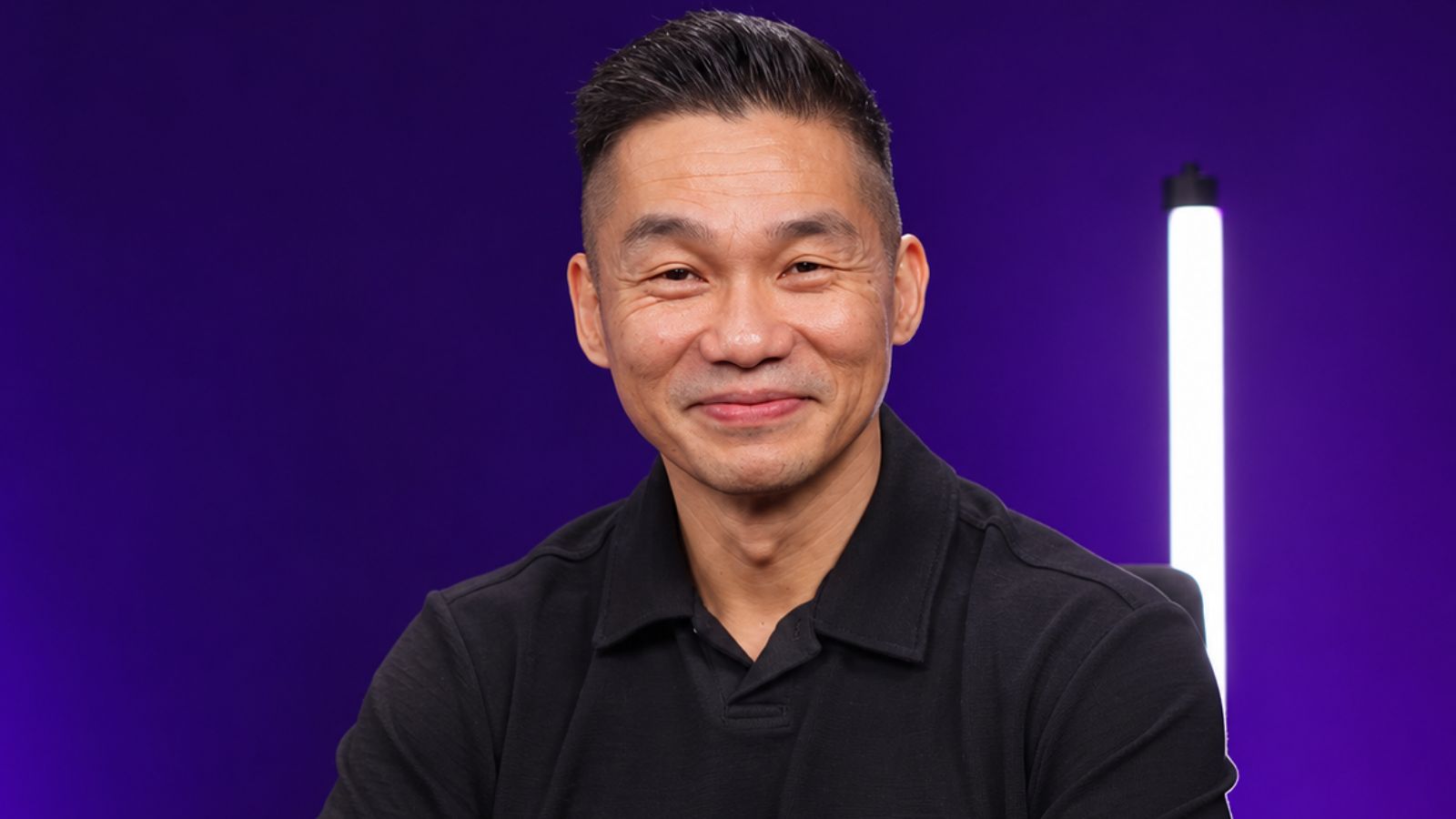
If you only bother with one tech story this morning, let it be this one: a former agency chief executive has crossed to the vendor side. Sequencr AI has appointed Paul Soon, the former McCann SG chief executive, as strategic advisor, drawing on more than 25 years in creative and digital businesses to support AI built for communications and marketing teams. In the new role he helps shape the Stratum platform, the consulting services and the company's engagements with brands, agencies and partners. The headline is not the name on it — it is what the name says about where AI in marketing is currently stuck.
What did Sequencr AI actually announce?
Read plainly, the news is modest: an advisory appointment, not a product launch and not a funding round.
Soon will help shape the continued development of the Stratum platform and the consulting services, while supporting Sequencr's engagements with brands, agencies and partners. The company positions itself as the firm that helps communications and marketing organisations integrate agentic AI into their operations, develop new capabilities and rethink their operating models — so an advisor with client-side scars is a deliberate fit with that pitch rather than a decorative title.
In the LinkedIn post announcing the appointment, Sequencr framed the moment this way: the rise of agentic AI is changing how communications and marketing teams work, and that raises questions around organisational structures, capabilities and the role of technology in business operations. The company said Soon's experience will contribute to its efforts to help organisations adopt AI across their communications and marketing functions, with a focus on developing practical capabilities and operating models, and added that his appointment comes at a time when leaders are increasingly considering how to harness agentic AI to reshape the way their teams operate.
Who is Paul Soon, and why does his CV carry weight?
Because he has spent his career selling and running exactly the kind of change Sequencr is now packaging as software — in two markets, not one.
Soon previously served as CEO of McCann Singapore, where he led the combined business after the McCann–MullenLowe integration and oversaw efforts to expand digital and government client work and AI capabilities. Before McCann, he was CEO of MullenLowe Singapore and China from 2020 to 2025, having first taken on the Singapore CEO role in 2018.
- 2011 to 2015 — led Mirum Agency.
- 2015 to 2018 — led POSSIBLE Singapore.
- 2018 — took the Singapore CEO role at MullenLowe.
- 2020 to 2025 — CEO of MullenLowe Singapore and China.
- Then — CEO of McCann Singapore through the McCann–MullenLowe integration.
- Earlier stops — JWT, XM Asia Pacific, Arc Worldwide, Saatchi & Saatchi and AKQA.
Stacked together, that is more than 25 years across creative and digital businesses, most of it in the Asia Pacific agency world where Sequencr is hunting for customers.
What is Stratum, the platform Soon will help shape?
Stratum is the product half of Sequencr AI: an AI platform aimed specifically at communications and marketing work rather than a general-purpose assistant.
Sequencr's own product page describes Stratum as a communications intelligence platform with agents for media monitoring, narrative analysis, crisis detection and competitive messaging. Think of it less as a writing tool and more as a always-on watch desk that also drafts the response. The company's other half is consulting, and it is in the gap between the two that Soon's job sits: deciding which agent capabilities a real comms department can actually absorb without breaking its approval chains, its escalation routines or its client reporting.
What is agentic AI, in plain English?
Definition first: agentic AI refers to software that takes a goal, breaks it into steps and carries those steps out across other systems with limited human input — closer to an assistant with hands than to a chat box.
For a communications team, the practical difference is where the human stops. A generator helps you draft one press statement. An agent watches coverage, spots a spike, assembles the background, and prepares — or in some setups sends — the response, then moves on to the next task. That is why the questions Sequencr raises in its announcement are about organisational structures and capabilities rather than model quality: once software acts, someone has to decide who signs off, and who is accountable when the sign-off is missing.
Why would a veteran agency CEO join an AI firm instead of another network?
The most plausible answer is that the operating decisions have moved, and the cost of getting them wrong is now measurable.
Research firm Gartner predicted in June 2025 that over 40% of agentic AI projects will be cancelled by the end of 2027, while also forecasting that at least 15% of day-to-day work decisions will be made autonomously through agentic AI by 2028, up from 0% in 2024. In January 2026 the same firm predicted that 60% of brands will use agentic AI to deliver streamlined one-to-one interactions by 2028. Set the two numbers side by side and you can see the squeeze this hire sits in: adoption is expected, failure is expected, and the difference between them is operational rather than technical.
Two further details explain the timing. Sequencr is small — trade outlet Marketing-Interactive reported a 12-person team working with in-house and agency leaders globally, pairing the Stratum platform with consulting, when the company named Jeremy Seow as president and co-founder in October 2026. Provoke Media reported that before joining, Seow had served as regional COO at Allison Worldwide and earlier as CEO of WE Communications Singapore. Sequencr AI is recruiting its leadership bench from the industry it sells to, and Soon is the second senior name to appear in roughly a month.
Our own reading, flagged as analysis rather than a company statement: an advisory seat is a cheap way for a small AI firm to buy three things at once — product priorities grounded in client reality, credibility with brand-side procurement, and a warm path into the accounts a career of more than 25 years opens.
Who else sits in Sequencr AI's leadership team?
The appointment follows Sequencr AI's expansion of its leadership team last month, when it named Jeremy Seow as president and co-founder to support growth in agentic AI solutions for communications and marketing teams.
| Name | Role | Scope |
|---|---|---|
| Jeremy Seow | President and co-founder | Seow oversees client strategy, growth and the development of AI-enabled operating models across the firm's Stratum platform and consulting business |
| Matt Collette | Founder and CEO | Leads the company alongside the wider leadership team |
| Jay Hatch | CTO and head of product | Technology and product ownership |
| Sue Ann Teo | Head of client success and projects | Delivery and client outcomes |
| Dave Scott | CFO | Finance |
| David Gallagher | Director | Board-level role as stated by the company |
Paul Soon's title sits outside that day-to-day structure: strategic advisor, not operator. That distinction is worth keeping in mind when judging how much of the roadmap he actually moves.
What does this mean if you work in marketing, PR or an agency?
Three practical reads, depending on which side of a contract you sit.
- If you buy on the brand side: vendors are now packaging senior operator judgment as reassurance. Ask for the workflow, not the résumé — which approvals change, which get automated, which stay human.
- If you work at an agency: the line between "agency" and "AI consultancy" keeps thinning. Sequencr's model — platform plus consulting plus advisors poached from client leadership — is a template others will copy, and it competes with junior-headcount billing.
- If you run in-house comms: monitoring, narrative analysis and crisis detection are the first functions to be rebuilt around agents, because they are continuous, data-hungry and already partly automated.
If you are benchmarking how to judge a services partner's real depth, our breakdown of what 20,000 certified practitioners mean for enterprise AI buyers covers the same question from the enterprise software side.
What are the common misconceptions in this kind of news?
- Misconception: this is a product announcement. It is not. Stratum was already in market; the change is who is helping prioritise what gets built next.
- Misconception: agentic AI means a tool that writes better copy. The defining feature is action across systems, which is why governance, not grammar, is the hard part.
- Misconception: an advisor equals a customer pipeline. Advisory titles carry no committed revenue; treat them as a signal of intent.
- Misconception: senior AI hires mean agency leadership jobs are drying up. The evidence points to movement between roles — more advising, buying and building — not disappearance.
- Misconception: a small vendor cannot deliver. A 12-person team can move quickly, but capacity, not intelligence, is usually what breaks first in enterprise rollouts.
What should you do before shortlisting an AI comms platform?
- Write down the two workflows you would hand an agent first, and the one you never would.
- Ask the vendor which step of your escalation process it cannot touch, in writing.
- Request named references from teams of your size, not logos of your aspirational peers.
- Price the human review time the tool creates, not just the hours it saves.
- Check how outputs are logged and attributed — the audit trail matters more than the draft.
- Set a 90-day kill criterion in advance, given the cancellation rates Gartner expects through 2027.
FAQ: what readers are actually asking
What will Paul Soon do at Sequencr AI?
He joins as strategic advisor, helping shape continued development of the Stratum platform and the consulting services, and supporting the company's work with brands, agencies and partners. He is not listed in the operating leadership line-up.
Is this a sign that agencies are being replaced by AI companies?
No — and the appointment argues the opposite. Sequencr AI is hiring someone who ran agencies because strategy, accountability and client judgment do not come out of a model.
Why does the date range of his roles matter?
It shows the sequence: Mirum Agency from 2011 to 2015, POSSIBLE Singapore from 2015 to 2018, the Singapore CEO role from 2018, then MullenLowe Singapore and China from 2020 to 2025, followed by McCann Singapore through the McCann–MullenLowe integration. Digital, data and AI work were added across those stops rather than bolted on at the end.
How quickly could a hire like this change what I see in the product?
Expect advisory influence to show up as roadmap order, not a new button, and expect the clearest signal in Sequencr's client messaging over the next two quarters. Our reporting on the October 2026 leadership expansion — naming Jeremy Seow last month — is the more direct read on near-term delivery.
What happens next, and what is still missing?
Two things would turn this from a personnel note into a market story: a published reference customer showing what an agent actually changed in a comms department's reporting line, and evidence that the firm can scale a 12-person delivery model into enterprise rollouts without bending on governance.
Leadership churn is also worth tracking as an early indicator in this sector generally; our explainer of Advantech's CEO handover shows how a chairman-and-CEO split can be read as an infrastructure bet rather than a retirement plan.
For now, the useful question is not whether Sequencr AI got a well-known name onto its advisory list. It is this: when a former McCann SG chief executive starts helping decide what an AI platform should do first, does the roadmap get more exciting — or a lot more boring, in the way that mature software usually does?
Sources
- Sequencr AI product page on Stratum: https://www.sequencr.ai/stratum
- Gartner press release, 25 June 2025, on agentic AI project cancellations and autonomous work decisions: https://www.gartner.com/en/newsroom/press-releases/2025-06-25-gartner-predicts-over-40-percent-of-agentic-ai-projects-will-be-canceled-by-end-of-2027
- Gartner press release, 15 January 2026, on brands using agentic AI for one-to-one interactions: https://www.gartner.com/en/newsroom/press-releases/2026-01-15-gartner-predicts-60-percent-of-brands-will-use-agentic-ai-to-deliver-streamlined-one-to-one-interactions-by-2028
- Provoke Media on Jeremy Seow's appointment and prior roles, 21 October 2026: https://www.provokemedia.com/latest/article/former-allison-coo-jeremy-seow-joins-sequencr-ai-as-president-and-co-founder
- Marketing-Interactive on Sequencr AI's team size and the Stratum-plus-consulting model, 21 October 2026: https://www.marketing-interactive.com/sequencr-ai-nabs-allison-worldwide-regional-cco-as-president-and-co-founder
- Sequencr's LinkedIn announcement post on the rise of agentic AI, as cited in the original report