
Advantech’s CEO Handover Explained: What Miller Chang and K.C. Liu’s Split Roles Mean for Edge AI
Advantech has confirmed a top-of-house change: effective January 1, 2027, founder K.C. Liu moves into a full-time Chairman seat, and Miller Chang, currently president of Advantech’s Embedded Sector, becomes CEO. In plain terms, the company is separating long-term ownership thinking from day-to-day operating control. Even if you never buy an industrial motherboard, that split matters — it shapes the roadmap of the quiet, rugged computers inside checkout lanes, hospital carts, delivery robots and factory lines.
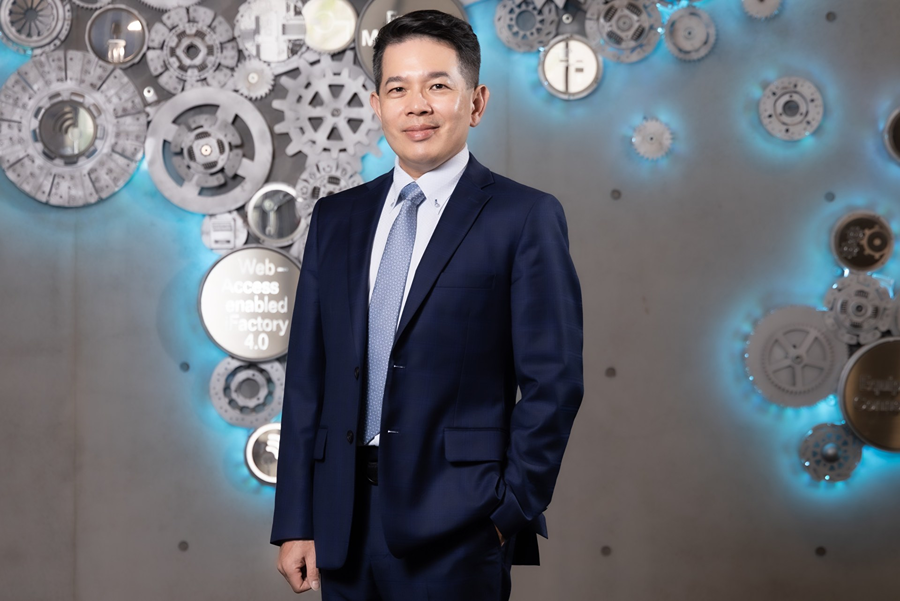
Miller Chang, President of Advantech’s Embedded Sector, officially begins serving as Chief Executive Officer (CEO) on January 1, 2027, and will direct global operations together with the company’s future growth strategy.
What exactly changes on January 1, 2027, and who does what?
Short answer: one leader stops running the business daily, the other starts, and the two job descriptions are being rewritten so they no longer overlap. Advantech says it will further define the strategic and operational responsibilities of chairman and CEO, rather than leaving both roles to the same person.
| Role after January 1, 2027 | Stated focus | How to read it |
|---|---|---|
| Chairman — K.C. Liu (full-time) | Corporate governance, long-term corporate development, new business investments | Owner-style questions: where the company should be in ten years, which new markets or stakes it funds |
| CEO — Miller Chang, with the chief operating officer (COO) and chief financial officer (CFO) | Group operations, business integration, resource allocation, annual performance objectives | Operator-style questions: margins, delivery, capacity, budget targets for the current year |
| Worldwide Business Operations — the WWBO framework | Cross-business-group and cross-region cooperation and decision-making efficiency | The plumbing that keeps regional teams from waiting on Taipei for every call |
Put together, the design is a management model that pairs long-term strategic vision with operational excellence. The stated goal is not tidier org charts for their own sake, but stronger competitiveness and sustained long-term growth while the artificial intelligence build-out is still running hot.
Why is Advantech making the move now?
Conclusion first: this looks like a scheduled exit, not a reaction to trouble. Three separate signals point the same way.
- The retirement was flagged years earlier. Forbes reported in May 2024 that K.C. Liu, then 70, had already said in 2023 that he intended to retire within three years. The 2027 date lines up with that runway.
- The change lands during record results, not a rescue. On its October 29, 2026 earnings release, Advantech reported 3Q26 EPS of NT$7.15 and called quarterly revenue and profit record highs, with overall revenue of US$2,485 million for the accumulated nine-month period, up 46% year on year. Earlier, an August 5, 2026 investor conference disclosed first-half 2026 consolidated revenue of NT$46.512 billion, up 32% year on year, at a 38.3% gross margin.
- The bench was built first. By mid-2026 the company was already running a co-president structure — Eric Chen, Miller Chang and Linda Tsai appearing with the chairman at investor events — so the incoming CEO is stepping onto a platform he helped operate, not into an empty chair.
Handing over at the top of a cycle is cheaper than handing over at the bottom of one. A founder who leaves while demand, revenue and margins are strong gives the successor room to make mistakes on their own terms.
Who is Miller Chang, and why does his background matter?
He is a career engineer-turned-operator who arrived from the PC BIOS world rather than from finance. Advantech’s own executive profile records that he joined Advantech in 2007, worked at Phoenix Technologies from 1996 to 2006, and holds an EMBA from the Department of Information Management. His public work has centred on edge computing and Edge AI inside Advantech’s Embedded Sector.
His most concrete claim so far is about developer friction, not chip specs. In a July 2026 interview with electronics trade outlet EEPW, Chang argued that medical, retail and transport deployments differ so much that a standardised layer is the only way to keep costs sane; he said Advantech’s WEDA edge-AI developer architecture, which unifies the differing APIs and AI software development kits across x86 and ARM silicon, had in live projects cut product development cycles by more than half.
He has also set the software direction in public: at the company’s World Partner Conference merged with COMPUTEX in May 2026, Chang said as Embedded Sector President that Advantech would fully integrate agentic AI tools into its Edge AI platform. A CEO who spent years on that platform is more likely to treat it as the company's spine than as a side product.
Why should everyday tech readers care about an industrial computing supplier?
Because this is the layer that quietly decides what devices can do on-site, offline, where cloud latency is unacceptable.
- Scale. Advantech’s industrial computer materials describe it as the world’s No. 1 industrial PC provider, citing a 41% market share estimated by analyst firm Omdia. Whoever sits in the CEO seat influences pricing, component allocation and support levels across a very large installed base.
- Long lifecycles. Factory, kiosk and medical equipment run for seven to fifteen years. A leadership change that shifts investment toward AI-ready platforms shows up as longer software support windows — or, if priorities move elsewhere, as awkward mid-life upgrades for buyers.
- Supply chain pressure. The company has flagged fluctuating key raw material costs and ongoing supply-chain challenges even while profit hit records. A CEO whose job description explicitly includes resource allocation is the person integrators and OEM partners will be watching.
- Regional service. The Worldwide Business Operations model, or WWBO, is meant to speed decisions across global regions, which is what partner networks feel as quote turnaround, stocking and firmware cadence.
Is this handover part of a broader leadership reset across tech?
Read as one signal among several, yes — 2027 is shaping up as an unusual window for top-job changes at established hardware and software companies. The same January calendar also carries HP Inc.’s move, with Emma Walmsley effective January 4, 2027, a board-appointed switch that puts a consumer-and-pharma turnaround operator in charge of PCs and printers. In consumer devices, readers are also tracking the Apple Siri leadership rumor as a question about who owns the AI layer, and what an organisational reshuffle means for the assistant you actually talk to.
The pattern, and this is our analysis rather than any company statement, is that boards are separating two jobs that founders historically combined: owning the long-term thesis, and running the quarterly machine. Advantech writes that separation into governance, investments and new business for K.C. Liu, versus operations and annual performance objectives for Miller Chang.
Common misconceptions about founder-to-professional-management handovers
- “The founder is leaving, so the strategy will flip.” Here the founder stays as full-time Chairman with long-term development and new investment duties — closer to continuity with a second reader’s eye than to a clean break.
- “Titles changed, nothing else changed.” The company is pairing the titles with a rewritten duty split and the WWBO decision framework, which is an operating-model change, not a nameplate swap.
- “An embedded-hardware CEO change won’t affect software.” The incoming CEO built his reputation on Edge AI platforms and has publicly committed to agentic AI tooling inside that platform stack.
- “Succession at record revenue means there is no risk.” Records can coexist with execution risk: two years is long enough for partners to plan, but short enough that a stalled transition still shows up in roadmaps and support windows.
FAQ: quick answers on the Advantech leadership change
When does Miller Chang become CEO of Advantech?
January 1, 2027. Until then he remains President of Advantech’s Embedded Sector, and the transition date was disclosed as part of a formal succession plan rather than as a market rumour.
What happens to founder K.C. Liu?
He transitions to the role of full-time Chairman, centred on corporate governance, long-term corporate development and new business investments. He founded the company in 1983 and led it into recognition as one of the Top 20 Taiwan Global Brands.
Does this change affect products I can buy today?
No immediate change. Leadership transitions of this kind affect budget priorities, platform investment and support commitments over quarters and years — not current SKUs or existing warranties.
What is WWBO and why does it appear in the announcement?
Worldwide Business Operations is the framework Advantech says it will use to strengthen cooperation and decision-making efficiency across business groups and global regions. Think of it as a standing decision path instead of an escalation queue.
What is the single best thing to watch between now and January 1, 2027?
Whether the COO and CFO reporting line, the co-president structure and the Edge AI roadmap stay stable through the announcement window. Stability suggests a rehearsed handover; churn in the eighteen months before the date suggests the plan is still being negotiated.
What to watch before January 1, 2027: a reader checklist
- Follow the next two quarterly earnings releases for whether record 2026 momentum holds while the handover is pending.
- Watch whether agentic AI tools actually land inside the Edge AI platform stack, and whether developer-facing layers such as WEDA become easier to use — that is the incoming CEO's stated thesis.
- If you buy or integrate industrial computing, ask your supplier how long current platforms will be supported and whether roadmap input moves closer to your region under WWBO.
- Compare with other 2027 leadership changes rather than treating this one in isolation — the shared pattern is governance/operations separation.
- Treat any “founder exits under pressure” framing with suspicion until it is supported by primary filings.
Sources and further reading
- Advantech, “Advantech Enters a New Chapter of Leadership Succession” (official newsroom): https://www.advantech.com/en-us/resources/news/advantech-enters-a-new-chapter-of-leadership-succession-as-miller-chang-assumes-ceo-role-in-2027
- Advantech Investor Relations, “Advantech Reports 3Q26 EPS of NT$7.15”, October 29, 2026: https://www.advantech.com/en-us/resources/news/advantech-reports-3q26-eps-of-nt715
- Advantech, “Advantech Drives Industrial AI Opportunities with Integrated WISE Solution & Station Platform Strategy”, August 5, 2026: https://www.advantech.com.cn/zh-cn/resources/news/advantech-drives-industrial-ai-opportunities-with-integrated-wise-solution--station-iws-platform-strategy
- Advantech Executive Team profile — Miller Chang: https://www.advantech.com/en-us/about/executive-team/business-groups/miller-chang
- EEPW (电子产品世界), interview on Advantech Edge AI and WEDA, July 2026: https://www.eepw.com.cn/article/202607/482560.htm
- Forbes, “Billionaire Chairman Of Industrial Computer Maker Advantech Prepares For Succession”, May 2024: https://www.forbes.com/sites/chengboliu/2024-05-29/billionaire-chairman-of-industrial-computer-maker-advantech-prepares-for-succession/
Written by Sarah Chen for MyTechDailyNews, a Tech Daily publication. Story tips and corrections: hello@techdaily.com