
MyTechDailyNews Deep Dive: Can Saskatchewan Wire AI, Quantum, Chips and Materials Into One Working Stack?
I read a week of Canadian tech announcements and landed on one blunt answer: Saskatchewan does not have to build everything to matter. The province's play is connectivity — AI compute, quantum research, chip design talent and materials testing, linked across Canada instead of stacked inside one place. Here is what each piece actually does, where I think it can break, and what a general tech reader should watch next.
My first instinct, when a gigawatt-scale AI plan got attached to a landlocked Prairie province with fewer than 1.3 million residents, was the one I get with any spec sheet: who supplies the power, who does the work, and what happens to the rest of the stack. Saskatchewan's two cities anchor the answer — Saskatoon, home to the University of Saskatchewan and the Canadian Light Source, and Regina, the capital, where Bell Canada is digging. Tyler Morhart, an associate scientist and beamline lead at the Canadian Light Source's Synchrotron Laboratory for Micro and Nano Devices (SyLMAND), told EE Times the plain version of the same idea: Canada is enormous, and its research machines are scattered just as widely.
What exactly is Saskatchewan assembling?
Conclusion first: four assets running on four different clocks, none of them a wafer fab.
| Asset | Who holds it | Where | The clock it is on |
|---|---|---|---|
| AI compute | Bell Canada, under its AI Fabric unit | Rural Municipality of Sherwood, outside Regina | First data hall targeted for the first half of 2027 |
| Quantum research | University of Saskatchewan (USask) | Saskatoon | A newly acquired nine-qubit machine, used for homework that already exists |
| Chip design talent | Siemens EDA, plus AI and machine learning work at the University of Regina | Saskatoon and Regina | Multi-year hiring and university pipelines |
| Materials and radiation testing | Canadian Light Source (CLS); TRIUMF in British Columbia | Saskatoon; Vancouver area | Proposal-based access, not on-demand |
Strip the table down and the strategy reads like a supply chain: sell compute, keep the hard research problems local, and lend the rest of the country whatever the province does best.
How real is the AI data center plan?
The headline numbers are big, and they are still numbers on paper. A non-binding agreement announced by Bell and Saskatchewan points toward another 900 MW of AI infrastructure capacity, lifting the potential provincial total to 1.2 GW; if it all gets built, the data centers, tenant computing equipment and power generation could involve more than C$50 billion (~$35 billion) in capital, and Bell also plans to put an AI Fabric head office in the province.
The part I can check is smaller and much more concrete. The initial 300-MW campus near Regina has more than 500 people working on site, and the first data hall is targeted for the first half of 2027. Bell's own project newsroom names Cerebras and CoreWeave as secured tenants and says construction will support at least 800 jobs in the trades; the company's site page adds that the first phase takes electricity from SaskPower over a dedicated industrial feed, separated from residential distribution.
Why does a nine-qubit quantum computer belong in this story?
Because it arrived with problems already waiting for it, not the other way around. The University of Saskatchewan's acquisition of a full-stack quantum computer — a system that includes a nine-qubit Rigetti Novera processor — is modest beside the ambitions attached to Bell's development, and that comparison is the honest way to read it: this is a research instrument, not a product.
Steven Rayan, director of USask's Centre for Quantum Topology and Its Applications, told EE Times earlier this year that the openings already span vaccines, agriculture, energy and secure communications. The team had used quantum hardware in Quebec to investigate protein networks relevant to vaccine design, and built a quantum circuit to model northern microgrids that mix solar generation with diesel power.
The money trail is public and worth knowing: a March 2026 announcement from the Canadian government's regional development agency lists $1.93 million for USask to own and operate the machine, with a further $400,000 from Innovation Saskatchewan. Scaled up, that is one node in a national program — Canada's National Quantum Strategy commits $360 million in dedicated funding, and Ottawa signed a CAD $195 million agreement with photonic quantum firm Xanadu in August 2026. Anyone who treats the nine-qubit box as the ceiling, or as the whole program, is reading the wrong line.
Defence work pulls in the same direction. Hosted at the University of Calgary, the Quantum Defence Innovation Secure Hub — DISH — recently selected USask as a primary academic partner. The Bureau of Research, Engineering, and Advanced Leadership in Innovation and Science is building a national network of DISHes as secure, shared spaces where government, industry, academia, the Canadian Armed Forces and national security partners can push technologies that matter for defense.
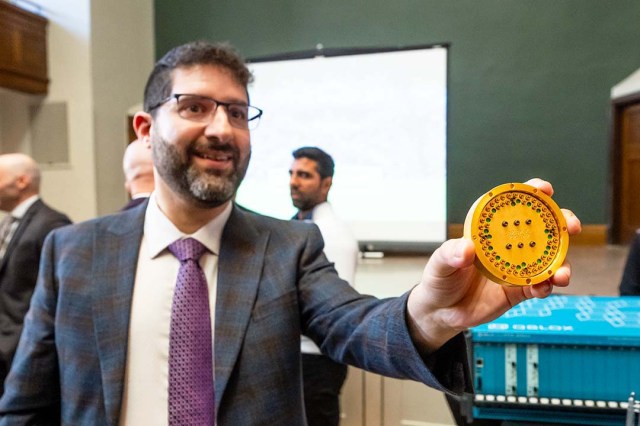 USask's Steven Rayan says the university's recently acquired quantum computer has many real-world uses, spanning vaccines, agriculture, energy, and secure communications.
Where do the engineers come from?
Compute without people is just real estate with a power bill. Siemens EDA's Saskatoon operation shows the slow part of the build. Aaron Genest, technical director at Siemens EDA, explained to EE Times that the team's growth depended on university relationships, internal training and an environment that makes people want to stay — experienced EDA specialists are not waiting on every street corner.
That university-to-industry path also produced a company. Novigrad founders Christopher Elash and Lars Kishchuk met as USask engineering students and worked together on university space projects; their first ambition was simple, make chips. Customer conversations redirected that energy to a narrower bottleneck: proving whether electronics can survive radiation exposure.
Their map of Canadian resources is the useful part. TRIUMF in British Columbia supplies the radiation-testing infrastructure, and USask contributes expertise in semiconductor radiation effects. TRIUMF's own facility pages describe proton and neutron beamlines used for single-event effect testing, with partners ranging from the Canadian Space Agency to Cisco and Boeing — which is how a national laboratory ends up inside a Saskatchewan startup's business plan.
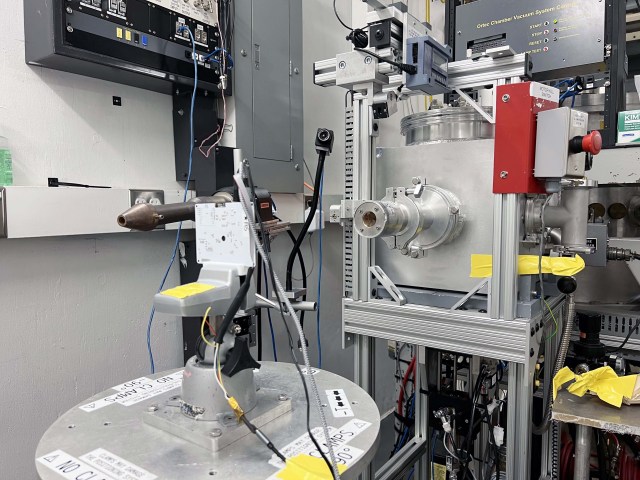 The Saskatchewan startup Novigrad sees many opportunities to help Canadian semiconductor companies with radiation-testing needs.
Why does everything start with materials?
“Everything's downstream of materials,” Morhart said. As an analytical chemist who runs the SyLMAND laboratory at CLS, he has the view from underneath the hardware: conversations jump from software straight to economic opportunity, and the equipment still has to work.
He calls CLS “essentially a Swiss army knife,” with 22 beamlines adapted to different experiments. For semiconductor-related research, what CLS contributes is advanced materials characterization rather than conventional CMOS processing — the lab focuses on non-silicon microdevices and X-ray lithography. Synchrotron techniques let researchers examine interfaces, transport and degradation, meaning they can ask not only what a material is but what happens once it becomes part of a working product.
That makes CLS a national asset and a Saskatchewan advantage at the same time, and it shows why duplication is the wrong instinct: Alberta's nanoFAB in Edmonton provides conventional semiconductor processing that Morhart's group deliberately chose not to repeat. Effort is still needed to make the toolkit reachable — Morhart noted that cross-country connections take travel, professional networks and deliberate relationship-building, and organizations such as CMC Microsystems help bridge that distance with access to tools and experts.
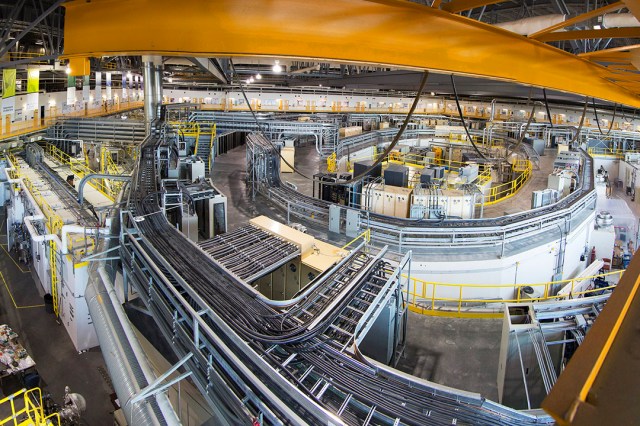 With 22 beamlines adapted to different experiments, the Canadian Light Source can be described as a “Swiss army knife,” and it contributes advanced materials characterization for semiconductor-related research.
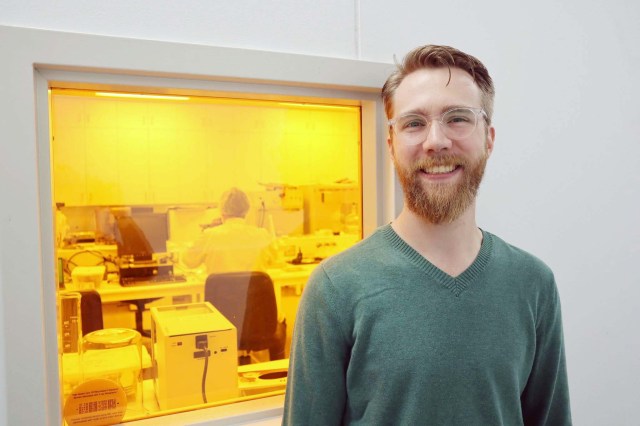 Canadian Light Source's Tyler Morhart.
What are the weak spots I would flag?
- Power is the gatekeeper. The first phase depends on SaskPower supply over a dedicated feed, and the wider 1.2 GW ambition implies self-supplied generation. Grid capacity, not chip demand, decides the pace.
- Demand is imported. With Cerebras and CoreWeave named as tenants, the province's upside is tied to two external customers' capacity plans.
- Scale mismatch is real. A nine-qubit processor and a 300 MW campus are different kinds of infrastructure; only one of them is close to revenue.
- Distance does not negotiate. Testing in British Columbia, fabrication help in Alberta, characterization in Saskatchewan: every hop costs a proposal, a flight and a project manager.
- Announcements are not permits. The expansion rests on a non-binding agreement, and a multi-year construction roadmap is still a roadmap.
Three misconceptions I keep seeing
- “This is a chip factory story.” It is not. Saskatchewan offers compute, talent, materials characterization and radiation expertise; conventional processing lives elsewhere in Canada.
- “Quantum means encryption breaks next year.” The useful near-term work is protein networks, microgrid modeling and secure-communications research, not code-breaking.
- “Small province, small relevance.” A province with fewer than 1.3 million residents can still hold national infrastructure: 22 beamlines, one of the country's largest planned AI campuses, and a defense-adjacent research network.
FAQ: the questions my inbox keeps sending
Is Saskatchewan trying to become Canada's semiconductor hub?
No, and that framing misses the point. The question Morhart and the others keep answering is how well existing strengths can be connected and scaled, not whether one province can own every step.
Can a nine-qubit machine do anything useful today?
For research, yes — USask researchers had already run quantum hardware work on vaccine-relevant protein networks and microgrid modeling. For commercial speed, no, which is why it is measured in experiments rather than FLOPS.
Why build AI data centers on the Prairies at all?
Land, a dedicated industrial power feed and cooler climate economics. Bell's first 300-MW site is already staffed with more than 500 people, so this is no longer a slide deck.
What single milestone tells me this is working?
The first data hall of the initial 300-MW campus, targeted for the first half of 2027. Everything else — the AI Fabric head office, DISH partnerships, startup growth — rides on whether power and space arrive on schedule.
Action checklist: what to watch, and what to do
- Follow the electricity, not the gigawatts. Published grid plans and SaskPower interconnect terms are the honest preview of the 1.2 GW ambition.
- Track tenant concentration. Two named customers set the revenue clock for a build of this size.
- If you are a hardware team, ask for access in writing. CLS characterization, TRIUMF irradiation and CMC Microsystems tooling are proposal-driven; budget weeks of lead time.
- If you are a student or early-career engineer, the pipeline is visible. Siemens EDA's Saskatoon story starts with university relationships, not job boards.
- If you cover this beat, stop counting fabs. Count beamlines, test facilities and talent retention instead.
My verdict: worth your attention, with three asterisks
Read the way I would read any product launch, this is not a province selling you a finished device. It is a set of scarce, complementary instruments — Bell's infrastructure, USask's quantum research, Siemens's talent development, Novigrad's testing business — that only become an ecosystem when researchers and companies can move between them, including beyond Saskatchewan's borders when the next capability lies elsewhere. Watch the first data hall, the power terms and the retention numbers; if those three hold, the map stops being the obstacle and starts being the asset.
Sources and further reading
- Bell AI Fabric, Saskatchewan project newsroom and site page (tenants, trades jobs, SaskPower feed): bce.ca
- Government of Canada support for quantum computing in Saskatchewan, $1.93 million announcement (March 2026): canada.ca
- Canada's National Quantum Strategy, $360 million dedicated funding: ised-isde.canada.ca
- TRIUMF proton and neutron irradiation facilities for electronics testing: triumf.ca
- EE Times reporting on Canada's chip design and materials infrastructure, including interviews with Tyler Morhart, Steven Rayan and Aaron Genest.