
Case Retrospective: How NVIDIA, Rebellions and SK Telecom Turned the R200 NPU Into a Reusable AI Build Pattern
How do you add domestic AI chips without rebuilding a data center? The collaboration between NVIDIA, Rebellions and SK Telecom offers a template: Rebellions links its Rebel R200 neural processing units (NPUs) to the NVIDIA platform through NVIDIA NVLink Fusion, builds rack-scale systems on NVIDIA MGX, and SK Telecom deploys them, with the Ministry of Science and ICT (MSIT) behind the effort. Deployment-ready R200 systems are expected in 2028.
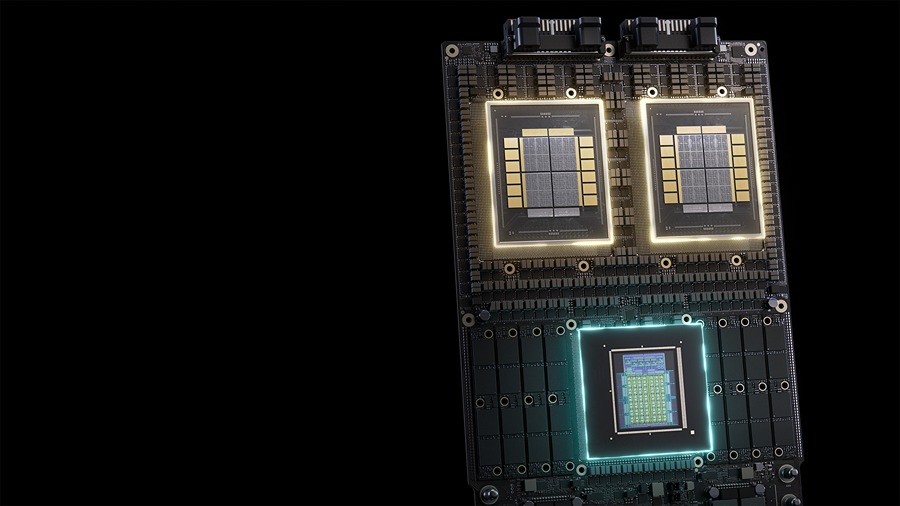
For everyday readers this looks like one more chip headline. For anyone who has swapped hardware underneath a live service, it reads better as a case study in sequencing: standardize the rack first, attach the new silicon second, and only then ask teams to care where the compute came from. The three sub-cases below show how that logic works, where it can still fail, and what to copy.
What was announced, in five moves
Stripped to its parts, the agreement keeps Korean chip design and Korean AI operations inside the same rack. Each element matters separately.
- Interconnect. Rebellions will use NVLink Fusion to connect its Rebel R200 NPUs to the NVIDIA platform, rather than standing up a parallel fabric the rest of the site has to learn.
- Rack. System development rides on the NVIDIA MGX rack architecture and its reference designs, which also give Rebellions access to an established supply chain of original design manufacturers and component suppliers.
- Operator. SK Telecom contributes AI data center operations, proprietary models and public-facing services, and plans to deploy the systems the trio develops.
- Sponsor. The Ministry of Science and ICT backs the effort, aiming for AI services shaped by Korea's language, industries and priorities.
- Timing. The joint announcement is dated 9 November 2026; R200 systems are expected to become ready for deployment in 2028.
Why the prefill and decode split is the real engineering story
Conclusion first: the most transferable idea here is not a chip, it is task-splitting. The companies intend a disaggregated inference approach that assigns different stages of AI response generation to the processor architecture best suited to each task — NVIDIA GPUs for prefill, Rebellions NPUs for decode — to improve inference throughput and power efficiency.
A plain-language analogy: answering a long prompt is like reading a thick brief and then typing the reply. Reading the brief in one go is a short burst of heavy arithmetic; typing the answer is a long, patient stream that stresses memory bandwidth and latency far more than peak compute. A part built for low-latency, energy-efficient inference on frontier models, including multitrillion-parameter mixture-of-experts models, earns its keep on the typing half of that job.
Within a rack, Rebellions will link its R200 NPUs through NVIDIA NVLink scale-up networking. Because GPU and NPU systems can share data center design elements — rack footprint, power delivery and cooling — on the MGX foundation, infrastructure planning can run in parallel with processor and system development instead of trailing it.
Case 1: NVLink Fusion's opening move in May 2025
Situation. NVIDIA's platform is vertically integrated but horizontally open, yet custom XPU makers had no clean path into its high-bandwidth, low-latency scale-up networking.
Action. On 18 May 2025 NVIDIA unveiled NVLink Fusion for semi-custom AI infrastructure. Coverage of the launch listed an early partner set including MediaTek, Marvell, Alchip, Astera Labs, Synopsys and Cadence, alongside CPU work with Fujitsu and Qualcomm.
Quote that frames the strategy. "NVLink Fusion opens NVIDIA's AI platform and rich ecosystem for partners to build specialized AI infrastructures," NVIDIA CEO Jensen Huang said in the company's own announcement.
Result and lesson. The Korea agreement is a follow-on to that 2025 move, and it shows what has changed on the negotiating table: chipmakers gain performance headroom, lower deployment risk and shorter time to market, while the interconnect and its ecosystem stay with someone else. Read "open" as "open to attach," not "open to walk away." That distinction is worth pricing into any vendor conversation.
Case 2: SK Telecom poured the site before ordering exotic silicon
Situation. SK Telecom had customers, models and government service obligations, but too little domestic accelerator capacity to serve them.
Action. It bought proven capacity first. In August 2025 the operator reported AI infrastructure built on more than 1,000 NVIDIA Blackwell GPUs and launched sovereign GPU-as-a-Service. In June 2026 it announced a gigawatt-scale AI Cloud in Korea using the NVIDIA DSX platform, with the first AI factory planned to come online in 2027, per NVIDIA's newsroom account.
Result. When R200 systems become deployable in 2028, they land in an operating environment rather than a blueprint. SK Telecom plans to connect that infrastructure with its proprietary foundation models and public-facing services, including services under the government's AI for All project, as part of a full-stack sovereign AI strategy.
Lesson. Sequencing beats slogans. Buyers chasing continuity of cloud model access learn the same truth from the opposite direction: when the compute sits somewhere you cannot operate, access becomes conditional, so runnable capacity outweighs the logo on the die.
Case 3: Rebellions raised the money and patched the software gap
Situation. A Korean fabless startup competing against incumbents in inference silicon, where credibility depends on both balance sheets and migration effort.
Action. Capital first, then compatibility. Rebellions closed a $124 million Series B in 2024; Samsung joined a round of up to $200 million reported in July 2025; Arm took part in a $250 million round reported in November 2025. On the software side, the company published a vLLM-compatible path in August 2025 so serving applications could run on its NPUs without code changes.
Result and lesson. Rack-scale ambition follows cash plus a migration story. Hardware that demands a rewrite of the stack loses to hardware that drops into what teams already operate — which is precisely why the MGX reference designs and the ODM supply chain matter as much as the R200's own specification sheet.
How the three build routes compare
Reading the deal against the alternatives available to any national or enterprise program makes the trade-offs concrete. The assessment column below is analysis based on the announced facts, not measured results.
| Build route | What changes | Deployment risk | What this case shows |
|---|---|---|---|
| Replace the stack end to end | Chips, networking, racks, tooling, operations | Highest — every layer moves at once | Not chosen; the agreement keeps NVIDIA infrastructure as the spine |
| Attach domestic accelerators to an existing fabric | Processor role and rack design only | Lower — footprint, power and cooling are already standardized | The NVLink Fusion and MGX path for the Rebel R200 |
| Rent foreign capacity | Nothing on the buyer's side | Low capital risk, high policy and access risk | Why MSIT sponsorship and local operation by SK Telecom appear in the plan at all |
Where the public money sits, and why Korea is hedging
MSIT's 2026 budget stands at roughly $16.9 billion, including a record $3.5 billion for semiconductors, up about 30% year on year, according to the U.S. International Trade Administration's Korea digital economy guide, which also notes that Korea's AI Basic Act took effect in January 2026. The same ministry signed a separate sovereign AI ecosystem partnership with AMD, announced in July 2026.
Taken as evidence, this is a portfolio, not a bet on one winner. Programs that pair domestic NPUs with a foreign interconnect usually keep other vendor lanes open at the same time, so "sovereign" should not be read as "exclusive."
Four misconceptions this deal invites
- "Sovereign AI means no foreign chips." The agreement does the opposite: Korean-designed processors ride NVIDIA interconnect and rack standards, with sovereignty expressed through local operation, local models and local service obligations.
- "Announced means available." The stated readiness date for R200 systems is 2028, roughly two years after the announcement.
- "Open interconnect levels the field." It lowers integration cost, but the platform owner still sets the interface, the reference designs and the ecosystem terms.
- "Sovereign AI is one well-defined market." Independent estimates of sovereign AI infrastructure spending in 2026 diverge widely — around $19.2 billion at one research house and $24.8 billion at another — because the category itself is defined inconsistently.
Where this plan can still break
- Financing reality. In an October 2026 release, Gartner warned that more than $3.5 trillion of AI infrastructure spending could be exposed to impairment by the end of 2030 if providers continue current expansion plans. Any rack-scale program competes for capital against that backdrop.
- Energy and siting. Power costs, grid queues and local opposition now decide AI build schedules more often than chip roadmaps do. Sharing power delivery and cooling across GPU and NPU racks is a hedge, not a solution.
- Timeline slippage. A 2028 readiness date depends on tape-out, packaging, ODM ramp and certification. Treat it as a planning assumption.
- Software gravity. If the decode half of inference has to be retuned for each new model family, efficiency gains can be consumed by engineering time.
- Interface dependency. Building on NVLink Fusion means future generations must keep qualifying against someone else's specification.
A reusable checklist for your own AI infrastructure decision
- Name which workload stage each processor actually owns. Copy the prefill and decode logic, not the brand names.
- Fix the physical layer first: rack footprint, power delivery, cooling and network fabric are where schedule risk hides.
- Price the migration path, not the spec sheet. Ask what happens to your current serving stack on day one.
- Check the supply chain you inherit with a rack standard — ODM and component access is often the quiet differentiator.
- Write down what "sovereign" or "internal" means for you: data location, model control, operational control, or all three.
- Set a kill criterion. If the promised readiness date moves by two quarters, decide in advance what you revert to.
- Keep one competing vendor lane open, the way Korea pairs NVLink Fusion work with an AMD program.
Common questions, answered
What does NVLink Fusion actually do?
It extends NVIDIA's scale-up networking to third-party silicon, so custom XPUs and CPUs can join an NVIDIA-based rack design instead of running beside it on a separate fabric. In this case, that is how Rebellions connects its Rebel R200 NPUs to the NVIDIA platform.
Why is MGX as important as the chip?
Because MGX is the shared rack architecture and reference-design layer. It is what lets GPU and NPU systems reuse the same footprint, power delivery and cooling, and it is what hands a startup an established supply chain of original design manufacturers and component suppliers.
When can customers use these systems?
No earlier than the stated 2028 readiness date for R200 systems. SK Telecom plans to deploy them into its own AI data center and connect them to its foundation models and public services, including the AI for All project.
Does this reduce NVIDIA's role in Korea?
The opposite in the short term. Korean-designed processors, Korean models and Korean operations are being wired onto NVIDIA infrastructure, with the Ministry of Science and ICT supporting collaboration between NVIDIA and Korean NPU companies, starting with Rebellions and SK Telecom.
What to do next, depending on who you are
- Product and operations teams: assume nothing changes for users before 2028, and measure which inference stage dominates your cost today.
- Enterprise buyers: ask vendors whether they can name the interconnect and rack standard they qualify against, and what breaks if they leave it.
- Policy and market watchers: watch the budget line and the second vendor lane, not the press release. Funding and multi-sourcing reveal intent faster than roadmaps.
References
- NVIDIA investor release, "NVIDIA Unveils NVLink Fusion for Industry to Build Semi-Custom AI Infrastructure With NVIDIA Partner Ecosystem," 18 May 2025.
- NVIDIA newsroom, "SK Telecom and NVIDIA Build AI Infrastructure," June 2026.
- SK Telecom press release on sovereign AI infrastructure with more than 1,000 NVIDIA Blackwell GPUs, August 2025.
- CNBC, "Samsung backs AI chip startup Rebellions ahead of IPO," 29 July 2025.
- Rebellions, "LLM Serving with NPU" (vLLM-compatible software path), 24 August 2025.
- AMD newsroom, "AMD and Korea's Ministry of Science and ICT Partner to Advance a Sovereign AI Ecosystem," July 2026.
- U.S. International Trade Administration, Korea country commercial guide, Digital Economy chapter.
- Gartner press release on AI infrastructure spending exposed to impairment by the end of 2030, 14 October 2026.