
OpenAutark Setup Guide: Running a Multi-Agent AI Workforce on Your Own PC
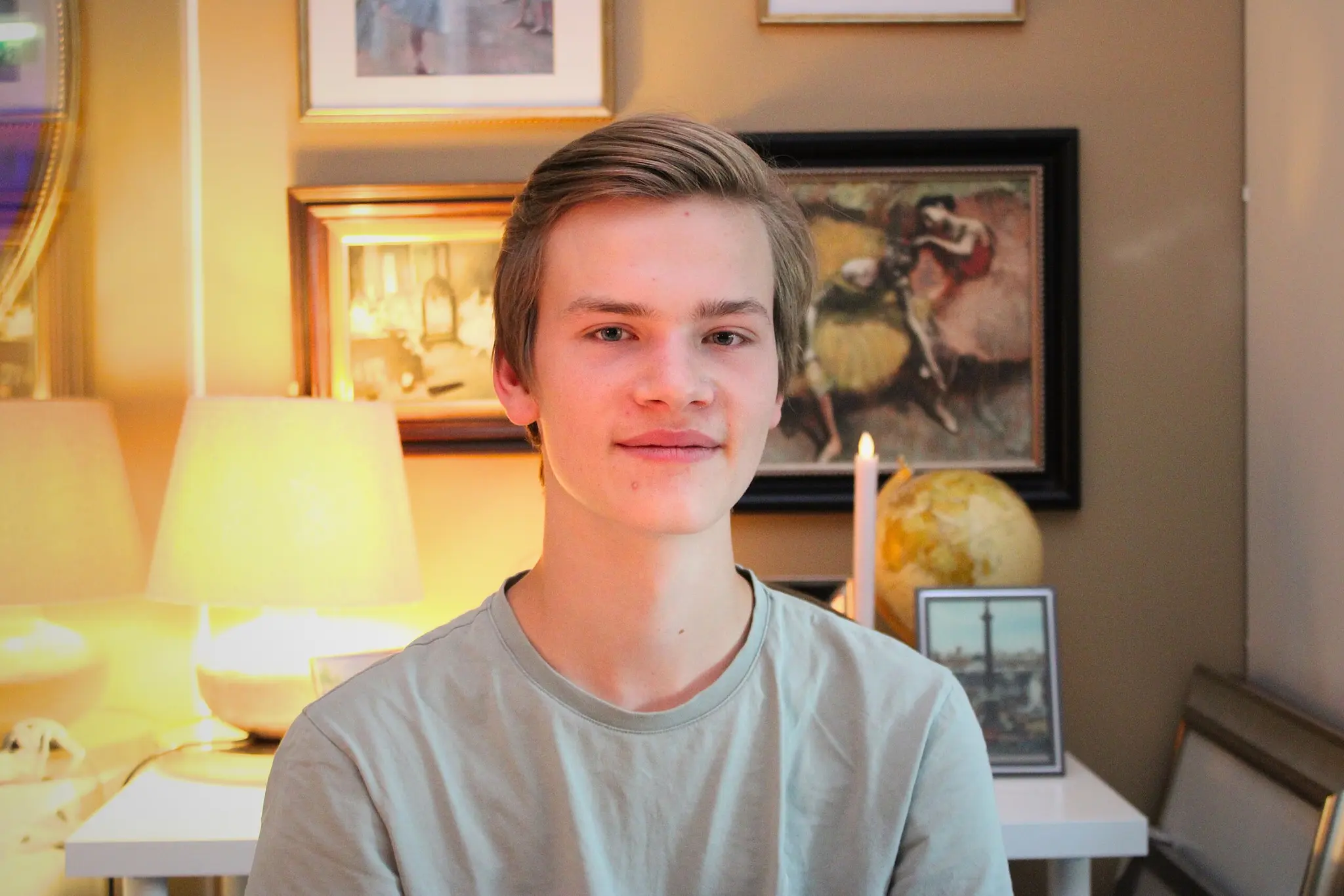
OpenAutark is a free, open-source desktop application that lets several AI agents split up a job and carry it out on your own computer, so your code, documents and internal messages never have to be shipped to a third-party cloud API. It was built by Stanislaus Hees, a 14-year-old developer from Salzburg, Austria, who works under Teydra Lab, and it runs on Windows, macOS, Linux and Android under the Apache 2.0 licence. This guide covers what the platform actually does, how to pilot it in seven steps, and the traps that catch first-time users.
What is OpenAutark, in plain terms?
The short answer: it is a workbench with a project manager inside it, not another chat window. Instead of you typing into one model and reading one reply, OpenAutark spawns a small team of agents on your machine, hands work to them, and keeps everything local.
The name is a clue to the intent. Its root comes from the German word „Autark", meaning self-sufficient and independent. That framing is deliberate. While AI vendors such as Perplexity have been rolling out Teammates multi-agent collaboration features, Hees went the opposite way and built an openly licensed, locally run alternative.
His own frustration was the starting point. Working with Claude Code and OpenAI Codex, he repeatedly found that a single platform's abilities were capped and that coordination across ecosystems was awkward. Reluctant to be tied to one AI vendor, he set out to build a local multi-agent desktop platform that supports mixed collaboration across several models at once. The stated purpose of OpenAutark is an "open, self-sufficient and highly resilient" open-source infrastructure for autonomous AI agents and automation workflows.
Why that matters is easy to see from the failure modes. AI is now embedded deep in production pipelines, yet most systems lean heavily on closed cloud models and third-party APIs, which exposes them to three boring but expensive hazards: everything stops when the network goes down, data leaks outward, and your compute is effectively held hostage by someone else's pricing and policy page.
Why does "digital sovereignty" now show up in a hobby installer?
Because dependence has become measurable, and it scares buyers. Parallels' 2026 State of Cloud Computing survey, published on 17 February 2026, reported that 94% of organisations are concerned about vendor lock-in, and 66% are actively looking for a new vendor. A separate 2026 Zapier survey of 542 US executives and decision-makers found that 47% said losing an AI service would disrupt key business functions. Those numbers describe exactly the anxiety OpenAutark is designed to answer.
Regulation adds a second pressure. With the European Union's GDPR and sector-specific data rules getting stricter, sending confidential business records, internal communications or core source code to a third-party public cloud API remains a compliance weak point. On 10 April 2025 the European Data Protection Board published its "AI Privacy Risks & Mitigations – Large Language Models (LLMs)" report, prepared by external expert Isabel Barbera, which lays out a lifecycle risk-management methodology and a catalogue of practical mitigations — the premise being that you must reduce what leaves your controlled environment in the first place.
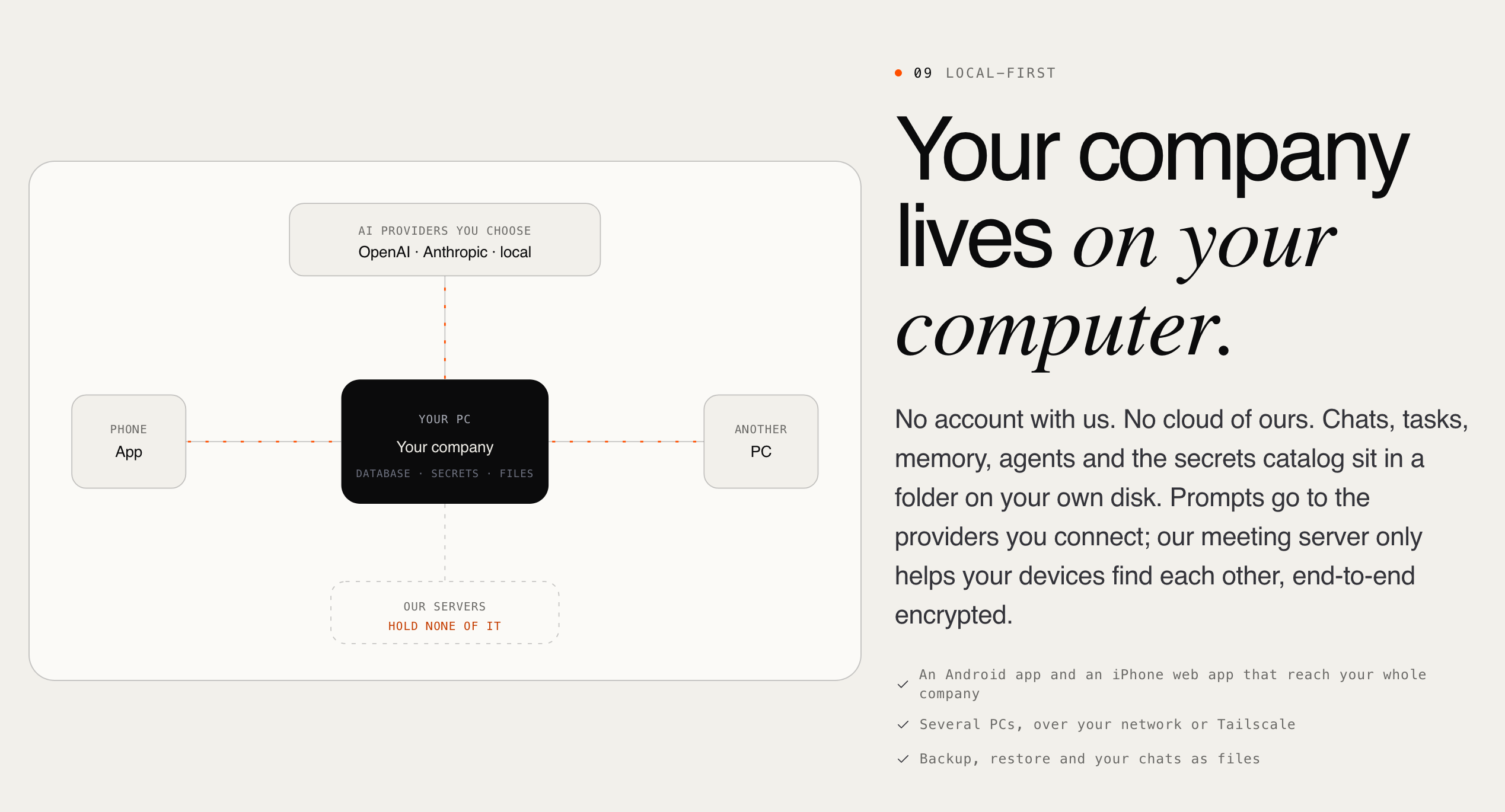
OpenAutark's answer is to implement "self-sufficiency (Autarky)" at the software-engineering level. An organisation can run the whole multi-agent collaboration chain on a local server or a trusted private cloud, keeping sensitive data inside the intranet for the entire task lifecycle. That is pitched at finance, government and enterprise, healthcare and proprietary R&D teams that want an intelligence layer without the compliance hangover.
How do you get it running? A seven-step pilot
Treat OpenAutark as an experiment you gradually promote, not as a switch you flip. The following sequence keeps the blast radius small while you learn where the seams are.
- Pick one repeatable, low-stakes workflow. Inbox triage, weekly report drafting, changelog summarising, or dependency checking. Repetitive jobs are where a local agent team pays back fastest.
- Size your memory before you size your ambition. The project is still early-stage, and the number of agents running concurrently is capped by the device's RAM. As a reference point from Ollama's own documentation, allow at least 8 GB of RAM for 7B-class models, 16 GB for 13B-class and 32 GB for 33B-class — then multiply that by the number of agents you intend to run side by side.
- Install from the project's GitHub repository and sandbox it first. Builds cover Windows, macOS, Linux and Android, but the Android client is the least proven; test on a machine you can wipe.
- Wire the model layer. OpenAutark abstracts the model layer away from the execution layer, so agents can move between Anthropic, OpenAI and local open-source large models. Point it at quantised local models served through llama.cpp, Ollama or vLLM, and keep one frontier cloud endpoint for the genuinely hard steps.
- Attach tools through the standardised sandbox. Using Teydra's existing extension ecosystem (for example Teydra-Extensions), OpenAutark exposes standardised sandbox and calling interfaces so local models can reach external APIs, file systems, databases and desktop automation (Proactive Agent). Grant read-only access on day one.
- Set human-in-the-loop gates. Configure transparent decision paths, audit trails and a takeover mechanism so that automated behaviour stays inside a bounded, reviewable range — the project's own design principle for avoiding black-box hallucination runaway. If you want a broader framing of who should be watching autonomous agents, see our practical guide for users and teams on Geoffrey Hinton's warning.
- Split the workload by cost. Route high-frequency, cyclical, highly repetitive automation to cheap local compute and close the loop there, saving expensive public cloud API calls for the tasks that need them. Done properly, this is where organisations can see several-fold to tens-of-times improvements in long-term total cost of ownership.
| Shape of the task | Where to run it | Why |
|---|---|---|
| Nightly log digest, file renaming, repetitive code linting | Local model via llama.cpp, Ollama or vLLM | High volume, low reasoning depth; marginal cost drops to your electricity bill |
| First-pass drafting of a standard report | Local model, with human review | Template-shaped work tolerates imperfect output |
| Architecture decisions, tricky debugging, long-context analysis | Anthropic or OpenAI frontier endpoint | Quality gains justify the API spend on the hard 10% |
| Anything touching customer records or regulated data | Local or trusted private cloud only | Keeps sensitive data inside the intranet for the whole task lifecycle |
What ships today: capabilities, licence and limits
- Multi-agent teamwork. The app uses a division-of-labour architecture: a Manager Agent distributes tasks, while each sub-agent keeps its own role, memory and task list, and work can be handed between agents.
- Cross-vendor and local model support. Agents can switch seamlessly between Anthropic, OpenAI and local open-source large models.
- Local execution and privacy. All agent computation happens on the user's own computer; cloud services are used only to connect the user's different devices.
- Automation put through real use. In recent development, Hees' agent team has begun assisting the development of the software itself, and even surfaced and handled a media contact request he had previously missed. Similar "agents building software" runs still lean heavily on human steering — our replay of Ginux, the Rust kernel an AI wrote in 11 days, is a useful calibration of how much supervision such work needs.
- Licence and price. Everything is free, open-sourced under the Apache 2.0 licence. The project's source code repository is on GitHub.
- Supported platforms. Full coverage of Windows, macOS, Linux and Android.
- Current limitation. The project is early-stage, and the number of agents that can run concurrently is limited by the device's memory capacity.
What is the project aiming for beyond one app?
Escaping frontier-model suppliers
Relying on a single cloud LLM provider means more than high bills: rate limits, outages and sudden API policy changes are all single points of failure. By separating the model layer from the execution layer, OpenAutark can schedule local quantised models alongside external frontier models. Routine automation closes the loop on low-cost local compute, while the paid cloud API is kept for the moments that genuinely need it.
From "passive chatbox" to "proactive autonomous workflow"
Most AI products today are still stuck in the "user asks, model answers" stage. The Teydra system — including its Proactive Agent Workforce line — is exploring something different: a Proactive Workforce that senses events on its own, links up with calendars and orchestrates multi-step tasks. OpenAutark supplies the open standard and base execution engine for that shape of software. Agents stop being chat windows and start listening for events in the background, analysing task dependencies, calling tools, and checking in with a human at key nodes, which frees knowledge workers from repetitive chores.
An anti-fragile base for the open agent ecosystem
Plenty of community agent demos are brittle, with tangled dependencies; lose the network or change one API and the whole thing collapses. If OpenAutark holds to modular, lightweight and highly self-sufficient engineering, it offers the community an "anti-fragility (Anti-fragile)" pattern: developers package, share and reuse private tool sets (Extensions) over a unified protocol instead of rebuilding everything for each new underlying model. Standardisation and independence are the step that takes an open AI toolchain from "geek toy" to "production-grade infrastructure".
Who should install it now — and who should wait
- Good fit: developers and tech-savvy professionals who already run local models, who do repetitive document or code chores, and who want a private lab rather than a managed service.
- Plausible fit: small teams in finance, healthcare or public administration that need a demonstrable "the data never left the building" story for internal compliance review.
- Wait: anyone whose workflow has hard uptime requirements, anyone with 8 GB of RAM and several agents in mind, and anyone expecting a polished onboarding flow. This is an early-stage project, not a vendor with a support contract.
Five mistakes first-timers make
- "Local means safe." Keeping inference on your machine removes one leak path, not all of them. Device syncing, telemetry and the cloud bridge used to connect your devices still need auditing.
- Over-launching agents. Concurrency is bounded by RAM; spinning up ten sub-agents on a laptop produces a queue, not a team.
- Granting write access on day one. The OWASP GenAI Security Project's Top 10 for Agentic Applications 2026 ranks Agent Goal Hijack (ASI01), Tool Misuse (ASI02) and Identity & Privilege Abuse (ASI03) among the leading threats — exactly the permissions an over-eager sandbox demo hands out by default.
- Assuming Apache 2.0 means no obligations. The licence permits commercial use and grants an explicit patent licence, approved by the Apache Software Foundation since 2004, but you still keep copyright notices, include the licence text, and get no trademark rights in return.
- Treating an open source alternative as a drop-in replacement. Vendors' Teammates-style features arrive with managed infrastructure and support; OpenAutark arrives with a repository and a RAM ceiling.
Frequently asked questions
Is OpenAutark really free?
Yes. The whole line is free and open-sourced under the Apache 2.0 licence, so you pay for hardware and your own time rather than seats.
Do I have to abandon Claude or ChatGPT-class models to use it?
No. Cross-vendor support is a core feature: agents can switch between Anthropic, OpenAI and local open-source large models, and you can route routine work locally while keeping a cloud endpoint for harder steps.
What is the biggest practical bottleneck today?
Memory. The project remains early-stage, and the number of agents that can run concurrently is limited by the device's RAM capacity.
Is this only interesting for privacy nerds?
Not only. The cost argument is concrete: moving high-frequency, cyclical, repetitive automation onto local compute is the mechanism by which organisations can achieve several-fold to tens-of-times reductions in long-term total cost of ownership.
Can a 14-year-old's project be taken seriously?
Judge the architecture, not the age — though maturity is a real caveat. Hees' agent team already contributes to the software's own development, which is a credible proof of concept; the early-stage status and RAM ceiling are equally real, so pilot before you depend on it.
Action checklist: your first two weeks
- Inventory the three tasks you repeat most often and estimate how many minutes each costs you per week.
- Check free RAM on the target machine and choose a local model size that fits, leaving headroom for a second agent.
- Install OpenAutark on a spare device; keep the cloud device-bridge toggle off until you need it.
- Connect one extension only — file system or calendar — and run it read-only for three days.
- Turn on the audit trail and define the takeover threshold: which actions must pause for a human?
- Compare one week of local runs against your last cloud API invoice, then decide what else moves.
- Re-read your licence obligations before you distribute anything you build on top of it.
References and further reading
- Parallels, 2026 State of Cloud Computing survey (17 February 2026): https://www.parallels.com/newsroom/news/press-releases/20260217-cloud-survey/
- Zapier, AI vendor lock-in survey of 542 US executives: https://zapier.com/blog/ai-vendor-lock-in-survey/
- European Data Protection Board, "AI Privacy Risks & Mitigations – Large Language Models (LLMs)" (10 April 2025): https://www.edpb.europa.eu/documents/support-pool-of-experts/ai-privacy-risks-mitigations-large-language-models-llms_en
- OWASP Gen AI Security Project, Top 10 for Agentic Applications 2026: https://genai.owasp.org/resource/owasp-top-10-for-agentic-applications-for-2026/
- Apache License, Version 2.0, Apache Software Foundation: https://www.apache.org/licenses/LICENSE-2.0
- Ollama project documentation and hardware guidance: https://github.com/ollama/ollama