
Case Replay: Ginux, the Rust Kernel an AI Wrote in 11 Days — Process, Numbers and Reusable Lessons | MyTechDailyNews
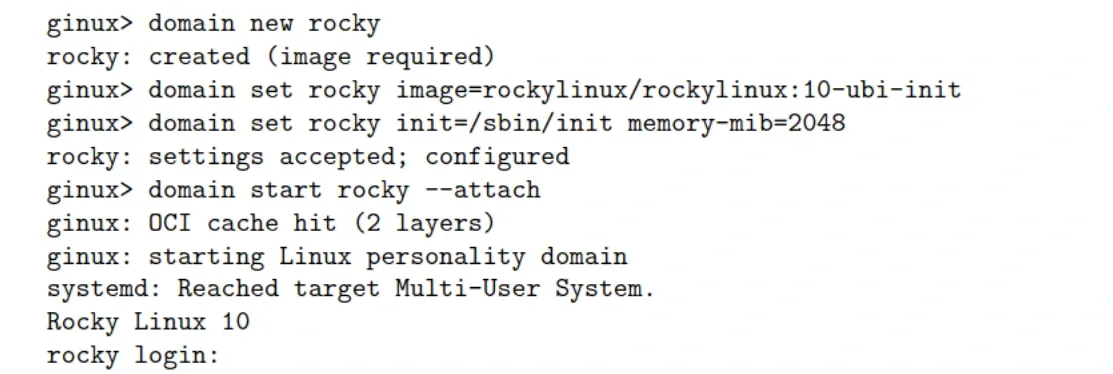
Eleven days is roughly how long it takes a mid-sized app team to ship a routine update. In that same window, Kurtzer says he finished with something far heavier: an operating-system kernel that can boot a real enterprise distribution. He unveiled the project, Ginux, on X last week, with the source code on GitHub and a technical report on Zenodo. Read the right way, this is not a story about a new rival to Linux. It is a documented case study of how far an AI coding agent can go when an experienced engineer stops typing code and starts writing the rules — and where the wall still stands.
Below is the replay: how the run was organised, what actually worked, what failed, and which habits ordinary product teams can copy.
The starting position: what was claimed, and what was not
Ginux is not a branch of the Linux tree and does not reuse existing Linux kernel components. Memory management, process scheduling, the file system and the networking functions were written from scratch, in Rust as the main language. The single thing Linux and Ginux genuinely share is the application binary interface (ABI): Ginux imitates the interface Linux offers to software, so programs compiled for Linux can run without being rebuilt.
The framing Kurtzer uses is worth quoting in plain terms. Linux, in this view, is not only one particular kernel — it is also the “personality” a kernel presents to applications, a compatibility environment anyone can re-implement. Today Ginux offers only that Linux-compatible personality; a BSD compatibility mode is described as a possibility rather than a plan. Even the name is a joke about the division of labour: Linux plus GPT plus Greg, with the project noting that the G is best read as GPT, so the author does not come across as too self-important.
Move 1: the human drew the map, the agent ran the loop
Kurtzer calls the method Human-Directed Agentic Engineering. The split is explicit and it is the part most teams can reuse immediately. The human owns the architecture, the constraints, the milestones, the acceptance criteria and the decision of when to stop. The AI owns the implementation loop: write code, boot the kernel, run the tests, diagnose the failure, revise, repeat — against checks a machine can grade.
A useful analogy is a contractor handed a blueprint, a materials list and a punch list. Nothing about the building's design is delegated; the bricklaying is done at machine speed. That distinction matters because the failure modes are different: bad prompting produces wrong code, but a bad acceptance test produces wrong code nobody can detect.
Execution came from a continuously running OpenAI Codex task on the GPT-5.6 Sol model. Over 11 days it produced roughly 139,000 lines of retained implementation and test material and completed more than 1,000 code commits. The report is published on Zenodo (zenodo.org/records/23682548), which makes the whole sequence auditable rather than anecdotal.
Move 2: the acceptance oracle was a real distribution, not a toy test suite
The decisive choice in this case is a methodological one. A hand-made test suite only proves the kernel matches its author's expectations. Rocky Linux — the same real-world distribution Kurtzer has spent years shipping — was used as the referee. Booting and running an actual distribution surfaced problems that artificially constructed test cases had missed.
By the end of the run, Ginux could load Rocky Linux 10 and carry it as far as systemd's multi-user target. It also picked up Alpine-based workloads, which rely on the lightweight musl library and BusyBox, and could assemble the file system for each workload from standard OCI container images. The isolation model, called “Domains”, gives each workload its own processes, address space and file system; the project presents this as a stronger boundary than conventional containers. In coverage of the report, 36Kr also noted that the kernel, its management controller and boot components ship as one EFI image that boots directly through UEFI, without an underlying Linux kernel.
Move 3: where the prototype stopped short — the numbers
The honest scoreboard is in the documentation, and it is less flattering than the headline.
| Dimension (reference: Linux 6.12, x86-64 interface) | Result | What it means for a normal user |
|---|---|---|
| Fully implemented system calls | 82 of 375 | Only a minority of the kernel services everyday software expects are complete |
| Partially working system calls | 245 | Some programs will start and then fail at an obscure step |
| Deliberately refused system calls | 48 | Certain features are switched off on purpose, not forgotten |
Hardware is the other hard limit. Everything runs inside QEMU virtual machines; Ginux cannot boot directly on physical machines, and it has no GPU or NVMe storage support. There is also no independent security audit, which means security claims cannot be verified. This is not a quibble: QEMU's own documentation warns that emulated environments should not be relied on for isolation or security guarantees (qemu-project.gitlab.io). “It runs in QEMU” therefore evidences interface correctness, not fitness for production.
Two reference points from the hand-written era
Eleven days is easier to appreciate next to comparable attempts. Redox OS, another Rust-based from-scratch operating system, was first published on GitHub in April 2015 and was still described as pre-stable a decade later — a milestone its founder Jeremy Soller took to RustConf 2025 to discuss as “10 Years of Redox OS and Rust”. SerenityOS, begun by Andreas Kling with a first commit dated October 10, 2018, likewise took years to reach a usable desktop. Those projects had different ambitions, so this is a comparison of pace, not of quality. The point is narrow and striking: the interval between “empty repository” and “it boots” has compressed from years to days.
The governance backdrop: the Linux community is rewriting its own AI rules
The case landed while the kernel project itself was shifting position. Last month, Linux founder Linus Torvalds used Claude Code to write a set of experimental page-cache patches; reviewers subsequently found a race condition, so the code remains under review. Around the same period, kernel maintainers agreed to stop requiring contributors to disclose whether code was AI-assisted — a rule that had only existed since January, and one Torvalds has likened in coverage to banning compilers (xda-developers.com). Disclosure is being replaced by the same standard Ginux relied on: executable tests and human review.
What this case is worth if you never touch a kernel
- Prototype cost has collapsed; verification cost has not. 139,000 lines in 11 days is a supply shock. Compatibility, security and long-term maintenance remain the actual moat, exactly as Kurtzer argues.
- Definition of done is now the scarce skill. The human contribution in this project was architecture plus gradable acceptance tests. Teams that cannot write clear pass/fail criteria will get fast, confidently wrong output.
- Real-world oracles beat synthetic tests. Booting an actual distribution did what the artificial cases could not. For most products the equivalent is testing against production-shaped data and traffic, not a tidy fixture.
- Budget the bill, not just the headcount. 36Kr's review of the report puts the model API spend for the 11-day run at around US$8,000 — trivial next to a kernel team, but a figure managers should expect rather than discover.
Common misconceptions
- “Ginux is a drop-in Linux replacement.” With 82 of 375 system calls complete, it runs a subset of Linux software and cannot be treated as a general-purpose substitute.
- “The boot benchmark proves it is faster.” Reported timings for reaching a login-capable Rocky Linux 10 state — about 12.9 seconds against 42.6 seconds for Linux in a constrained emulated single-core VM, per 36Kr — were taken under conditions that favour Ginux, including a pre-cached file system and no ordinary kernel load path. Treat them as indicative only.
- “139,000 lines means the hard part is finished.” The hard part in operating systems is hardware enablement, security review and a decade of maintenance, none of which the line count measures.
- “Anyone can reproduce this by prompting.” The steering came from one of the people who built CentOS and Rocky Linux. Replace him with a non-expert and the acceptance tests lose their teeth.
- “No disclosure means no review.” Dropping the AI disclosure tag in the kernel project changes paperwork, not the bar for code that ships.
A reusable playbook, plus what to do this week
- Write the architecture, the constraints and the milestones before invoking any agent; keep the stop condition yours.
- Convert every milestone into an executable check the agent can fail on — the way a real distribution's boot log failed Ginux repeatedly.
- Let the agent run the write → boot → test → diagnose → revise loop continuously rather than in chat-sized bursts.
- Use a real-world oracle (production-shaped data, an actual distribution, a genuine device) as referee, not a hand-built happy path.
- Publish the code and the method. Ginux's credibility rests on Apache 2.0 source plus an auditable report, not on a screenshot.
- Score coverage explicitly and disclose gaps: partial support and deliberate refusals are legitimate findings, hidden failures are not.
Action advice: if you run a product or engineering team, pick one internal tool and try the loop this week with three gradable acceptance criteria and a small budget. If you buy infrastructure, do not let “AI-generated” in a vendor pitch substitute for an independent security audit — the same standard Kurtzer applies to his own prototype. If you follow tech news, the metric worth watching is not the next line count but whether Ginux ever leaves QEMU, and whether GPU, NVMe and bare-metal support ever arrive.
FAQ
Is Ginux a fork of Linux?
No. It is written from scratch in Rust, with its own memory management, scheduler, process model, virtual file system and network stack. It shares only the Linux ABI, which is why Linux binaries can run on it.
Can I install it on my server or laptop today?
No. It runs in QEMU virtual machines, boots via UEFI, and currently lacks physical-hardware support as well as GPU and NVMe drivers.
How much of Linux does it actually support?
Measured against the Linux 6.12 x86-64 interface: 375 system calls in scope, 82 fully implemented, 245 partially working and 48 intentionally refused.
Who wrote the code?
An agent did, under human direction. A continuously running OpenAI Codex task using GPT-5.6 Sol produced roughly 139,000 lines and more than 1,000 commits in 11 days, while Kurtzer set the architecture, constraints, milestones and acceptance criteria — the method he names Human-Directed Agentic Engineering.
Is it safe to use?
Not yet, on the project's own account. It has not undergone an independent security audit, and QEMU virtualisation is not a security boundary in any case.
Why does this matter to non-specialists?
Because the same pattern — human sets goals and gradable tests, agent executes the loop — is now demonstrated on one of the hardest software targets there is. Expect it to show up first in internal tools, prototypes and migration experiments, where a fast draft is valuable and an audit trail is still required.
Bottom line
The Ginux case does not dethrone Linux. It dethrones the assumption that complex system software must be built slowly because humans must type every line. Kurtzer's own conclusion is the sober one: AI shortens the distance from nothing to something that runs, but it does not shorten the distance from something that runs to something you can trust on hardware you own, with security you can prove and maintenance you can staff for years. For anyone reading technology news, that gap — prototype to product — is the story to follow from here.