
Microsoft's Live-Editing AI Patent: What It Means When You Hear Words Nobody Said
Short answer: in principle, yes. A Microsoft patent application describes an AI system that monitors a live audio stream, swaps out, deletes or rewrites chosen words with only a few seconds' delay, and then redraws the speaker's mouth and face so the edited sentence looks completely natural. It remains a patent application rather than a shipping product, but it is a clear signal of where live broadcasting, translation and content moderation may be heading next.
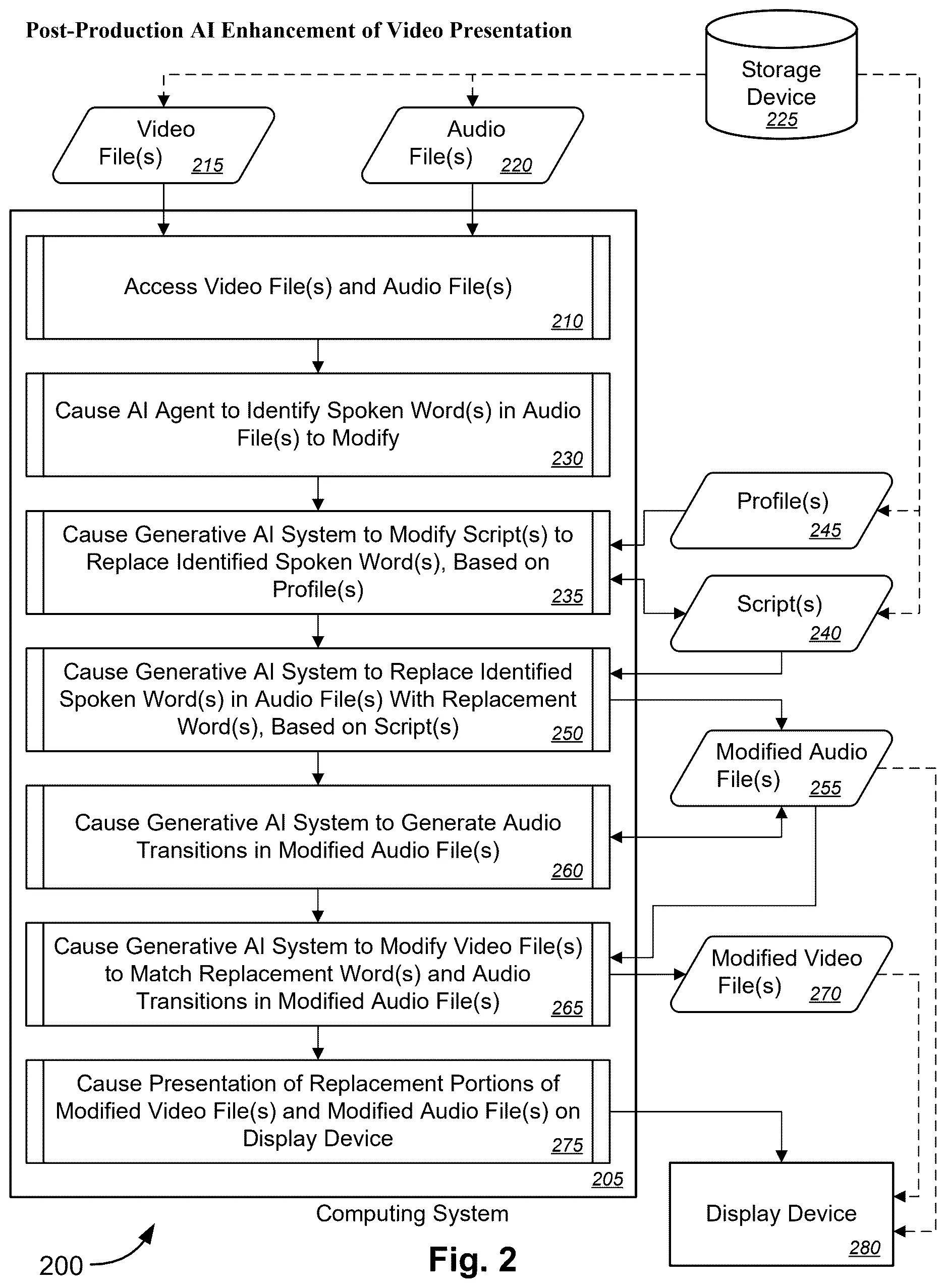
What exactly did Microsoft file, and how does the system work?
The filing is titled "Real-Time Artificial Intelligence-Enhanced Video or Augmented Reality Live Presentation Technology". It was first submitted in April 2025 and formally published in October 2026, and it reached public view through the patent-tracking site Patentlyze before tech outlets picked it up. The document covers more than audio tweaks: it proposes using generative AI on the picture itself, so a person's lip movements end up matching speech that was never recorded.
Stripped to its mechanics, the pipeline described in the filing runs in five steps:
- The system listens continuously to the incoming live audio stream.
- An AI agent flags the specific words or phrases that match its settings.
- Generative AI then replaces, deletes or rewrites that stretch of audio.
- Related video frames are modified in step — facial movement, lip shape and the trajectory of the mouth.
- Audio and picture around the edited segment are smoothed so the join is hard for a viewer to spot.
Microsoft frames the speed as "near real-time": between capturing the content and finishing the edit, only a few seconds elapse. The same architecture is described as usable both for post-production and for live transmission, which is precisely what makes it interesting beyond a studio edit bay.
Why the few seconds of delay is the detail that matters most
Live television has never been truly instantaneous. Broadcasters have relied on short delay buffers — the familiar "seven-second delay" or profanity delay — so that an operator can mute, bleep or cut away before a slip reaches the audience; the long-running convention is documented in the industry description of broadcast delay. What the patent adds is not the time window but what fills it.
A human bleep leaves a conspicuous gap that everyone recognises as an edit. The system Microsoft describes closes that gap silently: the filler sounds disappear, the wrong word is corrected, and the mouth moves exactly as the new audio demands. For a viewer, the difference between "something was censored" and "nothing happened at all" is the entire story.
What it could be used for — and what a viewer would notice
The patent lists a range of intended applications, from language access to audience-specific cleanup. The table below maps each use against the benefit and the failure mode that concerns critics.
| Intended use | What the audience gets | Where it gets risky |
|---|---|---|
| Real-time translation with matched lip-sync (the core use case in the filing) | A foreign-language talk feels native, without dubbing or subtitle lag | Translated phrasing is an interpretation, not a quotation |
| Removing filler sounds such as "um" and "uh" | Tighter, more fluent speech with no extra editing pass | Hesitation carries meaning; deleting it changes the tone of an answer |
| Correcting slips of the tongue, pronunciation errors and inaccurate wording | Fewer embarrassing mistakes on air | Corrections are only safe when they never touch substance |
| Filtering coarse language, sensitive terms, offensive expressions and some regional dialect words per viewer preference | Customised versions of one broadcast for different audiences | Different households literally hear different statements |
| Using web search to generate replacement wording on the fly | More accurate or more context-appropriate phrasing | Machine-chosen synonyms can drift from the speaker's intent |
| Formats named in the filing: lectures, award ceremonies, sports broadcasts, cooking shows and other live TV | Less manual post-production work and faster content turnaround | Live quotes from officials and athletes are the most sensitive cases |
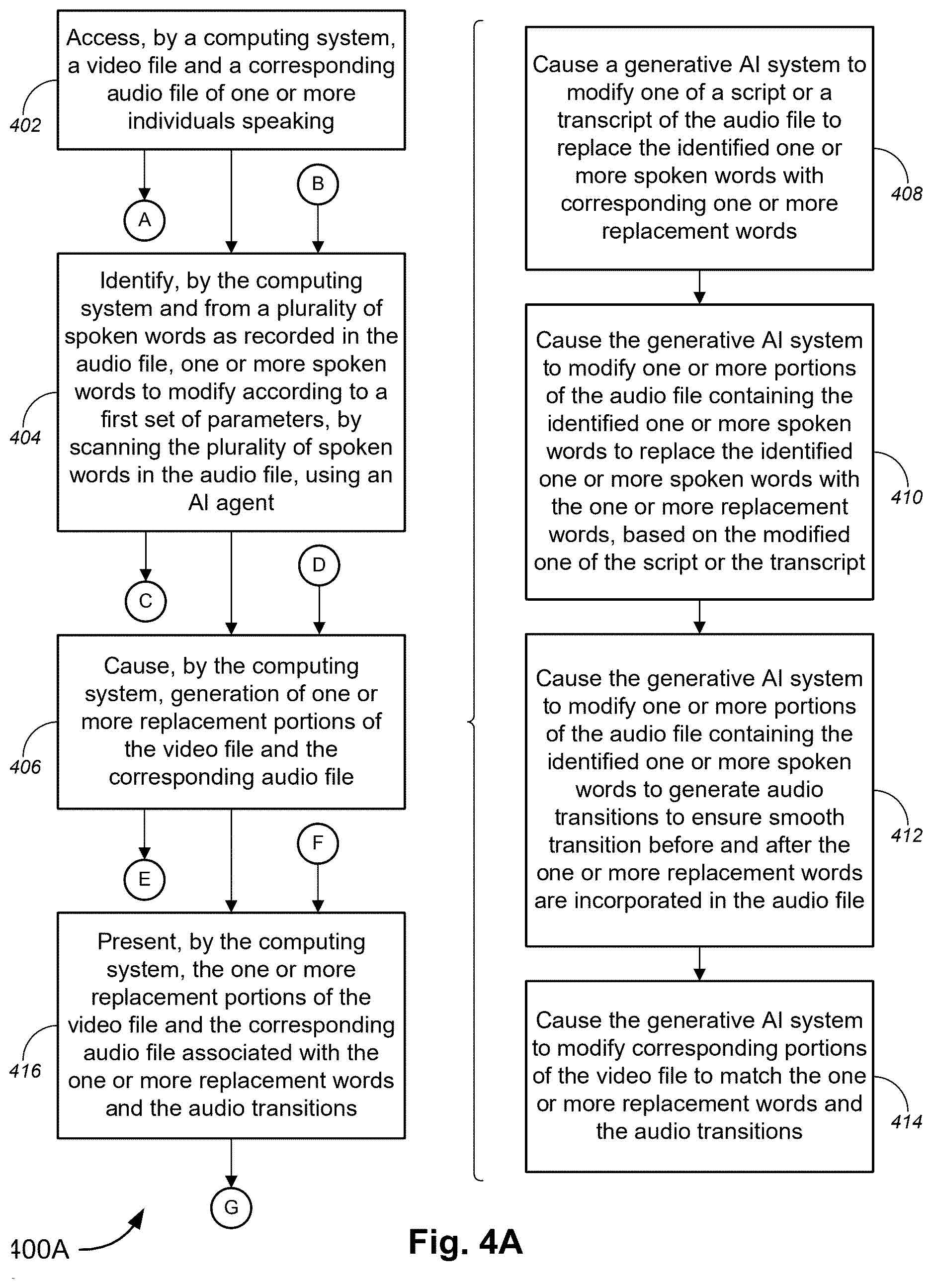
Where the trust problem begins
Because the technology can change what a speaker finally presents to an audience, commentators have raised the obvious worry: the same machinery that cleans up a cooking show could alter a politician's line, a company's statement or a news report, adding to the volume of misinformation in circulation. A patent that edits live quotes is therefore a governance question as much as an engineering one.
Microsoft anticipates part of this in the filing itself. In some configurations the untouched original audio and video are retained as a "base factual record", available for verification when a dispute, an investigation or a legal request arises, and certain variants mention digital identifiers that leave traces of the modification.
That idea maps onto standards that already exist outside the patent. The C2PA specification and its Content Credentials attach verifiable origin and edit history to media — a kind of nutrition label for a video file — and regulators have started to require its use in practice. The European Commission's transparency rules for AI-generated content, built on Article 50 of the EU AI Act, have applied since 2 August 2026: deployers of systems that manipulate video or audio amounting to a deep fake must disclose that fact, while providers are expected to mark synthetic content in machine-readable form (Code of Practice on Transparency of AI-generated Content).
Verification tools, meanwhile, are not a clean solution. Media-law practitioners point out that most detectors return a probability rather than a finding — "86% likely to be a deep fake" is not the same as admissible evidence — and the status of AI-manipulation forensics in court is still being tested (Kennedies' analysis of evidence in the AI era). Treat any tool output as a reason to investigate further, never as a verdict.
A six-step reality check for any live clip you rely on
Ordinary viewers rarely have forensic software, but the cheap checks below catch most problems:
- Ask how "live" it was. A stream with several seconds of buffering can carry edits you never saw happen; a genuine on-location moment cannot be altered without leaving the original feed behind.
- Look for provenance signals. Content Credentials, broadcaster watermarks or an on-screen disclosure are the fastest evidence that something was processed.
- Demand the base record. The patent's own logic says the unmodified capture should exist. If nobody can produce the raw footage or audio, say so in your conclusion.
- Cross-check against an independent transcript. Compare the clip with a stenographer's record, a separate camera, a press release or another outlet's file of the same remarks.
- Distrust your own eyes. Smoothed joins around lip shape and mouth movement are exactly what this design is built to hide.
- Extend the scepticism to AI text and images, not just video. Our step-by-step guide to spotting AI hallucinations in published reports works the same way: check the claim, then the source, then the citation.
If you run a livestream, set these five rules first
For creators, brand teams and broadcast operations, the practical question is not whether this tech arrives but what policy is ready when it does:
- Draw a hard line between formatting and meaning. Removing "um" and "uh" is one thing; replacing a word that changes substance is another and should be prohibited outright.
- Label everything. If lips or voices are regenerated for translation or cleanup, disclose it on screen — increasingly a legal expectation rather than a courtesy.
- Keep the untouched capture, timestamped and access-controlled. That archive is your defence when someone claims a quote was doctored.
- Log each change. What was edited, under which parameter, by which operator or model, and why.
- Require human sign-off for sensitive categories — earnings calls, political statements, safety announcements, news segments — and never let a search-generated substitute go on air unreviewed.
The wider context is that autonomous AI agents are already arriving in everyday tools rather than staying in research documents; the same agent pattern shows up in enterprise products such as Perplexity's long-running Teammates agents. Live media editing would simply be the most visible version of that shift.
Four misconceptions worth dropping
- "This is a new Microsoft feature." No — it is a patent application. Filing does not mean a product exists, and the industry holds a large backlog of patented ideas that never ship.
- "It only affects dubbing and translation." The filing explicitly covers deleting and rewriting individual phrases inside an untranslated broadcast.
- "Cleaning up filler words never changes meaning." Fluency is information. A halting answer and a polished one read very differently on a hot mic.
- "I watched it live, so it was real." Near real-time editing is designed to fit inside the delay you already accept as normal.
Your questions, answered
Has Microsoft released this live-editing technology?
No. Only the patent application is public: it was submitted in April 2025 and published in October 2026. There is no product, launch date or announced feature, and the filing may never be commercialised.
How fast could a live broadcast be changed?
The patent describes "near real-time" processing — a few seconds' delay between capture and finished edit — which is short enough to sit inside the buffering most streams already have.
Does the system throw away what was actually said?
Not by design. Certain configurations keep the original, unmodified audio and video as a base factual record, and some mention digital markers that preserve evidence of modification.
Should I stop trusting live TV and livestreams?
You should shift from trusting the format to trusting the provenance. A clip with a disclosed edit policy, an archived raw feed and verifiable credentials is more reliable than an unlabelled video, however "live" it appears.
Is live AI rewriting regulated anywhere already?
Partly. Under the EU AI Act's transparency obligations, in force since 2 August 2026, deep fake-style manipulation of audio or video must be disclosed by those deploying the system, and synthetic content must carry machine-readable marking.
The takeaway
An amended quote that looks and sounds perfect is not a futuristic thought experiment — it is the design goal written into a filing that went from April 2025 submission to October 2026 publication. Nothing forces a broadcaster to adopt it, and patents routinely stay on paper. But generative AI and real-time video handling keep improving, so the practical work for platforms, newsrooms and audiences is already visible: keep the original record, disclose every alteration, and make the disclosure easy to check. Convenience and authenticity are the two variables that will decide whether live TV with AI is welcomed or resisted — and that balance is now a public conversation, not a lab debate.
By Sarah Chen, General desk at MyTechDailyNews. Spotted a clip you suspect was altered? Send it to hello@techdaily.com and we will run it through the six-step check.
References
- Patentlyze — Microsoft patent entry on live AI video that rewrites speech: https://patentlyze.com/patent/microsoft-live-ai-video-rewrites-speech/
- Futurism — Microsoft patents an AI that can put words in people's mouths: https://futurism.com/artificial-intelligence/microsoft-patents-ai-words-in-peoples-mouths
- European Commission — Code of Practice on Transparency of AI-generated Content: https://digital-strategy.ec.europa.eu/en/policies/code-practice-ai-generated-content
- C2PA — Content Credentials standard: https://c2pa.org/
- Wikipedia — Broadcast delay: https://en.wikipedia.org/wiki/Broadcast_delay
- Kennedys Law — 86% fake, 100% admissible? Rethinking evidence in the AI era: https://www.kennedyslaw.com/en/thought-leadership/article/2026/86-fake-100-admissible-rethinking-evidence-in-the-ai-era/