
Manus 2.0 and Cue Put a Phone Number and a Wallet in Your AI Agent's Hands | MyTechDailyNews General
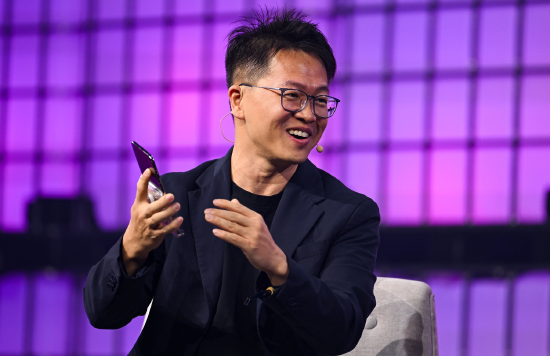
Short answer: an AI agent that owns its own phone number, email address and budgeted wallet can finally act in the real world instead of only drafting things for you — but only as far as the permissions you hand it reach. On the evening of November 9 local time, at Web Summit 2026 in Lisbon, Portugal, Manus co-founder and chief product officer Zhang Tao used his first public appearance since the Meta episode to describe exactly that shift. I review consumer tech for a living, so I watched the demo through one narrow question: which slices of my own working day would survive being handed to a machine that can dial my dentist, read my mail and pay an invoice.
Before the product talk came the personal one. The host, Casey Lau, opened with the line most of the room was already thinking: “This is your first time speaking publicly after the Meta event. How are you feeling?” Zhang Tao did not relitigate the acquisition turmoil. “Startups are like that — you always run into problems that need solving. We cannot predict what comes next, and that is simply what the process of building a company is. Right now, we are more focused on the future.”
It is worth naming the backdrop: after the acquisition and spin-off turbulence that held global attention, Manus walked back onto an international stage as an independent company again, with its next chapter rather than its last controversy on the agenda.
What did Manus actually announce, and what is genuinely new?
The new part is identity, not intelligence. In March 2025, Manus rose to fame with a general-purpose AI agent that could plan tasks on its own, call tools and complete complex work — pushing AI from “answering questions” toward “finishing the job”, which made it one of the most watched startups in the global agent wave.
Zhang Tao framed the past 20 months like this: “In March last year, when we first launched Manus, we in a sense defined a new category — the general AI agent. We introduced a computer for the AI, so that one agent could handle a large volume of long-tail tasks of very different kinds.” Giving a model its own virtual computing environment — browsing the web, gathering sources, running code, analysing data, chaining multi-step work into a finished research report, website or slide deck — was the original trick. He argues that trick is now table stakes: “Today everyone is building agents that can work on a computer. Maybe it is time to take one more step forward.”
That step arrived on September 28, 2026, when Manus formally released Manus 2.0 and, alongside it, Cue, a product aimed at the personal AI assistant scenario. On stage, Zhang Tao described the change in very concrete terms: Manus now gives its agents not only a computer, but a phone number, an email address and a digital wallet. With the user's authorisation, that means the AI can place calls itself, send and read text messages, sign up for online services, process email, and even pay within a budget the user has set.
One detail the session did not stress, but that matters if you want to try it: Manus's own launch post for Manus 2.0 (published September 28 on manus.im) presents the release as a bundle rather than a version bump — a new agent harness, a cloud computer, automations and a creation workspace — with Cue shipped as a separate app for phone and desktop, sitting in free, invite-code early access. So the demo you are reading about is a preview, not a generally available consumer product.
Where the money went also signals the stakes. On October 8, Manus's parent company Butterfly Effect announced the completion of a new funding round of over $500 million, co-led by Boyu Capital and IDG Capital, with existing shareholders including Tencent, HSG and ZhenFund taking part. Financial media in China, including Yicai, noted this as the company's first large raise after it resumed independent operations — capital markets, in other words, are not done with this category yet.
How does the 20-plus-todo morning actually work, step by step?
My favourite part of the conversation was not the roadmap but Zhang Tao's own inbox. He said that every morning he typically faces 20 to 30 to-do tasks — for a startup executive, those cut across product, marketing, team communication, research and project push-forward, with more than 20 items landing on the list before coffee.
“For me, the hardest part is not solving the problem, it is starting a task,” he admitted, noting that he has ADHD (attention deficit hyperactivity disorder) and that in the past he sometimes chose to ignore the pile rather than open it.
Here is the loop he described on stage, broken into the stages anyone could copy with a tool like this:
- Dump everything, do not triage first. He hands all the to-do items to Manus instead of sorting them by hand.
- Let the agent decompose. Manus splits the list into discrete tasks and starts executing.
- Expect to be asked back. If a task needs more context, the agent questions him rather than guessing.
- Route with background, not just an instruction. When a task fits someone else, Manus sends it out through Slack — after first pulling relevant context from platforms such as Notion, Slack and Gmail, so the colleague receives the task plus the material needed to finish it.
- Ask for status on demand. He can simply ask Manus: “The tasks I give you every day — what is their progress right now?” and the AI aggregates where everything stands.
His own shorthand for the setup is a “Chief of Staff” that doubles as a PMO (project management office). The honest caveat from my side: a description from the vendor's founder is a demo, not a benchmark. What I would look for before believing the time savings is a published task-completion log — what the agent finished unprompted, what it botched, and what it needed a human to redo.

Zhang Tao used a new iPhone Duo on stage to show how work tasks get broken down and completed through AI agents.
What guardrails should you set before an agent touches your accounts?
Read this as my working checklist rather than vendor advice, because the point of this pitch is that risk grows with privileges. An agent that can call, text, register services and spend money is, in security terms, a new kind of account holder.
- Start read-only. Research, summarising and drafting only; no wallet, no outbound calls, no sending.
- Cap the wallet hard. Manus's own framing is payment “within the budget the user has set” — treat that cap as the first setting you change, not a footnote.
- Give one agent one job. In Cue, multiple agents each carry their own digital identity and can be pointed at a shared goal — one finds the venue, one screens options, one builds the deck. Split duties so no single credential can do everything.
- Keep a human checkpoint on irreversible actions. Payments, cancellations and anything sent to a real person get confirmed by you.
- Read the logs weekly. Manus has previously described transparency about what the agent is doing as a design principle; in a May 13, 2026 InfoQ interview, Zhang Tao revisited the two choices behind the product's early traction: giving AI “hands” inside a cloud virtual machine, and keeping the agent's steps visible.
- Assume you are the auditor. OWASP's Top 10 for Agentic Applications 2026 — a peer-reviewed risk framework — treats agent identity, permissions and excessive agency as first-class risks, which is a polite way of saying the industry has not finished solving this.
What changes at work: hiring tests, job titles and the 2027 question
The strongest section for ordinary readers was the one on jobs. Casey Lau asked what hiring looks like as we move into 2027, once a mass of routine work can be handed to AI — and whether companies still need as many conventional roles.
Zhang Tao said the company's recruiting philosophy has already shifted in the past few months: “The people we look for are no longer just people who are good at doing things, because AI is already very good at doing things. What we truly need are people who can work alongside AI.”
Manus changed the engineering interview to match. Instead of the traditional coding exam or algorithm test, candidates get one real problem and are asked to finish it using Manus within four hours. The company then reviews the whole process together: how the candidate asked the AI, what background they supplied, how they adjusted instructions, and how they used the tool to get unstuck. The deliverable matters, but the collaboration is what is scored.
The same logic reaches inside the org chart. Zhang Tao says he owns product and marketing, that product managers at Manus write code and join design work, and that designers are expected to program too. “Internally, our idea is that everyone can do anything. We do not weigh job titles much; we care about who can get the thing done.” That does not mean no specialists — the company still hires front-end and back-end engineers, with the boundaries between roles drawn in pencil.
If you are job-hunting in tech, my read is practical rather than doom-laden: rehearse the two skills this test actually measures — writing a brief an AI can execute, and noticing fast when the output is wrong.
Can a 30-second video come from fewer than 30 English words? Where the pitch gets thin
Yes — on stage, at least. The host noted that Manus 2.0 has already added video, and asked Zhang Tao to produce one live from plain text. He said that about a month ago, the public impression of AI-generated video was a flood of uneven output that demanded endless prompt revisions; now, he argued, a user can describe the need in very simple language and complete the whole chain from information gathering to finished video. His instruction was fewer than 30 English words, roughly: research the 2026 Web Summit and make a 30-second video to show in this room. Manus gathered the sources and generated the clip; in Zhang Tao's assessment, the finished piece — concept to export — was already a mature product.
Now the shortcomings, because a review without them is advertising:
- Preview status. Cue is invite-code early access, so most readers cannot reproduce this workflow this week.
- No independent numbers. Nothing on stage quantified task success rates, cost per completed task, or error recovery.
- Economics are the elephant. Gartner's June 25, 2025 forecast holds that more than 40% of agentic AI projects will be cancelled by the end of 2027, citing escalating costs, unclear business value and inadequate risk controls. Autonomy without a bill of health is how projects die.
- Identity and fraud exposure. A phone number that answers your dentist's appointment call and a wallet that pays are attractive targets; the security frameworks above exist precisely because agent credentials leak.
- What was not discussed. The session did not go into enterprise administration, data residency or per-seat pricing.
Common misconceptions after the Web Summit 2026 talk
- “An agent with a computer is the same as an agent you can trust with money.” No — execution ability and payment authority are separate permissions, and the second one is where Manus's own “user authorisation” language does real work.
- “Multi-agent group chats mean you can cut headcount.” The stage example was three agents splitting one goal while a human sets direction and signs off; the company still hires engineers.
- “This is the first product ever to give AI a computer.” Manus defined that category in March 2025, and Zhang Tao's own claim is that everyone does it now.
- “One demo clip means content teams are redundant.” A 30-second event recap generated from fewer than 30 English words tells you about convenience, not about editorial quality at scale.
FAQ: the questions readers keep sending me
Was Manus back on stage because the Meta deal is settled?
Not on the evidence available. The host's opening question was the only place the aftermath surfaced. What the reporting documents is that, after the acquisition and spin-off turbulence that drew global attention, Manus returned to an international stage as an independent company — and that on October 8 its parent, Butterfly Effect, announced a new round of over $500 million.
Can I try Cue today?
Only through the invite-code early access described in Manus's September 28 launch post on manus.im. Treat everything you have seen as a preview.
What should I connect first if I try an agent like Manus?
My order of operations: one bounded research task with a deadline, read-only access; then a drafting job that outputs to a folder you review; only then email sending; wallet access last, and always with the smallest budget cap that lets the job run.
Does “AI is very good at doing things” mean my tasks are gone?
Zhang Tao's own answer pointed at a different skill mix — people who can collaborate with AI, define a problem, brief a machine and check its work. His personal bottleneck is instructive: the hardest part is starting a task, not solving it.
Why should a non-technical reader care?
Because the phone number and the wallet are the consumer-facing bits. If agents can register services, read texts and pay within a limit, the questions stop being model questions and start being banking questions: who authorises, who sees the log, who gets blamed when the agent buys the wrong thing.
Verdict: worth piloting, but keep the leash short
Here is my buying advice, applied to software rather than a gadget. If your workday already looks like 20-plus to-do items spread across channels you keep in Notion, Slack and Gmail, the Manus 2.0 direction — decompose, ask back, ship context to teammates, report progress — is the part worth testing first, because it is the part Zhang Tao described using himself every single morning. If you expected to hand it your calendar and credit card and go on holiday, stop: this is an early-access product line, the guardrails are yours to build, and the industry's own risk frameworks and failure forecasts say plenty of agent projects stall before they pay back.
Run a seven-day pilot: Monday, one research task, read-only. Tuesday through Thursday, repeat it and log every place the agent had to ask you for context — that list is your real integration requirement. Friday, let it draft one outbound message you approve manually. Weekend, review the logs and decide whether a wallet cap is worth setting at all. That is how I would spend my own week with it, and I would not sign it up for anything that can spend more than my lunch.
References
- Introducing Manus 2.0 — Manus official blog, September 28, 2026
- Web Summit 2026, Lisbon, November 9-12 — official event page
- Gartner: over 40% of agentic AI projects will be cancelled by end of 2027, June 25, 2025
- OWASP Top 10 for Agentic Applications 2026
- InfoQ on Manus's agent design and transparency choices, May 13, 2026
- Yicai: Manus parent Butterfly Effect closes over $500 million round, October 8, 2026