
iPod 25th Anniversary: A Practical Guide to Old Hardware, 1,000 Songs and What Replaced Them | MyTechDailyNews General
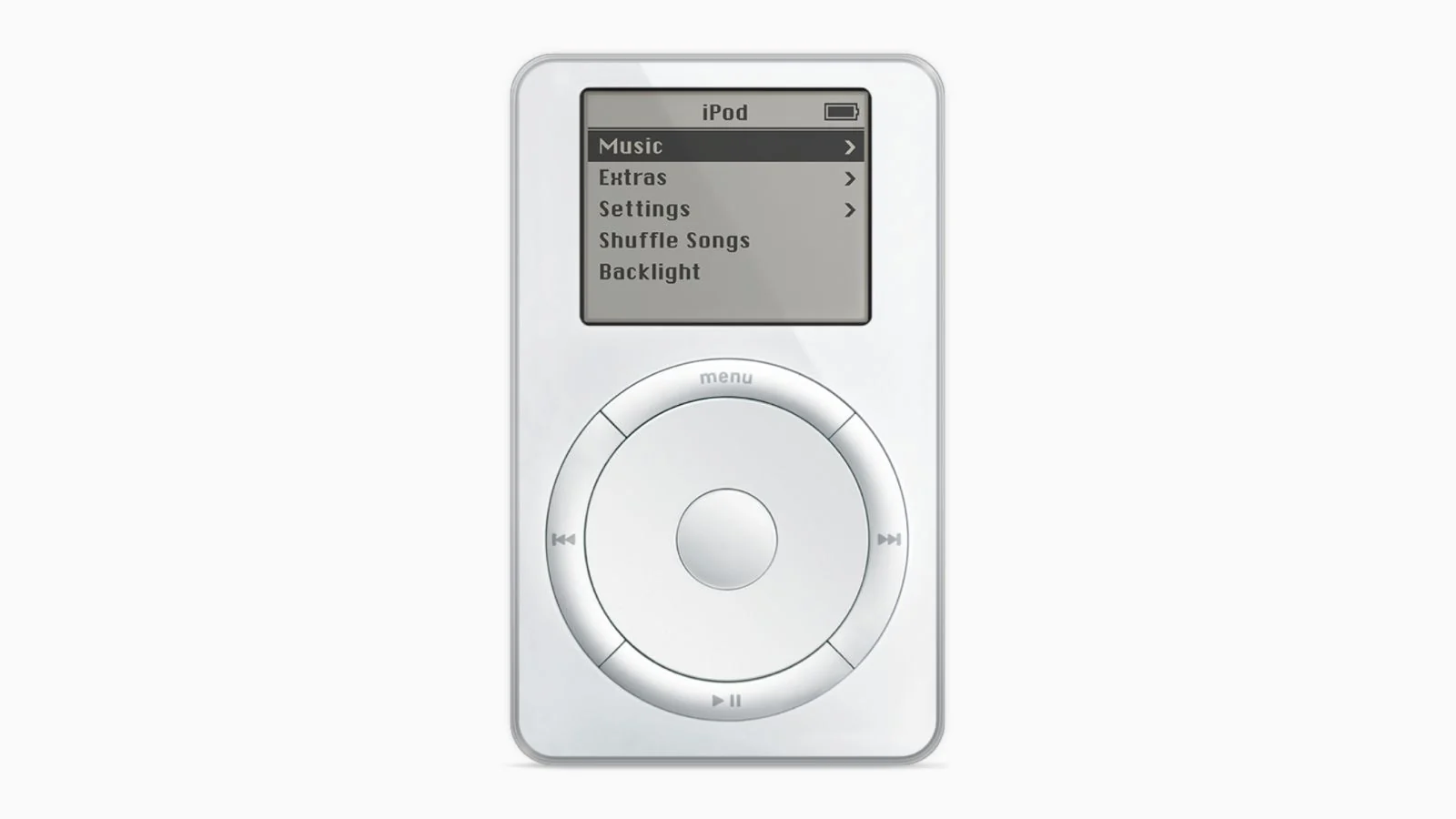
I pulled a white 30-pin player out of a drawer this week with one blunt question: does a retired iPod still do anything useful? Short answer, yes — as a working music machine if you buy the right cable, and as a lesson in how music gets organised. Apple's first-generation iPod went on sale on November 10, 2001 at $399, carrying a 5GB drive and the promise of 1,000 songs in your pocket.
What actually happened on October 23, 2001
The turning point was not the hardware, it was the pairing of hardware with a library. Steve Jobs, then Apple chief executive, showed the first iPod at a small event at the company's headquarters on October 23, 2001; sales followed on November 10, 2001. The spec list reads humble now: a 5GB mechanical hard drive, a monochrome LCD, a physical scroll wheel, and battery life rated at up to 10 hours.
Where it felt advanced was transfer speed and housekeeping. Music moved over a FireWire port, and the same port charged the battery, so a listener carried one cable rather than two. iTunes synced the collection and playlists automatically. In Apple's own launch materials, a full CD could be copied in under 10 seconds, and all 1,000 songs in under 10 minutes — a comparison aimed squarely at the USB-based players then on the market. The drive also held documents and other files, which is how owners first used it: as a pocket hard disk that happened to play music.
Reviews were not uniform praise. The first iPod worked only with Mac computers, not Windows, and $399 struck many buyers as expensive. Some press and users openly doubted that it was revolutionary at all.
Three misconceptions I still see about the iPod
- It was the first hard-drive music player. It was not. Creative shipped the Nomad Jukebox with a 6GB drive back in 2000, larger than the iPod's 5GB, and Archos answered later that year with the Jukebox 6000. The iPod's real innovation was packaging plus software: a wheel you could browse with, and a library manager that kept order without effort.
- It supported Windows from day one. It did not. The first Windows-compatible units arrived with the second generation, dated July 17, 2002 in The Apple Wiki's model list, and Apple's own Windows release of iTunes came even later, in October 2003. Before that, Windows owners managed music with third-party software such as Musicmatch Jukebox.
- "1,000 songs" was a spec. It was arithmetic on compressed files, and by my calculation it does not survive contact with lossless audio. At 128kbps, a four-minute track lands around 3.8MB, so 1,000 of them need roughly 3.8GB — a comfortable fit inside 5GB. The same 1,000 tracks ripped to CD-quality lossless sit near 42GB, more than eight times the drive. Anyone quoting that slogan today is quoting a file format, not a capacity.
How a 21-year product line unfolded: a skimmable timeline
| When | What changed | Why it mattered for owners |
|---|---|---|
| 2002 | Second-generation iPod replaced the mechanical wheel with a touch-sensitive one | Fewer moving parts to wear out, and no dust grinding inside the wheel gap |
| 2003 | Third generation adopted the 30-pin Dock connector; the iTunes Music Store opened on April 28, 2003 at 99 cents per song, selling more than 1 million tracks in its first week | One connector for docks, car kits and chargers; one price point made singles worth buying again |
| 2004 | Colour displays arrived on the full-size model; iPod mini shipped in anodised aluminium with silver, gold, pink, blue and green, and introduced the Click Wheel | Play controls and scrolling merged into one ring; smaller bodies made the player a daily carry |
| 2005 | iPod shuffle and iPod nano launched; video playback was added to the line-up | Flash memory replaced the spinning drive in the nano, thinning the hardware; the shuffle dropped the screen entirely |
| 2007 | Apple announced in April 2007 that cumulative sales passed 100 million units, under six years after launch; in September 2007 the iPod touch arrived with a 3.5-inch Multi-Touch display, Wi-Fi and the Safari browser | The touch model carried the interaction grammar later phones would adopt, minus cellular voice |
| 2010 | Sixth-generation iPod nano went square and could be worn on the wrist with third-party bands | A music player started doubling as a fitness-style wearable |
| 2011 | Cumulative sales topped 304 million units by October 2011 | The category's ceiling had already been reached |
| 2014 | iPod classic was discontinued in September 2014 | High-capacity spinning-drive players left the shelf first |
| 2017 | iPod nano and iPod shuffle lines ended in July 2017 | Only the touch remained on sale |
| 2019 | Seventh-generation iPod touch launched in May 2019 with an A10 Fusion chip and up to 256GB storage | A final refresh that Apple never followed with another hardware update |
| 2022 | Apple ended production of iPod touch on May 10, 2022, closing a 21-year line | The dedicated pocket player became second-hand hardware |
Volume peaked earlier than the cumulative numbers suggest: 2008 was the best single year, at roughly 54.83 million units according to Statista's iPod statistics, and annual sales had fallen to about 14.38 million by 2014. Smartphones absorbed the job — music, internet, messaging and apps inside one pocket device — and a standalone player lost its reason to exist.
Can a 25-year-old iPod still play music today? A six-step check
- Identify the port, not the poster. Early units transfer data over FireWire as well as charge through it. Apple later stripped FireWire data support, starting with the first-generation iPod nano, and on the fifth-generation iPod classic the port remained for charging only. Late models use the 30-pin connector. Buy the matching cable before you buy the player.
- Map your adapter chain. Modern laptops have USB-C or Thunderbolt only, so a first-generation iPod needs an extra bridge such as a Thunderbolt-to-FireWire adapter plus a FireWire cable. Owner communities routinely report the cheaper route: a period-correct used laptop with a native port.
- Sort the software before the shelf. iTunes no longer exists as one app on current macOS; iPhone, iPad and iPod syncing moved to the Finder, as Apple's support documentation states. On Windows the situation differs, and owner forums report that recent macOS updates stopped listing some pre-touch players at all. Test any used unit against your own machine first.
- Inspect the battery before you charge. That nominal 10 hours is now mostly theory. Apple's own community support treats a swollen cell as a fire risk rather than a quirk: look for a lifted back plate or a screen separating from the shell, and stop using a bulging unit immediately.
- Match file types to the generation. Older players handle MP3 and AAC; Apple Lossless support appears only on later firmware, and subscription files from Apple Music are not a transfer target for discontinued hardware. Purchases from the earliest store years may also carry DRM. Convert first, then copy.
- Set a realistic library size. On a 5GB drive, plan around 1,000 compressed tracks, not your whole collection. The 256GB ceiling of the last model shows how much of the pitch was file size rather than ambition.
What the iPod changed for the way you pay for music
The commercial shift outlasted the device. Before 2001, digital music mostly meant files you found yourself; the iPod made a managed library desirable, and the 99-cent single made it payable. Twenty-five years later the money has moved again. IFPI's Global Music Report puts global recorded music revenue at $31.7 billion in 2025, up 6.4% and an eleventh straight year of growth, with subscription streaming accounting for more than half of industry revenue. You no longer own the 1,000 songs; you rent access to several million of them.
Apple's framing at the time of the last shutdown was that the spirit of the iPod survives elsewhere: Steve Jobs-era product thinking now lives across the iPhone, Apple Watch, HomePod mini, Mac and iPad, with Apple Music carrying the library. Greg Joswiak, Apple's senior vice-president of worldwide marketing, said at the announcement that iPod's spirit would live on in all of those products. Reading the current smart-home lineup — HomePod mini and its screen-based companions included — that argument holds: the player became a service.
Should you buy, keep or skip one? My advice by buyer type
- Curious listener, small budget. Skip the collector market. A working late-generation unit is fine for a commute, but a phone you already own does the same job with a bigger catalogue. If you want the deliberate, screenless listening feel, today's iPad covers it without a cable hunt.
- Nostalgia owner with a drawer unit. Run the six-step check above. Budget for a cable, an adapter and a battery service; expect the first charge attempt to be the failure point, not the music.
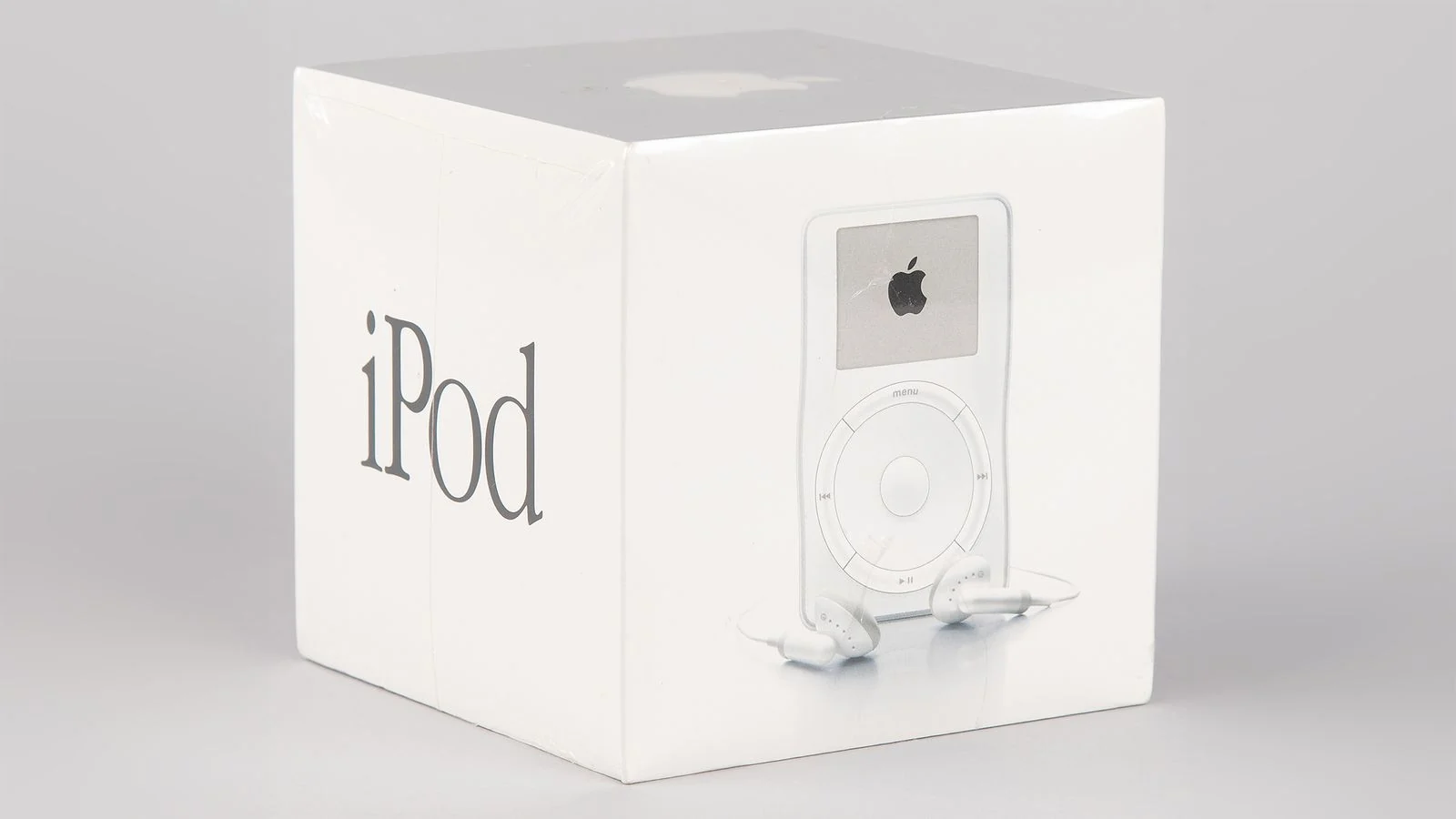
- Anyone treating it as an investment. Handle with care and paperwork. Sealed first-generation units have cleared $25,000 at RR Auction in August 2022, $29,000 through the platform Rally in 2023, and $40,264 in an RR Auction sale reported in August 2025. Those prices are for unopened boxes with provenance, not for the scratched player in your drawer, which typically trades in the low hundreds. Value here sits in packaging, not playback.
FAQ: what people search when an iPod resurfaces
Was the iPod the first MP3 player?
No. Hard-drive players preceded it, and flash-based ones existed too. The iPod won on interface, storage-to-size ratio and iTunes integration, and on the credibility of a launch that promised 1,000 songs in your pocket and delivered on it over FireWire.
How long did the product line last?
21 years: from the announcement on October 23, 2001 and the November 10, 2001 on-sale date to Apple's decision on May 10, 2022 to end production of iPod touch.
Can I still sync an old iPod to a modern computer?
Sometimes. On current macOS, syncing happens in the Finder rather than iTunes, and support for pre-touch models has thinned out over successive updates. On Windows, third-party managers remain the practical route for older players.
Why did the iPod disappear?
Consolidation. Once one device handled music, browser, phone calls and apps, a dedicated player lost its slot in the pocket and the price bracket that justified it.
Sources consulted
- Apple newsroom, "Apple Presents iPod", October 23, 2001 — FireWire transfer claims of under 10 seconds per CD and under 10 minutes for 1,000 songs
- Apple newsroom, "Apple Launches the iTunes Music Store", April 28, 2003, and "iTunes Music Store Sells Over One Million Songs in First Week", May 5, 2003
- Apple newsroom, "100 Million iPods Sold", April 9, 2007
- Apple Support, "Use the Finder to sync your iPhone, iPad, or iPod touch with your Mac"
- CNN, review of the Creative Nomad Jukebox, October 13, 2000
- The Apple Wiki, "List of iPods" — connector and platform-support dates
- Statista, iPod unit sales statistics — 2008 peak of 54.83 million units
- IFPI, Global Music Report 2026, and Reuters coverage of the same figures
- USA Today and Barron's on the $29,000 sealed first-generation iPod sale; MacRumors on the $40,264 RR Auction result