
Apple's November 6 Launch, Decoded: A Practical Guide to the OLED iPad mini, M6 iMac and the Touch MacBook Pro | MyTechDailyNews
Starting today, Apple is selling its biggest autumn wave: the OLED iPad mini, the M6 iMac and the new-generation MacBook Pro lineup all reached buyers on November 6, with U.S. prices spanning $699 to $3,399. Orders run through Apple's official website and the Apple Store app, but if you want hardware in hand this week, a trip to an Apple Store retail store beats the online cart — several configurations are currently quoted at 2 to 3 weeks.

What exactly goes on sale on November 6?
Four products, one date. Apple's release closes out the year with one new tablet and three desktop-class machines: the eighth-generation iPad mini with an OLED display, the iMac built on the M6 chip, and two flavours of the new MacBook Pro series — the M6 model and the first touch-enabled MacBook Pro models.
| Device | Silicon | Screen | From (U.S. market) | The catch |
|---|---|---|---|---|
| Eighth-generation iPad mini | A20 Pro processor + Apple N1 wireless chip | 8.5-inch Super Retina XDR using OLED display technology | $699 (128GB) | Stays at 60Hz, no ProMotion adaptive high refresh rate |
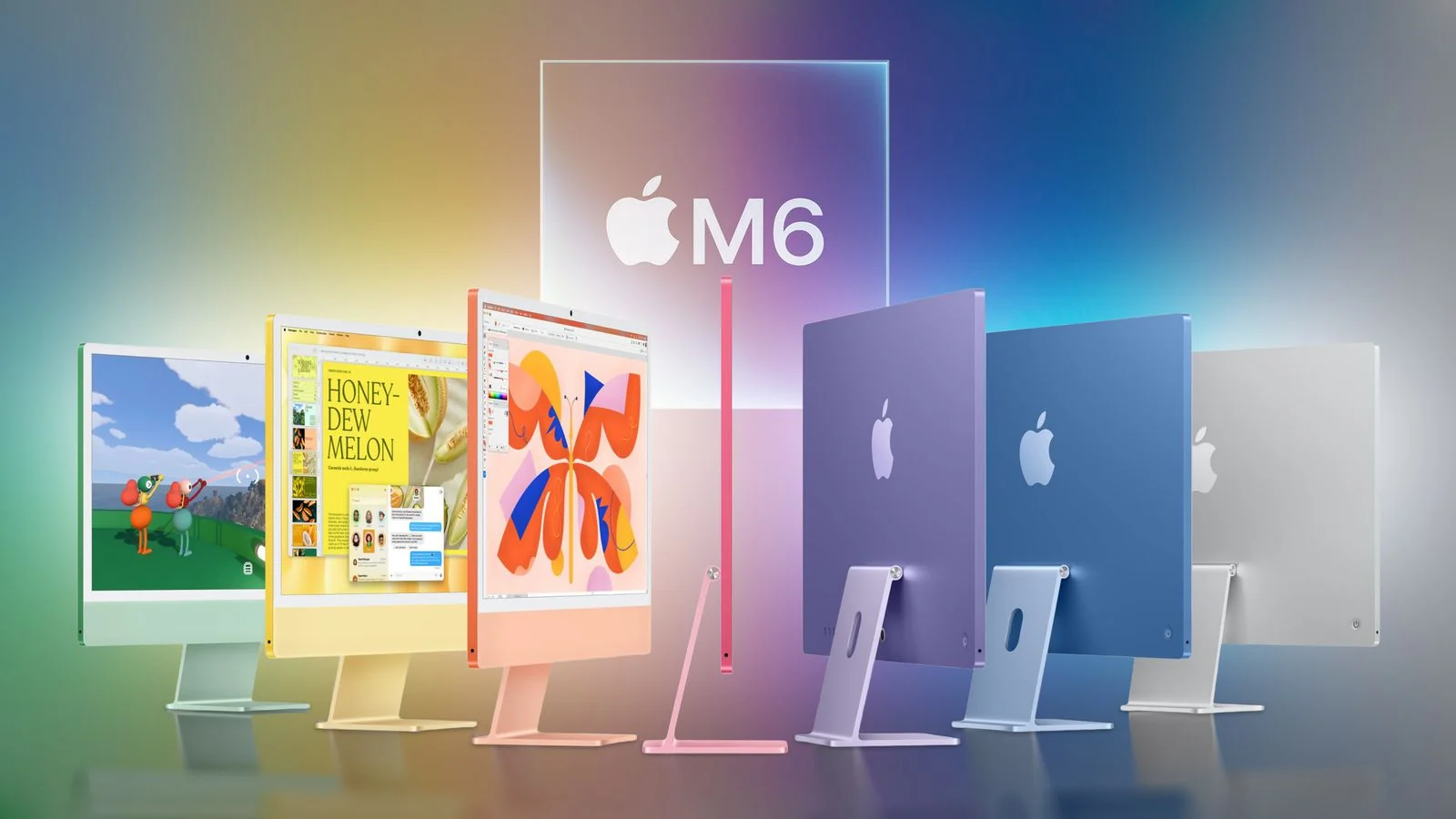
| M6 iMac | M6 processor, 10-core CPU / 10-core GPU or 12-core CPU / 12-core GPU | 24-inch all-in-one | $1,499 | First major update since the M4 version iMac |
| 14-inch MacBook Pro (M6 version) | M6 chip, 12-core CPU and 12-core GPU | 14-inch | $1,999 | Base Pro, no touch layer |
| MacBook Pro touch-enabled models | M5 Pro or M5 Max | PROLED XDR touch display, 14-inch and 16-inch | $2,899 / $3,399 | Longest lead times, up to 2 to 3 weeks |
How to buy one: a seven-step playbook
- Start on Apple's official website or in the Apple Store app. Sales opened today, first pre-order customers are already receiving devices, and Apple Store retail stores plus the Apple authorized reseller channel have stock on shelves.
- Lock storage before you fiddle with the screen options. On the new iPad mini, the anti-glare nano-texture glass is offered only on the 256GB and 512GB models and adds $100 — the entry 128GB machine cannot have it at any price.
- Read the shipping estimate before paying. The estimate is the only reliable signal of whether you are getting a machine this month or next.
- Compare online lead time against local stock. Apple's online store currently shows several silver and space black configurations of the 14-inch and 16-inch touch-enabled MacBook Pro models slipping to 2 to 3 weeks, so a walk into an Apple Store retail store can be the faster route.
- Check the education ladder first. Education pricing for the iPad mini begins at $649, and the education price for the M6 version iMac starts at $1,449 — enough to cover the gap between several tiers.
- Do not buy a router you do not need. The Wi‑Fi 7 and Bluetooth 6 radios carried by the Apple N1 wireless chip in the tablet and by the N1 wireless chip in the new laptop are backward compatible, so an existing Wi‑Fi 6 router keeps working; a Wi‑Fi 7 access point simply unlocks the newer link modes.
- Decide on wired networking before the iMac order goes through. The 2.5Gb Ethernet interface on the M6 iMac is an option built into the power adapter, which is easier to choose at checkout than to add later.
Which of the four is the right one for you?
MyTechDailyNews maps the lineup to four everyday scenarios — this part is our editorial analysis rather than Apple's own positioning:
- Bedroom, commute and note-taking: the iPad mini. At 5.4 millimetres thick and about 255 grams it is the lightest and thinnest iPad Apple has built, and it is the first iPad with IP67-class dust and water resistance.
- A shared family desk or a fixed home office: the M6 iMac, where graphics performance reaches up to twice that of the previous generation inside the same footprint and price bracket.
- Students and mobile professionals who just need a faster laptop: the $1,999 14-inch MacBook Pro (M6 version), the cheapest entry point into the new family.
- Presenters, designers and anyone who points at the screen: the touch-enabled MacBook Pro models at $2,899 and $3,399, the first Mac laptops with a touch PROLED XDR display.
What the OLED iPad mini gains — and what it still gives up
Answer: a much better panel and a much lighter body, but the same old refresh rate. The eighth-generation iPad mini is the first Apple tablet in the smallest size class to use OLED display technology: the 8.5-inch Super Retina XDR screen peaks at 1,200 nits, reaches a 2,000,000:1 contrast ratio, and can dim down to 1 nit for dark rooms. The 256GB and 512GB versions can also be ordered with nano-texture glass to cut reflections.
Inside, Apple pairs the A20 Pro processor with its own N1 wireless chip for Wi‑Fi 7 and Bluetooth 6. The 5.4-millimetre, 255-gram body makes it the lightest of Apple's iPad products, IP67-class protection is a first for the line, and the new Acoustic Display sound solution vibrates the panel itself, so there are no speaker holes on the outside. The 12-megapixel front camera now sits on the landscape edge for video calls, and the tablet supports both Apple Pencil Pro and the Apple Pencil (USB-C version). The sticking point is the refresh rate: the display remains at 60Hz and does not support ProMotion adaptive high refresh rate technology, which early reviews flagged repeatedly. Apple has pushed back on that reading — in remarks reported around launch, the company argued that perceived display quality should not be judged by refresh rate alone, since pixel response and contrast on OLED improve independently of hertz (source: itheat.com). Anyone coming from a 120Hz tablet should still try the panel in person before committing.
U.S. market pricing puts the 128GB Wi-Fi model at $699, 256GB at $799 and 512GB at $999, with nano-texture glass a $100 extra. Cellular models start at $849 and education pricing begins at $649.
M6 iMac: what the spec sheet does not say
Conclusion: this is the biggest internal jump in the all-in-one line since the M4 version iMac. The M6 processor is offered with up to 12-core CPU and 12-core GPU; Apple says graphics performance reaches up to twice the previous generation, and the machine also gains Wi‑Fi 7, Bluetooth 6 and an optional 2.5Gb Ethernet interface. Prices start at $1,499 for the 10-core CPU and 10-core GPU build, $1,699 for the 12-core CPU and 12-core GPU build, and $1,449 on the education tier.
Two figures reported by the press sharpen the case. Sina Finance reported that the 24-inch iMac opened for pre-order on October 28 and rolled out across 35 countries and regions from November 6, with Apple claiming up to five times the on-device AI performance of the M4 model, memory bandwidth of up to 170GB/s, and read and write speeds up to twice the previous generation. The Chinese market outlet Wall Street CN separately reported that Apple pegged the entry-level MacBook Pro's graphics speed at roughly 30 per cent above its predecessor. Both sets of numbers are Apple's own best-case comparisons under specific test conditions, not guarantees across every app.
The MacBook Pro mistake most buyers make
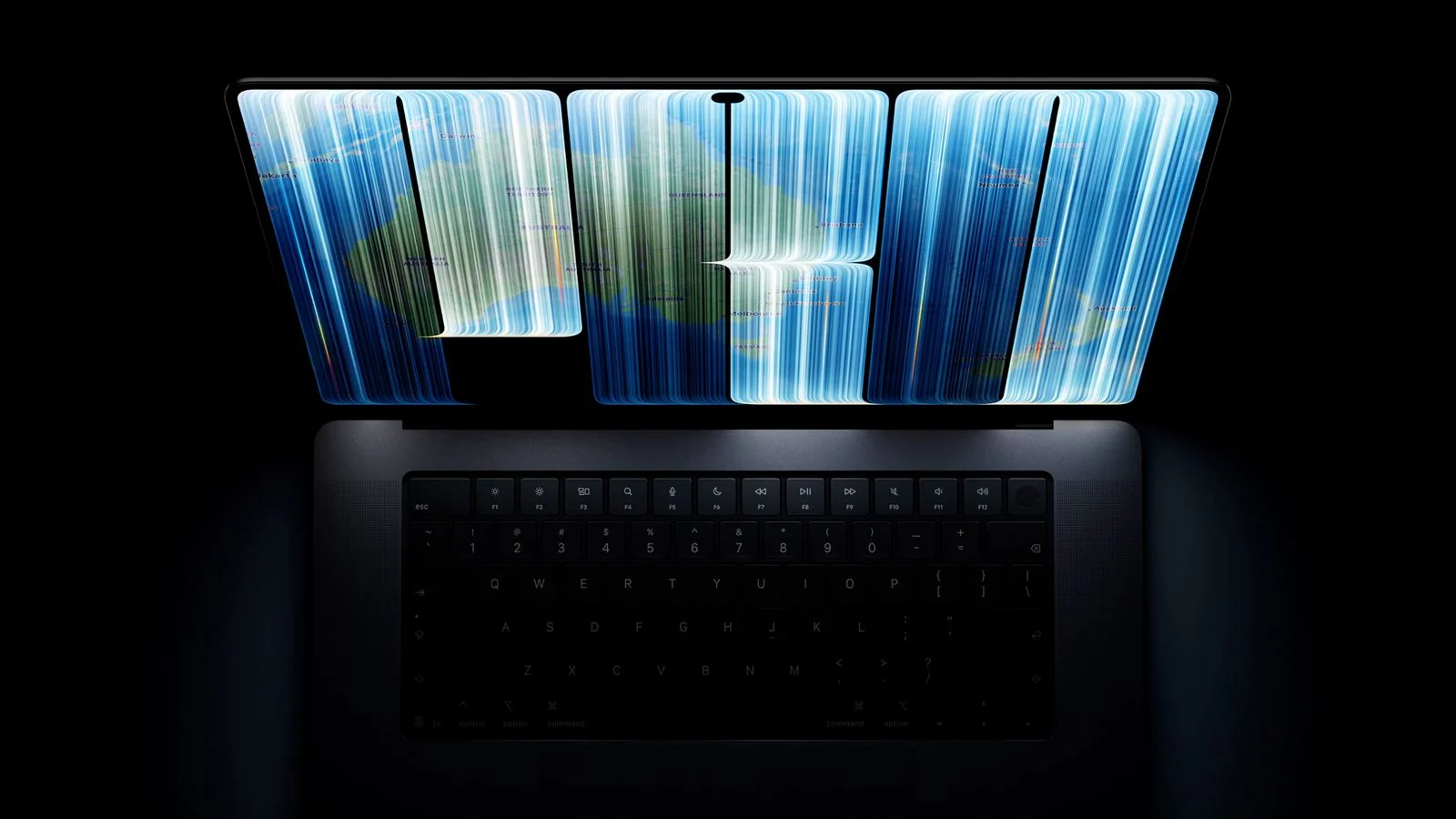
Assuming one chip family covers the whole range. It does not. The 14-inch MacBook Pro (M6 version) that starts at $1,999 is an M6 machine with 12-core CPU and 12-core GPU and the N1 wireless chip for Wi‑Fi 7 and Bluetooth 6. The new 14-inch and 16-inch MacBook Pro touch-enabled models — from $2,899 and $3,399 — are a separate branch running the M5 Pro or M5 Max, with the first touch-capable PROLED XDR display on a Mac laptop. Apple also dropped the notch from those models in favour of a Dynamic Island approach, and peak brightness now reaches 2,000 nits for both SDR and HDR content. If a listing quotes "the new touch MacBook Pro" with M6 specs, that is the wrong machine.
Five common mistakes to avoid
- Expecting every configuration to arrive on November 6. Launch day and delivery day are different things; the 2 to 3 week estimates apply to specific silver and space black touch MacBook Pro builds, not to the whole catalogue.
- Mixing up M6 with M5 Pro / M5 Max. Touch lives on the M5 Pro and M5 Max models, not on the $1,999 base.
- Buying 128GB and then wanting the anti-glare glass. Nano-texture glass is tied to the 256GB and 512GB tiers, plus $100.
- Assuming 60Hz is a typo. The iPad mini simply does not offer ProMotion adaptive high refresh rate technology, so weigh smoothness against the panel's brightness before you order.
- Rushing out for a Wi‑Fi 7 router. The new radios negotiate down to older standards, so an existing router is fine until you actually want the new features — a point made in vendor compatibility guidance and consumer networking reviews (sources: ASUS support FAQ on Wi‑Fi 7 router compatibility; SMZDM's Wi‑Fi 7 upgrade guide).
FAQ: the questions readers keep asking
Is the OLED iPad mini worth $699?
For reading, annotation, travel and light gaming, yes — it is the brightest, lightest and most durable mini Apple has shipped. If your current tablet already runs at 120Hz and you feel it when scrolling, the 60Hz ceiling is your reason to wait.
Can I actually get a machine this week?
Pre-order customers began receiving devices and retail plus Apple authorized reseller shelves are stocked, so in-store pickup is the reliable path. Configurations quoted at 2 to 3 weeks should be reserved only if you can wait.
Do I need to upgrade my router for Wi‑Fi 7 and Bluetooth 6?
No. Backward compatibility means the new devices connect normally to older networks. A new access point matters only if you want Wi‑Fi 7 throughput or steadier latency under heavy multi-device load.
Did Apple launch anything else in this window?
Not in this batch. Bloomberg reporter Mark Gurman's widely republished schedule put this hardware group on November 6 and expected HomeView plus a fourth-generation Apple TV 4K on the following Friday, November 13 (source: ithome.com), so the smart-home items are a separate decision from a Mac or iPad purchase.
What does this mean for the rest of the year?
With the OLED iPad mini, M6 iMac and the new-generation MacBook Pro lineup on sale, Apple has completed its Mac and iPad refresh for the end of 2026, resetting the baseline for premium mobile and desktop computing going into the next cycle.
Action plan for the next 48 hours
- Write down the single job you want the new device to do better; if you cannot name it, do not order today.
- Check the shipping estimate on Apple's official website, then ask a nearby Apple Store retail store about the same configuration.
- Compare the education tier — $649 for the iPad mini, $1,449 for the M6 iMac — before you settle on a storage size.
- For a touch MacBook Pro, fix memory and storage up front, because a 2 to 3 week build window is hard to change mid-flight.
- Keep your router as it is; spend that money on the tier or accessory you will actually use.
Sources and further reading
- IT之家 coverage of Mark Gurman's launch schedule: ithome.com
- Sina Finance report on M6 24-inch iMac pricing, pre-order window and performance claims: finance.sina.cn
- Wall Street CN on the M6 iMac AI uplift and entry MacBook Pro graphics figures: wallstreetcn.com
- Reporting on Apple's response to 60Hz criticism of the iPad mini screen: itheat.com
- iFanr summary of pre-launch reporting from Bloomberg and analyst Ming-Chi Kuo: ifanr.com
- ASUS technical FAQ on Wi‑Fi 7 router compatibility with existing devices: asus.com.cn
- SMZDM consumer guide on whether a Wi‑Fi 7 upgrade is necessary: smzdm.com
- Apple's official store and product information: apple.com
Written by Sarah Chen for the General desk at MyTechDailyNews, published by Tech Daily. Questions about this buying guide? Contact our editorial team at hello@techdaily.com.