
MyTechDailyNews General Practical Guide: iPhone Duo 2's Face ID Plan — Checklist, Pitfalls and What to Watch
Short answer: Apple has set two priority tasks for the iPhone Duo 2 — Face ID and the Action Button — with Face ID in first place. But that Face ID work may not be ready for the next fall launch, and could arrive on the iPhone Duo 3 in 2028 instead. If you're tracking this foldable-iPhone rumor, here's a practical way to read it, plus a checklist for what to watch.
Today's version of this story traces back to 9to5mac, citing Bloomberg's Mark Gurman. Rumors about Apple's foldable have run for years, so the useful question is not "is it happening?" but "which parts are locked in, and which can still slip?" This guide separates the two and turns the answer into steps you can actually use, whether you are shopping, planning a product, or just trying to decode a headline.
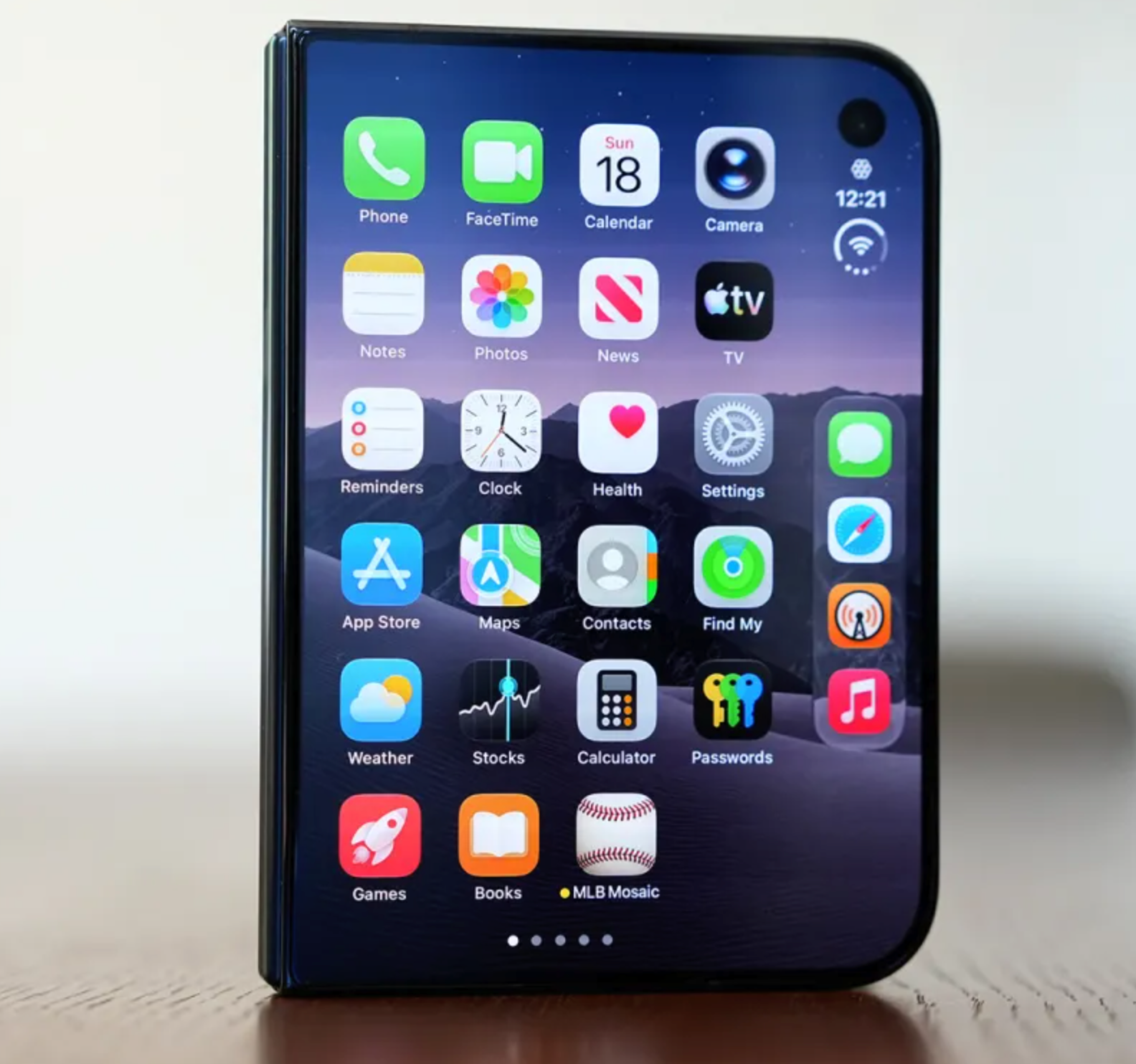
Caption: iPhone Duo, the foldable Apple is expected to refresh next fall.
What did Gurman actually say about iPhone Duo 2?
The core claim is narrow: Face ID is the number-one engineering priority for the second-generation foldable, ahead of every other upgrade on the list.
According to 9to5mac's report dated November 15, 2026, citing Bloomberg's Mark Gurman, Apple engineers are "actively working" to bring Face ID to the outer display. Gurman's fuller statement, as quoted in that report, was:
Other goals for future generations of products include adding a telephoto camera, and further thinning the body and reducing overall weight. But Face ID is the top priority. As I understand it, Apple has developed an iPhone Duo 2 prototype with Face ID, and engineers are still actively working to integrate the facial recognition system into the outer display of the second-generation model.
That is the factual core. Note what it does not say: there is no confirmation that the feature will actually ship. A priority is a direction for engineering teams, not a product promise.
Why is Face ID on the outer display harder than it sounds?
Because Face ID is a stack of sensors that needs physical room and a clear optical path — both of which are scarce inside a folding phone.
Apple's own documentation explains that the TrueDepth camera projects and analyzes thousands of invisible dots to build a depth map of your face. That system depends on a dot projector, a flood illuminator and an infrared camera working together. A foldable chassis must also squeeze in a hinge, two panels and a battery, so engineers trade thickness and weight against sensor space. That trade-off is why the first-generation model reportedly relied on Touch ID in the side button instead of facial recognition.
For a primary source on the mechanics, Apple's support page on how Face ID advanced technology works is worth a look. It also shows why small feature details matter: using Face ID while wearing a mask requires iPhone 12 or later and iOS 15.4 or later, according to Apple's mask guidance. A foldable would need to match that hardware-and-software combination before it could feel like a natural upgrade.
What is the Action Button change, really?
It may be less dramatic than the name suggests — likely a software tweak to Camera Control rather than a new piece of hardware.
Per the same 9to5mac report, the second priority could end up being a new software function for Camera Control. It would let you reassign a long-press that currently calls up Siri inside the camera, so the press launches an app you choose instead. For everyday users that is a small but genuinely handy quality-of-life change, and unlike Face ID it does not depend on fitting new sensors into a thin chassis. It is also a good reminder that "priority" can mean a settings update, not only a hardware overhaul.
Will Face ID ship in iPhone Duo 2? A decision checklist
Treat it as unconfirmed until Apple says so, and use the following checklist to judge each new leak.
- Prototype does not equal shipping spec. A working prototype, which Gurman says exists, proves feasibility, not a final bill of materials.
- Watch the timing language. Gurman says development time is tight and the technology is not fully ready. If it misses the window, plan on the iPhone Duo 3 in 2028.
- Look for a second independent source. One reporter's newsletter is a signal, not a specification sheet.
- Ask whether the outer display matters to you. If you mostly unfold the phone, outer-screen recognition may be a nice-to-have rather than a deal-breaker.
Here is a quick way to map what you read to what it actually means:
| Signal you see in a report | What you can reasonably conclude |
|---|---|
| "Prototype built with Face ID" | The engineering path exists; shipping is still undecided. |
| "Engineers actively working on it" | Work is ongoing, with no confirmed launch commitment. |
| "Time is tight / may slip" | Higher chance of a 2028 iPhone Duo 3 debut. |
| "Official Apple announcement" | The only point at which this becomes a confirmed feature. |
Not every leak becomes a product. Our guide showing how the iPhone Air 2 could move from one rear camera to two illustrates how a plausible metal mockup can still sit far from a final specification — useful perspective when reading the next foldable rumor.
Common misconceptions to drop
- "A prototype means it is confirmed." It means the idea works in a lab, nothing more.
- "No Face ID means no security." Side-button Touch ID is still a secure method; the change is about convenience and ecosystem fit, not safety.
- "Face ID is only for unlocking." It also underpins payment approval, app authentication and account checks, which is why its absence is felt across the software experience.
If security is the reason you care, it helps to read how to read a high-confidence spyware alert. Biometrics are one layer of protection, not the whole story.
What you can do today
- Decide whether outer-display Face ID actually affects your daily routine before treating it as a must-have.
- If you rely on Face ID with a mask or glasses, note the current iPhone 12 / iOS 15.4 requirement as a baseline any foldable would need to match.
- Track the two named priorities — Face ID and the Action Button — rather than every speculative spec.
- Watch Apple's next fall event for the iPhone Duo 2; if Face ID is absent, keep the 2028 iPhone Duo 3 on your radar.
FAQ
When will the iPhone Duo 2 arrive?
Apple is expected to launch the second-generation iPhone Duo next fall, according to the 9to5mac report. That timing is separate from whether Face ID makes the cut.
Is Face ID confirmed for the iPhone Duo 2?
No. Gurman says a prototype exists and engineers are actively working on it, but he also says the timeline is tight and the feature may slip to the iPhone Duo 3 in 2028.
What exactly is the Action Button change?
It may simply be a software option that lets you reassign the camera's long-press action — currently tied to Siri — to an app of your choosing.
Should I wait for the next model?
Only if outer-display Face ID is genuinely important to you. Otherwise, judge the iPhone Duo 2 on the upgrades that are actually confirmed at launch.