
iPhone Air 2 Drops the Single Rear Camera: A Practical Guide to Lusi Roy's Two Metal Mockups | MyTechDailyNews General
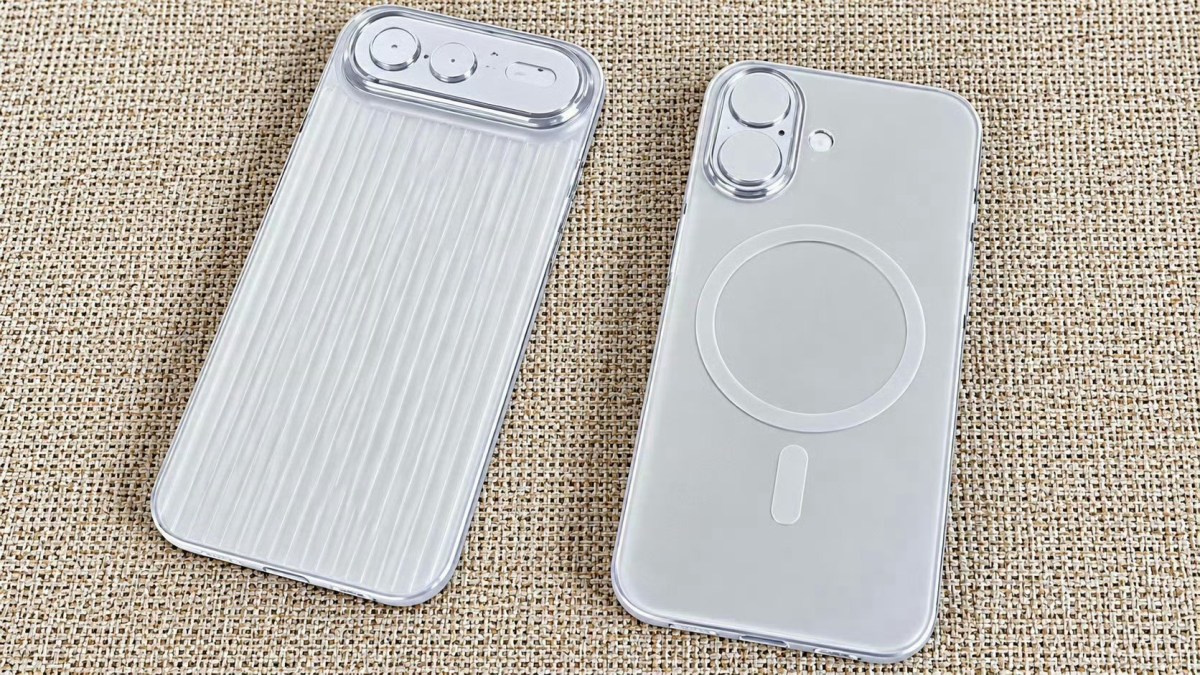
Here is the short version. Leaker Lusi Roy put two machined-metal dummy phones on camera, and the visible change is easy to state: iPhone Air 2 appears to replace the first generation's single rear camera with two lenses, while the standard iPhone 18 mockup keeps an iPhone 17-style dual-camera layout instead of adopting the Pro series camera platform. Apple has confirmed none of it. What the mockups do offer is a readable signal about how Apple plans to repair its thin iPhone, and a decent excuse to build a checklist for judging leaks before you change your upgrade plans.
What exactly did the two mockups show?
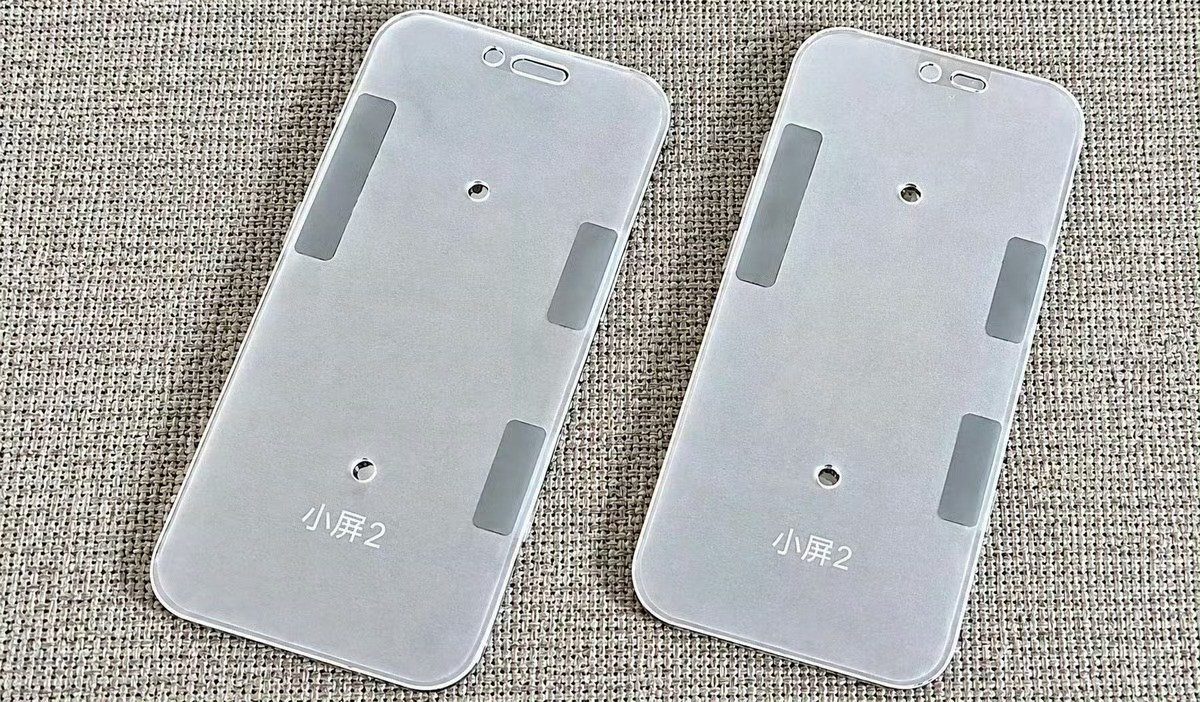
Start with the unglamorous but important part: a dummy unit is a CNC-machined shell built from supply-chain dimension and design data. It previews body contours, button positions and camera-module placement. It cannot tell you which chip, cell or glass will ship. Treat these objects as three-dimensional rumors, not spec sheets.
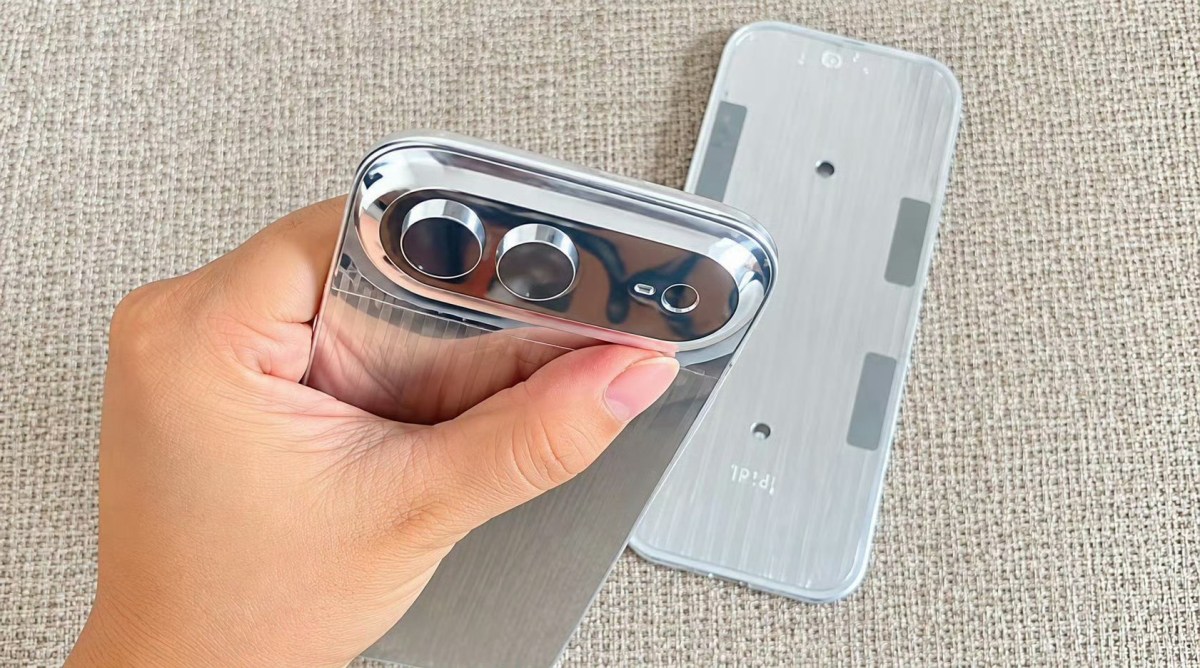
With that filter on, the Air 2 body is straightforward. The horizontal camera platform that defines the back of the iPhone Air is still there, but the lens area has been re-cut: where the first generation carried one rear camera, the mockup shows two lenses side by side, with the flash and microphone openings shifted to the side.
That lines up with what supply-chain analyst Jeff Pu and leaker Digital Chat Station had already described, namely Apple adding a second 48-megapixel ultra-wide sensor to work alongside the existing 48-megapixel main camera. When an analyst reading component orders and a leaker reading tooling point at the same fix, the signal is stronger than any single post.
Why a second lens matters more than another millimetre
For the original Air, that missing lens was the clearest compromise in the whole product. Landscapes, group photos and shooting in a room where you cannot step back further were all limited by the decision to fit only one rear camera on the back. If a second camera is confirmed, the everyday usability of the Air series changes, and the feature gap between the iPhone Air series and the standard iPhone narrows.
Mockup photos rarely carry context, so here is some. Apple introduced the iPhone Air in September 2025 as its thinnest iPhone ever, at 5.6 mm and 165 grams, with an eSIM-only design and a starting price of USD 999 (Apple Newsroom). By late 2025 the wider category was cooling: Digitimes reported on November 27, 2025 that Chinese smartphone makers were halting their own iPhone Air follow-up projects after disappointing sales, and MacRumors covered the same industry retreat that morning. Xiaomi's Lu Weibing put the engineering argument plainly in posts relayed by GeekPark: extreme thinness gets paid for in battery life, thermals, sustained performance and cameras, and actual sales show the segment is niche.
Price closes the loop. Global Times reported on January 25, 2026 that Apple's Chinese New Year promotion took 2,000 yuan off the 7,999 yuan launch price of the 256GB iPhone Air, bringing street prices down to as low as 5,499 yuan. Read that alongside the mockups: this second Air is not a fashion refresh, it is an attempt to make the thin format defensible on the things people actually complain about.
Can 5.2 mm, a bigger battery and two lenses coexist?
Three numbers are worth tracking. Earlier rumors put iPhone Air 2 at roughly 5.2 mm thick, against 5.6 mm for the first iPhone Air, a saving of about 0.4 mm, or roughly half the thickness of a credit card. Battery capacity is rumored at about 3500mAh, against the 3149mAh cell commonly listed for the first model, which works out to around 11% more stored energy. And a second 48-megapixel camera module now has to be packed into the same slab.
This is the real story, and a metal shell cannot prove any of it. Depth is the dimension that carries the cell, the path heat escapes through, and the lens stack. Trim 0.4 mm and all three systems have to shrink; add a lens and grow the battery and two of them have to expand. Whether Apple found a geometry that does all three at once is precisely the question a dummy unit cannot answer, so the 5.2 mm figure should stay flagged as unverified.
What the iPhone 18 mockup says about Apple's calendar
The second dummy shows a standard iPhone 18 that looks conservative. There is no large horizontal camera platform of the kind associated with the Pro series models; instead the body keeps the familiar iPhone 17 dual-camera arrangement. The shell also reads as bigger overall, which may mean Apple is resizing the standard model's screen and positioning rather than restyling it.
Specs attached to that body in current chatter: a 6.3-inch ProMotion display and the next-generation A20 chip. iPhone Air 2, in the same round of rumors, is expected to pair a 6.55-inch display with an A20 Pro. None of that can be judged from an exterior, and all of it still needs Apple to say so.
The scheduling is the part that changes buyer behaviour. Under the plan circulating now, iPhone 18 Pro, iPhone 18 Pro Max and the first foldable iPhone would appear first, while the standard iPhone 18, iPhone 18e and iPhone Air 2 would be held for a spring 2027 window. Apple would therefore stop putting the whole lineup out in one go every autumn and spread launches across the calendar. Practically, "the new iPhone" stops being a single decision point: there are now two windows to watch in the same cycle, plus one more hardware question worth following, such as what happens if Apple merges the Action Button into Camera Control.
The strategic consequence is simple. If an ultra-wide lands on the thin model, the two product lines get harder to tell apart on camera count alone, and Apple will have to separate them by body design, display spec, performance tier and price.
A five-step checklist for reading mockup coverage
- Sort form from function. Dummy units are credible about shape, lens placement and thickness. They say nothing about chips, cells or pricing.
- Count independent sources. The two-lens claim for Air 2 is carried by Lusi Roy's model, Jeff Pu's supply-chain read and Digital Chat Station's earlier post. That is corroboration, not repetition.
- Find the missing number. Nothing here covers price, final thickness or the software features attached to a second sensor, and those are usually the items that decide a purchase.
- Check the calendar. A spring 2027 target leaves months for tooling changes, so today's layout can still move.
- Match against your own friction. If your phone dies at 8 p.m., thinness is not your variable. If you shoot rooms, skylines and group tables, the added lens is.
Four misconceptions this leak tends to create
- "A dummy model is basically the final phone." It is a shell cut to rumored dimensions; internal structure and the exact measurements remain open questions.
- "Two lenses means better photos than the standard iPhone." The second sensor mainly adds a wide field of view; it does not automatically raise quality from the main camera.
- "Thinner is always better." The same trade-off in battery, heat and performance is what rivals cited when they shelved their own slim flagships.
- "eSIM-only is a footnote." If you cross borders or switch carriers often, it is a usability question. Apple's own guidance on using eSIM while traveling internationally is worth reading before you commit to any thin, tray-free model.
What to do now, depending on where you stand
| Your situation | Practical move | Why |
|---|---|---|
| You own the first-generation iPhone Air | No change to your plan today; re-check trade-in value closer to spring 2027 | A confirmed two-lens successor typically pressures the residual value of the single-camera model |
| You want a thin phone and can find one discounted | Decide on battery and camera limits, not on the price cut | Deep discounts reflect the compromises the rumored successor is trying to fix |
| You are on an older standard iPhone | Choose your window: high-end models first, standard and Air 2 later | Split launches mean waiting no longer buys you the whole lineup at once |
| You shoot wide scenes often | Treat the ultra-wide rumor as a real reason to wait | It is the one capability the first Air simply did not have |
| You care mostly about thickness and weight | Do not wait for a thinner number you cannot verify | 5.2 mm is a rumor; the mockup cannot confirm the final measurement |
FAQ: what readers actually ask
Does iPhone Air 2 definitely have two cameras?
No. Two machined mockups and two separate leak sources point in that direction, but Apple has not confirmed it, and camera layouts are among the easiest things to change during tooling.
How thick and what battery size are rumored?
The rumors cluster around 5.2 mm versus 5.6 mm for the first iPhone Air, and about 3500mAh versus the roughly 3149mAh cell listed for the original. Both figures are unverified.
When would iPhone Air 2 and iPhone 18 arrive?
Under the timeline being discussed, iPhone 18 Pro, iPhone 18 Pro Max and the first foldable iPhone come first, and the standard iPhone 18, iPhone 18e and iPhone Air 2 land around spring 2027 rather than alongside them.
Is a thin, tray-free iPhone a bad idea for travellers?
Not automatically, but you lose the option of dropping in a local physical card, and carrier support for eSIM varies by plan and region. Check your carrier and destination before buying, using Apple's eSIM support documentation.
The question left open
Every number in this leak points the same way: Apple believes people want a thin iPhone but do not want to pay for it with a single camera and a small cell. The interesting thing to watch over the next few months is not whether two lenses appear, but whether a thin phone can be made ordinary enough that buyers stop treating lightness as a trade-off. If Apple cannot solve that, the second attempt faces the same problem the first one did. Which would you pick up: a phone you forget is in your pocket, or one that does more but weighs more?
Sources
- Apple Newsroom, "Introducing iPhone Air" (September 2025): 5.6 mm, eSIM-only design — https://www.apple.com/newsroom/2025/09/introducing-iphone-air-a-powerful-new-iphone-with-a-breakthrough-design/
- Apple, iPhone Air product page: 5.6 mm, 165 grams — https://www.apple.com/iphone-air/
- Digitimes, "Chinese smartphone makers halt iPhone Air follow-up projects amid weak sales" (November 27, 2025) — https://www.digitimes.com/news/a20251127PD228/iphone-smartphone-sales-production-huawei-xiaomi.html
- MacRumors, "iPhone Air Flop Sparks Industry Retreat From Ultra-Thin Phones" (November 27, 2025) — https://www.macrumors.com/2025-11-27/iphone-air-flop-industry-drops-thin-phones/
- GeekPark, roundup quoting Xiaomi's Lu Weibing on the costs of extreme thinness — https://www.geekpark.net/news/363696
- Global Times, "iPhone Air price is cut by 2,000 yuan in Chinese mainland promotion" (January 25, 2026) — https://www.globaltimes.cn/page/202601/1354135.shtml
- Wikipedia, iPhone Air (3149mAh cell, 165 g) — https://en.wikipedia.org/wiki/IPhone_Air
- Apple Support, "Use eSIM while traveling internationally with your iPhone" — https://support.apple.com/en-us/118227