
EES on Trial: A Practical Guide to the EU's Case Against IBM, Atos and Leonardo
By Sarah Chen, MyTechDailyNews General — tips, questions and corrections: hello@techdaily.com
Short answer: the lawsuit changes almost nothing at the border. The European Union, through the agency EU-Lisa, has sued US technology company IBM and two European companies — French IT group Atos and Italian defence contractor Leonardo — over repeated delays in building the Entry/Exit System (EES), the biometric register that now logs non-EU travellers crossing the Schengen area. The claim was filed in December 2025 in Estonia, where the agency is based, and disclosed this July in its latest annual financial report. It is a contractual fight over missed milestones and money, not an order to switch the system off.
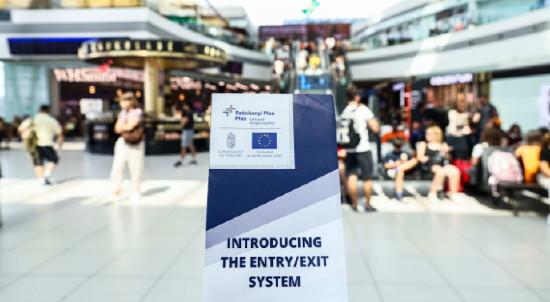
What is the EES, and what is the EU actually claiming?
The Entry/Exit System (EES) is the automated EU database that records the entry, exit and refusal of entry of non-EU nationals at the external frontiers of the Schengen free-travel area, which spans 29 European countries, most of them EU members. Under its rules, a traveller arriving from outside the Schengen area has fingerprints taken and a facial photograph captured at first entry, so authorities can spot people who overstay a visa or are wanted by law enforcement.
The court case is about how that system was built, not what it does today. According to internal correspondence records, EU-Lisa — the EU agency responsible for supervising the project — has sued the three companies that form the project consortium after they repeatedly failed to finish the work on time; the consortium, in turn, objected to the warnings and financial penalties the agency issued. Letters exchanged between the two sides show that the argument over missed deadlines and fines has now been running for several years.
The agency's own wording, in the annual financial report published this July: “In view of the contracting consortium's repeated delays in delivering the EES system, the Agency has launched the contractual and legal remedies available to it to protect its own financial interests.”
Harju County Court, Estonia's largest district court, confirmed that it has accepted the civil case, but that no hearing has been held and none has been scheduled. EU-Lisa declined to comment on the ongoing legal proceedings while stating that the case “does not affect the operation of the Entry/Exit System (EES), which is already fully in use across Europe”. The European Commission likewise stressed that the suit concerns “delivery delays during the EES system's development phase” and is “unrelated to the actual operation of the EES system”. Leonardo and Atos refused to comment on the legal proceedings; IBM did not respond to a request for comment.
Where the rollout and the courtroom story intersect
The project was supposed to be live in 2022; instead it only reached full use this year, and the gap between promise and delivery is what put Europe's borders under strain. This summer, the rollout of the EES triggered large-scale disruption at airports across Europe. Software and hardware faults continued to surface during deployment — fingerprint scanners misbehave when a traveller's fingers are sweaty — and airports reported queues lasting several hours. Some EU countries are still buying scanners today.
Two dates outside the court record help explain why the chaos felt sudden rather than gradual. The system went live in a phased rollout that began on 12 October 2025, according to eu-LISA, and EU rules required it to be fully applied from 10 April 2026, the point at which electronic records replaced the stamping of passports for short-stay visitors.
Full deployment on paper did not mean identical conditions at every booth. Reporting from July and September 2026 indicates that nine Schengen states — Belgium, France, Germany, Greece, Italy, Malta, the Netherlands, Portugal and Switzerland — were allowed extra operational leeway even after the Union's temporary flexibility mechanism formally expired on 6 September, because of peak-season queues and technical problems. That is why two travellers landing in different countries in the same week can describe very different EES experiences, and it is a nuance the litigation itself does not resolve.
A five-year delay, in six dates
| When | What the record shows |
|---|---|
| 2021 | The contract's total value is raised from €142 million to €212 million before the delays escalate. |
| October 2021 | Atos's Belgian company and IBM's Belgian company contest the penalties imposed on them, questioning “the principled basis of the penalties and their calculation method”, and attribute the slippage to “external factors” including the pandemic. |
| Months later, in February 2022 | The three firms reject the new delivery dates set by EU-Lisa. In the letter they write: “Ignoring reality is unwise and does not help the plan. On the contrary, working to unrealistic plans only frustrates all stakeholders.” They also criticise the EU agency's “overall governance approach”. |
| March 2022 | An IBM representative agrees that EU-Lisa may withhold part of the payment until the question of damages is resolved. |
| 2022 annual report | EU-Lisa states that it “encountered difficulties with the contracting consortium responsible for implementing the EES system” and is assessing the “additional costs” caused by the delays, which also dragged on other IT systems. |
| 2025 → 2026 | The original contract expires last year and a new business consortium takes over implementation work, while Atos, Leonardo and IBM remain responsible for it until August this year. The lawsuit is filed in December 2025 and made public this July. |
What the money trail shows
Cost drift is the most instructive part of this story for anyone who buys technology. EES's contract value had already been lifted from €142 million to €212 million in 2021. A year later, EU-Lisa reported in its annual financial report that the delays had “increased the budget needed to implement the EES system”, with hardware and software maintenance costs rising alongside it. In 2023, the agency moved money in from other programmes to raise the EES budget almost double, reaching €40 million. Disputes over penalties, not over features, are what a budget line like that eventually produces.
Five lessons for anyone commissioning a large technology programme
- Make payment conditional on delivery. The March 2022 letter shows EU-Lisa extracting agreement from an IBM representative to withhold funds until damages were settled — retention money is the cheapest leverage a buyer has.
- Write the penalty formula down, not just the penalty principle. The consortium's core objection was to “the principled basis of the penalties and their calculation method”. Where the arithmetic is pre-agreed, litigation is smaller.
- Audit the schedule independently. The consortium's February 2022 message — “Ignoring reality is unwise...” — is a warning that deadlines had already drifted from engineering reality on both sides.
- Govern the decision rights, not just the code. The consortium's criticism of the agency's “overall governance approach” shows how often programme failure is a question of who signs off a milestone, who can move a date, and who pays for the change.
- Govern the internal users of the system too. Delays are not the only failure mode in big IT estates; the same headline risk appears when staff bypass policy, as in one employee's upload of HR data on about 334,000 people to a generative AI service that Panasonic had prohibited.
The security question nobody has closed
The project has also carried allegations about cybersecurity risk. Last year, media reported that Atos had used its Moscow office to procure software for this sensitive border system. EU-Lisa said at the time that no security vulnerability or security incident had been found. The EU anti-fraud office (OLAF) judged the allegations to have “sufficient grounds” justifying a further investigation, and said that if claims of Russian involvement were confirmed, they would amount to a breach of contract. Still, according to an internal report, OLAF — while considering EU-Lisa's initial assessment “insufficient” — ultimately handed the case back to EU-Lisa to handle.
Nothing here has been established in court, and no hearing date exists. It is worth remembering, though, that software supply chains for European public services are a live attack surface: a 2026 incident in which attackers remotely rewrote the temperature settings of cold-chain refrigeration serving France's blood supply shows how a vendor's equipment, rather than the agency's own systems, can become the weak link.
Common misconceptions
- “The lawsuit means EES is being switched off.” It does not. Both EU-Lisa and the European Commission separate the development-delay case from day-to-day operation.
- “Travellers must register and pay before flying.” EES registration itself is free and happens at the border. The separate €20 ETIAS travel authorisation, valid for three years, has not begun; reporting in mid-2026 pointed to a launch slipping into 2027 because EES needed stabilising first.
- “EES replaces a visa.” It records movements and automatically tracks the 90-days-in-any-180-day rule; it does not change who needs a visa or how one is applied for.
- “Sweaty-finger failures prove biometrics don't work.” Optical fingerprint readers degrade with wet, oily or worn prints; the fix is procedural — dry and clean hands, follow the booth prompts, allow extra time — not a return to stamps.
- “The three companies have been found guilty.” No hearing has been held or scheduled; the filings describe a contractual dispute, not a judgment.
FAQ: what readers ask about the EES case
Does the EU's lawsuit change anything for my next Schengen trip?
No. The litigation targets late delivery during the build phase, and the system remains in operation across the Schengen area, so the biometric registration routine at first entry continues unchanged.
How long do my fingerprints and photo stay in the system?
Once captured, your EES record is kept for three years, which means later trips are usually verified against existing data instead of a fresh capture. Guidance for travellers is published on the EU's official travel-europe.europa.eu portal, which can be recognised by the europa.eu domain — use it rather than third-party registration sites.
Are children scanned as well?
Under official guidance, children aged 11 or younger do not have fingerprints scanned, although a photograph may still be taken, and each traveller is registered individually — parents can assist minors at the booth or desk.
Will the case be heard soon?
On the current record, Harju County Court has accepted the civil claim but has neither held nor scheduled a hearing. Both sides have previously negotiated inside the contract — the 2022 withholding arrangement is evidence of that — so how or whether the dispute reaches a courtroom remains open. That reading is our analysis of the documented timeline, not a prediction.
Action checklist: what to do now
- Travelling to Europe: allow extra time at the airport if it is your first Schengen entry in a while, since registration takes longer than a passport scan; make sure your hands are dry and clean before the fingerprint capture; keep proof of your short stay and onward plans, because EES automatically computes the 90/180-day clock.
- Managing travel programmes or events: build queue-time contingency into itineraries for external Schengen borders, and check whether the country you land in is among those granted extra operational leeway.
- Buying enterprise or public-sector software: put milestone-linked retention, a written penalty calculation method, independent schedule review and code-supply-chain attestations for subsidiaries into the contract — the four items the EES correspondence shows were contested.
- Following the story: watch two dates — the first hearing in Estonia, once scheduled, and the eventual ETIAS launch, which will layer a €20 pre-travel authorisation on top of EES.
Sources
- EU-Lisa, EES programme page and quarterly statistics — https://www.eulisa.europa.eu/topics/ees
- European Commission, Entry/Exit System (EES), travel to Europe — https://travel-europe.europa.eu/ees
- eu-LISA newsroom, EES entry into operation, 12 October 2025 — https://www.eulisa.europa.eu/news-and-events/news/entryexit-system-successfully-connected-across-europe
- GOV.UK, Entry requirements (Spain) — EES biometric registration guidance — https://www.gov.uk/foreign-travel-advice/spain/entry-requirements
- Euronews, “EES at a 'critical point': Europe's aviation sector urges EU to show more flexibility”, 1 July 2026 — https://www.euronews.com/2026-07-01/ees-at-a-critical-point-europes-aviation-sector-urges-eu-to-show-more-flexibility
- Euronews, “Nine European countries urge EU to ease entry/exit system border checks”, 10 July 2026 — https://www.euronews.com/2026-07-10/serious-concern-nine-european-countries-urge-eu-to-ease-entryexit-system-border-checks
- House of Commons Library briefing on the EU Entry/Exit System and travel authorisation system — https://commonslibrary.parliament.uk/research-briefings/cbp-10676/
Written by Sarah Chen for MyTechDailyNews (Tech Daily). Spotted an error or have documents to share? Email hello@techdaily.com.