
MyTechDailyNews Practical Guide: What CE-25A Photos, Heart's 27-Minute Flight and a $5 Power Bill Really Prove About Electric Planes
Battery-powered flight is not a promise: several pure-electric aircraft are already airborne, and a few small models hold official airworthiness approval. What does not exist anywhere yet is a scheduled service in which more than 100 passengers board a plane that runs only on onboard batteries. That gap — proven flight versus a sellable seat — is exactly what a handful of photos said to show COMAC's CE-25A, spreading across the internet over the past few days, has put back on the table. This guide gives you a practical way to read every electric-aircraft headline that follows.
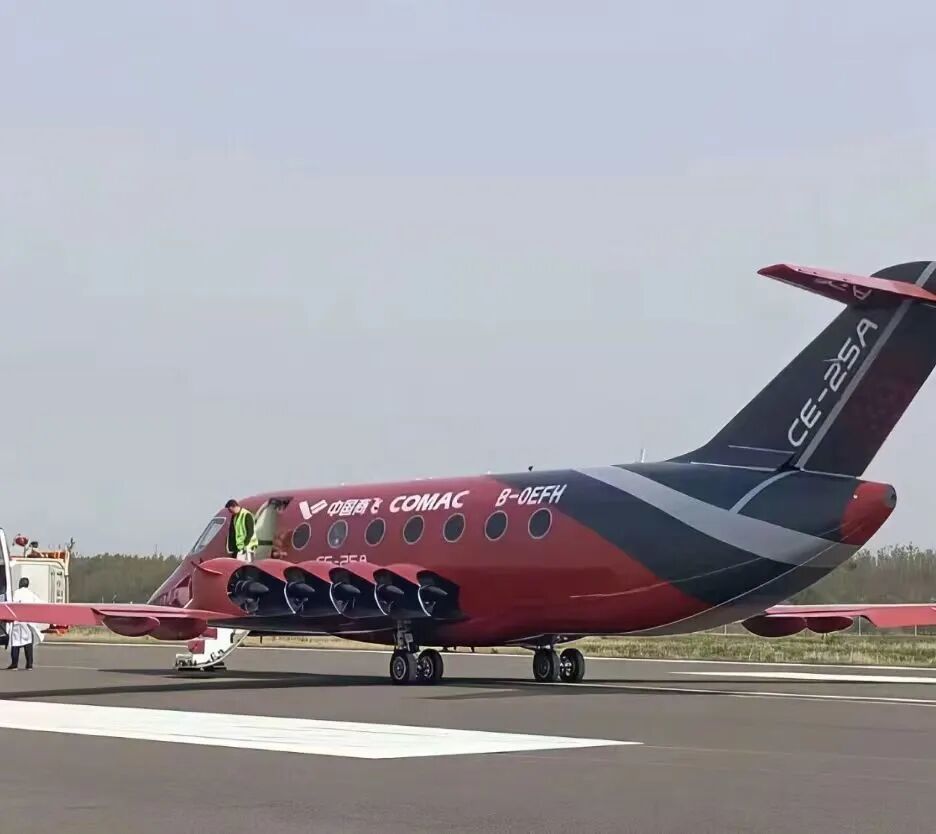
Photo: the images of a COMAC CE-25A electric demonstrator that circulated recently; whether the aircraft has actually flown still requires formal disclosure.
What counts as a pure-electric aircraft — and what does not
Start with a clean definition, because most confusion comes from loose labels. A pure-electric aircraft stores energy in onboard batteries and gets all of its thrust from electric motors. Hybrid-electric aircraft that burn fuel to generate electricity, and hydrogen-fuel-cell aircraft that convert hydrogen into current, are separate categories: they can share much of the electric-propulsion hardware, but their energy-storage problem is a different one entirely.
Have battery planes carried people before? Four checkpoints
The idea is older than the passenger jet. The French aeronautical writer Gaston Tissandier recorded in his 1886 book La Navigation Aérienne that in early 1881 his work on electric boats led him to the idea of mounting an electric motor on a flying machine, and that the same year he showed a model electric airship at the Paris electrical exhibition.
On 8 October 1883 Tissandier and his brother Albert — the Tissandier brothers — lifted off in an electric-powered airship from the Auteuil district of Paris, an account backed by their own writings and predating the Wright brothers' success. Airships, however, ride on buoyancy rather than wing lift, so their electric motors solved a very different engineering problem.
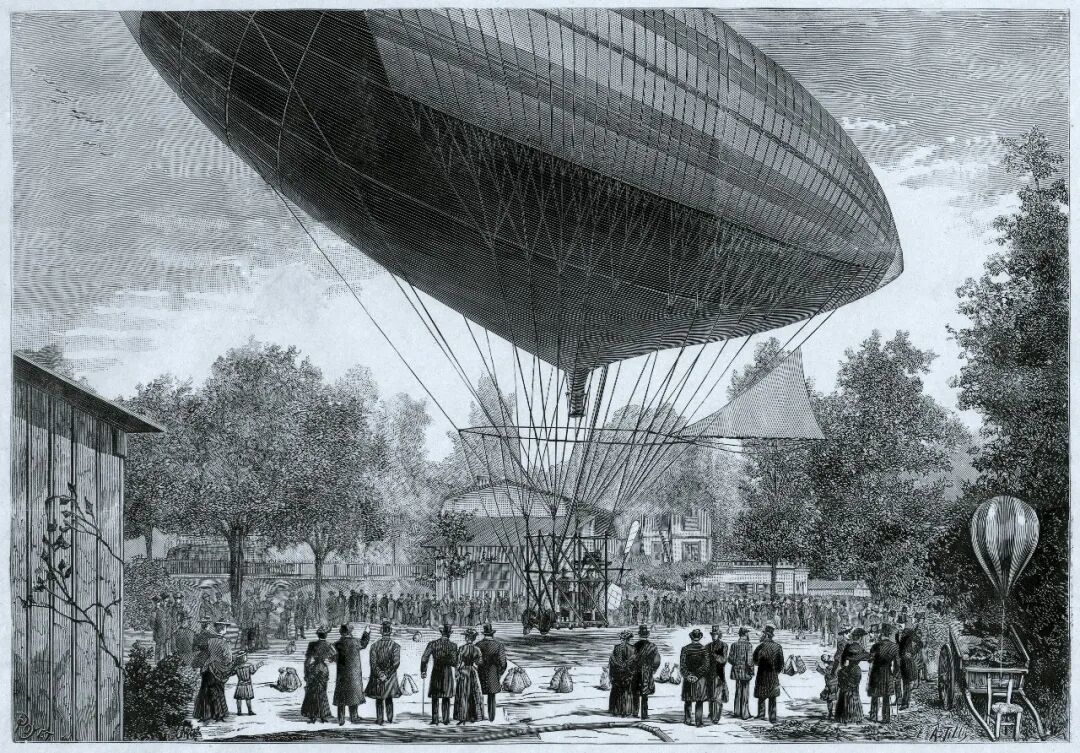
Photo: a contemporary woodcut showing the Tissandier brothers' 8 October 1883 electric airship departure from Auteuil, Paris.
The recognised starting point for battery-powered, crewed, fixed-wing flight is 21 October 1973. Working with engineer Heino Brditschka, designer Fred Militky flew the MB-E1 in Austria on nickel-cadmium cells for about 9 minutes; the Fédération Aéronautique Internationale (FAI) record notes a later flight of about 15 minutes.
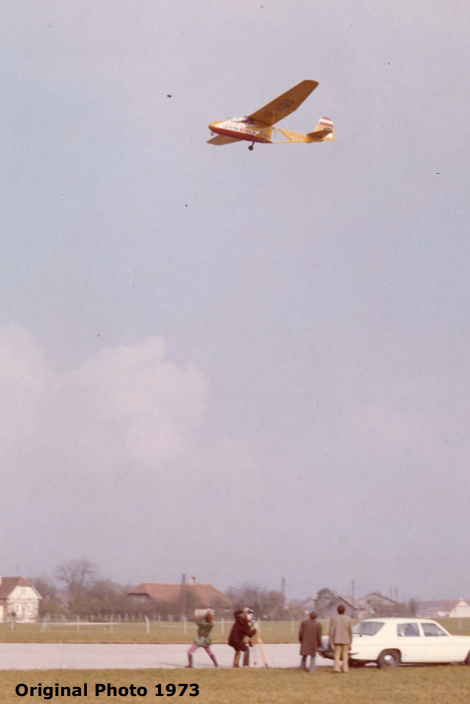
Photo: the 1973 MB-E1 electric aircraft, which flew on nickel-cadmium batteries for roughly 9 minutes.
Read that date carefully, because it reframes today's news: more than half a century ago humans already proved that batteries could carry a person through the air. Almost everything since has been spent on making that capability useful — duration, payload, redundancy and rules.
The small-plane path: what Europe, North America and China each proved
Europe moved first on light aircraft and reached a regulatory milestone. In 2015 an Airbus pure-electric demonstrator crossed a major waterway: on 10 July 2015 the E-Fan flew across the English Channel and touched down at Calais in France. Five years later, in June 2020, Slovenia-based Pipistrel's two-seat Velis Electro received a type certificate from the European Union Aviation Safety Agency (EASA) — the first for a fully electric aircraft — and it is used mainly for flight training, with a manufacturer-published endurance of a maximum of about 50 minutes plus the reserve required for visual-flight-rules operations.
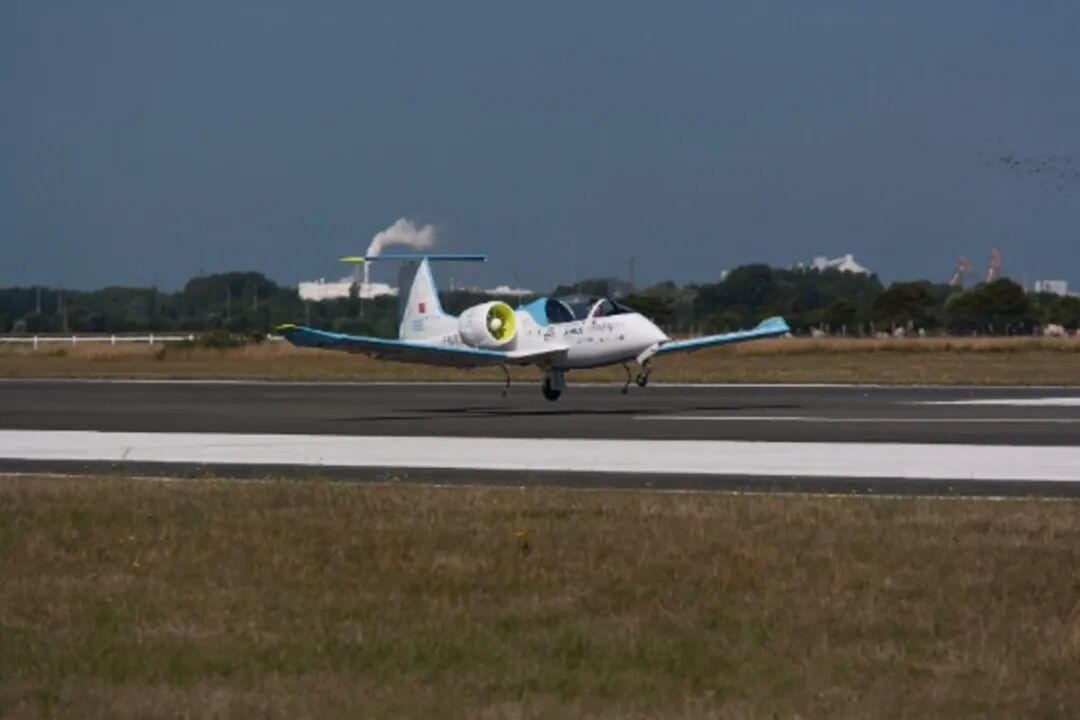
Photo: on 10 July 2015 the E-Fan pure-electric demonstrator crossed the English Channel and landed at Calais.
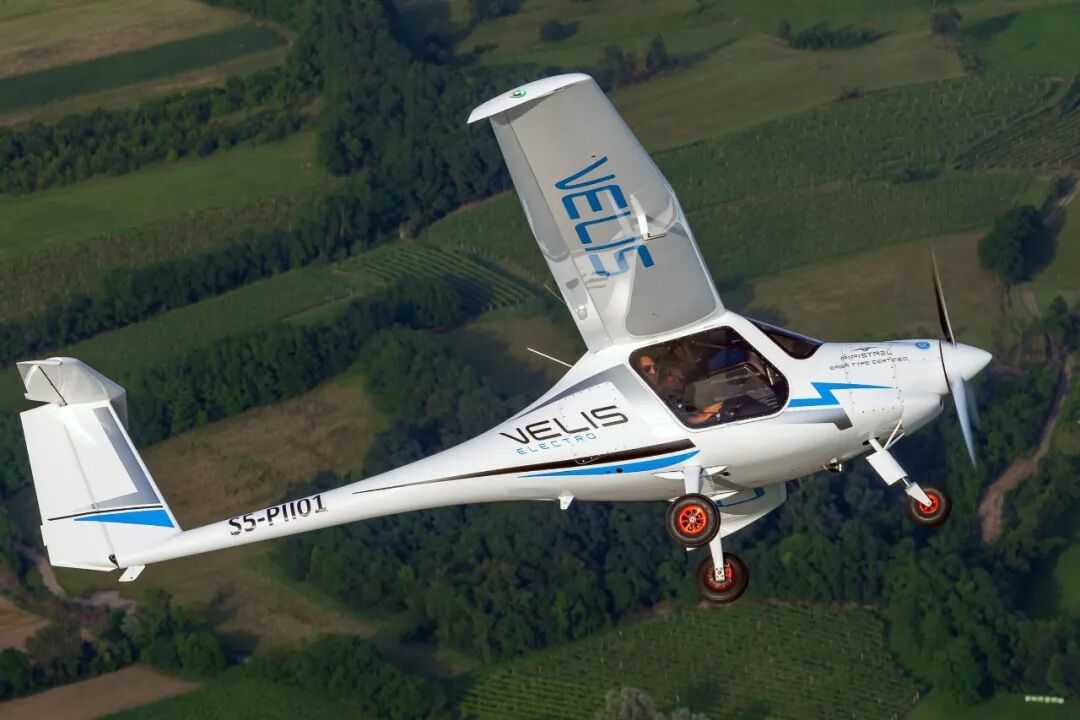
Photo: the Pipistrel Velis Electro two-seat electric aircraft, certified by EASA in June 2020 and used mostly for training.
North America tried to push electrification into short-haul transport. In Canada, Harbour Air and magniX converted a DHC-2 "Beaver" floatplane to electric drive, flying it for the first time in 2019. Eviation's Alice, designed around nine seats, made its first flight on 27 September 2022 at Moses Lake in the United States and stayed up only about 8 minutes. One path modified an existing airframe, the other built a new one; neither first flight proves that a scheduled passenger operation has arrived.
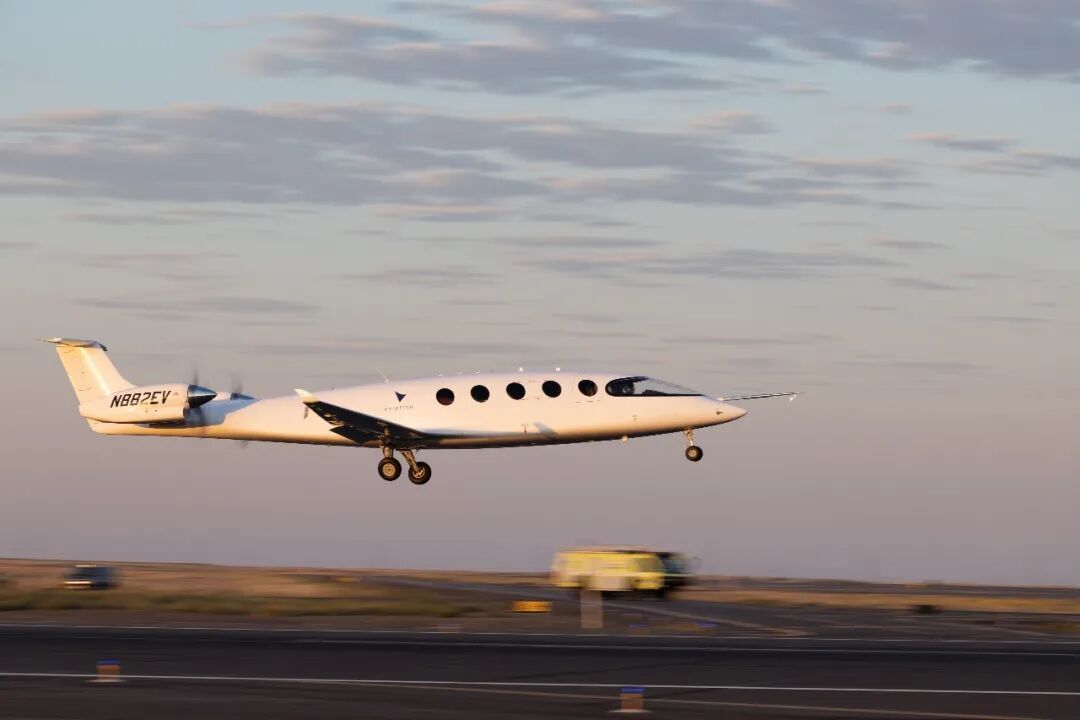
Photo: Eviation's Alice electric demonstrator at Moses Lake, USA, on 27 September 2022; the first flight lasted about 8 minutes.
China's route has been equally incremental, and it is documented by certifiable dates:
| Aircraft / programme | Milestone and date | Published figures | What it does and does not prove |
|---|---|---|---|
| Ruixiang RX1E (Shenyang Aerospace University, team led by Yang Fengtian) | First flight 2013; type design approval and production licence 2015 | Two-seat electric light-sport aircraft | Small electric aircraft can be approved and built, not that commuter routes are close |
| RX4E | Type certificate from the Civil Aviation Administration of China (CAAC) on 29 December 2024 under CCAR-23 normal-category rules | Four seats, 1,260 kg maximum take-off weight, 70 kWh battery capacity, maximum endurance of 1.5 hours | A certified, mass-produced electric trainer; published "maximum endurance" is not ticketed block time with full payload and alternates |
| AG60E (AVIC General Aircraft) | Maiden flight in early 2024 | Two-seat electric demonstrator | State aviation industry is investing in electric propulsion |
| RX4E assembly in Beijing | In September 2025 the first RX4E rolled off final assembly in Yanqing, Beijing | Production-stage progress | Small electric aircraft have reached manufacturing and real-world use in training and sightseeing |
| COMAC CE-25A | Shown publicly in 2023; a 2025 paper in Chinese Engineering Science records completed scale-model validation flights; that same year COMAC's Beijing Research Center issued a tender notice for structural-test analysis of the CE-25A programme's No. 0 airframe | 19 seats, design range 400–500 km, maximum cruise speed of about 400 km/h, ducted-fan distributed electric propulsion integrated with the wing | The programme and its validation work exist; the flight status in the recent photos still needs an official statement |
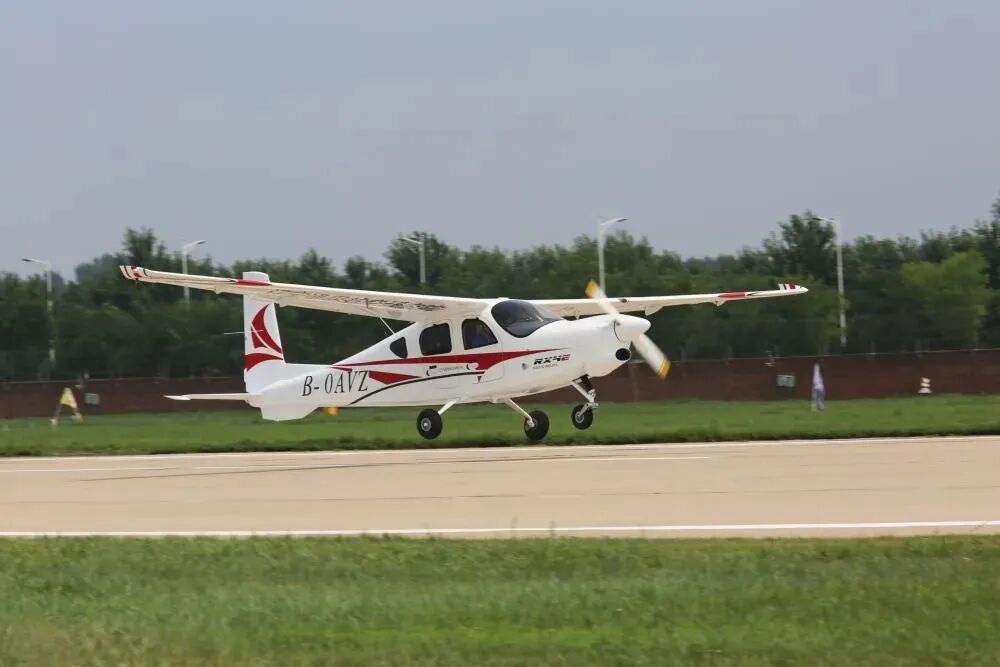
Photo: the RX4E four-seat pure-electric aircraft developed by Shenyang Aerospace University; it received its CAAC type certificate on 29 December 2024 (image source: the university's official website).
The 19-seat scale is the interesting part, since it maps onto real commuter demand — but 400–500 km remains a design target. How many passengers it can carry, how much reserve charge it must keep and how far an ageing battery still flies all remain to be demonstrated.
Bigger demonstrators — and the programme that stopped
The largest battery aircraft yet to fly is Heart Aerospace's X1, unveiled in 2024 with a 32-metre wingspan as a full-size demonstrator for the ES-30 programme. The company's August 2026 announcement put its take-off weight at more than 25,000 pounds, roughly 11.3 tonnes, and said it flew for 27 minutes purely on batteries. The 30-seat layout, 200 km pure-electric range and 400 km hybrid range published at the same time are specifications of the proposed ES-30 production aircraft — they are not capabilities the X1 has already demonstrated with fare-paying passengers.
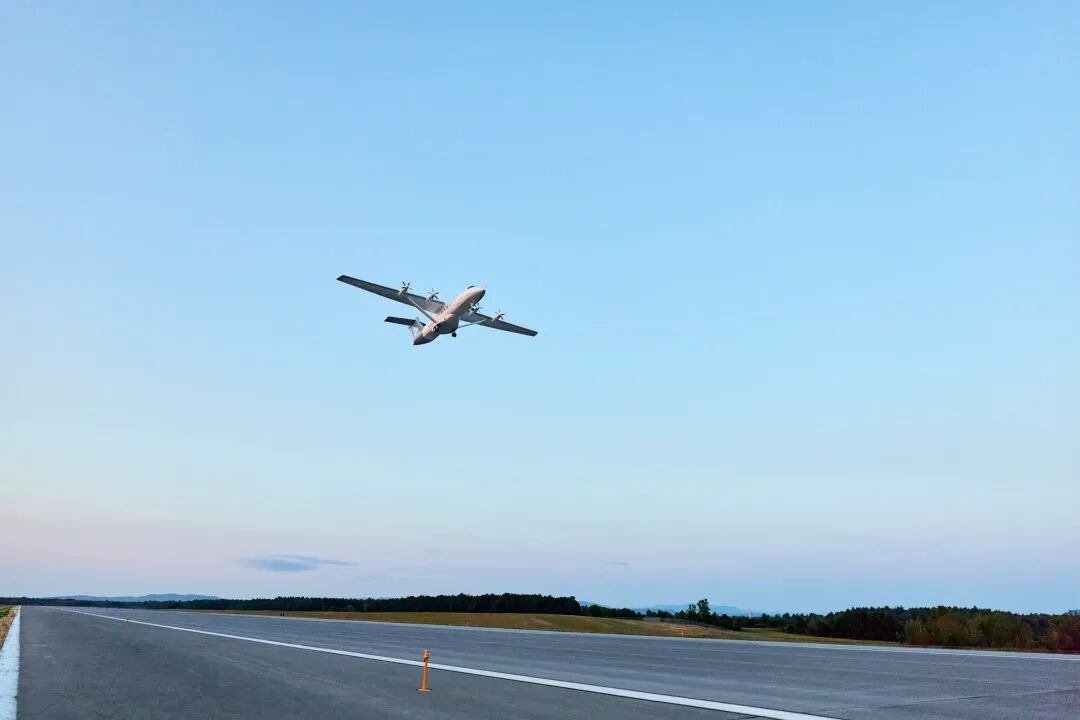
Photo: the Heart X1 demonstrator climbing during its first flight in August 2026; do not transfer ES-30 or ES-36 production figures onto this aircraft.
In September the company presented a 36-seat ES-36 production concept: about 200 km on batteries alone, longer trips supported by a gas turbine generating electricity, with entry into service planned for 2031. Two details from the company's own newsroom help date the regulatory track: the FAA issued Heart a special airworthiness certificate for the X1 demonstrator on 23 July 2026, ahead of the flight, and Heart says it holds an order book worth about $9.4 billion from customers including United Airlines and Air Canada for the ES-30, whose entry into service target of 2031 was reported by Flying Magazine. An experimental certificate authorises test flying. It is not a type certificate, and orders are not deliveries.
Not every programme finishes. NASA's X-57 Maxwell, built to prove distributed electric propulsion, was closed out in 2024 without ever flying; on 15 April 2021 the aircraft had been undergoing high-voltage ground testing at the Armstrong Flight Research Center in California.
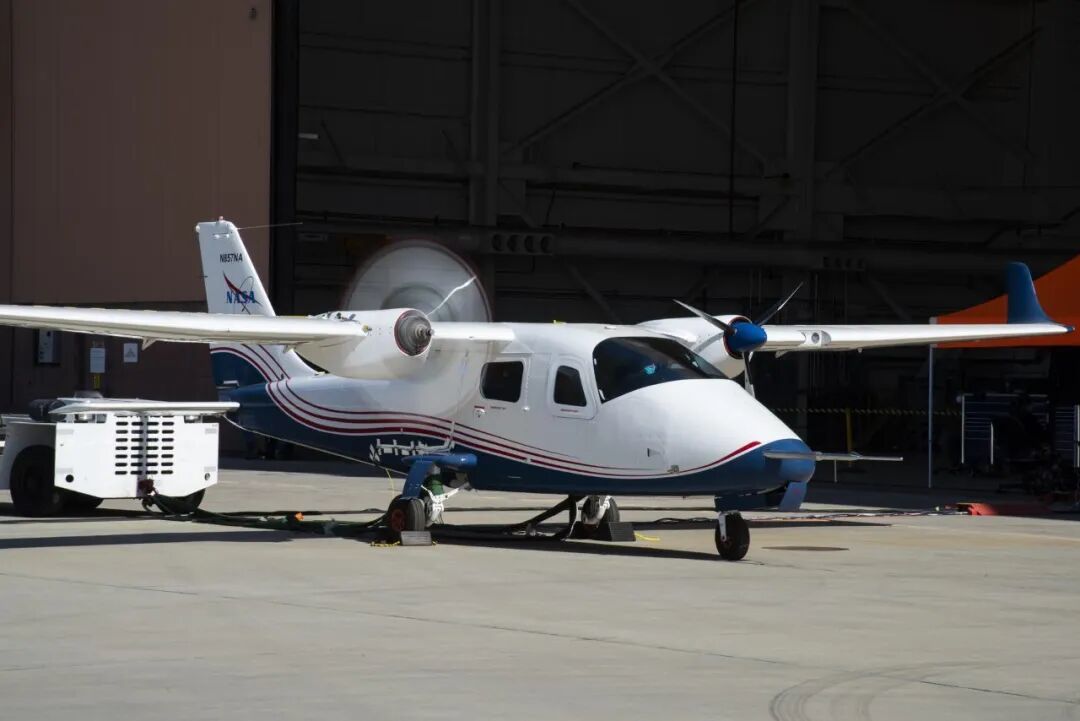
Photo: NASA's X-57 Maxwell electric research aircraft during high-voltage ground testing at the Armstrong Flight Research Center in California on 15 April 2021.
NASA blamed experimental hardware problems, supply of key components and the time left in the programme. It left behind useful battery and electrical-system research — and a warning that a spinning motor and an aircraft cleared for safe flight are separated by a great deal of engineering.
Which gate is hardest: the rulebook, the physics, or the accountants?
Gate 1: there is no finished rulebook for electric airliners
Conventional airworthiness codes were written around fuel-burning engines, so regulators have been issuing special conditions instead. EASA's guidance for modifications asks applicants to assess a battery thermal-runaway event for heat, explosive energy, projecting debris and toxic gases, and to look at how close cells sit to occupants and critical systems (see the agency's own note on supplemental type certificates). Rachel Daeschler, EASA's Certification Director, described the February 2025 certification of Safran's ENGINeUS 100 motor as the first real test of the agency's Special Condition for hybrid and all-electric propulsion, as reported by EVTOL Insights. Translation for readers: the rules are being written while the aircraft are being tested, which is why dates slip.
Gate 2: weight does not negotiate
Kilogram for kilogram, aviation fuel stores far more energy than any battery, and the gap survives even after crediting electric motors with higher efficiency. Burned fuel leaves the aircraft lighter; discharged batteries keep their mass, so the plane carries dead weight all the way. Add cells and you add electrical capacity, but you also take space from passengers and baggage. Airports' turnaround needs and reserve rules matter too: a plane can never be planned with "just enough to reach the destination", because bad weather can force holding, an alternate airport or a go-around after the batteries are already partly drained, while thermal-runaway protection and electrical reliability requirements never relax.
Headline energy-density numbers usually describe a bare cell; bolted into an aircraft, the pack needs enclosures, cooling and management systems, so the saving depends on the complete installation. Battery-maker CATL is a real signal here: the company announced a 500 Wh/kg condensed battery on 19 April 2023, arguing it enables the electrification of passenger aircraft, and its April 2026 product news describes 500 Wh/kg systems that have completed maiden-flight validation on a four-tonne-class aircraft — a system-level claim far more useful than a laboratory cell figure.
Gate 3: the airline's calculator
Even after the technology works, operators must price battery replacement cycles and charging time between flights. Research at the U.S. National Renewable Energy Laboratory has modelled the on-ground charging electricity demand needed to serve regional electric aircraft at several airports, a reminder that a plug-in fleet is also a grid, cable, transformer and staffing project. Money saved on electricity can be spent again on swapping packs and waiting.
How to read a "it cost only $5 in electricity" headline
Heart Aerospace stated in its 13 August 2026 press release that the X1 used roughly $5 worth of electricity on its first flight — a figure published against a backdrop of sustained increases in global jet fuel prices. That number is genuine, but its scope is narrow. Before you treat it as a ticket-price forecast, run this checklist:
- Ask what the number includes. Electricity alone excludes the aircraft, battery depreciation, maintenance, crew, airport fees, insurance and financing.
- Ask whose tariff was used. Airport ramp power and a home charging rate are not the same price.
- Ask per seat, not per flight. An 11.3-tonne demonstrator with test equipment onboard is not carrying a paying cabin.
- Ask about cycles, not just the battery's first life. Frequent deep charge-discharge wears an aviation pack far faster than a parked car battery.
- Ask what replaces the saving. If turnaround grows from 30 to 90 minutes, an airline loses aircraft utilisation, which is the most expensive asset it owns.
Five steps to fact-check the next electric aircraft story yourself
- Identify the machine: is it a certified production model, a demonstrator, a mock-up or a rendering? The X1, Alice and CE-25A are test platforms, not airlines.
- Find the issuing authority. A CAAC type certificate, an EASA type certificate and a special airworthiness certificate for test flying are three different things.
- Separate design targets from proven flights. A 400–500 km design range is not the same as a verified 400–500 km route with payload and reserves.
- Check who is paying and who is counting. Order books, letters of intent and options are not delivered aircraft or audited cost-per-seat data.
- Look for the boring infrastructure: chargers, spare parts, trained high-voltage technicians and battery logistics. That is where programmes stall.
Common misconceptions to drop now
- "A first flight means commercial service is next." Two-seat trainers are flying today; hundred-seat schedules are not.
- "Electric aircraft failed in the West and only China is succeeding." NASA closing X-57 in 2024 shows how normal cancellation, delay and iteration are in advanced R&D — and Europe has already certified an electric trainer.
- "Range scales like an EV battery." Aircraft impose different weight, redundancy and certification requirements, so extending 400–500 km to long-haul is not a matter of adding cells.
- "Cheap power means cheap tickets." Energy is one input; utilisation, maintenance labour and battery replacement decide the fare.
Where you are most likely to sit on batteries first
My expectation is the same order the data supports: training and short local flying first, then commuter and regional routes. Island hops, mountain or coastal city pairs where roads detour for hours, and thin-demand routes that cannot fill a jet are the natural homes for 19-seat, 30-seat and 36-seat electric aircraft, whose near-silent motors and zero local emissions also help at noise-restricted airports. On corridors already served by fast, frequent high-speed rail, swapping fuel for batteries by itself is unlikely to pull passengers back to an airport. Nobody can give a credible year for hundred-seat-class pure-electric service; the honest milestone to watch is today's battery airplane that lands and tomorrow flies again on a published schedule, carrying full payload with reserve.
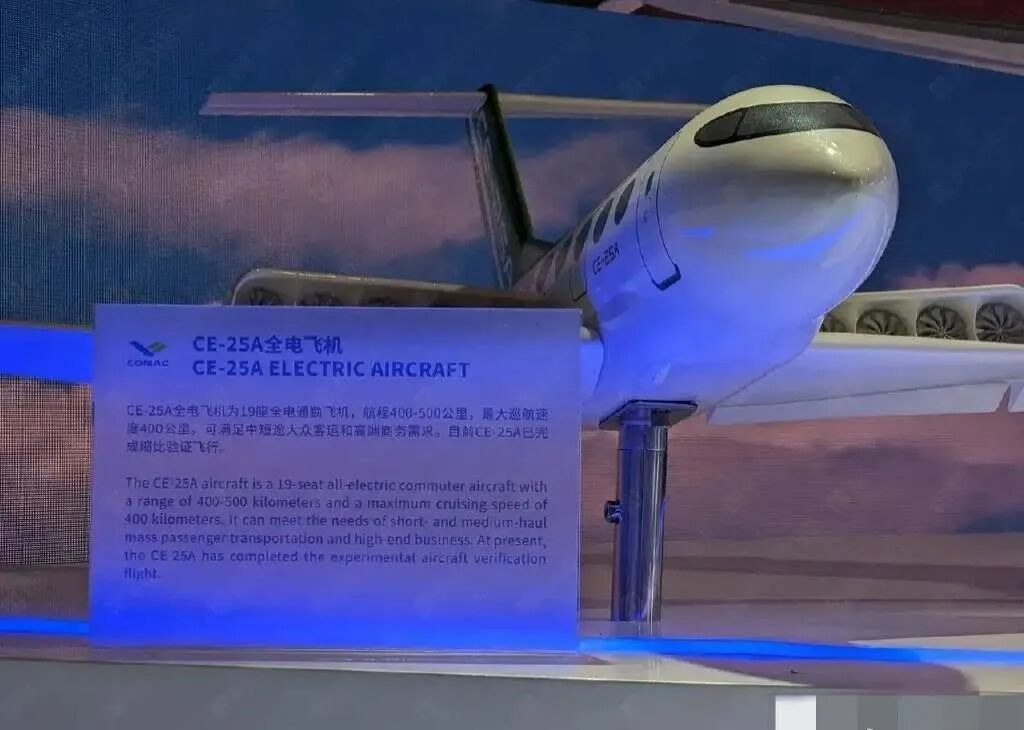
Photo: the COMAC CE-25A, whose concept was unveiled at the China International Import Expo in 2023 — the same expo stage where Tesla brought Cybercab to Asia.
Your 24-month watchlist: dates and signals to set reminders for
- An official statement from COMAC on the CE-25A's flight status, since the recent photos remain unconfirmed. MyTechDailyNews will track the CAAC record as well as the safety-and-recall notices that reveal how regulators handle high-voltage faults.
- Whether Heart's pre-production ES-30 reaches its reported 2028 flight-test window and holds the 2031 entry-into-service target.
- Any move from "special conditions" to a stable electric-airworthiness standard at EASA or the FAA — the single biggest unlock for whole fleets.
- System-level (not cell-level) aviation battery announcements from suppliers such as CATL, plus published cycle-life numbers.
- Charging and ground-support procurement at regional airports, which precedes any fare-paying route.
Frequently asked questions
Are pure-electric aircraft legal to fly today?
Yes, in specific categories. Pipistrel's Velis Electro has held an EASA type certificate since June 2020, and China's RX4E received a CAAC type certificate on 29 December 2024. Both are small training and leisure aircraft, not airline jets.
Is the CE-25A already in the air?
The verifiable record is that the project exists, that scale-model validation flights were documented in a 2025 paper in Chinese Engineering Science, and that structural testing of the No. 0 airframe was put out to tender that same year. Whether the aircraft in the recently circulated photos has flown needs an official announcement.
Why can't we just scale the batteries up?
Because stored energy per kilogram sets both range and payload at the same time, and because a discharged battery does not get lighter. On top of physics, certificated safety margins — alternates, holding, go-around, thermal-runaway containment — make "just enough to reach the destination" impossible as an operating concept.
Should I expect cheaper short-haul tickets?
Not in the near term. Heart's own $5 electricity figure shows energy can be cheap, but fares depend on utilisation and maintenance. The realistic first effect is new thin routes that were uneconomic with noisy, fuel-burning turboprops, alongside quieter operations near airports.
What single number matters most?
The energy density of the whole installed battery system, together with its cycle life and recharge time — not the headline range of a one-off test flight.
Written by Sarah Chen for Tech Daily on MyTechDailyNews. Corrections and tips: hello@techdaily.com.
Reference sources
- Heart Aerospace newsroom, 13 August 2026 — first flight of the X1 demonstrator, including the about $5 electricity figure and the note on rising global jet fuel prices.
- Heart Aerospace newsroom, 23 July 2026 — FAA special airworthiness certificate for the X1; order book and ES-30 plans.
- Flying Magazine, 29 July 2026 — Heart targeting 2031 for ES-30 type certification and entry into service.
- EASA — type certification of a fully electric aircraft (June 2020) and FAQ on supplemental type certificates covering battery thermal-runaway effects.
- EVTOL Insights, February 2025 — EASA Certification Director Rachel Daeschler on the first application of the agency's Special Condition for hybrid and all-electric propulsion.
- CATL newsroom, 19 April 2023 and 21 April 2026 — 500 Wh/kg condensed battery and electric-aviation flight validation.
- U.S. National Renewable Energy Laboratory, 2023 — charging electricity demand for regional electric aircraft operations.