
Reading the Yangwang Dingyao Altior Debut: A Practical, No-Hype Guide to BYD's Ultra-Luxury Gulf Play
By Sarah Chen · MyTechDailyNews, General desk
Short answer: BYD Group's top marque Yangwang put the Dingyao Altior — an electric ultra-luxury sedan longer than 5.5 metres, with rear-hinged coach doors, a gem-set "ding" grille and artisan-made bespoke interiors — on the world stage at the Emirates Palace hotel in Abu Dhabi. It arrived a day after the Yangwang U9 Extreme was FIA-recognised for a top speed above 503 km/h. Here is what was actually confirmed, what is still guesswork, and what to watch next.
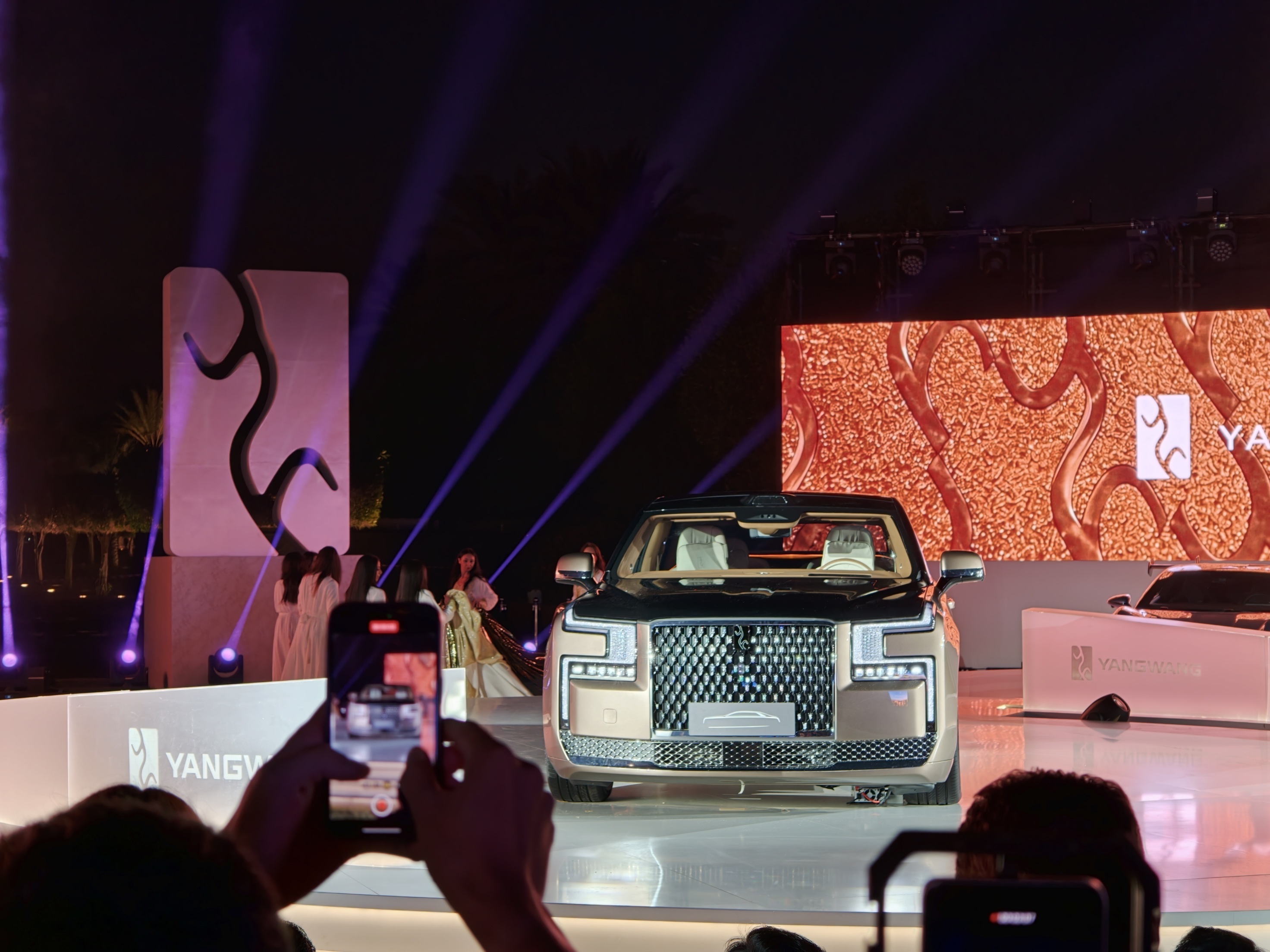
What did BYD actually reveal in Abu Dhabi?
The conclusion first: a design statement, not a spec sheet. From the visible proportions alone, the car reads as a 5.5-metre-class flagship, and every cue it uses — two-tone bodywork, full-disc "pancake" wheels, rear-hinged coach doors — points squarely at the old-money territory occupied by Rolls-Royce.
What BYD Group executive vice president Li Ke repeated on stage was not "luxury" but "palace". In her framing, the Dingyao Altior simply is a mobile palace. The venue reinforced the point: the Emirates Palace hotel in Abu Dhabi, and a name built around the ding, the ancient Chinese state cauldron that carries the idiom wen ding tian xia — asking who holds the tripod, meaning a challenge for the throne. The name itself reaches in the same direction: as Chinese financial media reported at the reveal, Altior comes from a Latin root meaning "higher", the upward ambition sitting behind the Chinese name Dingyao.
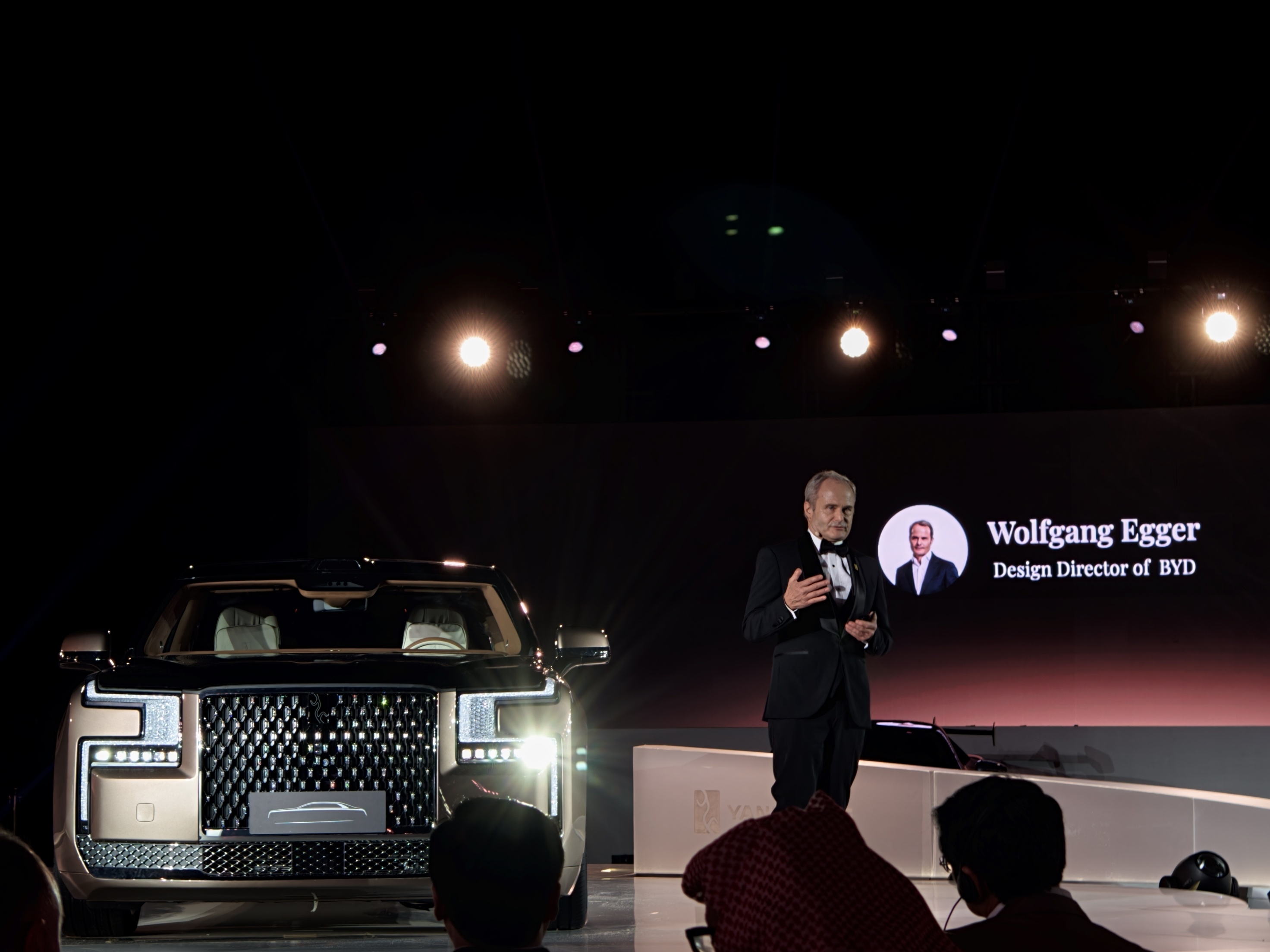
BYD's design director walked the press through the concept, and GeekPark reporters on site noted that the front end and lamps combine into a shape Chinese readers recognise as the character for ding. The Yangwang U8 explored the same idea; on the Altior that emphasis is pushed further.
In profile, straight-edged lines and a short rear deck keep the car reserved rather than loud, while the coach doors and disc wheels do the status work. Coach doors of this kind belong to ultra-luxury cars and to almost nothing else. And because "palace" summons gold and gemstones, the grille is assembled from multiple cut gems.
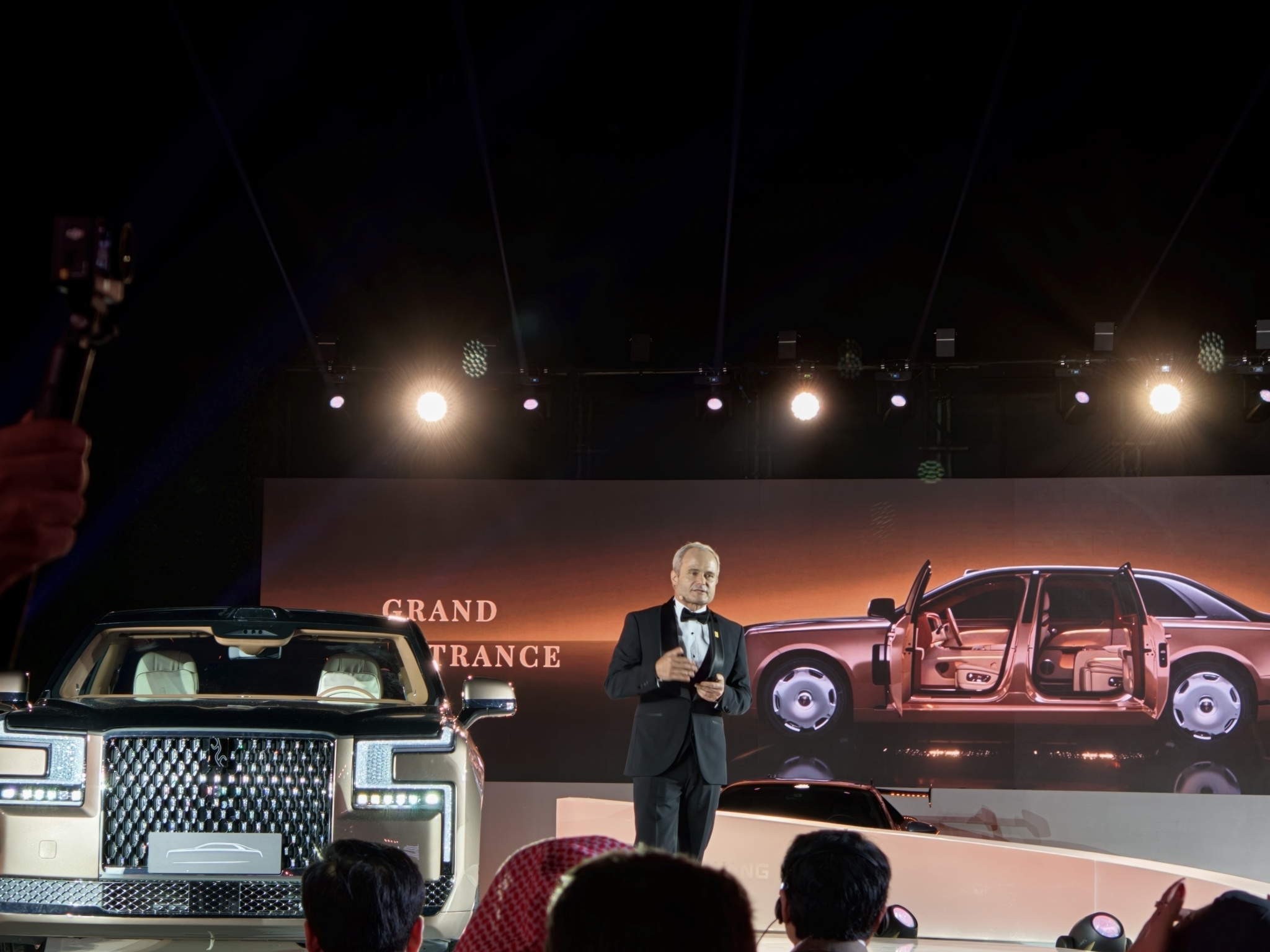
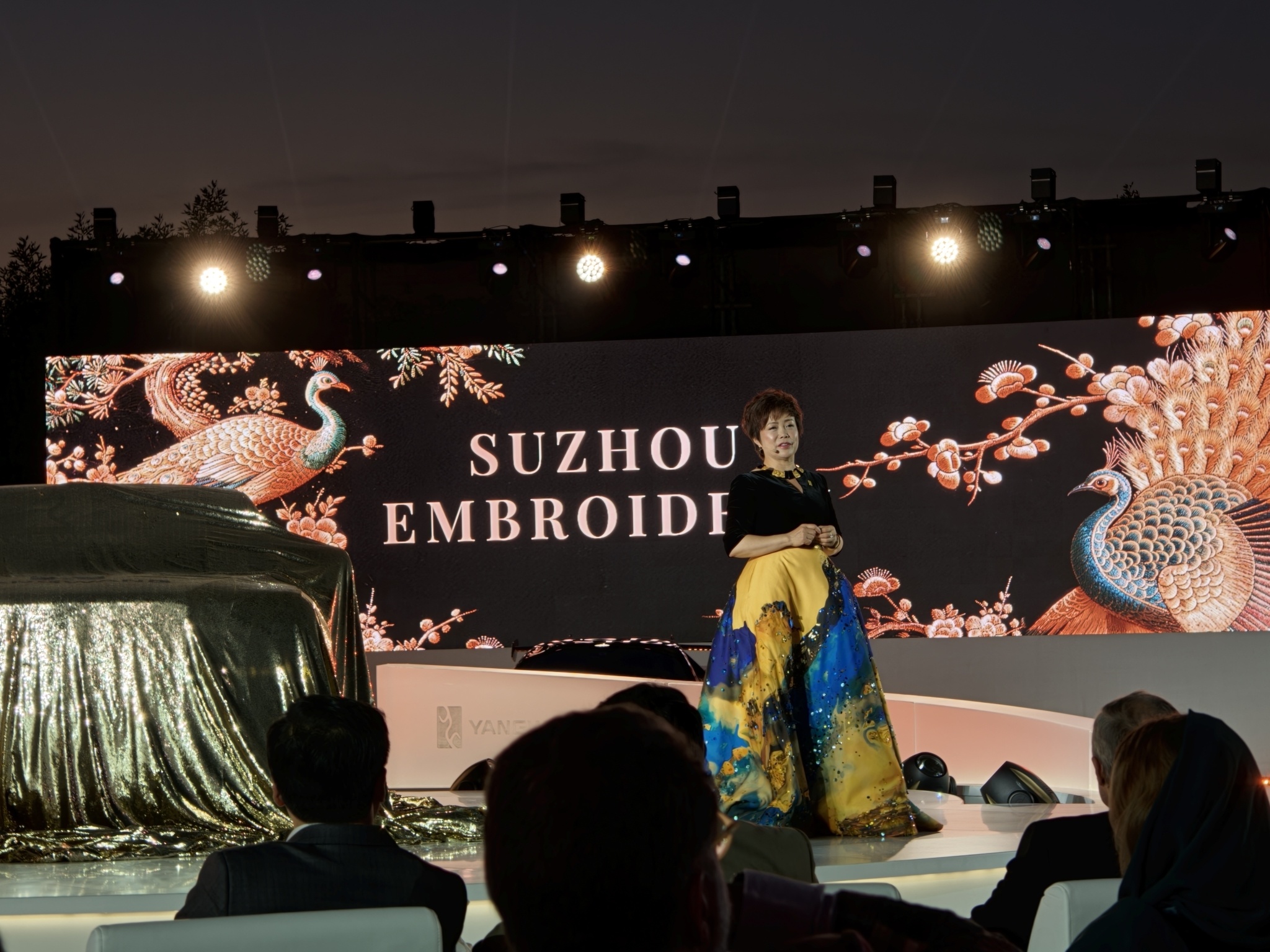
The part most buyers should actually care about is customisation. Owners can commission veneers and seats made by top-tier Chinese traditional artisans, producing an exclusive car that no one else has. One-touch rest and one-touch privacy modes come as standard. This, from silhouette to stitching, is how BYD wants overseas customers to be taught Chinese-style luxury — and, in the company's telling, a genuinely Chinese idea of what luxury can be, aimed at a global audience.
Why launch an ultra-luxury Chinese car in the Gulf?
Because that is where the growth already is. In January to October 2026, BYD sold 3.622 million vehicles worldwide, while overseas volume surged about 93% to 1.507 million units. In October alone it moved 170,000 units abroad — 35% of total sales — so the first ten months of the year had already cleared the full-year overseas goal of 1.3 million set at the start of the year and the 1.5 million target adopted in March.
The Middle East is the fastest-moving piece of that story. In 2025, BYD sold about 1.05 million vehicles overseas, with Middle East volume up about 120% year on year. By July 2026 it shipped 13,164 units to the region in one month, lifting the Middle East to fifth among its overseas regions. One source further claims that in the first half of 2026 BYD passed 24,000 units across the Gulf Cooperation Council countries, making it the best-selling Chinese brand there; treat that as single-source reporting.
Logistics moved before the marketing did. In early August this year, a roll-on/roll-off service from Shenzhen's Xiaomo port to Khor Fakkan port in the UAE opened, and the first sailing of the vessel "Changsha" carried 6,068 vehicles in one go.
What sells first is not pure electric. Fuel is cheap, chargers are scarce and summer temperatures reach 50 degrees, so BYD leads with plug-in hybrids. Shipment data from the Gasgoo Research Institute shows that in January–February 2026 the UAE ranked second, behind Brazil, among BYD's top 10 passenger-car export destinations, with 14,885 units shipped, 14,332 of them PHEVs — more than 96%. Distribution runs through regional family groups such as Al-Futtaim in the UAE and Alghanim in Kuwait, borrowing their showrooms and after-sales networks, while engineering teams reworked battery thermal management and dust sealing for local conditions.
Is a land speed record worth anything to a luxury buyer?
Partly — and this is where readers should slow down. A day earlier, the Yangwang U9 Extreme was certified by the FIA at a speed exceeding 503 km/h, and the governing body's own write-up puts the figure at 503.17 km/h from a high-speed run in Abu Dhabi, describing it as the first production car past 500 km/h. That record gave the Altior its technical curtain-raiser.
But records and luxury equity are different currencies. Enthusiast coverage of the run (see Hot Cars' report) notes it was a single pass on an Abu Dhabi highway, whereas classic top-speed marks are usually averaged over two opposite-direction runs. Read the record as proof of thermal control, aerodynamics and motor capability, not as evidence that the sedan will deliver a quieter cabin than a Rolls-Royce.
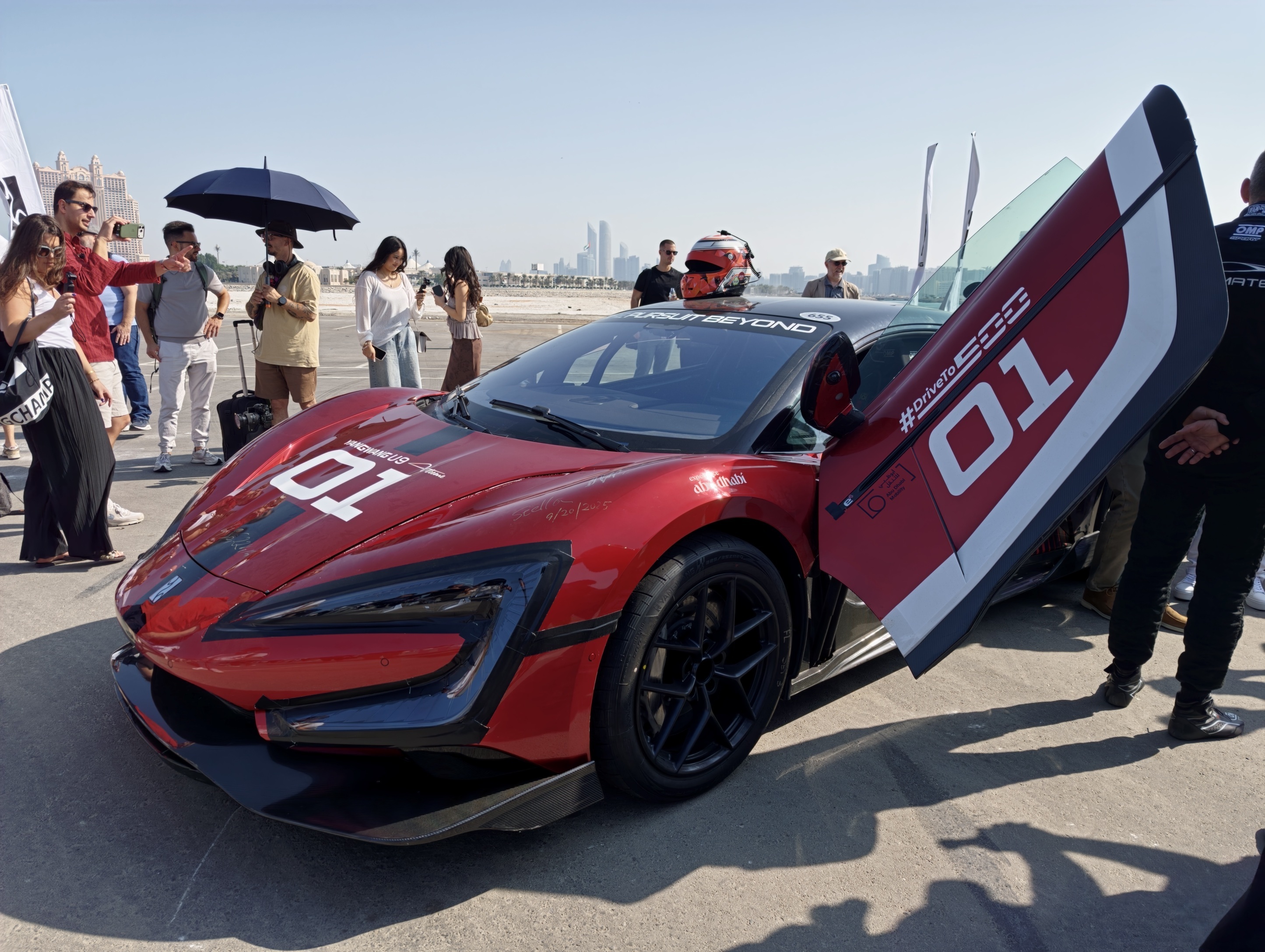
On hardware, the transfer is visible. The Altior uses the same Yi Sifang four-motor system (e⁴) found on the Yangwang U8; a roof-mounted lidar indicates support for BYD's advanced driving-assistance stack; and the second-generation battery with Flash Charging is a default option. That day, BYD published none of the remaining flagship technology, no price and no detailed parameters, with more expected to surface gradually.
How to check the story yourself: a six-point checklist
Anyone evaluating a debut like this — as a buyer, a journalist or a competitor's product team — should work through six checks:
- Separate stage claims from paper claims. Styling cues and themes are confirmed by photographs; power, range and charging numbers are not.
- Verify the dimensions against the incumbent. Public reference data lists a Rolls-Royce Ghost extended-wheelbase car at 5,716 mm, so a sedan over 5.5 metres enters the same footprint class without out-sizing the benchmark (Wikipedia's vehicle-length list).
- Ask who services it. In the Gulf, the answer is the local partner network — Al-Futtaim in the UAE, Alghanim in Kuwait — not an overseas call centre.
- Ask about heat, not horsepower. Sustained 50-degree ambient operation, dust ingress and battery thermal management are the real product requirements here.
- Check what is bespoke and what is standard. Hand-made veneers and artisan seats are the differentiator; one-touch rest and privacy modes are table stakes.
- Watch recall and safety notices, not just launches. Premium badges do not immunise hardware; the same document-reading habit we set out in our guide to the Mercedes-Benz recall covering 180,300 cars in China applies to any new flagship.
What is confirmed, and what is still speculation?
| Item | What the stage actually showed | What remains unconfirmed |
|---|---|---|
| Size and stance | A body over 5.5 metres, two-tone paint, full-disc wheels | Official length, width, height, wheelbase |
| Doors | Rear-hinged coach doors, an ultra-luxury exclusive | Hinge architecture, opening angle, side-impact certification |
| Powertrain | Yi Sifang quad-motor drive from the Yangwang U8; second-generation battery; Flash Charging | Output figures, range and charge rate; spec summaries circulating after the show are not statements BYD made on stage |
| Assistance systems | Roof-mounted lidar, compatible with BYD's advanced driving assistance | Level of autonomy, and the markets where it is licensed |
| Price and orders | Nothing announced that day | Every figure online is an estimate; the market it opens into first is Dubai and the wider Gulf |
Four misconceptions that travel faster than the facts
- "Export volume proves local demand." It does not. In 2025, China sent about 1.39 million vehicles to the Middle East, making it one of the two largest regional markets for Chinese car exports — yet the UAE's own new-car market is only about 260,000 to 270,000 units a year, while China's exports to the UAE from January to September 2025 hit 368,000 vehicles, up 59% year on year, and that December the UAE became China's single largest export destination. The gap is trans-shipment: the UAE redistributes cars onward across the Middle East, Africa and the CIS.
- "Chinese brands are already selling luxury in the Gulf." At retail, the volume band is 70,000 to 150,000 dirhams (about RMB 140,000 to 300,000) in compact and mid-size SUVs, fighting the Toyota RAV4, Nissan X-Trail, Hyundai Tucson and Kia Sportage, with Jetour already in the local top five. The Altior is a boutique play stacked on top of that volume base.
- "The region is electrifying fast." UAE EV sales grew 26.4% in 2025 to about 8% of the new-car market, and BYD's EV sales there rose about 212%; but new-energy penetration across the main Middle East markets is still below 5%, versus above 50% in China. In Saudi Arabia one estimate puts EVs at about 1%, while another tally claims roughly 80,000 new-energy vehicles sold in 2025 with Chinese brands at about 70%. Infrastructure lag and cheap fuel remain the binding constraints, even as the Net Zero 2050 agenda pushes government fleets toward electric.
- "This is just a copy of Rolls-Royce." The coach doors borrow a familiar sign, but the vocabulary — the ding, the palace, the gem-set grille, the artisan veneers — argues for a rival canon of luxury rather than an imitation.
FAQ: what readers keep asking
How big is the Dingyao Altior, and does that matter?
It sits in the 5.5-metre-plus class, which is the practical entry ticket: ultra-luxury sedan buyers shop by rear-seat space and presence first, styling second. Length alone will not decide a sale against Rolls-Royce.
How much does it cost?
No price was announced that day, and any figure you have seen is third-party estimation. Read the silence as strategy: BYD revealed the design and the technical framing, then left commercial terms for a later beat.
Where is it sold first, and why there?
The Gulf, with Dubai as the showcase market — the region concentrates ultra-wealthy buyers, the dealer structure BYD already rents through Al-Futtaim and Alghanim, and streets where the Yangwang U8 has become a credible alternative to Land Rover and Mercedes-Benz in large SUVs. Chinese luxury brands are now rebuilding their channel strategy elsewhere too, a pattern covered in our explainer on Audi's two-brand, two-partner China reset.
Does the U9 Extreme record help the sedan?
Only at the margin. The FIA recognition of a run exceeding 503 km/h proves capability; it does not prove ride comfort, cabin refinement or dealer service — the three things a flagship sedan is actually bought on.
What to do next: action advice by reader type
If you are a premium car buyer. Do not transact on a design reveal. Wait for published dimensions, battery chemistry, the charging curve and, above all, the warranty and service contract of the local distributor; drive the car in August heat, not in mild-weather showroom conditions.
If you run product or marketing. Copy the sequencing rather than the styling: lead with a verifiable world record, move up-market behind a cultural story, and land where your supply chain already works — the Shenzhen-to-Khor-Fakkan ro-ro line and 6,068 vehicles on a single sailing is a logistics announcement dressed as a launch.
If you follow tech and markets. The bigger read is that Chinese speed and Chinese technology are being taught to overseas consumers first, and Chinese-style luxury second. From the fastest production car to the "most luxurious" flagship unveiled tonight, BYD is attempting a brand leap in a single market. Watch three signals: the date of the official price and spec release, whether hybrid-first Gulf volumes convert into electric orders, and whether the Altior is ever announced for China and Europe.
Sources and further reading
- FIA on the speed achievement recognised by the governing body (503.17 km/h, Abu Dhabi): https://www.fia.com/news/yangwang-u9-xtreme-surpasses-500-kmh-speed-achievement-recognised-fia
- CarNewsChina on the Abu Dhabi premiere date, confirmed on 5 November: https://carnewschina.com/2026/11/05/byds-yangwang-altior-to-debut-in-abu-dhabi-on-november-8/
- Hot Cars on the 503.17 km/h run and its single-pass nature: https://www.hotcars.com/yangwang-u9-top-speed-record/
- Automotive World on the scale of BYD's October sales month: https://www.automotiveworld.com/intelligence/byds-october-record-hides-slowing-export-momentum/
- Wikipedia's list of longest consumer road vehicles, used as the Rolls-Royce Ghost extended-wheelbase reference: https://en.wikipedia.org/wiki/List_of_longest_consumer_road_vehicles