
Audi's Two-Brand, Two-Partner China Reset: What the FAW and SAIC Split Means for Buyers
Audi China announced today, October 26, that it has completed strategic agreements with China FAW and SAIC Motor, splitting its China business into two brand tracks with two dedicated partners. FAW keeps the Audi four-ring brand across smart luxury EVs and next-generation intelligent combustion models, while SAIC Audi focuses solely on the AUDI (letter-mark) brand and the new-energy market. For buyers, the split decides who sets product, software and pricing speed for each badge, not which badge is better.
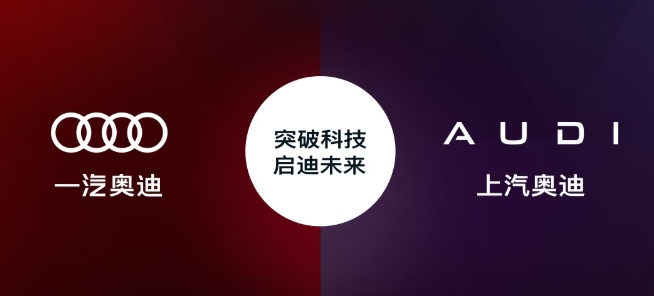
The context matters as much as the wording of the release. China's premium segment has stopped being a volume contest and become a cycle-time contest: how fast a brand can turn a software update, a price move or a new model into something a customer can actually order. Audi's own framing in the announcement — reported first by IT Home — is that the luxury market is entering a new phase defined by smart mobility and electrification, and that the company therefore needs "sharper focus and clearer posture". Dual brands answer the segmentation problem; dual partners answer the execution problem.
What exactly did Audi sign, and who gets what?
Two separate agreements, one per partner, that convert a familiar joint-venture setup into a clear division of labour. The stated goal is to strengthen the differentiation between the Audi four-ring brand and the AUDI brand — the letter-mark badge that IT Home flags in the original text — and to firm up the "two brands, two partners" channel architecture.
- China FAW: fully reinforces the market advantage of the Audi four-ring brand in two fields at once, smart luxury new-energy models and combustion models, backed by an intelligently equipped luxury product matrix for a brand positioned around design and technology.
- SAIC Audi: concentrates on the AUDI (letter-mark) brand and devotes itself to the new-energy market, rolling out next-generation connected cars shaped around what Chinese consumers ask for.
The practical effect is organisational. One partner asked to defend a premium combustion franchise while simultaneously building a value-led electric brand from zero usually slows both jobs down. With the tracks separated, the release argues, both brands can move with greater speed and greater precision — and, in Audi's words, this layout lays the foundation for the largest product offensive in the company's China history.
How the two brand tracks differ in practice
Buyers rarely care about channel architecture; they care about what a dealer can sell and service. The table below maps the split as described in the announcement, with the models Audi itself names.
| Dimension | Audi four-ring brand | AUDI (letter-mark) brand |
|---|---|---|
| Partner | China FAW | SAIC Audi, under SAIC Motor |
| Powertrain brief | Smart luxury new-energy plus next-generation intelligent combustion | New-energy only |
| Models named by Audi | Audi A6L e-tron, Q6L e-tron, all-new Audi A5L, A6L | Audi E5 Sportback, launched in 2025; Audi E7X SUV, launched in May this year |
| What the badge promises | Heritage, balance of fuel and electric, mature dealer experience | China-first connected hardware, aggressive value for money |
| Channel during transition | Sold by both partners: SAIC Audi may continue to sell four-ring products normally before the end of 2027 | Dedicated SAIC Audi channel |
| After-sales | Stated to run steadily and in orderly fashion | Stated to run steadily and in orderly fashion |
Why the split landed now, in numbers
Because the pressure is measurable. Audi's own quarterly reporting shows deliveries in China at 127,109 vehicles in the first quarter of 2026, down 12 percent year on year, within a global decline of 6.1 percent that Reuters attributed to weak demand in China and North America. Independent industry data underlines why the electric half of that problem needs a different partner model: CPCA figures cited by Gasgoo show that in April 2026 new-energy penetration reached 80.1 percent among domestic Chinese brands but only 26.1 percent among luxury brands, while average luxury transaction prices had slipped to around 358,000 yuan in 2025, roughly 18,000 yuan below 2024.
Cui Dongshu, secretary-general of the China Passenger Car Association, has repeatedly put the blame on price competition compressing margins, and the association's outlook published at the end of October 2026 expects domestic retail of about 18.5 million units this year, some 22 percent below 2025, with only a modest rebound in 2027. Against that backdrop, a two-partner structure that lets one side hold premium pricing on combustion and intelligent fuel models while the other chases electric volume at a lower entry point is a hedge, not a revolution. The International Energy Agency's Global EV Outlook 2026 makes the wider point: electric cars keep gaining share in China's growing market, and incumbents gain nothing by deciding at Stuttgart or Ingolstadt what a Shanghai buyer wants.
What sits on each side of the product line
On the four-ring side, the pitch is balance: electric luxury with the Audi A6L e-tron and Q6L e-tron, and continued investment in the combustion mainstream through the all-new Audi A5L and the A6L, framed as next-generation intelligent fuel models rather than legacy stock.
On the letter-mark side, the pitch is speed. The AUDI brand opened with the E5 Sportback in 2025 and followed with the E7X SUV in May this year — the first SUV from the SAIC-co-developed line-up, reported by CnEVPost and Electrive at a launch price band of roughly 269,800 to 359,800 yuan, undercutting its own pre-sale figures by about 20,000 yuan. Its assistance system was co-developed by SAIC Audi and the Chinese autonomous-driving company Momenta, which has described the car as running its R7 reinforcement-learning world model for "gate-to-gate" driving help. That is the clearest signal of what the AUDI brand is for: Chinese software and Chinese price discipline wearing German engineering restraint. Audi's Innovation Technology Center has meanwhile officially opened in Shanghai, putting development next to the partner that supplies it.
Is this an Audi move or an industry move?
Industry-wide, and it is not always rewarded. Volkswagen took the same logic further by investing in Xpeng, a partnership Reuters reported in October 2026 had delivered a new electric architecture and faster vehicle development even as the brand's China recovery remained fragile. BMW, Mercedes-Benz and other premium makers have likewise pushed local R&D and software alliances into the centre of their China strategy. Audi's difference is that it formalised the split at the badge and channel level rather than only at the technology level — a structural answer that is easier to reverse if it fails.
Common misconceptions about the two-brand plan
- "The letter-mark badge is a discount Audi." It is a separate brand track with its own partner, product cadence and after-sales channel; the pricing is aggressive, the positioning is not a trim level of the four-ring range.
- "My existing Audi is now stranded." The announcement states that customer service, after-sales support and dealer business keep running steadily, and that after-sales for both four-ring products and AUDI products remain in normal operation.
- "Audi is abandoning combustion in China." FAW's brief explicitly covers both smart luxury new-energy models and next-generation intelligent fuel models.
- "SAIC stops selling Audis immediately." No: SAIC Audi may continue to sell four-ring products normally before the end of 2027, so a two-year overlap of channels is the reality buyers will encounter.
Practical steps for buyers, owners and dealers
- If you are shopping for a premium electric SUV under roughly 360,000 yuan, test the Audi E7X against domestic rivals and judge it on software updates, charging behaviour and resale, not on badge nostalgia.
- If you are buying a four-ring model through a SAIC Audi outlet in 2026 or 2027, ask in writing which network will service the car after the channel handover, and keep the paperwork.
- If you already own an Audi, expect no change to warranty or service obligations; confirm the dealer authorisation status locally rather than on social media rumour.
- If you follow the market, watch three dates: quarterly delivery figures for China, the launch cadence of AUDI's second and third models, and the end-of-2027 channel transition.
Frequently asked questions
Is Audi leaving China or shrinking its joint ventures?
No. The release describes the agreements as a milestone in the long-term commitment of Audi, China FAW and SAIC Motor to the Chinese market, and points to the biggest product offensive in Audi's China history.
What is the difference between "dual brands" and "dual partners"?
Dual brands is the market-facing half: the Audi four-ring brand and the AUDI (letter-mark) brand aimed at different customer groups. Dual partners is the operating half: China FAW runs the first track, SAIC Audi runs the second.
Can I still buy a four-ring Audi at an SAIC Audi dealer?
Yes, for now. The company confirms SAIC Audi can sell four-ring products normally before the end of 2027, with after-sales remaining stable for both ranges.
Which brand is the technology bet?
The AUDI brand, given its new-energy-only brief, its Shanghai Innovation Technology Center link and its China-developed assistance software; the four-ring brand is the profit and heritage base that must stay competitive on intelligence too.
Our take: what this changes by 2027
Treat the announcement as a speed purchase rather than a rebranding exercise. Audi is buying shorter decision loops in the market that sets the pace of electrified premium cars, and it is doing so by accepting that two badges now need two different centres of gravity. The test will not be the signing; it will be whether the letter-mark line-up can hold volume after the E7X launch discount fades, and whether the four-ring range can make intelligent combustion models look deliberate rather than defensive in a market where CPCA reports penetration above 80 percent among domestic brands.
Sources referenced
- Audi China announcement of strategic agreements with China FAW and SAIC Motor, as reported by IT Home on October 26
- Audi quarterly media release on first-quarter 2026 deliveries (127,109 units in China, down 12 percent): audi.com/en/media-releases/first-quarter-of-2026-audi-figures-shaped-by-challenging-market-conditions-growth-in-germany-and-europe-17118
- Reuters on Audi first-quarter global deliveries, April 13, 2026: reuters.com/business/autos-transportation/audi-q1-deliveries-fall-61-weak-demand-china-north-america-2026-04-13/
- CnEVPost and Electrive on the AUDI E7X market launch and pricing in May 2026: cnevpost.com and electrive.com
- Momenta on the assistance-driving system co-developed with SAIC Audi for the E7X: momenta.ai/en/article/569.html
- Gasgoo Auto News on CPCA penetration and luxury pricing data, and on the Audi Innovation Technology Center in Shanghai: autonews.gasgoo.com
- MarketScale and GlobalChinaEV on CPCA secretary-general Cui Dongshu's 2026 retail outlook: marketscale.com
- Reuters on the Volkswagen-Xpeng partnership, October 20, 2026: reuters.com/business/autos-transportation/volkswagen-bet-xpeng-save-its-china-business-its-not-going-plan-2026-10-20/
- IEA Global EV Outlook 2026, executive summary: iea.org/reports/global-ev-outlook-2026/executive-summary