
Mike Rockwell May Leave Apple in 2027: A Practical Guide to Siri's Leadership Shuffle
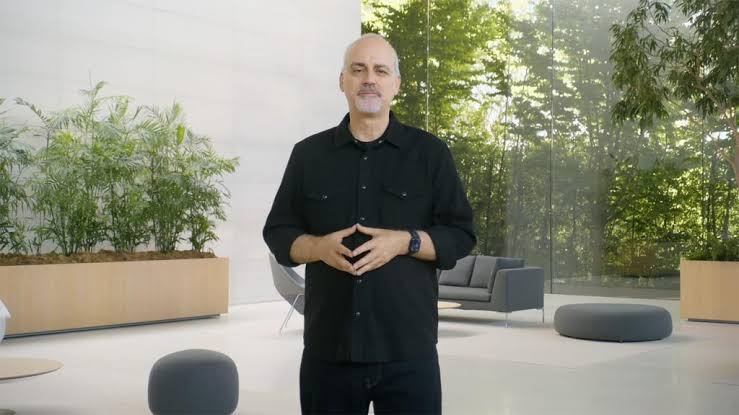
Apple's Siri AI chief, Mike Rockwell, is weighing whether to step down in 2027 or leave Apple Inc. altogether, according to Bloomberg reporter Mark Gurman's Power On newsletter. No voice assistant is being switched off: the practical stakes are roadmap timing, another round of executive reshuffling, and fresh questions about who decides what Siri may see and do on your phone. This guide separates the reported fact from the speculation, maps the chain of command, and ends with a checklist you can actually use.
What the report says, and what it does not
Short answer: this is one reporter's account of an unfinished decision, not an Apple announcement. In his Power On update, Mark Gurman described Rockwell as still seriously considering his next move, with a possible exit in 2027 and the option of leaving Apple entirely. Gurman's framing was that the rebuilt assistant arrived roughly two years late, which makes Rockwell's role — and therefore his departure — costly for the company. The company itself has confirmed neither the timing nor the exit, and no reason for the possible move has been reported.
- Reported as fact: Rockwell is actively weighing his future; the year under discussion is 2027; leaving Apple permanently is on the table.
- Reported as likely, not decided: if he goes, more of his duties are expected to fall to two executives — Amar Subramanya, Apple's vice president of AI, and Sebastien Marineau, a senior Apple engineering manager.
- Not reported at all: a successor's official title, a new org chart, an effective date, or Apple's response.
For context on the man himself: Rockwell previously led development of Vision Pro, then was reassigned to head the Siri AI overhaul. The version of Siri AI that reached customers in 2026 is the main output of several years of work by that team — which is precisely why an exit now is a product question, not only a personnel one.
How Apple got here: a five-point timeline
Conclusion first: Siri's leadership story is not one bad decision. It is four consecutive restructurings across roughly 20 months.
- March 2025 — reporting by Gurman said Apple handed Siri development to Rockwell, with him reporting into software chief Craig Federighi, moving the assistant out of John Giannandrea's remit after the personalised Siri project slipped badly.
- 2024 into 2025 — several intelligent features that Apple had promised alongside iPhone 16 did not arrive on schedule, a delay that later turned into litigation.
- December 2025 — Apple announced that Giannandrea would retire in spring 2026 and named Amar Subramanya vice president of AI, accountable for foundation models, machine-learning research and AI safety evaluation, reporting to Federighi; parts of Giannandrea's former organisation shifted to services head Eddy Cue and chief operating officer Sabih Khan, per Apple's own announcement.
- June 2026, Worldwide Developers Conference — Apple shipped the heavily rebuilt Siri AI: more natural conversation, the ability to understand onscreen content, search the web and pull relevant material out of your mail and messages, with a Google Gemini model supplying part of the capability.
- August 2026 — Apple carried out staffing changes touching more than 200 roles across teams including Siri and Vision Pro.
Layered on top is a hiring-market story. Over the past year several core researchers and managers were poached by competitors including Meta, among them Ruoming Pang, the executive responsible for Apple's foundation-model development, and Ke Yang, who worked on Apple's AI search project. Bloomberg's report on Pang's move is a reminder that retention, not just org design, is the constraint here.
Who are the two names to watch?
Conclusion first: both report to Craig Federighi, which tells you where Apple now thinks AI belongs — inside the software organisation rather than in a separate AI fiefdom.
| Executive | Background | Role today | Why it matters |
|---|---|---|---|
| Amar Subramanya | Spent 16 years at Google, including engineering work on Gemini Assistant, then served as an AI business executive at Microsoft | Vice president of AI since December 2025: foundation models, machine-learning research, AI safety evaluation; reports to Craig Federighi | He already absorbed John Giannandrea's core charter, so a Rockwell exit would finish a consolidation that began over a year ago |
| Sebastien Marineau | Long-serving Apple engineering manager | Also reports to Craig Federighi; his team works on folding AI into iOS | Some inside Apple regard him as a potential future successor to Federighi, though there is no sign Federighi plans to retire or leave in the near term |
Coverage of the December 2025 reshuffle, including an analysis in Business Chief, treated it as a change of reporting lines rather than a change of technical direction. If Rockwell leaves, expect the same logic: re-plumbing of accountability, not a new strategy.
Why an executive move should matter to ordinary users
Conclusion first: when AI leadership churns, three things change for users — timing, permissions and trust.
1. Timing
Every handover costs momentum. Apple's own record shows the effect: the personalised Siri project slipped so far that multiple features promised with iPhone 16 missed their window, and the rebuilt assistant reached users only in 2026.
2. Permissions
A genuinely useful Siri is one that can read your screen, search online and dig through your messages. Each of those powers requires an executive willing to accept the privacy trade-off. Apple has itself started warning about the downside: in its annual filing it flagged that AI agents able to behave in unexpected or unpredictable ways could invite litigation and reputational harm, a point we unpacked in our practical safety checklist on Apple's AI-agent risk disclosure.
3. Trust, and money
Broken AI promises have already carried a price tag. In September 2026 Apple agreed to a $250 million U.S. class-action settlement over claims that buyers were misled about delayed Siri and Apple Intelligence capabilities, with eligible owners of affected models — reporting covered the iPhone 15 and iPhone 16 families — entitled to roughly $25 to $95 per device and a claims window running to 21 December 2026, as CBS News and Wired documented. Availability is uneven by market as well: our guide to Apple Intelligence's first features in China shows how much depends on where you live and which iOS build you run.
A six-step checklist for tracking Apple's next AI leadership move
- Sort source from echo. If a claim traces back to a single newsletter, treat names, dates and motives as provisional; wait for a statement on Apple's newsroom page before repeating a "fact".
- Read the reporting line, not the headline. Who an AI executive answers to matters more than the title. Subramanya reporting to Craig Federighi rather than to the CEO signalled that Apple wants AI fused into the operating system.
- Put two dates in the calendar. Spring software announcements and the June Worldwide Developers Conference are where Apple has historically revised Siri timing.
- Test your own device. Open Settings, then Apple Intelligence & Siri, and record which features are actually live in your language and region before deciding anything about an upgrade.
- Keep your proof. Purchase date, model and serial number decide settlement eligibility; diarise deadlines such as the 21 December 2026 claims date.
- Judge shipping, not structures. Track three measurable things: what Siri can do on device, what it borrows from partners such as Google Gemini, and how fast promised features reach buyers.
Common misconceptions about this story
- "If Rockwell leaves, Siri breaks." Assistants do not stop working when an executive moves on; what changes is roadmap sequencing and who signs off on risk.
- "The leak is the decision." The report describes consideration, not resignation. Apple has confirmed nothing.
- "Siri AI on Google Gemini means Siri is a Google product." The joint statement from Google and Apple says Apple's foundation models will be based on Google's Gemini models and cloud technology — a supplied capability inside Apple's product, privacy layer and silicon.
- "Apple has no AI." A rebuilt Siri AI did ship in 2026 with onscreen understanding, web search and personal-context retrieval; the criticism is about delay and depth, not absence.
- "One more hire fixes it." Losing Ruoming Pang and Ke Yang to rival demand shows the binding constraint is talent retention and delivery discipline, not a missing job title.
What to do now, depending on who you are
iPhone and iPad owners
Nothing urgent. Keep your device current, check which AI features are actually enabled for your region, and if your model was bought in the iPhone 15 or iPhone 16 window, confirm whether you are still in time for the Siri settlement claims process.
Developers building on Siri or Apple Intelligence
Assume interfaces keep moving while Apple's AI leadership settles. Test against betas early, avoid depending on a single unannounced capability, and treat personal-context access as something that can be tightened after a privacy incident rather than loosened.
Product and marketing teams
Apple's case is the clearest recent lesson in promising a feature before shipping it. Tie launch copy to capabilities you can demonstrate on stage, and put a delivery owner and a public date on every AI claim.
Industry watchers and investors
Watch three signals in order: an Apple confirmation about Rockwell, whether Amar Subramanya's remit formally expands to include the assistant product, and whether Sebastien Marineau's iOS-integration team gains headcount. Those tell you more than any obituary-style memo.
Frequently asked questions
Has Apple confirmed that Mike Rockwell is leaving?
No. Bloomberg's Mark Gurman reported that Rockwell is considering stepping down from the Siri AI job in 2027, or leaving Apple entirely. Neither the timing nor a reason has been confirmed by the company.
Who would take over Siri AI?
Two names keep surfacing: Amar Subramanya, Apple's vice president of AI, and Sebastien Marineau, who reports to Craig Federighi. Neither has been publicly given Rockwell's title.
Is Rockwell the person who built Vision Pro?
Yes. He previously ran Vision Pro development before being reassigned to lead the Siri AI overhaul, which is why his possible exit is read as a loss for the assistant rebuild specifically.
Will this slow down Siri features in 2027?
That is the main risk. Apple's AI roadmap has already absorbed John Giannandrea's retirement in spring 2026, more than 200 role changes in August 2026 and departures to Meta; another management change adds coordination cost at exactly the moment Apple is chasing OpenAI, Google and Anthropic.
Does the Google Gemini partnership change if Apple's people change?
There is no sign of that. The partnership is a company-level arrangement covering models and cloud capacity; personnel changes at Siri affect how quickly Apple uses it, not whether it exists.
What Apple still has to prove
Launching the rebuilt Siri AI in June 2026 did not complete the transformation. Apple still has to widen the assistant's reach inside third-party apps, sharpen its handling of complex multi-step tasks, and strike a defensible balance between on-device privacy and cloud compute. If Rockwell's possible exit becomes reality, the company will be doing all of that while redrawing Siri's management structure once again. For a business trying to close the distance to OpenAI, Google and Anthropic, serial leadership change is not simply a question of who gets promoted: it decides whether AI product development stays continuous and whether a multi-year strategy survives contact with the org chart.
By Sarah Chen, MyTechDailyNews. Tips and corrections: hello@techdaily.com.
References
- Mark Gurman, Power On newsletter, Bloomberg — as summarised in IT之家's report at https://www.ithome.com/html/soft/1024014.htm
- Apple Newsroom, "John Giannandrea to retire from Apple": https://www.apple.com/newsroom/2025/12/john-giannandrea-to-retire-from-apple/
- Reuters, "Apple names Amar Subramanya new VP of AI, replacing John Giannandrea": https://www.reuters.com/world/asia-pacific/apple-names-amar-subramanya-new-vp-ai-replacing-john-giannandrea-2025-12-01/
- Bloomberg, "Apple Loses Top AI Models Executive to Meta's Hiring Spree": https://www.bloomberg.com/news/articles/2025-07-07/apple-loses-its-top-ai-models-executive-to-meta-s-hiring-spree
- Google, "Joint statement from Google and Apple": https://blog.google/company-news/inside-google/company-announcements/joint-statement-google-apple/
- Wired, "Apple's New Siri AI Is Ready to Get Personal": https://www.wired.com/story/apples-new-siri-ai-is-ready-to-get-personal/
- CBS News, "Apple settlement offers eligible iPhone owners up to $95": https://www.cbsnews.com/news/apple-settlement-iphone-siri-claim/
- Top Class Actions, "$250M Apple Siri false advertising class action settlement": https://topclassactions.com/lawsuit-settlements/open-lawsuit-settlements/250m-apple-siri-false-advertising-class-action-settlement/
- Business Chief, "Why is Apple Restructuring its AI Leadership Team?": https://businesschief.com/news/why-is-apple-restructuring-its-ai-leadership-team
- Daring Fireball linking Gurman's March 2025 Siri report: https://daringfireball.net/linked/2025-03-20/gurman-rockwell-siri