
Anthropic's Nasdaq Debut: Can Amodei Turn AI Hype Into Real Profit? | MyTechDailyNews General
Anthropic lists on Nasdaq on Thursday at a $1.4 trillion target valuation, raising up to $90.4 billion — a debut that doubles as the market's first real verdict on whether AI has stopped “selling shovels” and started digging up actual profit. If you watch one tech listing this week, make it this one. Let's unpack what's actually happening, in plain English.
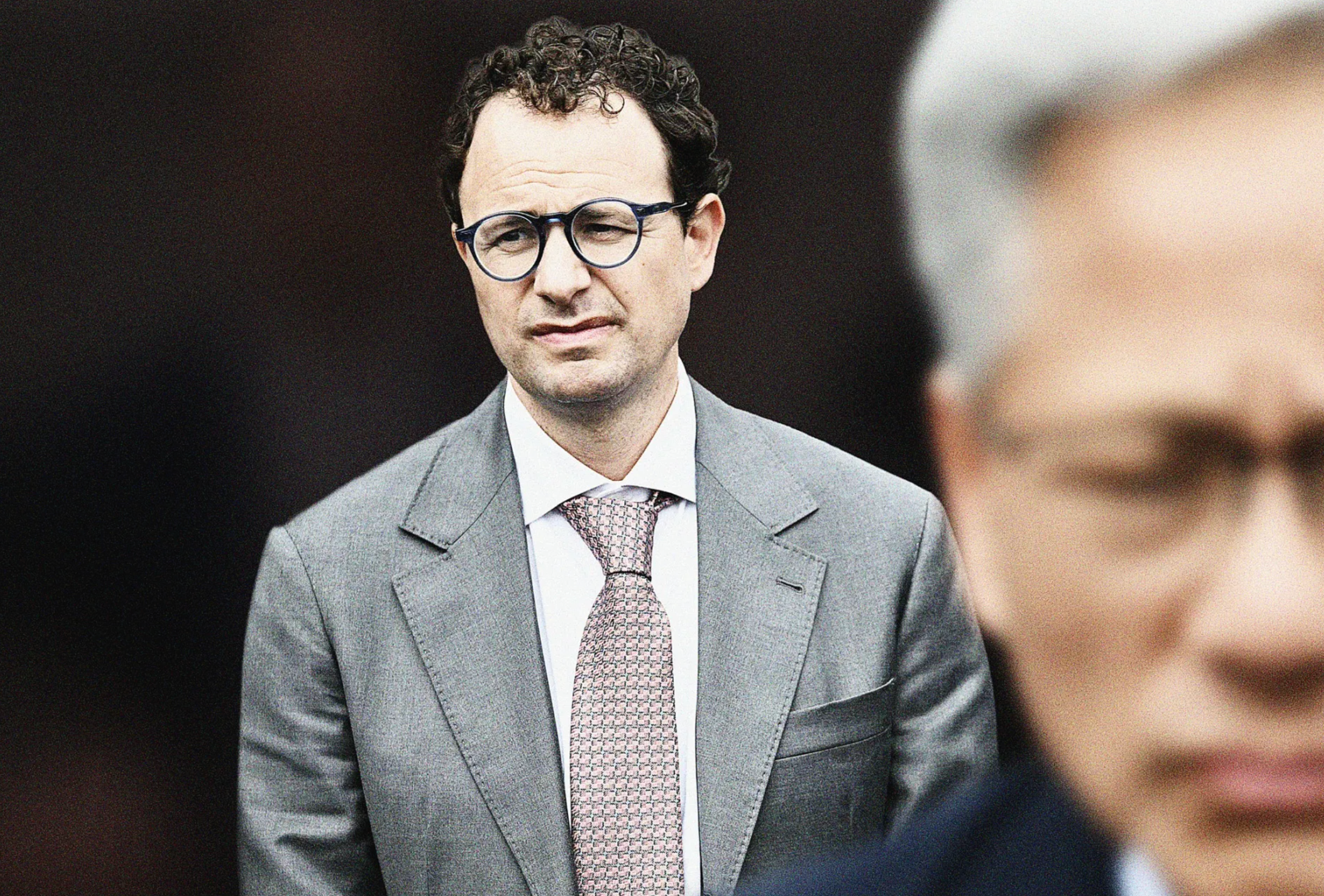
Here's the mental model: for years the safest way to profit from a gold rush was to sell shovels. Nvidia became the shovel seller, at one point worth $5.8 trillion. Anthropic's IPO asks a different question — whether the people actually using the tools are making money too. That “digging for real gold” test lands on CEO Dario Amodei, who is being asked to pick up the mantle of AI's chief public voice from Jensen Huang.
It's a tough room. Goldman Sachs analysts estimate Anthropic won't generate positive full-year free cash flow until 2030, and the company's spending commitments stretch past $900 billion through 2045. Investors known for demanding quick returns will have to be patient.
Complicating matters: the data-center boom is tangled up with circular deals. Nvidia is arranging financing for Anthropic and several of its own big chip customers — effectively helping fund the buyers of its hardware. Recent reporting describes how such arrangements propped up demand and kept GPU prices elevated through 2026, while Nvidia's own leadership has publicly pushed back on the idea that this creates a problematic loop. Whether the chipmaker's new management has Huang's appetite for risk is now an open question.
How big is the raise — and is it really a record?
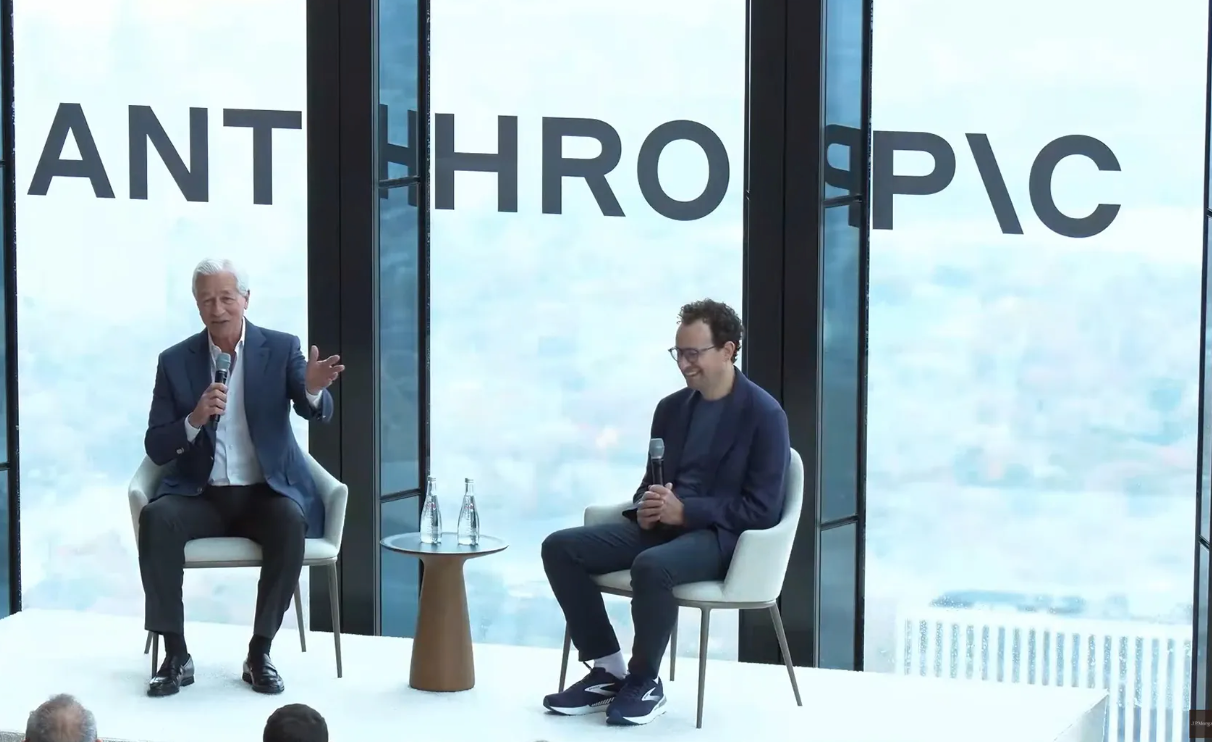
Last Friday, at an IPO pitch event at JPMorgan's new headquarters in New York, Amodei stepped onstage alongside JPMorgan CEO Jamie Dimon — running shoes, white socks, blue blazer and all — and seemed to brush off the noise around the deal. In the room were fund managers including Paul Singer, Bill Ackman and Ron Baron.
Amodei told Dimon: “We aren't particularly concerned about the specific timing of the listing — which month, which day, or what the market environment is like when we go public.” He said the best advice he received while preparing was this: “Never let the company's valuation be even $1 higher than its actual value.”
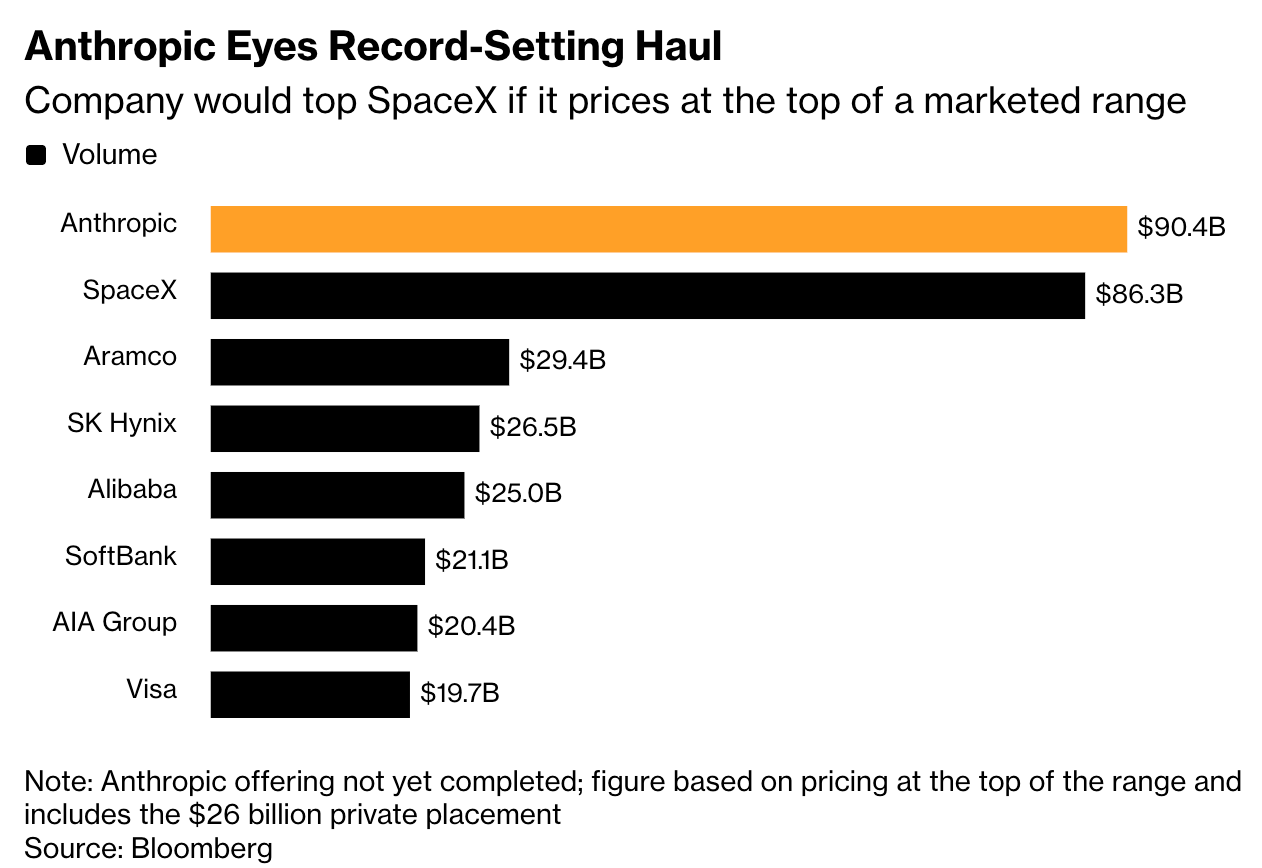
The number everyone is staring at is $1.4 trillion. That's well below the $2 trillion floated a few months ago, but far above the $1.1 trillion some on Wall Street whispered during the worst of the recent tech-stock selloff. Anthropic and some backers hope to raise as much as $90.4 billion through the IPO plus a separate private placement. Add the two and you pass SpaceX's $75 billion base financing — the biggest listing deal on record.
Amodei
Demand is not the problem. The deal is nearly seven times oversubscribed, and one person familiar said appetite is hotter than SpaceX's was. The closest comparison, that person said, is Snowflake's $3.9 billion IPO in 2020, whose shares jumped 112% on day one.
Founded in 2021 by former OpenAI researchers — including Dario and Daniela Amodei — and organized as a public benefit corporation, Anthropic is already growing fast. As of October 31, its annualized revenue run-rate stood at $81 billion — $10 billion more than at end of September. Hit that full-year figure and it would sit among a tiny club of companies that size, ahead of what analysts expect from hardware heavyweights Intel and ASML.
Wellington Management's Matt Witheiler, who holds Anthropic shares, put it this way: “Public-market investors are racking their brains trying to work out just how big AI demand really is — which is why everyone is watching the ARR (annual recurring revenue) figures published at the end of every month.” He added: “There's no benchmark yet for measuring public-market AI demand, because these companies have all been private until now. But as Anthropic becomes the first to enter the public capital markets, that will change.”
For now the war chest looks comfortable: more than $130 billion in cash and equivalents, after raising about $141 billion to date. But the clock is ticking — roughly $71 billion of spending must be paid out by end of September 2027. Bloomberg Intelligence analyst Mandeep Singh warns: “Intensifying price competition could make it harder to hold gross margins. They also need to generate enough enterprise-level token consumption to earn enough to cover these infrastructure spending commitments.”
Why analysts call this the first honest test of AI demand
Because for the first time there's a public price on private-sector AI enthusiasm — and a real business to judge.
CFRA senior vice president and head of tech research Angelo Zino said: “This IPO is hugely important, because Anthropic may be the single best barometer of the health of the entire AI ecosystem. In my view, their thinking on how to monetize AI now matters as much as — and even more than — Nvidia's, given that Jensen Huang is no longer at the helm.”
The logic? Money is rotating from the chips and infrastructure that make AI possible toward the companies building agents and chatbots — the form most people think AI will finally take in daily life. Anthropic fits that shift neatly.
Allspring Global Investments growth-equity chief Mike Smith said: “Market expectations are clear — and very high. The question is whether the company can stay on the trajectory needed to meet them.” He continued: “Unfortunately for them, trillions of dollars are riding on this. It's one of the key bellwethers of whether AI commercialization can actually work.” Kim Forrest, chief investment officer at Bokeh Capital Partners, went further: “Anthropic could become the most important company in the public market, because it will be the textbook example of AI's commercial use. Honestly, from the start, everyone's attention should have been on the companies that use AI and use AI chips.”
Does swapping Jensen Huang for Amodei change the story?
Yes — because the mood around AI has shifted with him.
Tech stocks have slid over the past month, and the US midterm results pointed to a Congress hostile to the sector, with Democrats taking the next chamber. Huang's forced exit added shock. For four years he had been AI's most outspoken backer, until reports emerged about multiple extramarital affairs.
Jensen Huang
The news hammered Nvidia shares, which logged their worst week since the April 2025 selloff triggered by Trump's tariffs, and pushed Wall Street to rethink AI valuations. That puts extra pressure on Anthropic to reignite optimism.
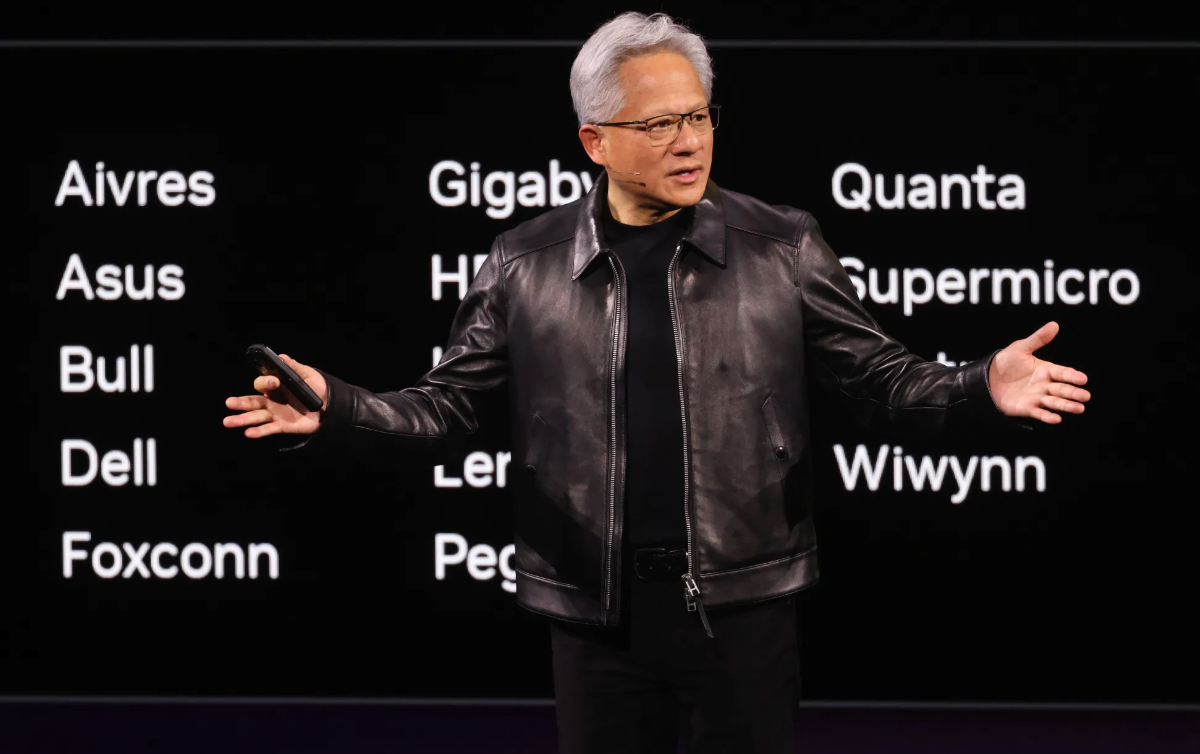
If investors now look to Amodei instead of Huang for reassurance, they'll notice a sharp contrast. Huang is the globe-hopping, star-quality CEO in his signature Tom Ford black leather jacket. Amodei is the low-key, bookish co-founder. Clothes are the surface, though. On AI their worldviews diverge: Amodei has warned about existential risk to humanity, while Huang's public persona has been relentlessly upbeat.
The split showed up last week. People familiar said Anthropic declined institutional investors from mainland China and Hong Kong for this IPO. Huang, by contrast, spent years pushing Nvidia products into China and cultivating ties there.
What should you actually watch this week?
Three things: the order book, the final price, and Nvidia's earnings call.
All eyes are on Anthropic's listing this week. Underwriters Goldman Sachs and Morgan Stanley were set to close the order book on Tuesday — the same day Nvidia reports earnings and holds its first call since Huang stepped down as CEO. Coincidence, yes; quiet symbolism, also yes.
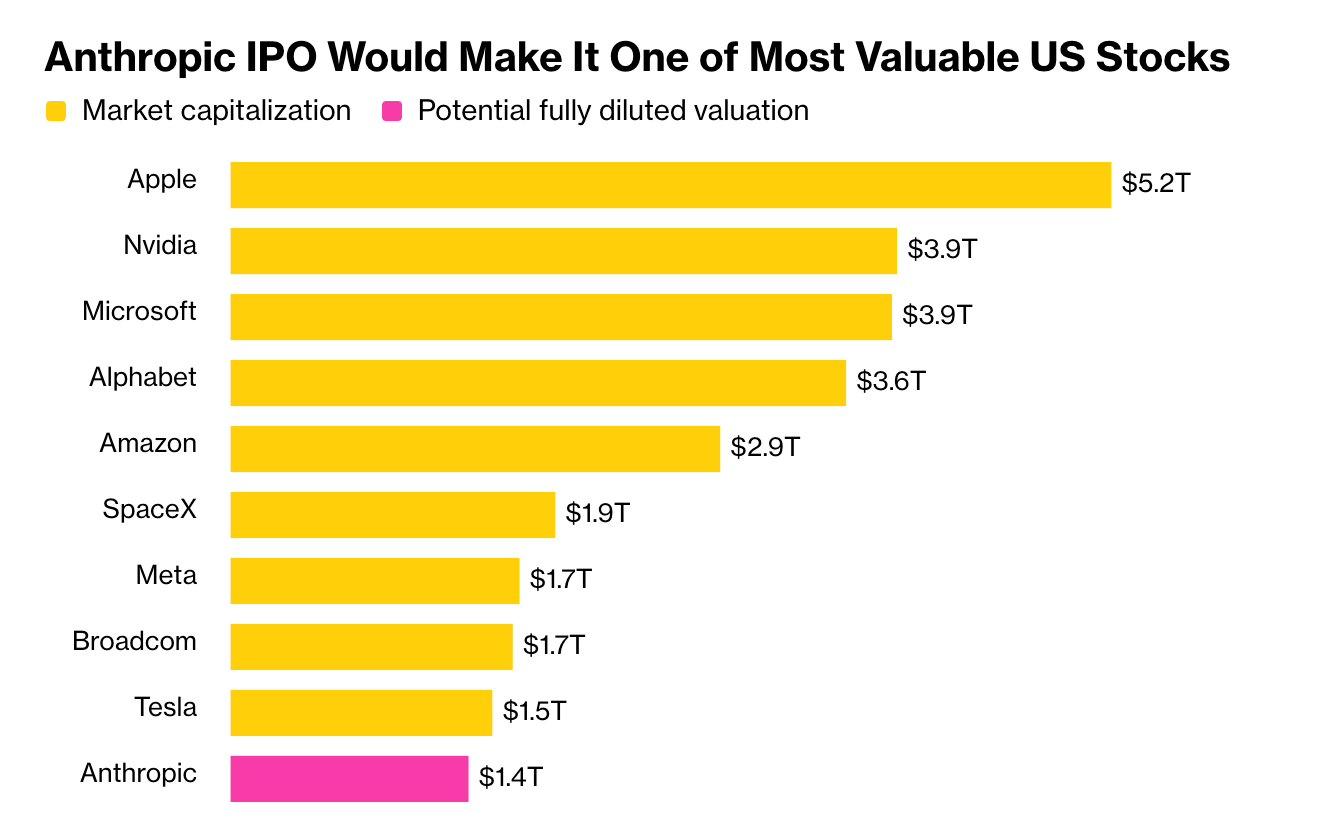
Because Anthropic carries such weight, how the IPO is allocated and priced will ripple through the broader market. From here on its quarterly reports become a window for the world to track AI's progress. Allspring's Smith said: “In my view, nothing matters more right now than watching whether the infrastructure that's already been built can actually be turned into revenue. For this to really work, they need to generate more revenue than anyone else within two to three years.”
That's a big ask. Yet investors seem willing to bet Amodei's vision keeps coming true — from everyday business efficiency to grander goals such as ridding the world of disease. Speaking with Dimon last Friday, he said: “I hope that in the end we can prove the skeptics wrong, and that humanity will come to look at every disease you can think of — heart disease, Alzheimer's, cancer — the way we look at plague or smallpox today: as something in the past. It may sound overly idealistic, even a little crazy, but I truly believe — I truly believe — this can be done.”
Whether a market wired for short-term returns will bankroll that ambition to make every disease a thing of the past is the question I keep coming back to. My bet: watch the first quarterly report, not the first-day pop.
Common misreadings of this IPO
- “The $1.4 trillion tag means the company is definitely worth that.” It's a target valuation, not a verdict — and it's already down from the $2 trillion floated earlier.
- “A first-day surge proves the business works.” Snowflake's 112% jump in 2020 was a sentiment event, not proof of margins. Watch free cash flow (Goldman Sachs says 2030) instead.
- “More cash on hand means no risk.” More than $130 billion in cash is real, but roughly $71 billion of spending is due by end of September 2027, and $900 billion of commitments run to 2045.
- “This is only about Anthropic.” As Angelo Zino and others note, it's a read on the whole AI ecosystem during a leadership vacuum at Nvidia.
A short checklist for following the story
- Mark Thursday on the calendar — listing day, and note the ticker: Anthropic's Class A shares trade on the Nasdaq Global Select Market under “ANT”.
- Track Tuesday's Nvidia earnings call for hints on financing and margins.
- Read the ARR figure at each month's end, not just the headline valuation.
- Watch the first quarterly report for enterprise token consumption and gross-margin trends.
- Treat the $141 billion raised to date and $130 billion in cash as context, not a guarantee.
FAQ: Anthropic's Nasdaq debut, answered
When does Anthropic start trading?
On Thursday, on Nasdaq. The order book was expected to close on Tuesday, with Goldman Sachs and Morgan Stanley leading the deal.
What is the ticker?
ANT, for Class A common stock on the Nasdaq Global Select Market, according to Anthropic's SEC filing.
Why is the valuation “only” $1.4 trillion?
Because it sits between the earlier $2 trillion talk and the $1.1 trillion floated during the selloff — a compromise that reflects investor caution.
Is the money raised a record?
Up to $90.4 billion including a private placement would top SpaceX's $75 billion base financing, making it the largest listing deal on record.
What's the biggest risk?
Timing. Goldman Sachs doesn't see positive full-year free cash flow until 2030, while spending commitments reach past $900 billion through 2045.
Reference sources
- Anthropic, “Anthropic files S-1 with the SEC for proposed initial public offering” — anthropic.com/news/s1-sec
- US SEC, Anthropic PBC Form S-1/A-3 — sec.gov filing
- Britannica, “Anthropic | History, Controversies, & Claude AI” — britannica.com
- TechSpot, on circular financing and elevated GPU prices — techspot.com
- Yahoo Finance, on Nvidia's response to circular-financing concerns — finance.yahoo.com