
Cat Wu Leaves Anthropic for OpenAI: What It Means for Claude Code and Codex Users
By Sarah Chen · MyTechDailyNews — General
Cat Wu, the product lead who helped turn Claude Code from an internal Anthropic experiment into one of the company's biggest growth engines, announced on November 3 that she was leaving, and she has surfaced at OpenAI, working alongside Nick Turley, Ashley Alexander and Tibo Sottiaux. For everyday users nothing breaks today: no feature, price or model moved with her. What changes is who designs the next generation of AI coding agents — which is worth understanding before you re-pick your toolchain.
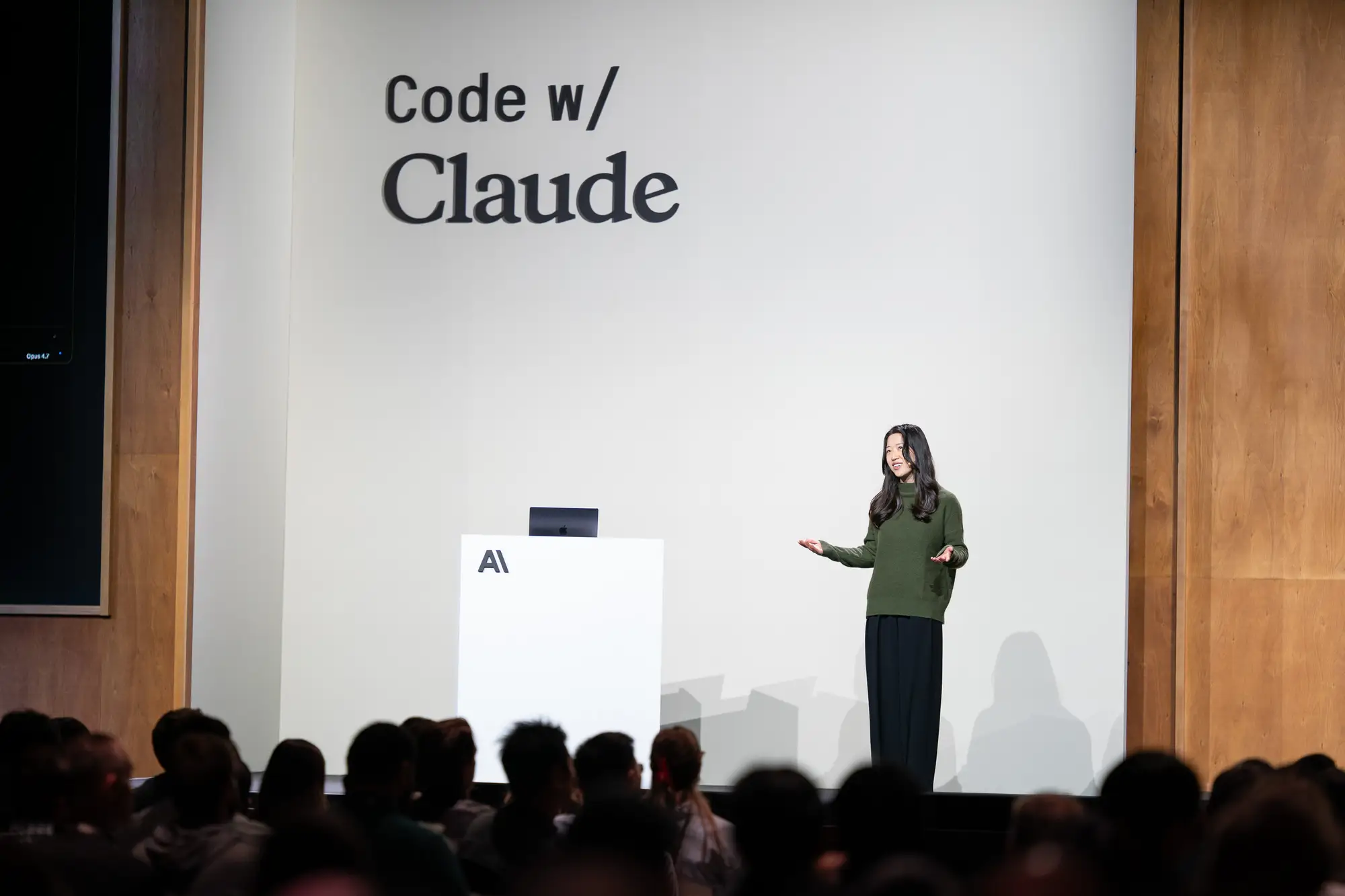
If you have ever watched an agent edit a real repository, run the tests and then explain a failed assertion, you have watched the output of the team she led. Most coverage this week counts the headline; this piece answers the practical question for a general tech audience instead — what does a personnel swap of this kind actually change for the tools you open every day, and how should you weigh Claude Code against Codex now?
What actually changed, and what did not
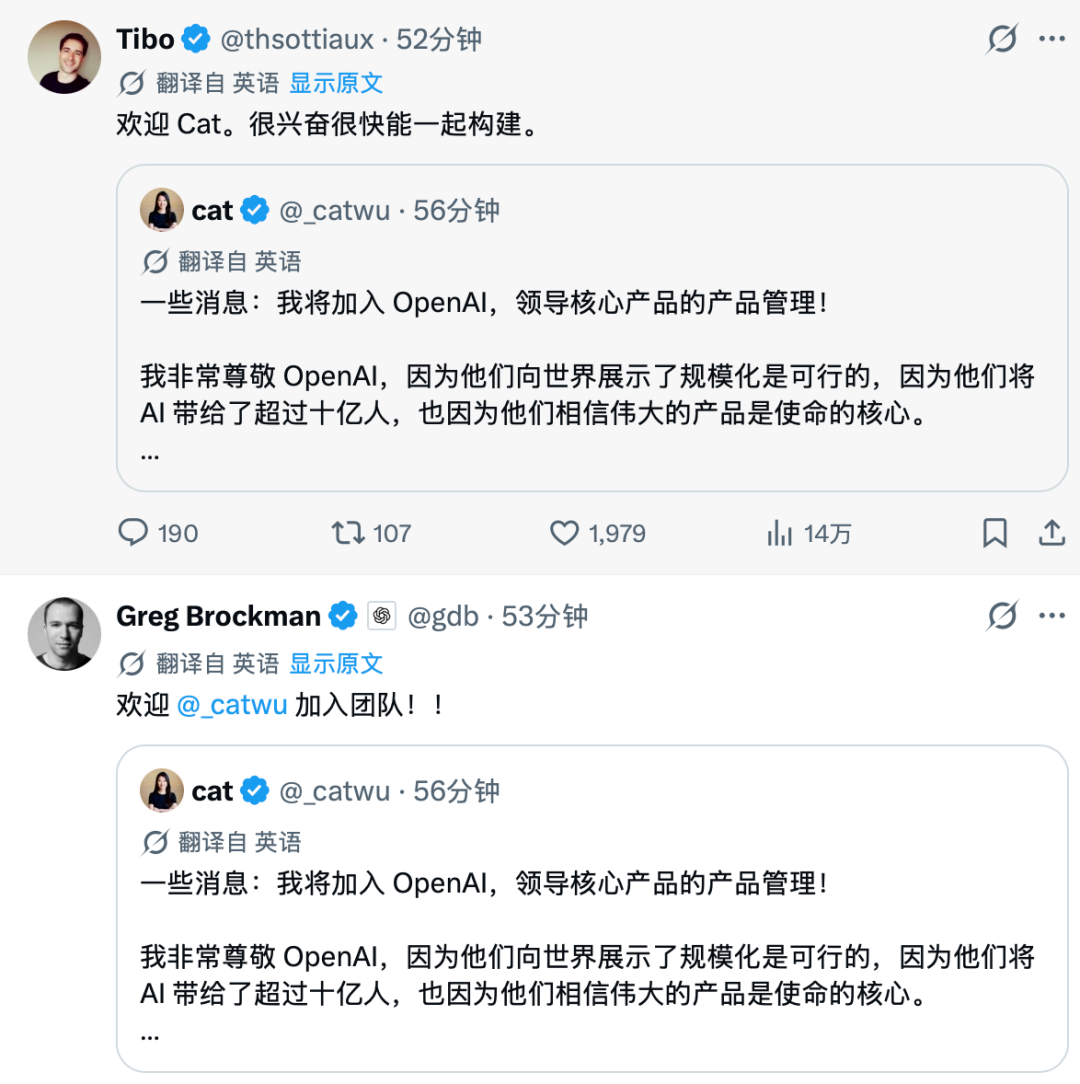
Short answer: one senior product manager changed employer; two product roadmaps kept running. Wu posted on the X platform that she had left Anthropic, adding that October 30 was her final working day there. An OpenAI spokesperson then set out her new remit: she will develop enterprise products together with Nick Turley, push consumer product work with Ashley Alexander, and report to OpenAI executive Tibo Sottiaux. Reporting dated November 5 put her in charge of product management for OpenAI's core products and agents.
What did not change is the software. Claude Code still runs where it ran before, Codex still sits inside OpenAI's stack, and no pricing page was rewritten when she crossed the street. The realistic effect falls on the next six to twelve months of product decisions: how agents are packaged, who they are sold to, and how much control the user is handed back.
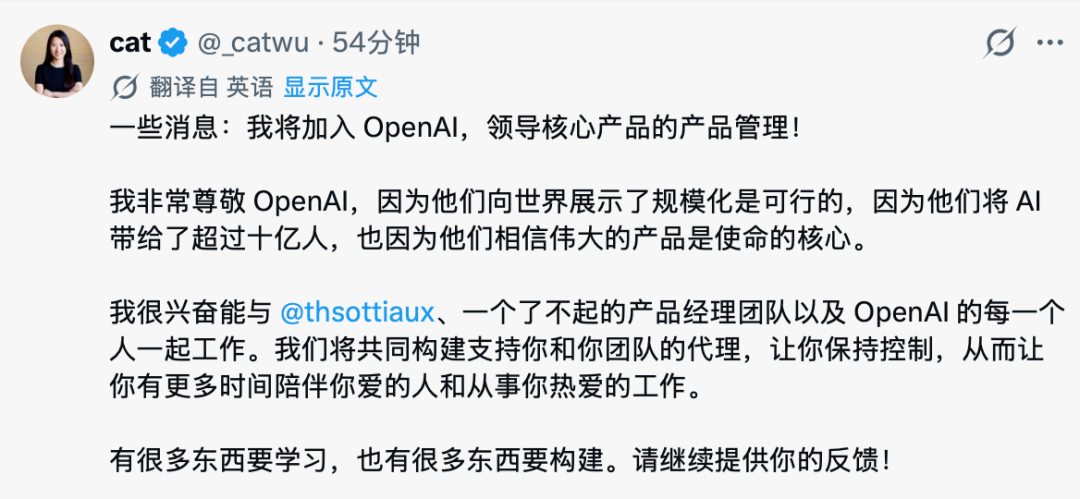
Her own framing is telling. Wu wrote that she has great respect for OpenAI and singled out one number — the company already reaches more than 1 billion users. Her stated ambition is to build AI agents that support both individuals and teams while letting people keep control, so they have more time for the work and life they care about.
What she built inside Anthropic
The credential OpenAI is buying is a commercialisation record, not a research title. Wu joined Anthropic in summer 2024 and took responsibility for Claude Code as well as Cowork, the company's AI tool for non-programming tasks. Claude Code shipped a research preview in February 2025, and its ability to write and run code autonomously won developers over quickly, turning it into a major growth driver for Anthropic.
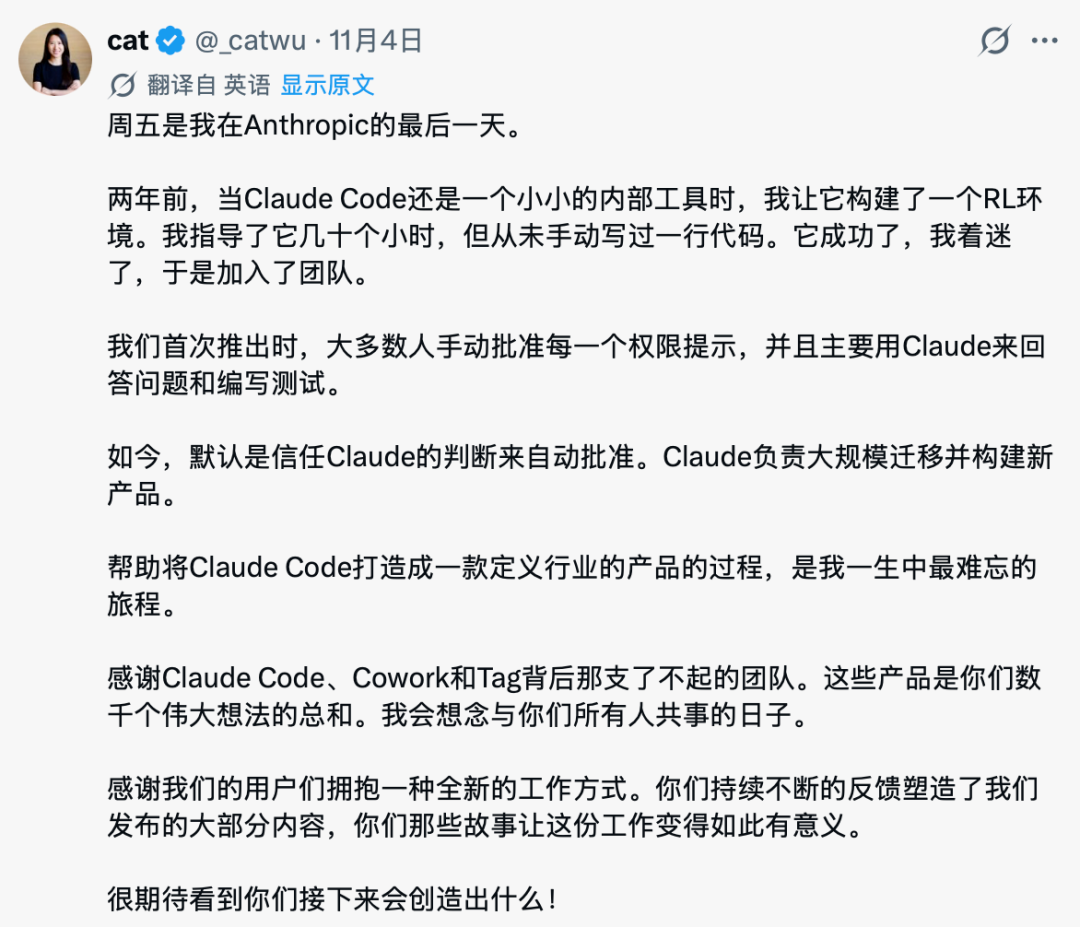
She has described the arc herself: in the earliest version, users had to approve most operations by hand, and the AI was mainly used to answer questions and write tests. Today Claude carries out far bigger jobs, including large code migrations and new product development. That is the same trajectory OpenAI is chasing with Codex as it extends beyond software engineering into broader, non-technical work.
The commercial size of what she leaves behind is now public. Reporting by CNBC on Anthropic's February 12, 2026 Series G round says Claude Code had passed a $2.5 billion annualised revenue run rate, more than double where it stood at the start of that year, inside a raise that valued the company at $380 billion. One product manager rarely owns a number like that alone — but she was the person who made the tool land.
OpenAI vs Anthropic: two strategies side by side
Read the hire as a statement about distribution versus depth. Here is how the two coding-agent programmes compare right now.
| Dimension | OpenAI | Anthropic |
|---|---|---|
| Flagship agent product | Codex, being widened from software development to non-technical tasks | Claude Code, plus Cowork for non-programming knowledge work |
| Origin story | Built on the largest consumer funnel in AI | An internal experiment commercialised via a research preview in February 2025 |
| Scale evidence | More than 1 billion users across its products; OpenAI said in June 2026 that Codex had passed 5 million weekly active users, up more than six-fold since its desktop app launched in February 2026 | A $2.5 billion-plus annualised run rate for Claude Code reported in February 2026 |
| Strongest instinct | Reach: packaging capability into products people already have open | Depth: long, technical, agent-driven sessions with heavy code context |
| Effect of this move | Adds a lead who has run preview-to-revenue cycles on both a coding agent and a knowledge-work agent | Removes that continuity at the exact moment public-market investors will interrogate growth |
| Open question for buyers | How far does enterprise governance and audit go? | How consumer-friendly does the stack become without its reference product lead? |
Demand is the one variable neither company controls, and it has shifted fast. JetBrains' research covering May to July 2026 found that 90% of professional developers use AI coding agents at work at least weekly, with 68% doing so daily, while Stack Overflow's 2026 developer survey ranks coding assistants and agents as the most common AI use case overall (66%), ahead of general-purpose chatbots (63%). The prize is now default working behaviour, not early adopters.
Should the switch change your tool choice?
If you code alone, as a hobbyist or indie builder
Benchmark rather than migrate. The learning cost of a new agent workflow usually outweighs small quality differences, so test the newcomer on one real backlog item and keep whichever gets a merged change faster. If you live in a terminal, Claude Code's lineage makes it the natural yardstick; if your subscription already bundles Codex, start there.
If you lead a team shipping production software
Evaluate the control dial, not the demo. Wu's own summary of the last two years — manual approval of most operations back then, full code migrations now — is precisely the axis a team should set deliberately: which actions an agent may take unattended, how changes are reviewed, and how sessions are audited. Autonomy buys speed; approvals buy safety, and you are trading one against the other every sprint.
If your day is documents, spreadsheets and operations, not source code
This is the segment where the hire matters most. Cowork on the Anthropic side and Codex's push into non-technical tasks on the OpenAI side both target the same user, and the work Wu says she wants to do — agents for individuals and teams that keep people in control — sits squarely here. Expect faster productisation on the consumer side; compare template coverage, per-task cost and permissioning before committing.
If procurement and compliance hold the pen
Let contracts decide, not hiring news. Anthropic's reported revenue base leans enterprise; OpenAI's leans on volume and breadth of distribution. Check data retention terms, model and region controls, seat and usage pricing, and exit portability before scaling any agent rollout.
The wider signal: talent churn in an IPO year
Timing is part of the story. Business Insider previously reported that Anthropic plans to carry out an initial public offering later in November, and speculation that share-sale windows shaped the decision was put to Wu directly — she said it was not a factor behind her choice. Coverage during the same week also describes a broader set of exits around the Claude Code team, including the creator of its desktop app, a core engineer and the product's first growth marketer; those accounts have not been itemised by Anthropic publicly, so treat the pattern as reported rather than confirmed.
MyTechDailyNews analysis: OpenAI acquires someone who has shepherded an internal tool through preview, growth and monetisation, in both coding and knowledge-work agents. Anthropic loses that institutional memory while preparing to answer public investors. Neither consequence shows up in a changelog this month — both show up in next year's roadmap.
Common misconceptions
- "A star hire changes the product next week." Roadmaps, models and enterprise commitments outlive any single manager; the effect compounds over quarters.
- "More users means the better coding tool." A user base over 1 billion measures distribution, not how well an agent survives a real codebase.
- "People leaving means the company is failing." Departures clustered around an IPO filing are a capital and career-timing phenomenon as much as a product signal — and Wu rejected the equity-timing reading.
- "AI coding agents are only for programmers." Cowork, Codex's expansion into non-technical tasks, and near-universal weekly agent usage among developers all point the same way: this is becoming general knowledge work.
Action checklist for the next 30 days
- Pick one genuine task from your backlog — a module migration, a test suite, a report — and run it through both Claude Code and Codex; compare time to a change you would ship.
- Write down your autonomy ceiling: the operations an agent may perform without asking, and the ones that always need a human approval.
- Check plan limits before rolling out to colleagues, since agent usage is metered differently from chat.
- Keep prompts, rules files and task templates portable so a vendor switch never costs you your workflow memory.
- Watch Anthropic's IPO paperwork for renewed disclosure of Claude Code revenue and usage; the February 2026 figure will be re-measured.
- Judge teams, not titles: follow which engineers and product leads stay and ship, because that predicts quality earlier than any launch post.
Frequently asked questions
Who is Cat Wu?
A product manager who joined Anthropic in summer 2024 and became the product lead for Claude Code and Cowork, working with Claude Code's creator Boris Cherny to turn an internal tool into a developer favourite and a company growth driver.
When did she leave, and when was the OpenAI move confirmed?
She announced on November 3 that she had left Anthropic, naming October 30 as her last working day. An OpenAI spokesperson's description of her new duties, with Nick Turley on enterprise products, Ashley Alexander on consumer products and reporting to Tibo Sottiaux, appeared in coverage dated November 5.
Do I have to stop using Claude Code?
No. Nothing in the change of personnel alters access, pricing or capability of Claude Code, Cowork, Codex or ChatGPT today. Re-evaluate on your own benchmarks, not on a job change.
Why does one hire matter so much right now?
Because both companies are racing to convert model capability into everyday agent workflows, in coding and beyond. Experience that took Claude Code from a February 2025 research preview to a reported $2.5 billion-plus run rate is scarce, and it now sits on the other side of the competitive line.
Reference sources
- CNBC, "Anthropic closes $30 billion funding round at $380 billion valuation" (February 12, 2026) — cnbc.com
- OpenAI, "Codex is becoming a productivity tool for everyone" (June 2026) — openai.com
- JetBrains Research, "AI Coding Agents: Adoption Trends" (August 2026) — blog.jetbrains.com
- Stack Overflow Developer Survey 2026, AI section — survey.stackoverflow.co
- Industry coverage of the Claude Code departures the same week (November 5, 2026) — woshipm.com
- Business Insider reporting on Anthropic's planned IPO, referenced in the original article
MyTechDailyNews follows the AI tooling race as it unfolds. Corrections, tips or a workflow you think we should test next: hello@techdaily.com.