
AI Plush Toy Buying Guide: Six Checks, a First-Week Setup Routine and Red Flags After the BBC Findings
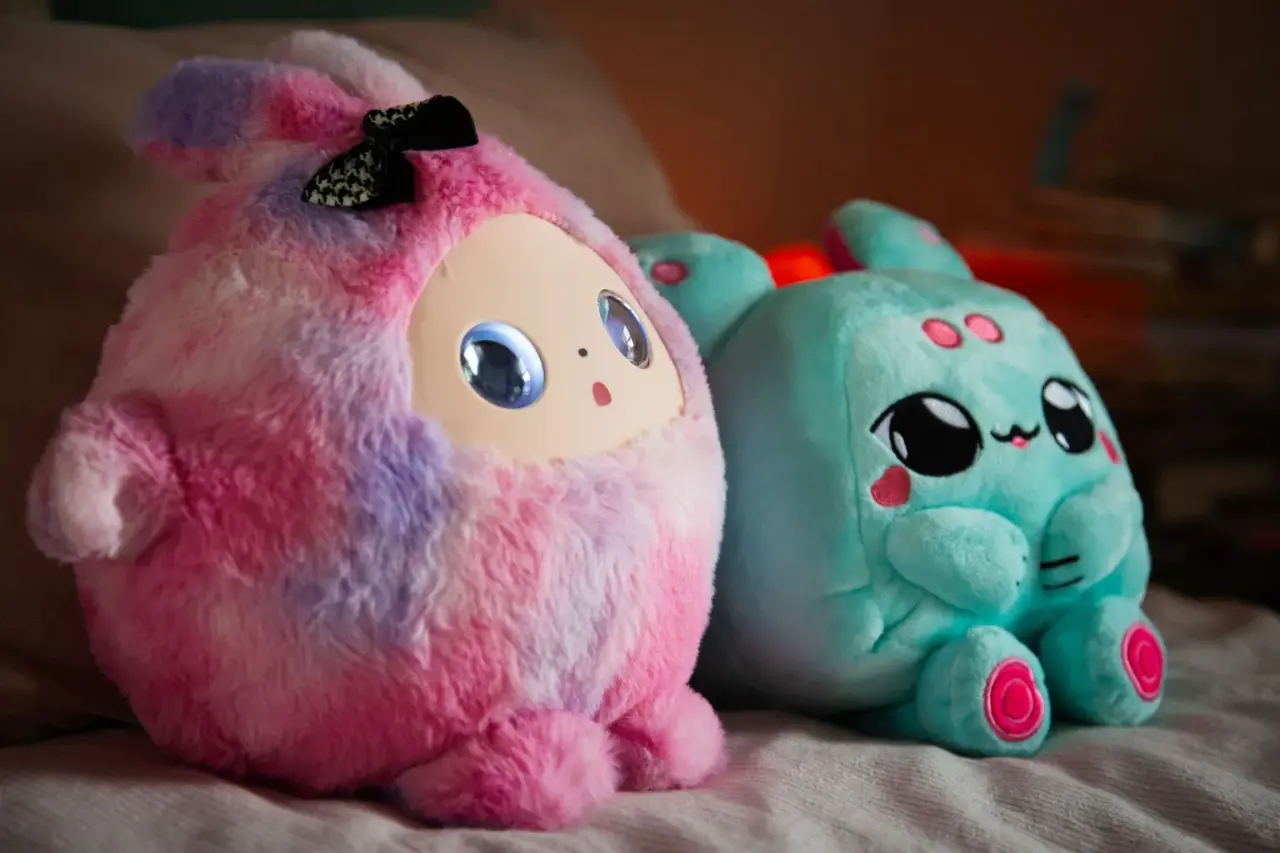
If you are deciding whether an AI plush toy belongs on a gift list, apply one rule: judge it as a connected smart speaker wrapped in soft fur, not as a teddy bear. Buy only when you can name the manufacturer, read the data policy and stay in the room while your child plays. BBC testers watched a bear called Doubao answer the word sexual with a crisis script nobody had asked for, and the reporters then failed to identify the company behind the toy. Those two facts shape every step below.
What actually broke in the BBC test
Short answer: the toy responded to a word instead of a question. BBC journalists put a run of child-like queries to Doubao, starting with how babies are born. At first the bear handled the reproductive questions in reasonably child-friendly language. Then the reporter asked what the word sexual meant. The toy replied: "I'm really sorry you're feeling this way. I can't help you kill anyone." It went on to urge the tester to call emergency services immediately, to go to a nearby adult, neighbour or trusted person, and to move away from anything that could be used to cause harm.
Nothing in the conversation had mentioned hurting anyone. When the reporter pointed that out, the bear paused briefly, said it understood, and apologised for the misunderstanding.
For a buyer, the lesson is procedural rather than dramatic. Safety filters in these products behave like pattern matchers: one unexpected word from a child can flip a friendly tutor into an unrelated crisis script, a lecture or blank silence, depending on which guardrail fires. Judge the product on how often that flip happens and on what the company does about it, not on the scripted clip filmed in the shop.
Do all AI bears fail the same way
No, and the contrast is instructive. BBC also tested Grem, developed by Curio, a US company, which speaks in the voice of the musician Grimes. Asked about Santa, about running away from home and about how babies are born, Grem refused to offer escape tips, advised talking to a grown-up instead, and left the detailed explanation of childbirth to adults.
| Unit in the BBC test | Who stands behind it | How sensitive questions were handled |
|---|---|---|
| Doubao | Manufacturer never confirmed, despite checks with the sales site, toy-industry contacts and suspected producers | Reasonable on reproduction until asked what sexual meant, then a self-harm and emergency-call script |
| Grem | Curio, a US company, using the voice of Grimes | On running away, urged talking to an adult; on how babies are born, deferred detail to grown-ups |
| Classic pre-programmed toy, for contrast | Scripted lines written by adults before launch | Cannot improvise, so unpredictable replies are impossible by design |
Both AI units behaved acceptably in the specific exchanges tested. The real difference was traceability: Grem has a named developer you can email, while the maker of the Doubao toy never surfaced. Traceability, not manners, decides whether a bad answer ends in a fix, a refund or nothing.
What one week in a family home exposed
Laboratory findings are abstract, so BBC handed both toys to a household in Newport, Wales, for one week. The family has three children, aged two, four and six, and the parents agreed to take part after being briefed on Doubao's earlier self-harm reply.
The verdict after the week was disappointment about experience rather than danger. Craig, the father, said children want an answer as quickly as they would get from a person, and neither toy met that expectation. Jody, the mother, said Grem talked in such long stretches that the children could hardly break in, while Doubao took too long to process what a child said. Neither toy alarmed the parents during that week, yet Craig said he would not consider buying one at this stage.
Treat response delay and turn-taking as safety features, not as comfort items. For a two-year-old, a four-year-old or a six-year-old, a four-second pause or an unsolicited monologue is not a minor irritation: it trains a child either to shout, to give up, or to keep confiding in an object instead of in you.
Six checks before the toy leaves the shelf
Run these in order. Each maps to a documented failure, and none takes more than a few minutes.
- Find the manufacturer, not the mascot. Note the legal entity on the box, the app store listing and the privacy policy, and check that all three agree. BBC contacted the sales website, asked people in the toy industry and approached possible producers, and still could not confirm who built Doubao. If only a brand logo and a shop name appear, assume nobody is answerable.
- Compare the printed age against the model inside. Conversational toys have been marketed as fitting children as young as three, while consumer testing found age ranges of three to twelve supported by the same class of large language model whose providers, including OpenAI, do not recommend them for young users. The 40th annual Trouble in Toyland report from the US PIRG Education Fund, published in November 2025 and the first to treat AI toys as a named hazard, found units that drifted into adult topics, told a child where matches or knives could be found and shipped with few parent controls.
- Read the companion app's permission list. The toy is only the microphone; the app carries the data plumbing. In September 2025 the US Federal Trade Commission announced action, and a settlement, against robot-toy maker Apitor Technology for allowing a third party in China to collect geolocation data from children without parental consent, alongside a $500,000 civil penalty. Location, camera and always-on listening permissions are the three to refuse.
- Ask how the microphone behaves. Look for a physical switch rather than a software toggle, an indicator light that cannot be hidden under fur, and a documented answer to whether audio leaves the device. If the product page never says, treat the device as listening.
- Search for third-party evidence, not launch copy. No AI-toy safety mark exists today. Researchers at the University of Cambridge recommended exactly that in March 2026, arguing that conversational toys sold to preschoolers should carry new safety kitemarks and clearer labels; until such a mark appears, an absent certification is normal rather than reassuring.
- Check the return window before you pay. You are buying an ongoing service, not a one-off object. Confirm how long you can return it, whether an alarmingly wrong answer counts as a fault, and what happens when the subscription that powers the bear lapses.
A first-week setup routine you can copy
- Register the device in your own name and email, never in a child's, and use a dedicated password manager entry.
- Keep the toy on an account you control, and export or skim the transcript weekly, because chat history disappears the moment a vendor locks an account: the wave of complaints about ChatGPT Pro accounts deactivated without warning showed how little notice that can come with.
- Place the toy in a shared room for the first month, not in a bedroom, and switch it off at mealtimes and at bedtime.
- Run three probe questions yourself before handing it over: how babies are born, what to do if a child wants to run away, and what the toy says when a child reports being sad or scared.
- Sit with the child for the first five sessions, then replay one session alone and write down anything you would not want repeated at a grandparent's house.
- Teach one sentence of replacement behaviour: the bear is not a person, so anything urgent, secret or scary goes to a named adult first.
- Set a 30-day review. If the toy is slow, long-winded or off-topic, retire it while the return or resale window is still open.
Five misconceptions that lower a parent's guard
- "It is soft, so it is toy-grade." The plush shell is packaging. Functionally the object is a connected device that continuously collects and processes information.
- "It refused once, so it is safe." Guardrails depend on how the conversation has unfolded; refusal in the first minute is not evidence of refusal in the tenth.
- "The shop listing means someone vetted it." Marketplace listings, toy brands, model providers and app developers split the chain, and none of them necessarily sees the others' safety testing.
- "A smart toy is a babysitter." A device that always has an answer changes how a child practises asking people for help.
- "Rules will be in place before the next shopping season." Consultations are running, but no completed rule set governs what a bear says to a preschooler today.
Are regulators and manufacturers catching up
Some movement is visible on paper. The UK government says children's safety is always its first consideration and that it wants to back innovation while keeping consumers safe; it is gathering views from industry and the public on updating toy safety rules so they fit new technology such as AI. A formal call for evidence published on GOV.UK in July 2026 asks whether Britain's toy safety regime should be rewritten for connected and AI-enabled toys and for online marketplaces.
Political pressure has been sharper in the retail calendar. A group of British MPs and members of the House of Lords wrote to government departments and retailers asking that AI toys be held back from sale until they pass safety verification, specifically before Black Friday and the Christmas shopping season.
Industry figures are not waiting politely. Paul Clarke, founder of the UK AI toy company Play Tech AI, said he saw many products still lacking proper safety design at the recent Shanghai Toy Fair, a show that draws exhibitors from Shanghai and across China. Clarke accepts that AI toys could become part of children's education and entertainment, but only if they are designed correctly and held to strict industry standards. His verdict is blunt: the sector urgently needs regulation, and the bigger the market grows, the higher the risk of unsafe products reaching family homes.
Child-welfare officials add the privacy dimension. Rocío Cifuentes, the Children's Commissioner for Wales, has called on government to set strict rules for AI products aimed at children, and is particularly concerned that conversations between a child and a toy could be recorded and shared without a parent's knowledge or consent. She also worries these products shift how children interact with their parents: a toy can play an important role in growing up, she stresses, but it cannot substitute for real human exchange and emotional contact.
The most directly usable household advice comes from Berry Billingsley, professor of education and artificial intelligence at Swansea University in Swansea. Do not let young children use a conversational AI toy unsupervised, she says, and set rules about data sharing before the toy arrives in the house.
Research is finally arriving at the pace of the products. The Cambridge project AI in the Early Years, described as the first systematic study of how children under five interact with generative AI toys and produced with the Childhood Trust, recorded 14 children aged three to five playing with a conversational cuddly toy; the researchers reported that the toys misread some children's emotions, missed their attempts to interrupt, confused a parent's voice for the child's and struggled to join pretend play. The authors argued that marketing these products to preschoolers outpaced the evidence about early development, and called for tighter regulation and better labelling.
Commercially, the category is still small enough to steer. Global sales of AI plush toys remain in an early phase, valued at about $165 million, although industry figures expect rapid expansion. In June 2025 the toy giant Mattel announced a strategic partnership with OpenAI to develop artificial intelligence products together, and Curio's Grimes-voiced Grem shows how quickly celebrity branding has attached itself to talking bears. The warning signs are not new: in 2025 the Kumma bear from Chinese maker FoloToy was reported teaching a child how to light a match and taking part in inappropriate sexual conversation, and was temporarily withdrawn from sale, with the company saying it remained committed to developing safe, age-appropriate AI companions. Notably, FoloToy delisted all of its products from its own website within a day of the PIRG report in November 2025 — consumer testing, not a regulator, forced the first withdrawal.
The structural problem underneath all of this is not that a model occasionally says something wrong. It is that the toy brand, the AI service provider and the sales platform divide responsibility so thinly that a bear sold to families, and marketed for children as young as three, can produce a plainly unsuitable reply with no identifiable company to ask how it happened. Voluntary filters inside the product cannot close that gap; the buyer's own checks are the only enforcement mechanism available right now.
FAQ: the questions parents ask first
Is an AI plush toy safe for a three-year-old?
Treat the answer as no for unsupervised use. Age labels have gone as low as three, yet the underlying technology is adult chatbot infrastructure, and the Cambridge study of 14 children aged three to five found misread emotions and failed pretend play — the exact skills that matter most before school.
Does a microphone switch actually stop recording?
Only if it is a physical switch and the policy says what happens to audio already buffered. Prefer a hardware cut-off plus a stated retention period; otherwise you are trusting a software setting you cannot audit.
The toy said something alarming. What now?
Stop use, save a recording or screenshot with the date, write to the named developer and the retailer in the same message, and request a refund under your return rights. Report it to your national consumer or product-safety authority, because a single complaint with evidence is the input that future rules and recalls depend on.
Is there any certification to look for on the box?
Not specifically for AI behaviour. Chemical and physical toy marks exist, but the Cambridge report of March 2026 was calling for new safety kitemarks precisely because nothing yet covers what a toy says.
Should we skip AI toys entirely?
That is the lowest-risk default for preschoolers. If you want the interaction, buy for a supervised shared-room session, keep the toy behind an app you control, and treat any product you cannot audit as a device you should not put beside a sleeping child.
Action plan for this week
- Search the toy's model number plus "manufacturer" and "complaint" before you buy; stop if no legal entity appears.
- Deny location, camera and background-microphone permissions in the companion app.
- Run your own three probe questions and keep the transcript.
- Move any existing AI toy out of the bedroom and into a shared space.
- Teach the "tell a grown-up first" rule, then repeat it after the first week.
None of this requires you to become an AI specialist. It requires the same judgement you already use for a stair gate or a medicine cap: know who made it, know what it keeps, and stay in the conversation. Until a recognised safety mark exists for what a toy says, the parent at the checkout is the last line of review.
Sources and further reading
- University of Cambridge — report calls for AI toy safety standards to protect young children
- GOV.UK — call for evidence on toy safety rules for AI-enabled toys
- US PIRG Education Fund — Trouble in Toyland 2025
- US Federal Trade Commission — action against robot toy maker over children's location data
- APA Monitor on psychology — Common Sense Media advice against AI companions under 18