
Fedora 45 Practical Guide: Linux 7.2, GNOME 51, KMSCON, Stratis and Security Changes
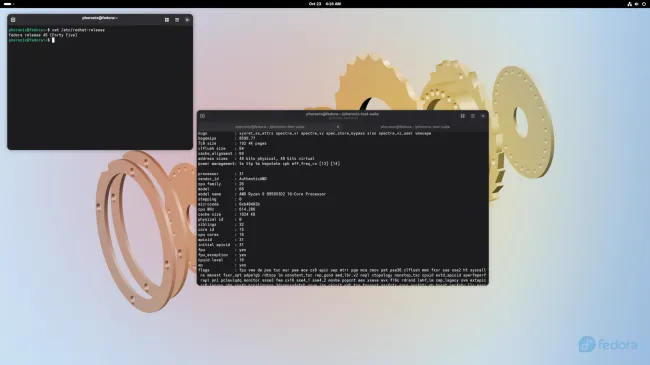
After two delays, Fedora 45 arrived on November 3, 2026 and opens the next six-month release cycle. For MyTechDailyNews Software readers, the practical question is not simply which version numbers moved forward, but what changes when you install the system, debug a process, manage storage, verify a package, or use a newer Qualcomm Snapdragon X ARM laptop. Fedora 45 pairs Linux 7.2 with GNOME 51, replaces the legacy Linux kernel console with KMSCON, adds Stratis storage support inside Anaconda, tightens default ptrace restrictions, enforces package signature checks, requires reproducible software builds, and introduces a DRM Panic graphical crash front-end. Release reporting also tied the final go-ahead to RC-1.4, a useful detail when checking installation media or update readiness.
By Sarah Chen · MyTechDailyNews Software
At a Glance: What Fedora 45 Changes for Daily Users
| Fedora 45 change | What you may notice | Who should care most | Preparation step |
|---|---|---|---|
| Linux 7.2 plus GNOME 51 | A refreshed desktop foundation and kernel-level support for newer hardware and display paths. | Desktop users, notebook owners, testers. | Back up your profile before moving from an older release. |
| KMSCON console | The traditional text console gains a more modern rendering approach. | Server operators, developers working on bare consoles, support technicians. | Re-check remote console and recovery workflows. |
| Stratis in Anaconda | Installers can choose Stratis as a storage layout with pool-style management. | Storage administrators, homelab users, automated provisioning teams. | Test snapshots and capacity planning on non-critical disks. |
| ptrace default restrictions | Debuggers and process-tracing tools may need explicit permission setup. | Developers, security researchers, application support teams. | Validate gdb, strace, or similar tools in a lab environment. |
| Package signature checks | Unsigned or untrusted software packages are less likely to be processed silently. | Users installing third-party RPMs, internal software publishers. | Sign internal packages or use approved repositories. |
| Reproducible builds | Package builders need more consistent environments to produce identical binaries. | Linux packagers, enterprise build teams, auditors. | Update build scripts and dependency inputs. |
| Qualcomm Snapdragon X ARM improvements | Better support for ARM laptops, though not every hardware feature is equally mature. | Windows-on-ARM notebook owners evaluating Linux. | Confirm Wi-Fi, suspend, audio and firmware behavior before migrating. |
| DRM Panic front-end | Kernel crashes can appear through a clearer graphical interface. | Support staff, QA testers, field technicians. | Capture screen details plus system logs when a crash occurs. |
Core Changes Explained in Plain Software Terms
Fedora 45 is not just a routine refresh. The release brings the project into a new maintenance window built around a six-month pace, while shipping Linux 7.2 and GNOME 51 as the visible platform base. The most consequential changes, however, are the ones that alter how administrators and developers interact with the system: KMSCON, Anaconda storage options, package verification, debugging permissions, build reproducibility, and crash reporting.
- KMSCON replaces the old console path. The master update notes that KMSCON takes over the traditional Linux kernel console, moving console behavior into userspace and using kernel mode setting for display output. In daily use, that points toward smoother text rendering and a more modern console experience.
- Stratis becomes installable through Anaconda. Fedora's installer preview material has highlighted the addition of Stratis storage as an option in the Anaconda installer, reflecting Fedora 45's effort to make modern local storage management available earlier in the deployment process.
- Security defaults become stricter by design. Fedora 45 limits ptrace by default and enforces software package signature verification. These are not cosmetic changes: they affect how processes can inspect one another and how unsigned packages are handled.
- Reproducible builds raise the bar for packaging teams. When builds must be reproducible, package maintainers need stable toolchains, fixed environment assumptions, and cleaner input control.
- Hardware support continues to mature for ARM laptops. Qualcomm Snapdragon X machines are becoming more practical Linux targets, but the upgrade path should still be treated as a compatibility check rather than an assumption that every device works perfectly.
Step-by-Step Upgrade Checklist for the First Install or Migration
- Take a full backup first. Fedora 45 arrives on November 3, 2026 after two delays, and that schedule should not be treated as a reason to skip rollback planning. Even a smooth desktop update can surface third-party drivers, custom repositories or local scripts that behaved differently under Linux 7.2 and GNOME 51.
- Inventory packages that are not coming from trusted repositories. Because package signature checks are enforced, any manually downloaded RPM or locally produced build should be tested in a disposable environment before you rely on it for daily work.
- If you debug software, retest ptrace-dependent tools. Debuggers, profilers and tracing utilities may behave differently under stricter defaults. Confirm that gdb, strace or similar tools still work in the workflow you expect.
- If you manage storage, pilot Stratis before standardizing it. Stratis can be useful for local pool management, snapshots and thin provisioning, but you should test capacity growth, failure handling and backup procedures before adopting it in production.
- If you use an ARM laptop, validate the exact device. Fedora 45 improves support for Qualcomm Snapdragon X systems, yet community guides still treat laptop Linux on ARM as a device-specific exercise. Check boot, Wi-Fi, suspend, audio, touchpad and firmware updates.
- Document crash behavior before and after the move. The new DRM Panic front-end is meant to make serious kernel failures more visible, but practical diagnostics still require logs and reproducibility notes.
Storage, Installation and the Practical Value of Stratis
The change most relevant to IT support staff and homelab users is likely Stratis support inside Anaconda. Historically, many installers ask users to choose between basic partitions, LVM or more complex layouts. Fedora 45 adds a modern local storage option that lets the installer set up Stratis-based storage at deployment time. The project documentation describes Stratis as a way to bring more contemporary management features to local Linux storage.
From a workflow perspective, this matters in three situations:
- Snapshot-friendly development machines. If you frequently test risky changes, snapshots can make it easier to preserve a known-good filesystem state.
- Small servers that need flexible capacity. Pool-based management may reduce the mental overhead of manually stitching together physical volumes and logical volumes.
- Automated provisioning environments. The Fedora 45 change proposal for Stratis in Anaconda also mentions Kickstart support for automated installation, which is useful for teams deploying multiple machines with the same storage design.
The caution is equally simple: Stratis is not a universal replacement for existing layouts. If your team already has validated backup, monitoring and recovery procedures for LVM, ext4 or other configurations, you should not migrate just because a new installer option exists.
Desktop and Kernel Notes: GNOME 51, Wayland-era Expectations and Console Behavior
GNOME 51 gives Fedora 45 its desktop face, while Linux 7.2 supplies the kernel foundation underneath. For general users, that combination is usually perceived through window management, compositor behavior, display output, power handling and overall system responsiveness. For testers, it is also a reminder that a new release cycle can surface regressions in GPU drivers, display scaling or application integration.
The KMSCON change is subtler. It does not usually affect the regular desktop terminal application, but it does change the underlying text console experience. If you use the system console for recovery, installation debugging or server maintenance, this is one of the updates worth checking directly. The practical benefit is that text-mode output no longer has to rely on the older in-kernel console path, which improves flexibility for display handling and long-term console improvements.
Security and Supply-Chain Changes You Should Explain to Colleagues
Fedora 45 places more emphasis on trust boundaries than a typical “version number” release. Two changes deserve special attention:
- ptrace restrictions. Linux's ptrace mechanism is useful for debugging, but it can also be abused to inspect process memory and behavior. By tightening the default policy, Fedora 45 reduces broad, unrestricted process tracking unless permissions and workflows are adjusted properly.
- Signature verification. Enforcing package signatures reduces the chance that a system accepts unsigned or tampered software without a deliberate policy exception.
These changes are positive, but they can surprise users. A developer may find that a debugging script no longer works with the same assumptions. An internal IT team may discover that unsigned enterprise packages need updated signing infrastructure. A packager may find that old build recipes fail signature checks. None of this suggests the security changes are wrong; it means users need to validate workflows instead of assuming compatibility.
Build Reproducibility: Why Packagers Should Care More Than End Users
Reproducible builds are one of the most important under-the-hood changes in Fedora 45. The idea is straightforward: if a package is built from the same source in the same environment, it should produce the same binary output. That makes it easier to detect tampering, compare build artifacts, and increase supply-chain confidence.
For end users, the benefit is indirect but real: the software they install should be more auditable. For maintainers and enterprise packagers, the benefit comes with work. They need to control environment variables, build paths, dependency versions and timestamps. If a build system has previously depended on “it just works on my machine” behavior, Fedora 45's reproducibility expectation is a good time to clean up those assumptions.
Qualcomm Snapdragon X and ARM Laptop Compatibility
ARM laptops are no longer a niche experiment, and Fedora 45 continues improving support for devices using Qualcomm Snapdragon X processors. The release notes frame this as progress around booting, drivers and device features, which is exactly what users need before they can treat such hardware as a daily driver.

Independent Linux hardware coverage cautions that some Snapdragon X1 laptop configurations may still require workarounds, so the right conclusion is not “Linux on ARM is now plug-and-play everywhere,” but that Fedora 45 is moving closer to that goal with a device-specific reality check.
DRM Panic: Making Kernel Failures Easier to See
DRM Panic is a small quality-of-life change with outsized support value. When a serious kernel failure occurs, traditional text-only crash output can be hard to interpret for non-specialists. A graphical crash front-end can present failure information more clearly and help users capture a useful snapshot of the incident.
It does not replace full crash dumps, logs or developer analysis. But for help desks, testers and anyone supporting a machine that occasionally panics, it improves the first step of diagnosis: seeing the failure more clearly.
Frequently Asked Questions
Should ordinary desktop users install Fedora 45 immediately?
If you use a single machine for work, create a backup or test partition first. The release includes meaningful kernel, console, security and packaging changes. Immediate installation is reasonable for enthusiasts; cautious migration is better for production users.
Does Fedora 45 disable debugging entirely because of ptrace changes?
No. It tightens default permission boundaries. You may need to adjust workflows or privileges if you rely on cross-process tracing tools.
Will package signature checks block all local software?
No. They are designed to prevent unverified or unsigned packages from being handled casually. Local software can still work, but it should be signed or placed in a trusted repository.
Is Stratis now mandatory?
No. Fedora 45 adds installer support for Stratis through Anaconda, but other storage approaches remain valid depending on your operational needs.
Will GNOME Terminal change because of KMSCON?
Not in the everyday desktop sense. KMSCON mainly concerns the underlying system console rather than regular desktop terminal applications.
Are Snapdragon X laptops fully supported now?
Support is better, but maturity varies by hardware model. Check firmware, wireless, suspend, audio and display behavior for your specific device.
Common Misunderstandings About Fedora 45
- “KMSCON is just cosmetic.” It is a deeper console architecture change, which matters for recovery, installation and low-level debugging.
- “Stratis is automatically better than everything else.” It can be useful, but it should fit your backup and monitoring model.
- “Signature checks mean I can never install my own RPM.” They mean unsigned installation paths are treated more strictly, not that local builds are impossible.
- “Reproducible builds only help the Fedora project.” They benefit any organization that audits software provenance or needs stable binary outputs.
- “DRM Panic replaces log analysis.” It makes severe failures more visible, but you still need logs and context.
Action Advice by Reader Type
- Everyday desktop users: Upgrade after backing up; test GNOME 51 responsiveness, GPU behavior and frequently used applications.
- Developers: Re-check debuggers, build containers and local package signing before making Fedora 45 your default machine.
- IT support teams: Pilot Fedora 45 in a small group first, especially where Stratis, Anaconda or automated provisioning are involved.
- Enterprise packagers: Treat reproducible builds and signature enforcement as compliance work, not optional polish.
- ARM laptop owners: Do not assume full Qualcomm Snapdragon X parity; validate the specific notebook model before wiping the previous OS.
- Homelab enthusiasts: Fedora 45 is a good opportunity to evaluate Stratis, but keep snapshots, monitoring and rollback discipline.
Bottom Line
Fedora 45 is best read as a practical platform adjustment, not a single-feature release. The combination of Linux 7.2, GNOME 51, KMSCON, Stratis support in Anaconda, stricter ptrace defaults, mandatory signature checks, reproducible build expectations, improved Qualcomm Snapdragon X ARM support and the DRM Panic front-end gives users a clear upgrade rationale and a clear set of things to test before adoption.
Source notes: Fedora project release reporting, Fedora change-proposal and installer documentation, and independent Linux hardware coverage informed the upgrade cautions above.