
Fedora 45 Ships Tuesday, November 3, 2026: What the KMSCON Switch, Stratis Installer Support and New Security Defaults Mean for Your Software
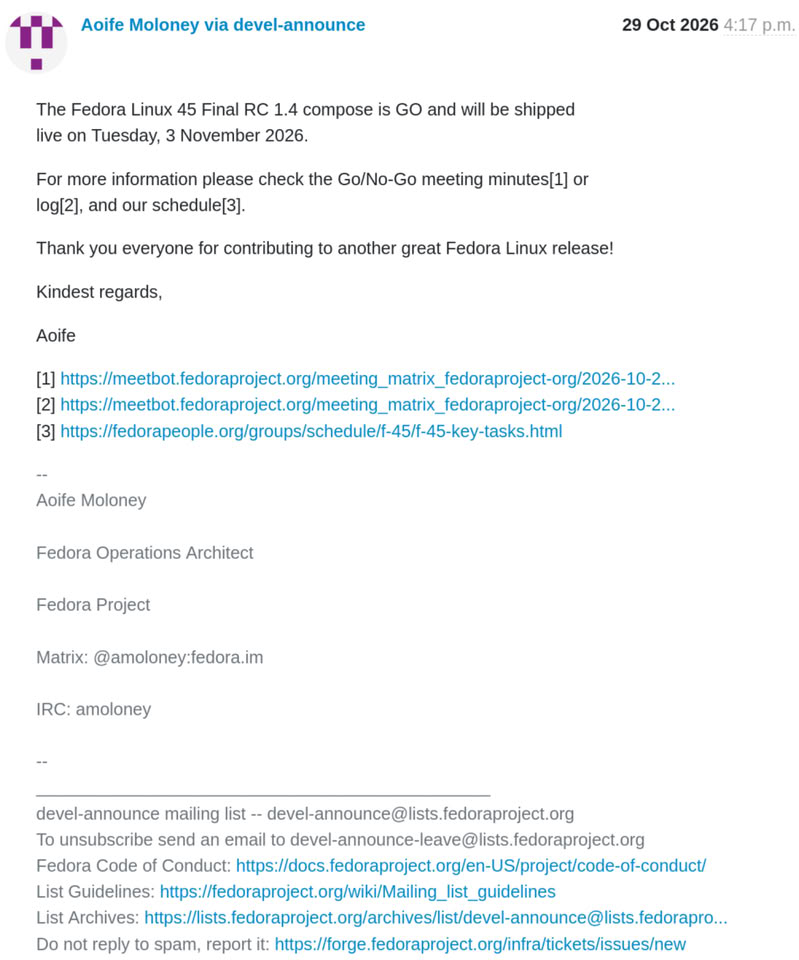
If you were holding off on a rebuild until the schedule firmed up, it now has: the Fedora Project team has set Tuesday, November 3, 2026 as the release day for Fedora 45, after the date slipped twice in a row. The more useful detail for people who live in software rather than silicon is that the candidate build has already been frozen as stable, and that most of the substantive changes in this round land below the desktop — in the console layer, the installer, the default security policy and the compiler toolchain.
Release status: what you can install today
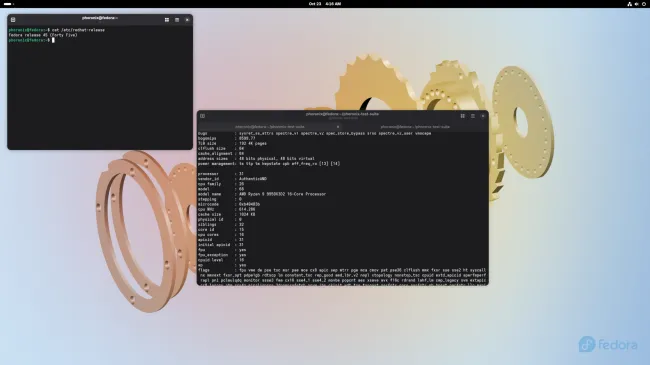
Fedora 45 Release Candidate 1.4 is the build the project now classifies as stable. Earlier, the release was blocked by two things rather than one: the candidate itself was not ready in time, and several critical defects that would have prevented a general publication were still open. The development team worked through them during the past week, and the latest release evaluation meeting produced the go decision.
Because you do not have to wait for release day to start testing: the candidate can be downloaded and installed now. The same 1.4 image is also what Fedora will push out to its mirrors as the official release build on November 3, which makes today's evaluation unusually representative of what users will actually run.
The system-level changes you will notice in daily use
- Console layer: KMSCON replaces the legacy console implementation carried by the Linux kernel.
- Installer: Anaconda gains stronger support for Stratis storage configuration during OS setup.
- Process debugging: ptrace is restricted by default, tightening inter-process access.
- Install-time trust: package signature checking is enforced by default.
- Supply-chain assurance: reproducible builds continue to be pushed across the package set.
- Failure reporting: the DRM Panic front end presents graphics subsystem crashes more readably.
KMSCON moves terminal display into userspace on top of KMS
KMSCON is a userspace console system built on Linux kernel-mode setting (KMS), and in Fedora 45 it takes over terminal display duties from the original in-kernel console, using modern graphics display interfaces. For an ordinary desktop user this looks like nothing at all; for anyone who administers machines, files system logs, or works outside a graphical session, it is a shift in how the console is rendered and managed, and it leaves Fedora a more flexible base for future graphics and terminal handling.
Stratis inside Anaconda: storage layouts get less manual
Stratis is the modern storage management approach in the Linux ecosystem, designed to simplify storage pools, file systems and volumes. Fedora 45 strengthens its integration with the Anaconda installer, so configuring a Stratis environment happens as part of OS installation instead of as a follow-up project. The benefit is concentrated on workloads with complex storage layouts; single-disk machines will feel little difference.
Two security defaults that change what software can do to other software
First, ptrace — the Linux mechanism used to trace and debug the running state of other processes — is limited by default. Developers rely on it, but malicious programs can abuse it, so the tighter default is aimed at reducing unauthorised debugging and access between processes. Second, package signature checks are enforced by default, so the system validates source and integrity before installing software, cutting the risk of a tampered or malicious package being taken in.
Read together, those two changes have a clear operational consequence: a debugger attached to a process it does not own may stop working without warning, and a package that cannot be validated will not install silently. Both are wins for fleet security and small irritants for ad-hoc diagnostics.
Hardware support: Snapdragon X laptops and the ARM question
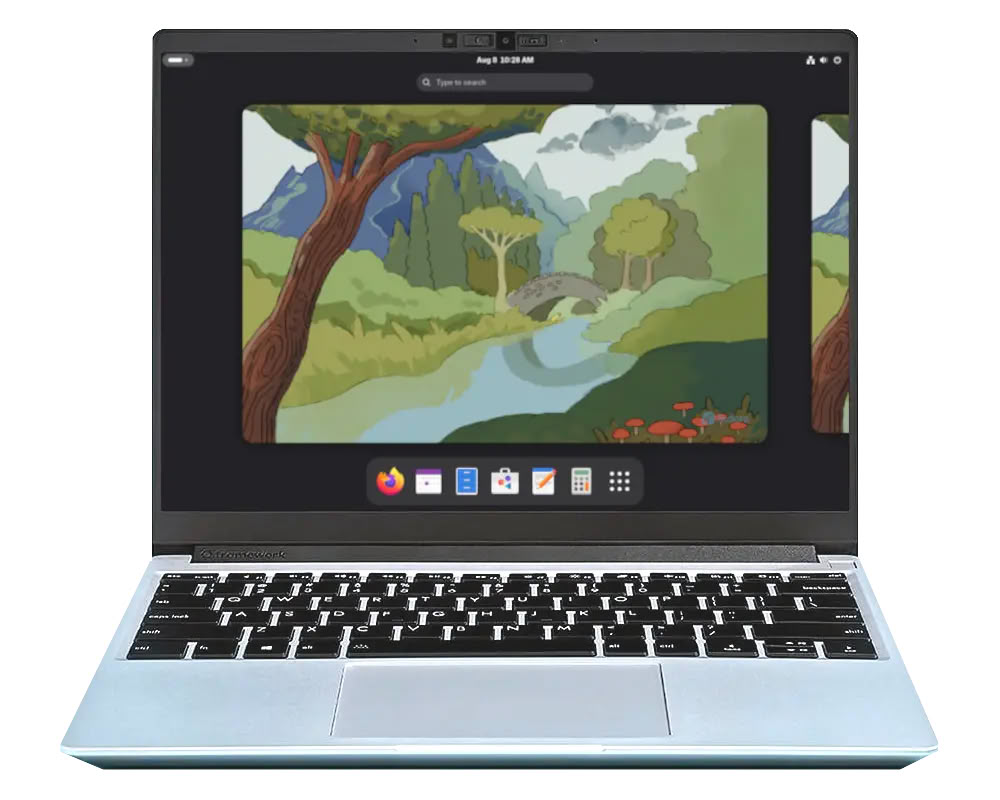
Fedora 45 carries targeted work for laptops built on Qualcomm's Snapdragon X series processors. The context is the slow growth of ARM-based Windows notebooks: as that segment expands, the Linux community keeps closing gaps in hardware compatibility on the Qualcomm platform. The practical expectation is a better experience on Snapdragon X machines running Linux — worth knowing before you buy a device in that class if Linux is your daily environment.
Trust and diagnostics: reproducible builds, DRM Panic
Reproducible build work continues in this release. The idea is that the same source code, build environment and parameters should yield identical build results, which matters for verifying software supply-chain safety, spotting build anomalies and raising the transparency of the distribution as a whole.
On the failure side, the DRM Panic front end is introduced. When the Linux kernel's graphics display subsystem hits a severe fault, it renders a clearer, friendlier error view so a user can understand what went wrong instead of parsing a raw kernel crash dump.
What ships in the desktop and toolchain
| Component | Version in Fedora 45 | Why it matters to you |
|---|---|---|
| Fedora Workstation desktop | GNOME 51 | The visible shell and system components move together with a large set of refreshed base packages. |
| Go | 1.27 | Current compiler line for Go application builds. |
| Python | 3.15 | Runtime and tooling baseline for scripts and packaging work. |
| GCC | 16.2 | Next-generation compiler and toolchain support for developers. |
| Glibc | 2.44 | Ongoing updates to the core runtime library of the Linux system. |
| LLVM | 23 | Modern compiler infrastructure alongside GCC for developers. |
| RPM | 6.1 | Underlying infrastructure for how packages are built, managed and published. |
Candidate now or final image on November 3: which fits your plan
| Decision factor | Install Fedora 45 Release Candidate 1.4 today | Wait for November 3 |
|---|---|---|
| Stability status | Already recognised as a stable release by the project. | Same content, published as the official release. |
| Image identity | The 1.4 ISO is also what goes out to mirrors at release time. | You fetch the identical build, just later. |
| Best suited to | Early testing of KMSCON, Stratis in Anaconda, the ptrace limit and signature enforcement before rolling them out. | Users who only want the finished label and do not need to validate changes in advance. |
| Trade-off | You are evaluating ahead of the official release announcement. | You lose the lead time to find integration issues. |
Step-by-step: evaluating Fedora 45 before release day
- Choose a non-production machine or VM where you can safely test a changed console stack and tightened security defaults.
- Download the Fedora 45 Release Candidate 1.4 image through Fedora's official channels, and treat it as representative of the November 3 release, since it is the same build.
- During installation in Anaconda, if your workload needs pools, file systems and volumes managed together, configure Stratis at setup time rather than after the fact.
- After boot, confirm that package signature checks are enforced: install a package and verify that the system validates source and integrity instead of accepting it blindly.
- Try your debugging workflow. If you attach to other processes with ptrace, check whether the default restriction blocks it, and adjust only where you genuinely need that capability.
- If the machine is a Snapdragon X laptop on ARM, exercise display, networking and peripheral basics before committing to it as a daily driver.
- On November 3, re-confirm the release image from the official channels and note whether anything you logged during candidate testing changed.
FAQ
- Is the date fixed now? The Fedora Project team has confirmed Tuesday, November 3, 2026, after the schedule slipped twice in a row and the blocking defects were cleared during the past week.
- Can I use the release today? You can install Fedora 45 Release Candidate 1.4, which the project has designated as stable; its ISO is also what will be distributed to mirrors at release.
- Will my debugger stop working? Possibly, for cross-process cases: ptrace is limited by default. Local debugging of your own processes remains the intended path.
- Do I need to care about KMSCON? Only if you work at the console or manage systems. It moves terminal display into a userspace implementation on top of KMS, replacing the older Linux kernel console approach.
- Is this mostly a desktop refresh? GNOME 51 on Fedora Workstation is the visible part, but the release also touches storage, security defaults, build transparency and developer toolchains.
Common misconceptions
- "A twice-delayed release means the build is shaky." The two slips came from an unfinished candidate and a handful of unresolved critical defects; those were addressed in the past week, and the candidate is classified as stable.
- "The candidate and the final release are different images." The 1.4 ISO is the same build that will be handed to mirrors on November 3.
- "KMSCON is a terminal emulator upgrade." It is a console layer on top of KMS that replaces the legacy in-kernel implementation, not a desktop app swap.
- "Snapdragon X support means Linux is a drop-in on any ARM Windows notebook." The stated work is targeted optimisation for Qualcomm Snapdragon X laptops, part of an ongoing Linux community effort to improve hardware compatibility — test your specific machine first.
- "Reproducible builds are only a packager's concern." They are what lets you verify that an installed package matches what the project actually built.
Action advice
- IT support and QA staff: run the candidate now on a test node, with particular attention to ptrace-dependent tools and unsigned or custom-built packages.
- Storage-heavy deployments: pilot Stratis configuration through Anaconda before production, and check your existing volumes still map cleanly to pool and file system management.
- Developers: schedule a rebuild pass against GCC 16.2 and LLVM 23, and check Go 1.27, Python 3.15, Glibc 2.44 and RPM 6.1 assumptions in your pipeline.
- Prospective ARM laptop buyers: wait for release-day feedback on Snapdragon X devices rather than assuming full support.
Read as a bundle of decisions rather than a version number, Fedora 45 is a security-and-plumbing release with a desktop face: a userspace console, a more storage-aware installer, defaults that distrust cross-process access and unverified packages, plus a refreshed compiler line under GNOME 51. The through-line for software users is fewer surprises from the system itself — and that is exactly what a candidate build already marked stable lets you verify before November 3 arrives.