
MyTechDailyNews Software Review: Shipped, Preview or Promise in This October's Martech Lineup
Feature announcements are not one product category. Before a renewal gets signed, separate what runs today from what is API-only, invitation-only or still on a roadmap — and put money behind only the part your team can actually operate. The releases we tracked this October make that split unusually easy to see, and each access stage changes what a buyer should test, pay and expect.
Picture the meeting: a polished slide shows a new AI capability, everyone nods, and three weeks later the integration still is not switched on for your account. As marketing tools fold in agents, automated media buying and new creative models, launch notes now blend four things — capabilities customers can use now, endpoints developers can call, pilots a few clients can test, and promises for later. All four are legitimate progress. None of them is the same procurement evidence. Here is a horizontal read of four announcements and what each one means for a software budget.
What did the four vendors actually announce?
Short answer: each launch sits at a different delivery stage, and none reduces to a simple live-versus-not-live verdict.
Netflix tied rollout timing directly to the money. In a shareholder letter dated October 20, the streaming company lowered its full-year advertising revenue outlook from roughly US$3 billion to about US$2.7 billion, pointing to advertising product capabilities that arrived more slowly than planned. That is a forecast change, not a reported revenue loss: US$2.7 billion is Netflix's revised 2026 advertising revenue outlook against an earlier approximately US$3 billion estimate. The disclosure did not say advertisers were leaving or name every delayed feature. Alongside it, Netflix described broader connected-TV programmatic availability, continued measurement work and a planned expansion of its advertising tier.
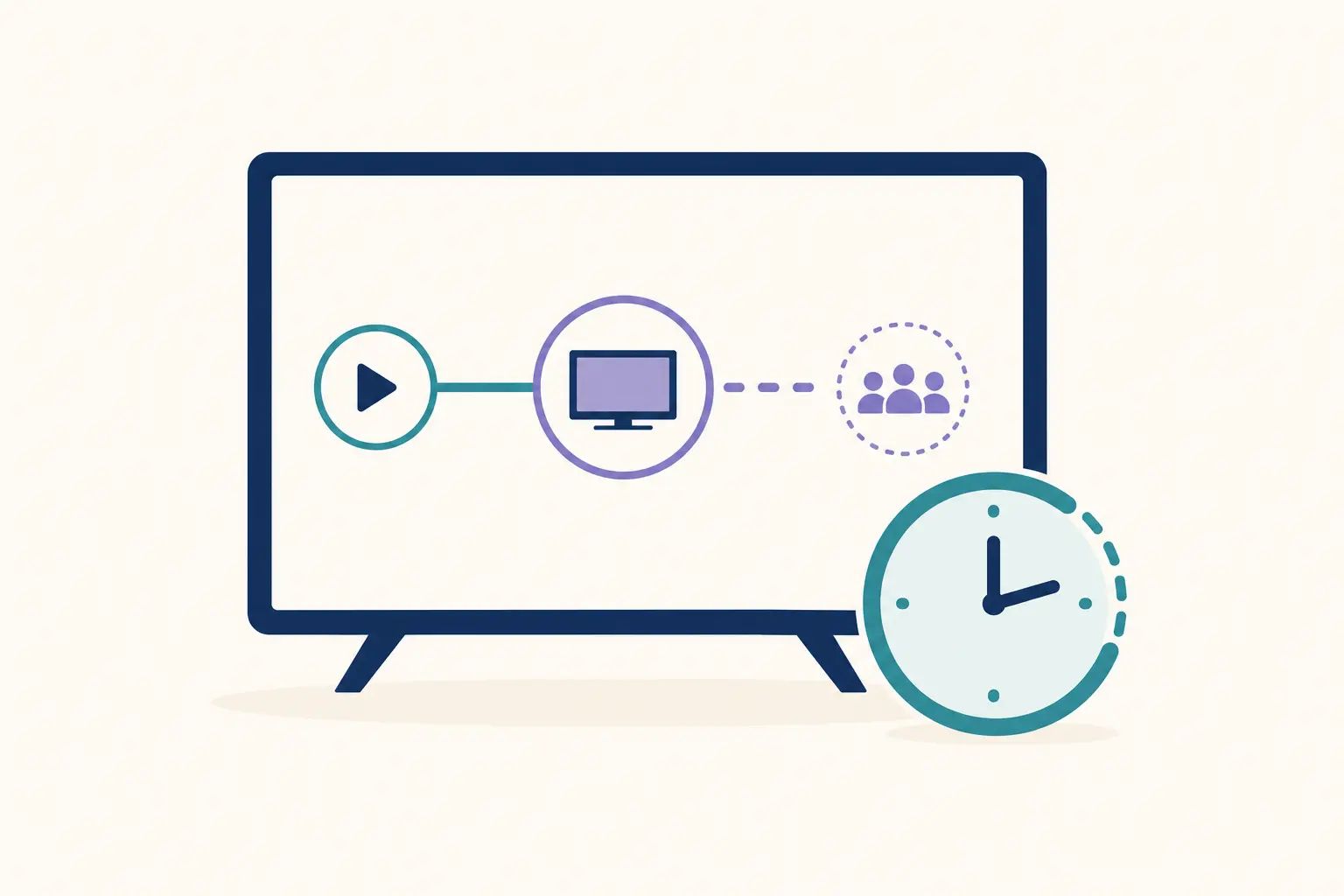
Netflix trims its 2026 advertising outlook to $2.7B as some product capabilities roll out late. (Image: ContentGrip)
For a media team, the smaller version of this problem is common: move streaming budget assuming a new reporting view will compare campaigns, then discover the integration is off for your buying account. The ads run; the promised evaluation does not. Our note on shared tracking templates that break quietly in Performance Max covers the same pattern — spend stays real while the control that justified it stays prospective.
Canva named its access paths more carefully on October 22. Its Craft announcement describes an image-generation model available in Dream Lab and through a public API; support via Canva's Model Context Protocol integration — MCP, the connector standard that lets AI assistants call outside tools — is described as coming soon, as are faster model variants. Canva's developer community adds a caveat the launch note does not foreground: the API is in preview, breaking changes may occur, and an image-to-design conversion consumes allowance. Third-party testing puts output at 2K and generation around 50–60 seconds per image. A creative team can generate images inside Canva today; a developer can build on the current API; nobody should book an agent-driven design workflow as delivered.
Walmart drew a permissions line on October 21. The retailer presented Agent Profiles and an Agent Gateway: separate profiles to identify authorised shopping agents, with customers able to review transactions, set limits and revoke access. Profiles are described as launching next month, while the gateway for external developers heads toward an invitation-only beta. Reporting on the announcement says the gateway uses Model Context Protocol, and that Walmart is opening the door to external agents just as Amazon blocks them — a strategic contrast, but still not a production path you can procure today.
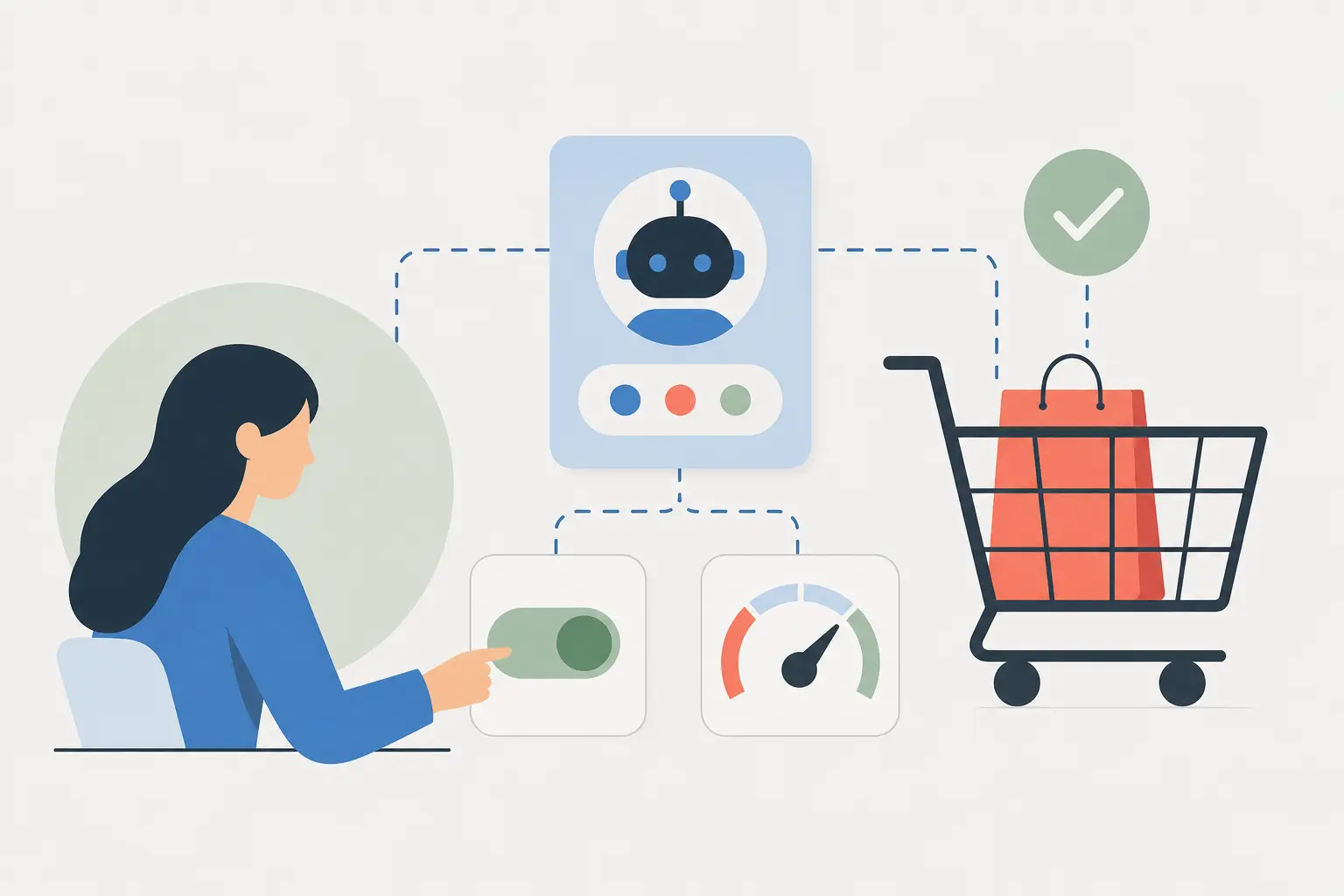
Walmart is building agent profiles, shopping permissions and a gateway for AI agents. (Image: ContentGrip)
Demandbase introduced AEO, Campaign and Audience agents in an October 20 announcement, describing applications across AI search visibility, campaign execution and audience intelligence. Those are meaningful claims worth investigating. The release alone cannot tell one buyer whether the subscription tier, sales-data configuration and regional privacy requirements support the advertised workflow end to end.
Which of these features can you use today?
Conclusion first: only one of the four offers a same-day, no-special-access workflow for an ordinary user, and even it has API caveats.
| Announcement | Available now | Still ahead | Buyer decision |
|---|---|---|---|
| Netflix advertising capabilities | broader CTV programmatic availability; measurement work ongoing | some ad products late; ad-tier expansion planned | verify which tools work for your DSP, objective and market |
| Canva Craft | image generation in Dream Lab; public API in preview | Model Context Protocol support; faster variants | use it in a design workflow now, do not price agent integration yet |
| Walmart agent controls | announced permissions model | Agent Profiles next month; Agent Gateway invitation-only beta | treat it as a pilot plan, not a live purchasing path |
| Demandbase agents | AEO, Campaign and Audience agents introduced | account-level enablement unverified | test data and tier fit before a renewal |
The distinction is not semantic. An API does not automatically appear inside a nontechnical team's workflow; a partner beta is not procurement-ready for a regional campaign. The release stage determines what you test — and who absorbs the cost when the test fails.
Why should access stage change the budget conversation?
Because most teams are funding capability they cannot operate yet. Gartner's 2026 CMO Spend Survey, conducted January–March 2026 among 401 CMOs and marketing leaders, reported average AI allocation of 15.3% of marketing budgets while only 30% said their AI readiness was mature or fully developed; budgets stayed nearly flat at 7.8% of company revenue. D1Net, citing Gartner's earlier spending work, reported that marketers used just 33% of their martech stack's capability in 2023, down from 42% in 2022 and 58% in 2020, while martech took roughly a quarter of budget.
A separate Knak study distributed via PR Newswire found 85% of marketing teams missed at least one planned campaign launch date in the past 12 months because of workflow constraints. Read together, those figures point to an operating problem rather than a feature shortage: the constraint is rarely whether the vendor built something, but whether permissions, data connections and approval flows can carry it. A vendor can technically ship a feature while a specific customer cannot use it without a supported connection, a contract amendment or clean data.
How do you test a feature before paying for it?
A demonstration proves a result can be produced under conditions the demonstrator chose. It proves nothing about your permissions, audience definitions, historical data or approval rules. A two-week test plan — the approach we use when auditing a closed-loop AI CRM claim — is enough to settle most renewal questions if it follows five steps:
- Name the environment. List the exact accounts, market, product tier and permissions the feature will run under before anyone grades the outcome.
- Pick one real task. For an audience agent, build a segment from approved first-party data, display the eligibility rules and export it without excluded contacts. For ad measurement, produce an agreed report for a live campaign in your own account.
- Define the pass condition. State what a successful result looks like and hand verification to someone outside the vendor's team.
- Write the failure path. Who can see and halt a wrong product attribute, what happens when a commerce agent hits a spending limit, and which reporting view survives a broken API?
- Price the labour. Analyst hours, manual exports and downstream corrections belong in the business case, or the demo just relocates cost from the invoice to your team.
For tools that generate claims or make decisions, the failure path is not an advanced exercise reserved for mature engineering teams; it decides whether the product can be trusted with an ordinary marketing budget. Declare a feature ready before those answers exist and the vendor's roadmap risk becomes your operational risk.
Where do software buyers most often misread a launch?
Four recurring mistakes explain most of the gap between a launch deck and a working workflow:
- "Generally available" means the vendor shipped it, not that your account, region or data connection has it enabled.
- A clean demo is not an acceptance test; it is a best-case run by the party selling the product.
- Conversion lift alone is not ROI if the pilot quietly absorbs analyst time and manual fixes.
- API access is not a team workflow; someone still has to build, maintain and monitor it.
What should a procurement record contain?
Keep what works today separate from what is merely expected, and attach a commercial trigger to each. Five checks make the decision record clean:
- Access: which named users, markets and tiers can use the feature right now.
- Dependency: the data connections, permissions, consent conditions and third-party systems it needs.
- Proof: one real workflow with the input, expected output and pass condition defined by the buyer.
- Ownership: the people answerable for exceptions, corrections and version changes after launch.
- Commercial trigger: what must be delivered before spending scales or the renewal is re-priced.
Then set a review date and a fallback for delayed access — a staged rollout, an alternative workflow, an extended evaluation or a reconsideration of the commitment. It is the same logic behind a learning budget. In a previously published ContentGrip analysis, Enricko Lukman, CEO at ContentGrow, an AI-powered content marketing agency, put it this way: “A useful experimentation budget is not money that marketing is allowed to waste. It is money that buys a decision.”
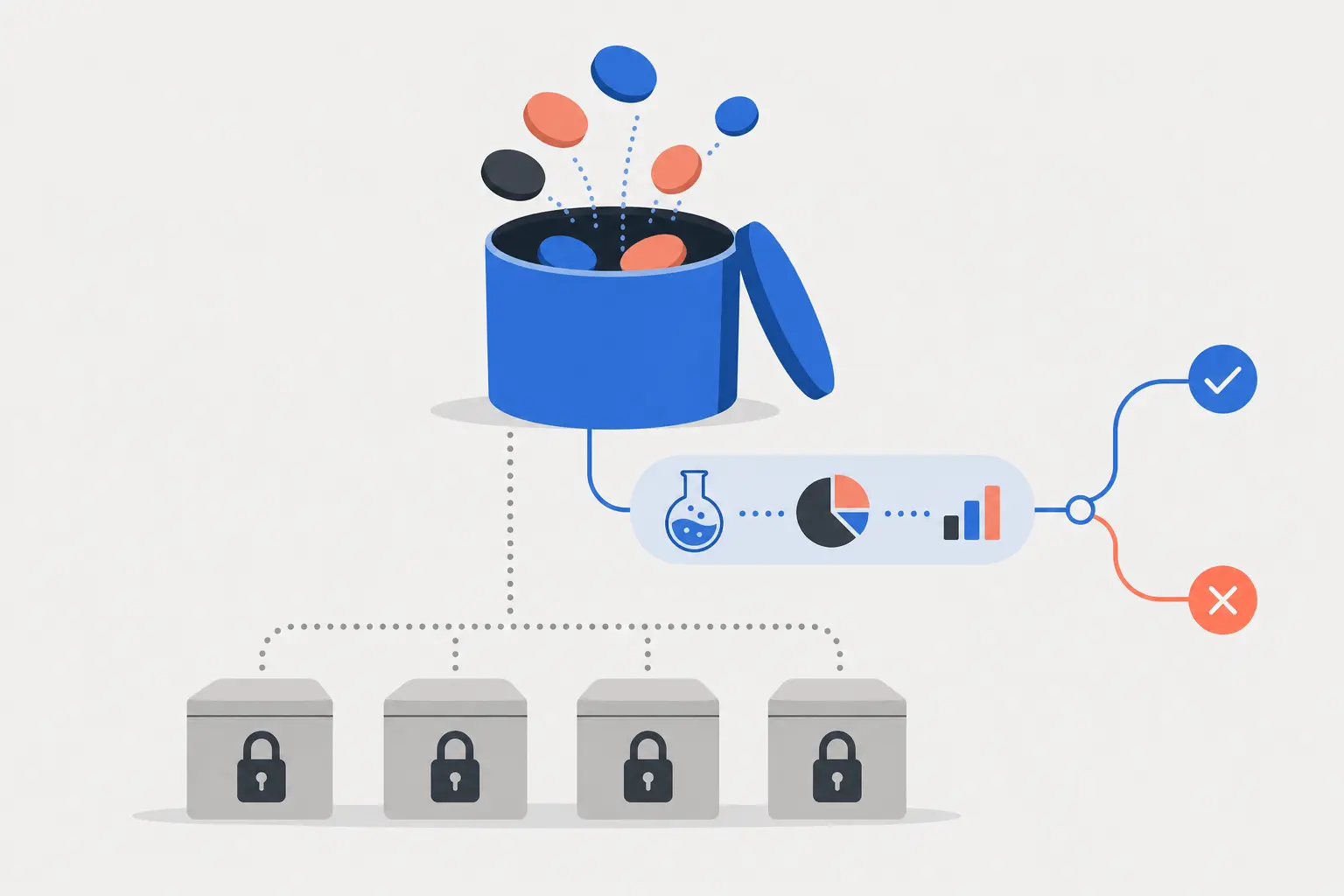
He was speaking about experimentation budgets rather than these October launches, but the application is direct: fund enough testing to settle a procurement question, and never treat the test budget as proof the technology is production-ready. A CMO who waits for every feature to mature misses useful opportunities; a CMO who pays for every announcement as though it works finances promises. The middle path moves money from exploration to committed spend only when evidence supports the move.
FAQ: quick answers for software buyers
Short answers to the questions that come up most in renewal reviews:
Is Canva Craft live for everyone?
Image generation is live in Dream Lab and through the public API, but that API is in preview and may change. Model Context Protocol support and faster variants are still listed as coming soon, so treat any agent-driven design workflow as planned rather than delivered.
Can we connect shopping agents to Walmart today?
Not as a production path. Agent Profiles are described as launching next month, and the Agent Gateway is heading toward an invitation-only beta. Merchants can prepare permission and approval flows, but a live integration is not something you can procure now.
Did Netflix lose advertising revenue over late features?
The disclosure does not say that. It revised a 2026 outlook from roughly US$3 billion to about US$2.7 billion because some capabilities rolled out late, while other buying and measurement work continues to expand.
How long should an acceptance test take?
Two weeks is usually enough for one real workflow with a named environment and a pass condition. The goal is to settle the purchase decision, not to run a six-month transformation project.
What to watch next
Three dates are doing a lot of work in this story: whether Agent Profiles really arrive next month, whether Model Context Protocol support and faster Craft variants get firm shipping dates, and whether Demandbase's agents can be switched on for real accounts. Each one is a checkpoint where a roadmap item either becomes a usable feature or stays a slide. The interesting question is not who announces first, but which vendor will show a buyer the exact task running in the buyer's own account — and who is willing to write that into the contract. When your next renewal deck lands, which button will your team be able to press on day one?
Sources
- ContentGrip — feature readiness analysis
- Gartner — 2026 CMO Spend Survey methodology
- Canva Newsroom — Introducing Canva Craft
- Canva Developers — Connect API: Craft for image generation
- Walmart — making it possible for agents to shop on behalf of customers
- Retail Dive — Walmart's Agent Gateway and Model Context Protocol
- PR Newswire — Knak study on missed campaign launch dates
- D1Net — Gartner martech capability utilization figures