
MyTechDailyNews Software Review: 13 AI PR Tools Compared — Monitoring, Outreach and Measurement in 2026
Shopping for PR software in 2026 and wondering whether the AI-first label is substance or marketing? Short answer: the AI layer has become the product, but real value still splits by job — monitoring, outreach and AI-answer visibility — and by team size. In this MyTechDailyNews Software review I compare 13 platforms on what they actually do, what they cost, and where each earns its place.
By Charlotte Ramirez, MyTechDailyNews Software — a hands-on look at tools I shortlisted for real communications workflows.
What changed in PR software over the past two years?
The big shift is not more AI; it is paid AI becoming embedded. Everything else follows from that. Muck Rack's State of AI in PR 2026 report finds 75% of PR professionals now use at least one paid AI tool, up from 57% the previous year, while 76% still use generative AI in workflows, little changed from 75% a year earlier. The meaningful movement is from free trials toward paid, embedded tools. Valued at US$13.8 billion in 2025, the global PR tools market is projected to reach US$30.1 billion by 2034, according to Research and Markets. AI-native platforms that did not exist two years ago now compete with suites that have been running for a decade.
How I compared these platforms
I scored each tool on five practical axes: the job it does best, data coverage, how useful its AI really is, price transparency, and privacy/measurement depth.PRSA's summary of Muck Rack's 2026 findings notes that 74% use AI to write and create content and 86% to edit and refine it, so AI assistance is now mainstream rather than experimental — which is why the differentiator is no longer whether a tool has AI, but whether its AI is trained and scoped for PR work.
The 13 platforms, up close
1. Muck Rack — journalist relationships first
 Muck Rack pairs a media database with AI-supported research: find reporters by beat, publication, social activity and recent coverage. That granularity matters because 88% of journalists say they immediately discard pitches that miss their beat, per Muck Rack's own 2026 State of Journalism report. AI refines pitches and targets based on what reporters actually cover, not job titles, while monitoring and a CRM layer keep relationship history across clients. Pricing starts around $10,000 per year, so it mainly serves mid-market agencies and enterprise teams.
Best fit: teams that care about journalist relationships and want a structured database with built-in AI guidance.
2. Cision — enterprise distribution at scale
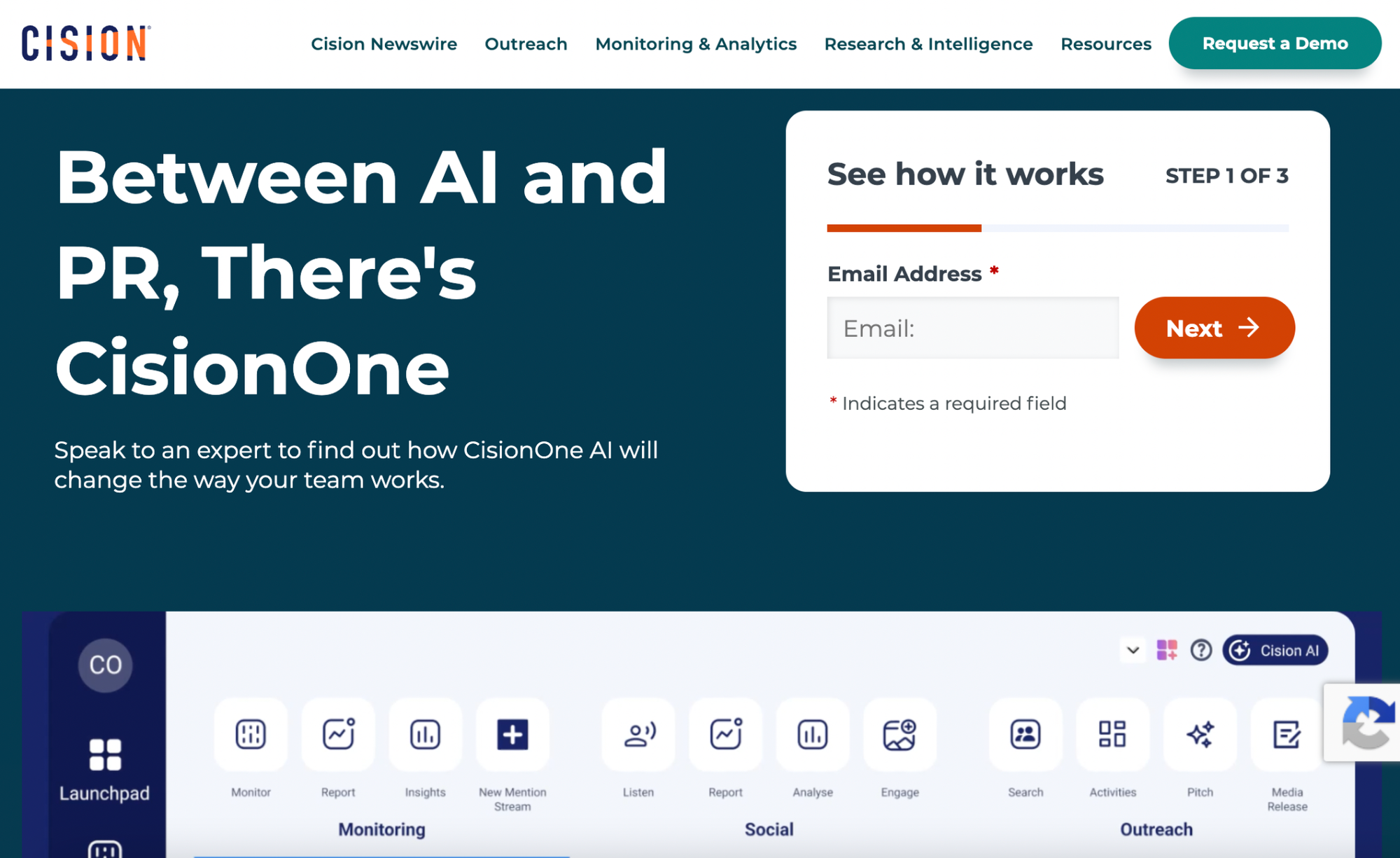 Cision stays a best-known name thanks to its link to PR Newswire and one of the largest journalist databases; the company reports 84% of Fortune 500 companies use it. CisionOne adds AI-driven issue detection and sentiment analysis to conventional monitoring, with hundreds of thousands of journalist contacts. The trade-offs are cost and onboarding: between $10,000 and $15,000 annually depending on features, plus substantial training for new users.
Best fit: enterprise communications teams needing mass press release distribution with a broad database.
3. Meltwater — monitoring reach and AI analytics
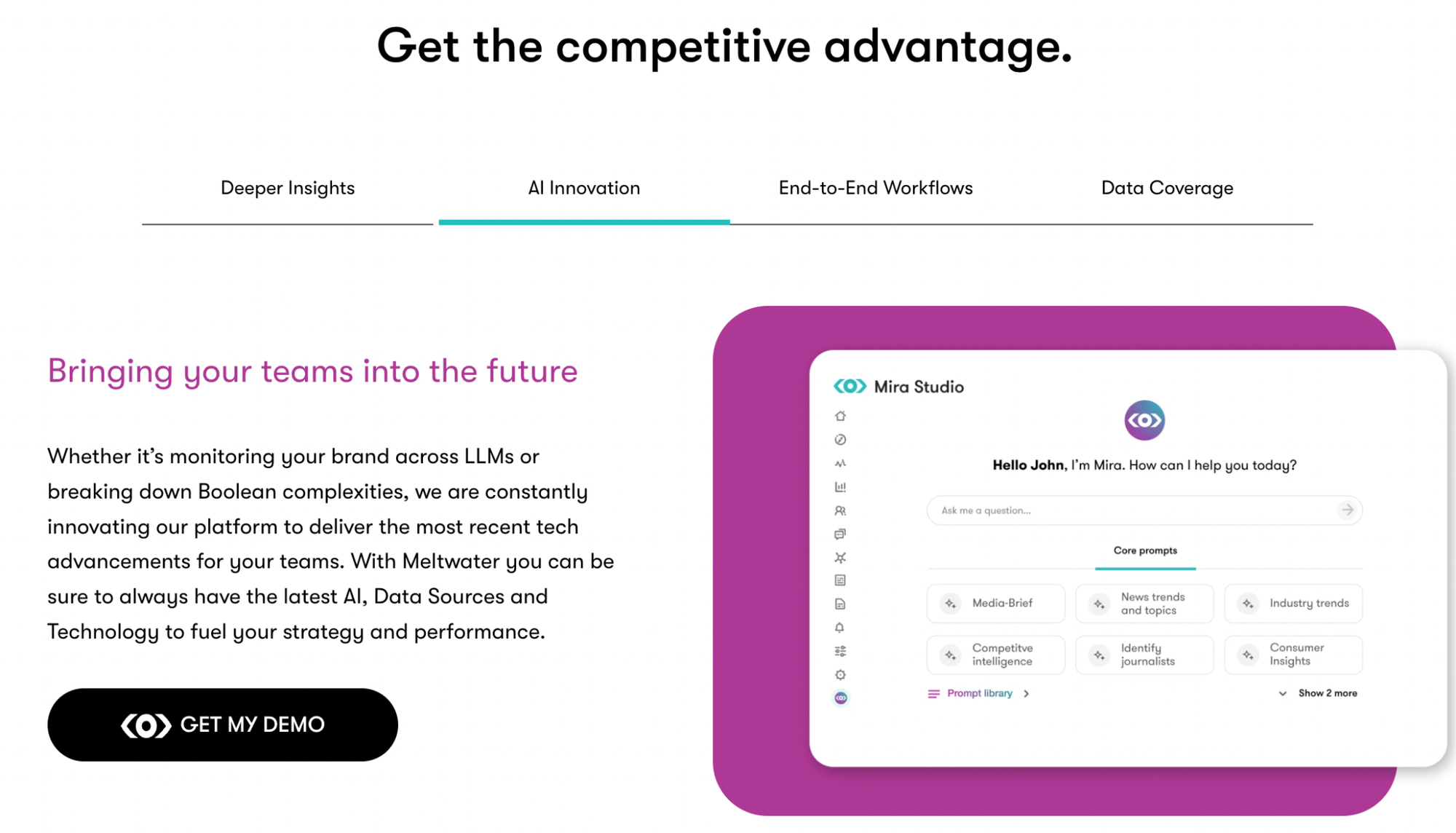 Meltwater's strength is scale: third-party research aggregated by Prowly says it handles over 1.3 billion documents daily from more than 270,000 global news sources and 15 social media channels, including major Asian platforms — useful for global, multilingual tracking. A late 2025 release added predictive analytics that estimate whether mention spikes grow or fade, and GenAI Lens tracks how brands appear in ChatGPT, Gemini and Perplexity as discovery shifts to AI answers. On privacy, Meltwater states it applies GDPR-compliant processes including opt-out-based contact handling and data governance controls.
Best fit: enterprise brands needing wide international monitoring with advanced AI analytics.
4. Semrush AI PR Toolkit (formerly Prowly) — tiered outreach
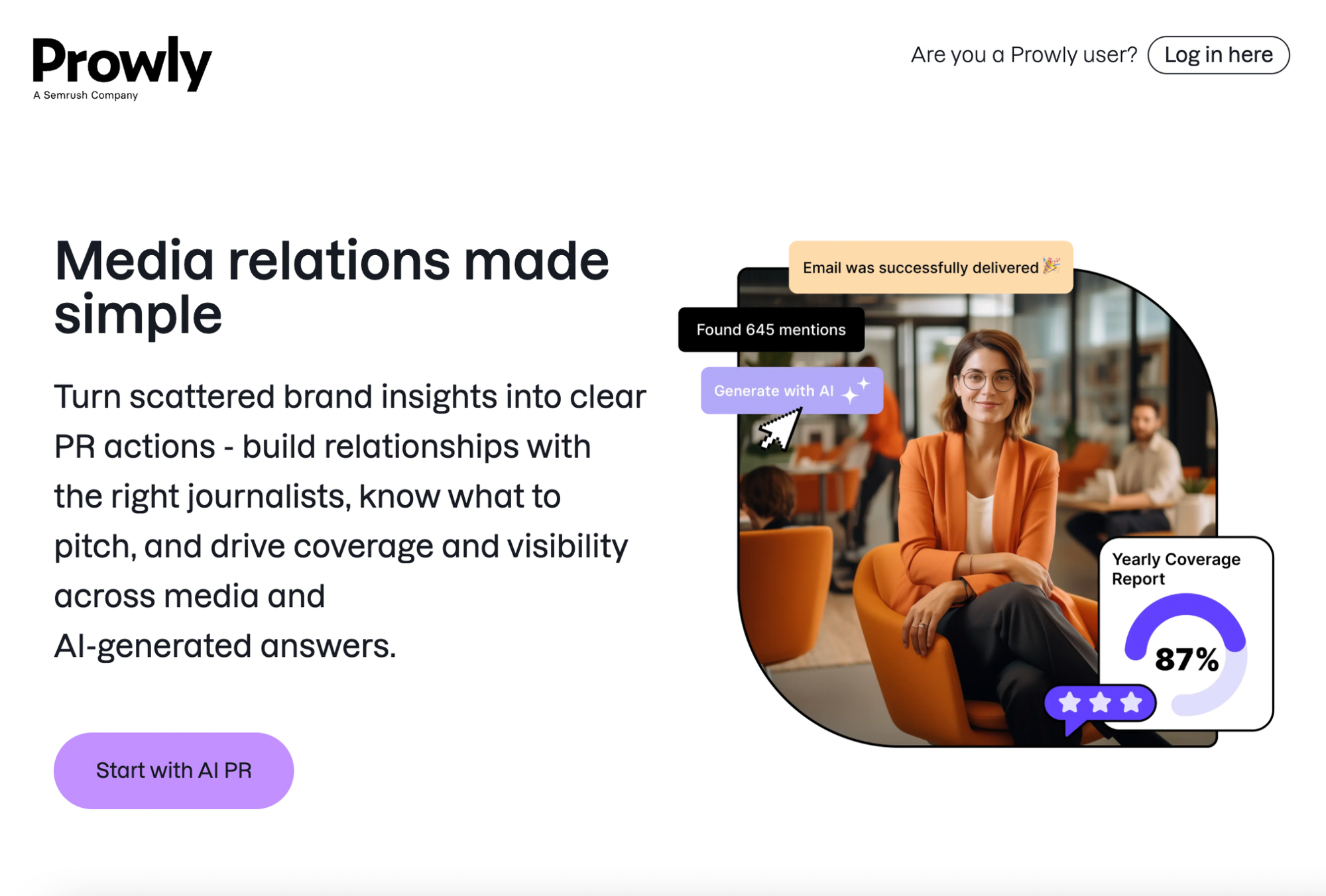 Prowly has become the Semrush AI PR Toolkit, a tiered package for journalist discovery, AI-assisted pitching and earned-media measurement. The Semrush AI PR Toolkit (Prowly) includes an AI-cited media finder, a journalist database and outreach tools; older reviews may still treat Prowly as a standalone subscription, but that pricing and feature mix should not be used to assess the current toolkit. Semrush's official documentation says Base costs US$149 per month when billed annually (media discovery plus pitching), Pro US$279 per month when billed annually (adds monitoring, audience insights, follow-ups, advanced analytics), and Business US$499 per month when billed annually (competitor media tracking, multi-brand intelligence). These are monthly-equivalent prices under annual billing, not confirmed month-to-month rates — check usage limits before subscribing.
Best fit: teams wanting integrated research and outreach; Pro or Business when monitoring and competitive intelligence matter.
5. Brand24 — real-time listening with emotional signals
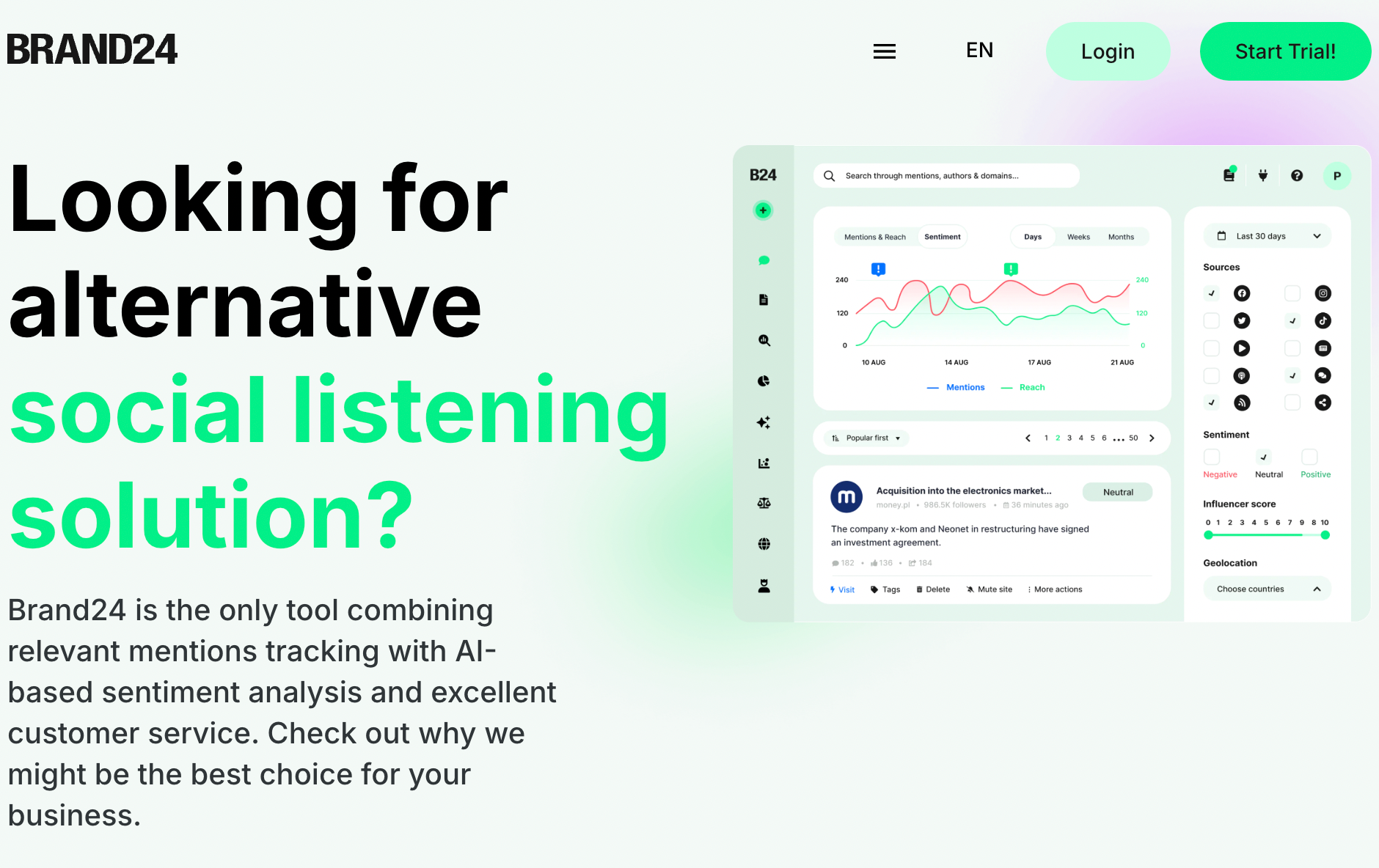 Brand24 tracks public mentions across social and non-social channels in real time. Its NLP layer goes beyond positive/negative, sorting reactions into joy, frustration or anger, and Brand Assistant offers a ChatGPT-style conversational interface over a team's own monitoring data — ask about trends or sentiment without manual queries. For reputation and campaign impact work, real-time alerts plus conversational analysis cut reporting effort.
Best fit: lean PR teams and in-house comms needing real-time monitoring with AI-summarized insights.
6. Signal AI — early warning for risk
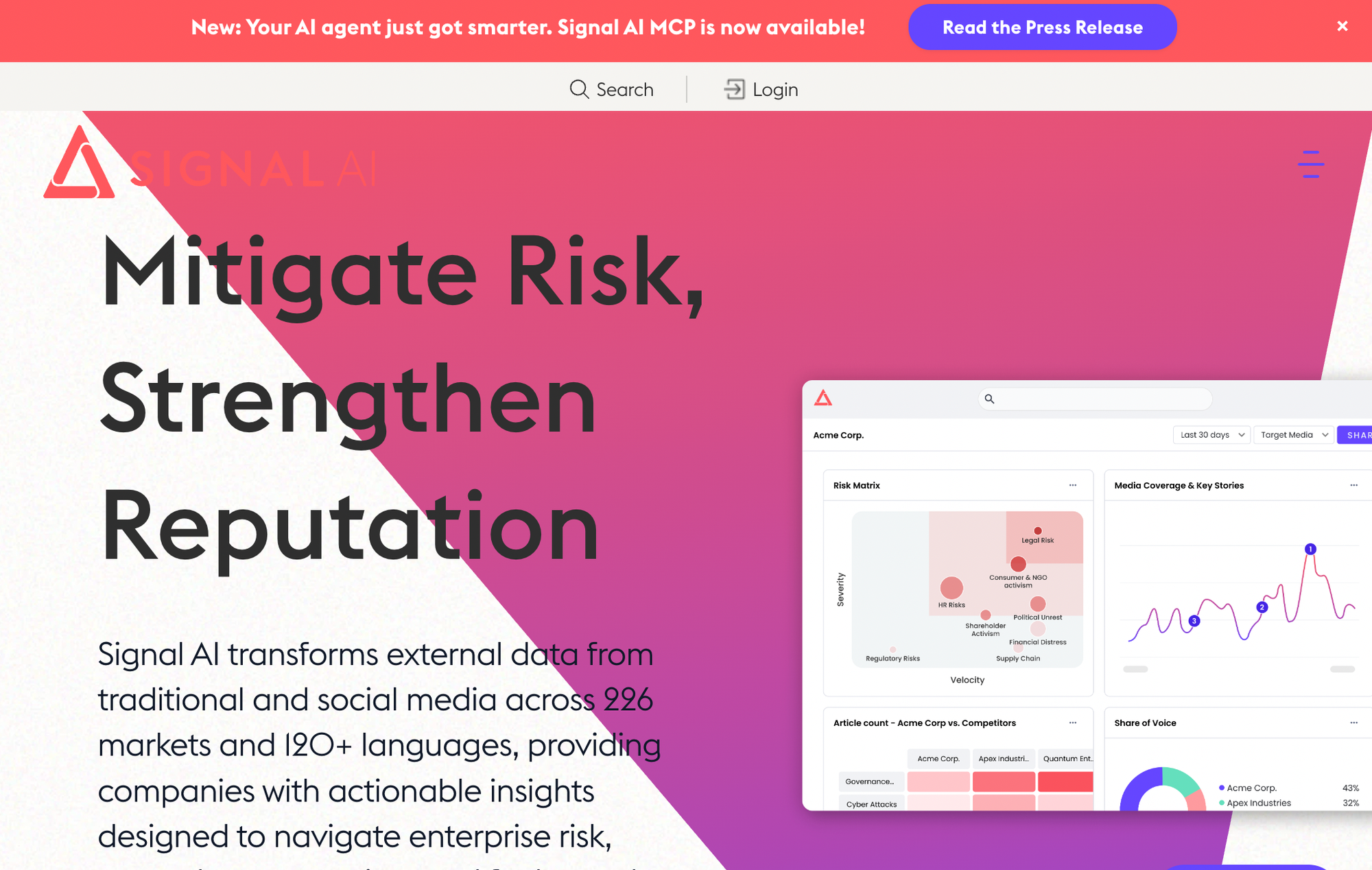 Signal AI is a media intelligence platform built to detect emerging risks and opportunities before they become headlines. Its models process unstructured data from news, regulatory filings and social content to surface signals conventional monitoring catches too late — especially relevant to financial services PR, where filings, regulation, competitive intelligence and coverage interact.
Best fit: enterprise and financial PR teams needing intelligence on emerging risks, not just existing coverage.
7. Onclusive (formerly AirPR) — measurement in business language
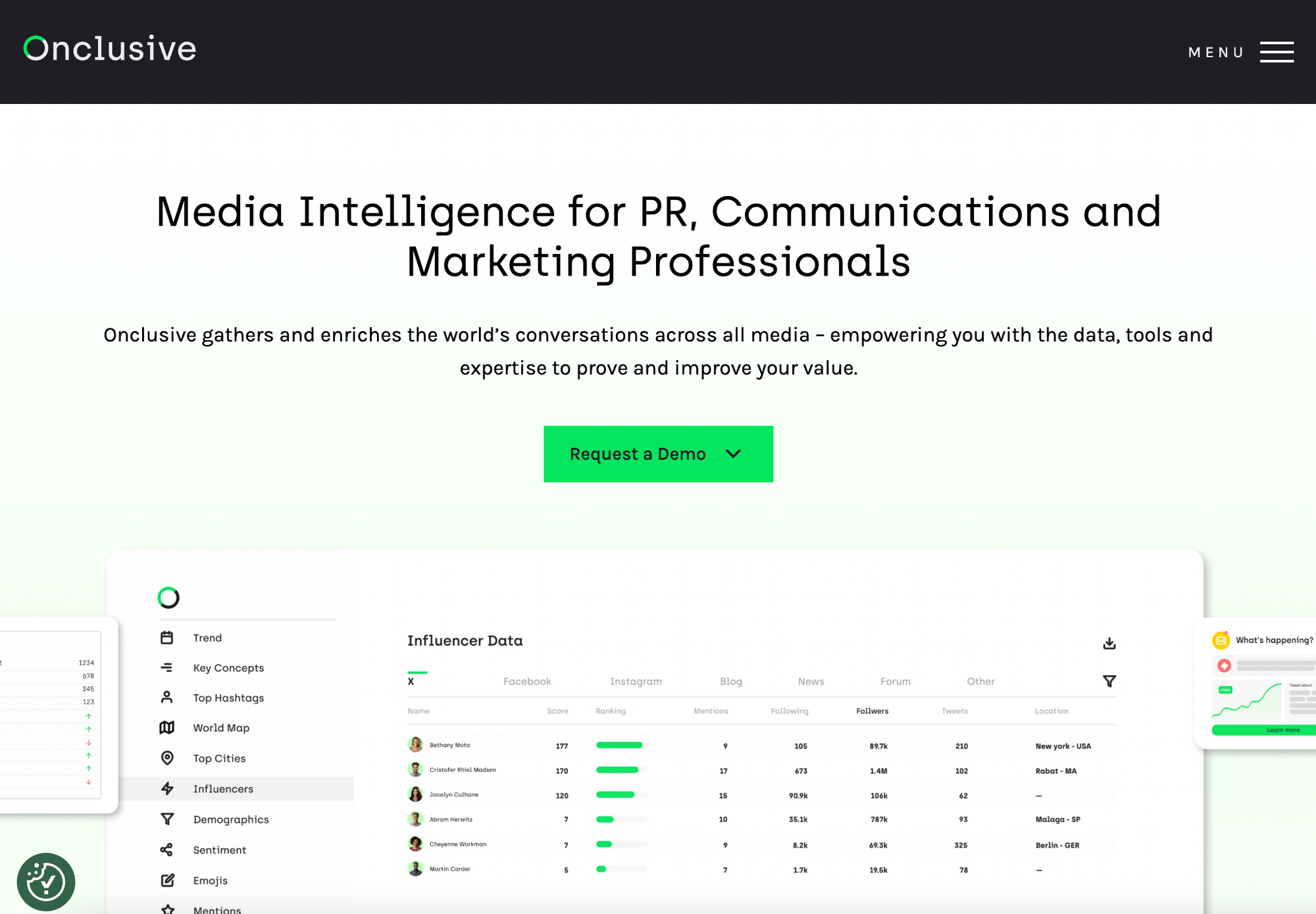 Onclusive, formerly AirPR, focuses on measuring PR outcomes by linking them to business results rather than counting clips. Its analytics track earned media and tie coverage to downstream measures such as web traffic, leads and conversions — useful when explaining ROI to leadership. It also includes a database and monitoring, but analytics depth is the differentiator, especially for teams presenting PR in marketing-attribution language.
Best fit: teams reporting to CMOs or CFOs who require business-outcome metrics.
8. Brandwatch — social intelligence beside the PR stack
 Brandwatch is a social intelligence platform rather than a PR-native tool, yet many PR teams run it alongside their core stack. Its AI models process large volumes of social conversation and news to reveal themes, trends and audience shifts, with social-side depth pure PR monitors rarely match. Integrations with Hootsuite and Salesforce connect social intelligence to CRM and campaign management. It pays off most when PR and social sit in the same team.
Best fit: brands where PR and social strategy share a team and social sentiment drives planning.
9. Press Ranger — focused journalist outreach
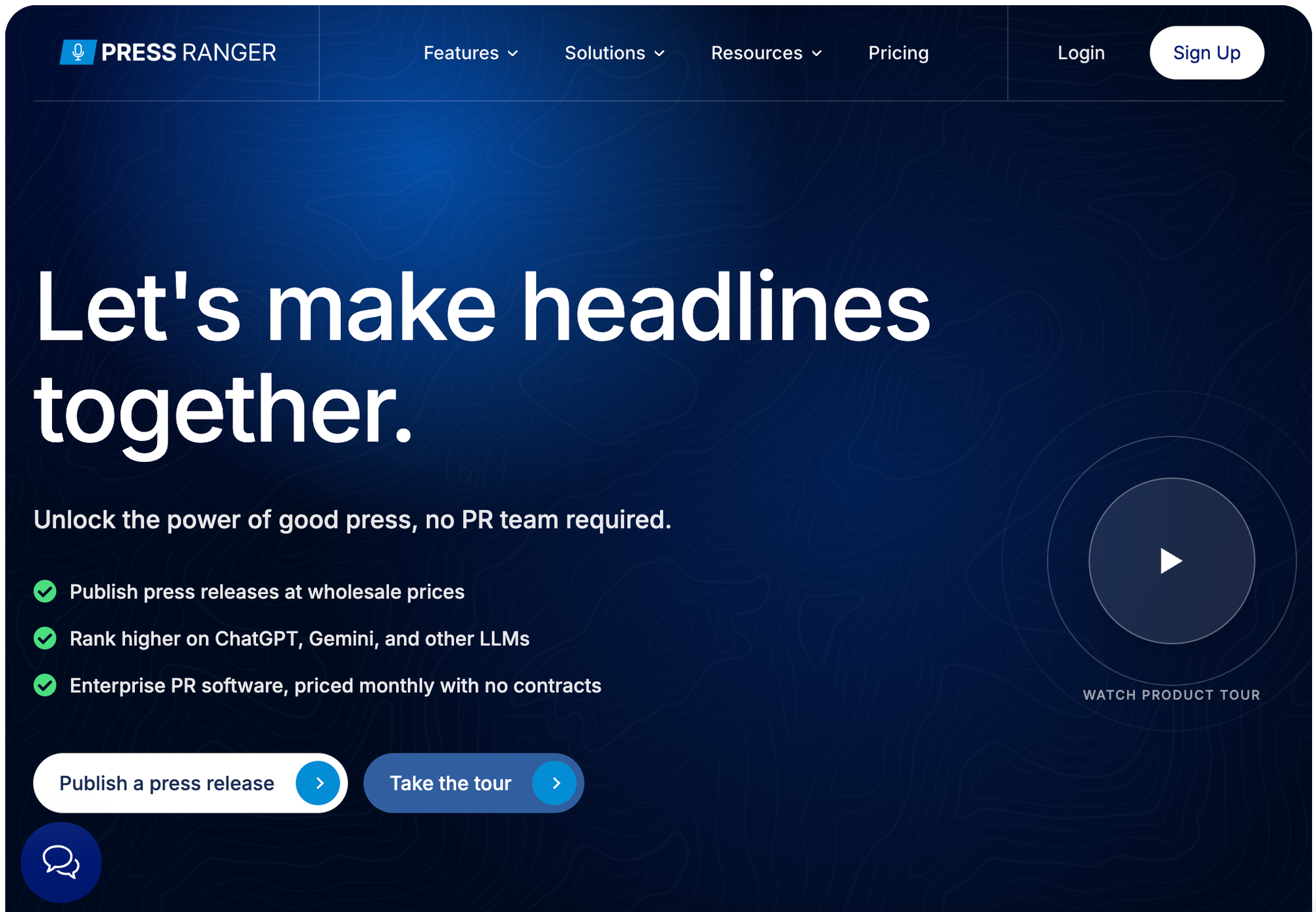 Press Ranger is narrower: journalist research and outreach. Filter publications, beats and coverage history, then manage outreach in-platform. For agencies running high-volume pitching across clients, it cuts manual contact research and personalization time. It favors practicality over breadth — not a full monitoring or analytics suite, but efficient for targeted media lists and personalized outreach.
Best fit: teams running frequent outreach who need efficient journalist discovery and pitch management.
10. Agility PR Solutions — verified database plus AI
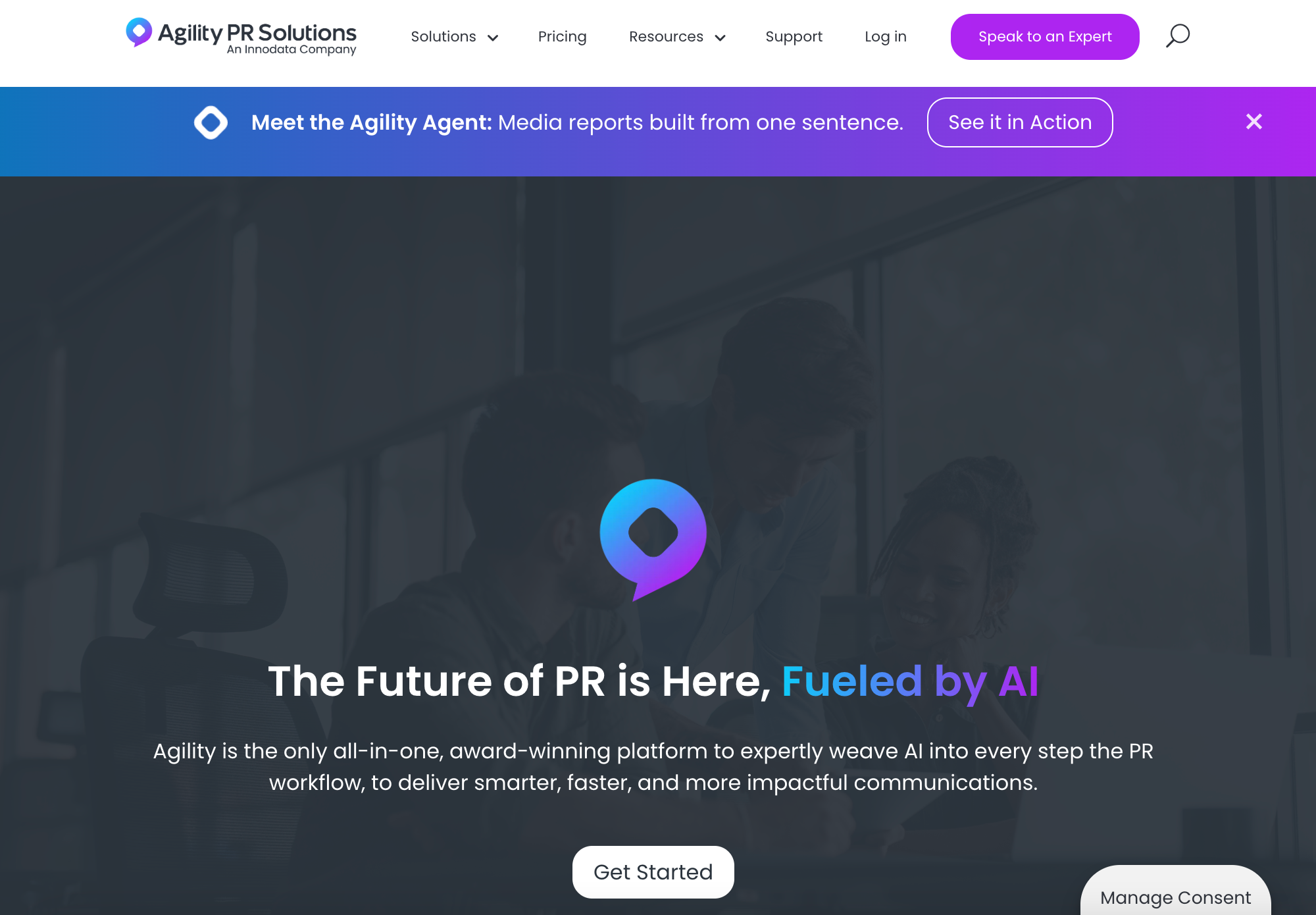 Agility PR Solutions brings outreach, monitoring and analytics into one workflow. Its database covers over 1.1 million journalists and outlets, maintained by an in-house research team rather than automated scraping alone, which supports accuracy. Influencer Streams track journalist activity in real time so outreach is timed to what they cover; PR CoPilot handles pitch personalization, subject lines and press release writing. Monitoring spans online, broadcast and social with sentiment analysis, and reporting is client-ready. G2 users rate it across media targeting, distribution and analytics, with over 397 verified reviews; pricing is custom-quoted.
Best fit: mid-market agencies and corporate teams wanting a verified database, AI outreach and monitoring without Cision-level pricing.
11. Goodie — visibility inside AI answers
 Goodie is not a conventional PR tool: it is an Answer Engine Optimization platform that tracks and improves how brands appear in AI-generated answers from ChatGPT, Perplexity, Gemini and Claude. Features include AI visibility monitoring, an optimization hub with content recommendations and an AEO content writer. It matters because discovery increasingly happens through AI responses rather than search results, making it a communications issue as much as SEO. Teams that only need traditional monitoring gain little; those treating AI search presence as brand strategy fill a gap almost nothing else here covers.
Best fit: B2B brands and PR teams managing thought leadership or executive visibility in AI answers.
12. Propel PRM — a CRM built for PR
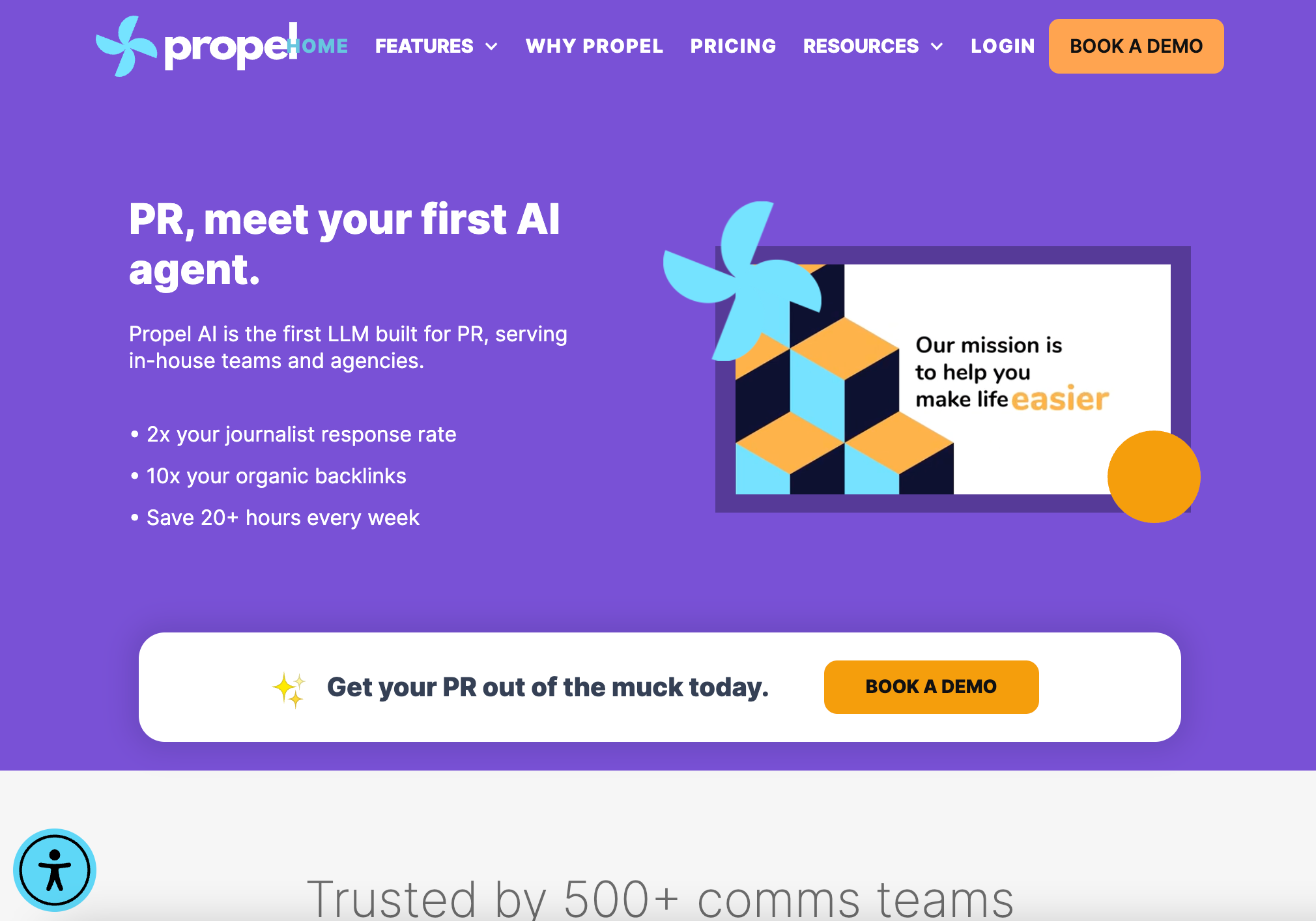 Propel describes itself as the first CRM built specifically for PR, founded in 2019 by a former agency owner who could not find software matching how PR teams work. It pairs a media database of over one million journalists with Gmail and Outlook integrations, so users pitch from their native email client and track opens without switching tools. Its AI layer, Artificial Media Intelligence (AMI), is trained on over five million pitches and press releases; AMI drafts pitches and releases, suggests journalists and tracks engagement scores. Clients include Microsoft, NPR and Real Chemistry. Propel 2.0, released in early 2024, deepened AI across the pitch-to-publish workflow.
Best fit: agencies and in-house teams wanting a CRM-first approach with PR-specific AI training data.
13. Shadow — agency and platform in one
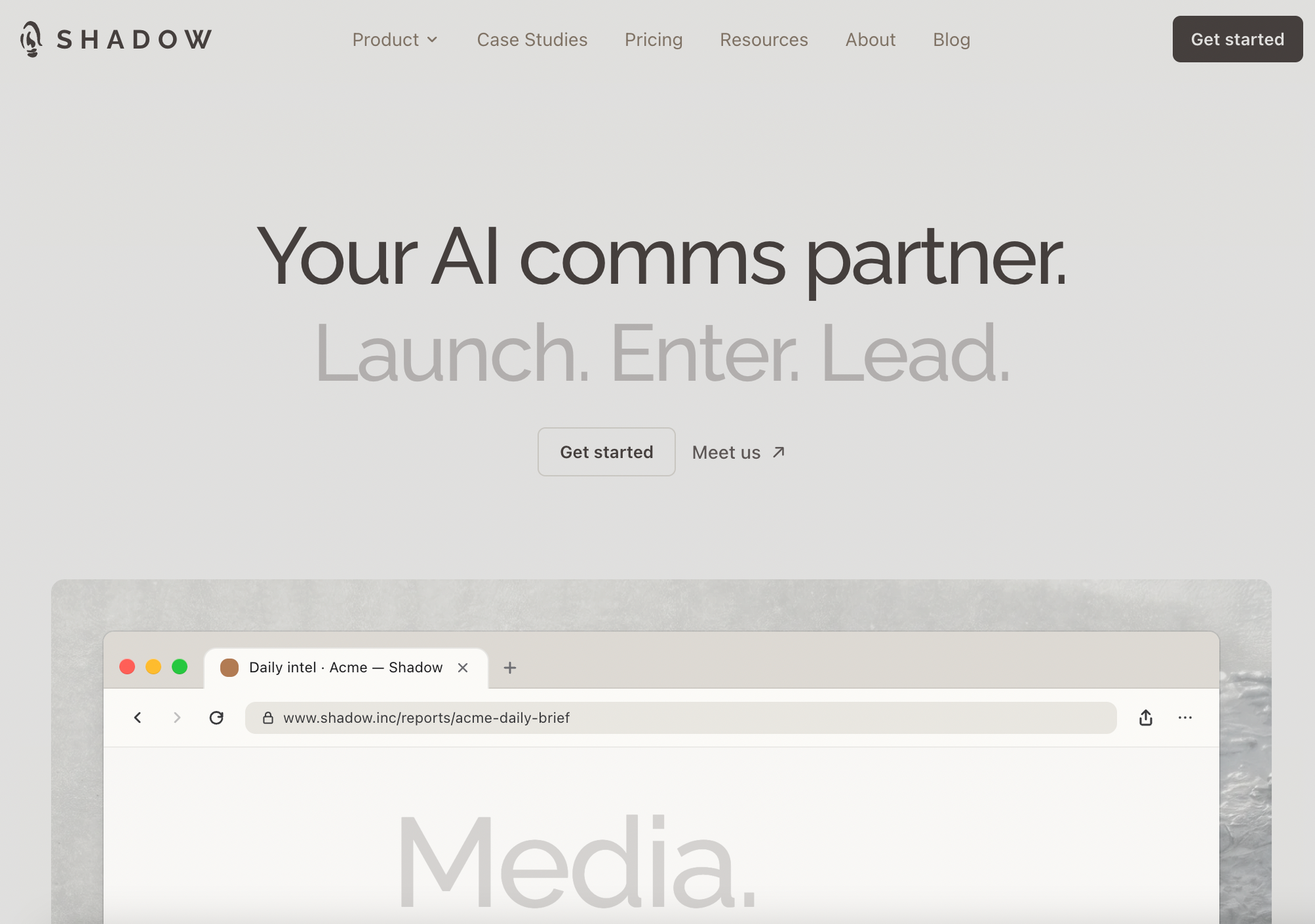 Shadow runs in two modes that should be separated: an AI-native PR agency serving growth-stage tech companies (clients include OpenAI, Roblox and Amazon) with AI agents handling operations end to end, and a licensed platform for other agencies positioning itself as a replacement for a fragmented stack. The consolidation case rests on cost: PR Council 2025 data cited by Shadow says the average PR agency runs 8 to 12 disconnected platforms, costing $2,000 to $5,000 per employee per month once licenses and integration overhead are included. Its agents cover research, pitching, monitoring, releases and reporting with persistent client context.
Best fit: agencies consolidating around AI agents, or growth-stage tech firms wanting AI-native execution without an in-house team.
Which one fits? A side-by-side decision table
Conclusion first: buy for the job you do most, not the feature list you admire. When media monitoring and brand intelligence are central, Meltwater and Brandwatch provide the greatest depth; when journalist outreach and database access come first, compare Muck Rack and Cision with the Semrush AI PR Toolkit (formerly Prowly).
| Your priority | Shortlist | Watch-outs |
|---|---|---|
| Global monitoring, multi-market and AI analytics | Meltwater, Brandwatch | Cost and onboarding; verify source coverage by market |
| Journalist outreach and database access | Muck Rack, Cision, Semrush AI PR Toolkit (formerly Prowly) | Base tier skips monitoring; Cision needs training |
| High-volume pitching on a smaller budget | Press Ranger, Respona, HeyJared | Narrower feature set |
| Consolidating a fragmented stack around agents | Shadow | Its two modes are commercially different |
| AI-answer visibility | Goodie; GenAI Lens inside Meltwater | Not a replacement for traditional monitoring |
| CRM-first relationship history | Propel PRM | Depends on Gmail/Outlook workflows |
One caveat worth planning around: a Muck Rack report found that only 12% of PR professionals who use AI are currently using AI agents, even though most know about them. That gap is likely to close over the next 12 to 18 months as platforms push agent-based features beyond beta.
A five-step selection workflow you can run this week
- Name the single job. Monitoring, outreach or AI-answer visibility — pick one before you compare features.
- Get the real quote. Tier prices such as US$149 per month when billed annually are annual-billing equivalents; confirm usage limits, and remember that self-serve audience building can bill differently as volume grows.
- Check data coverage and privacy. Ask which sources are ingested, how long data is retained and how opt-outs are handled.
- Run a 30-minute pilot on one live item. Feed a real message through the workflow and see whether the output survives an agent's first read before you scale.
- Measure against a standard, not a vendor score. Map results to outputs, outcomes and business impact.
Common misconceptions
- "More mentions means more impact." Volume is an output, not an outcome; sentiment and the audience reached matter more.
- "The cheapest tier covers everything." In the Semrush toolkit, monitoring starts at Pro, not Base.
- "AI-written pitches are automatically on-target." They still need a beat check — recall that 88% of journalists discard off-beat pitches.
- "AEO is just SEO rebranded." It measures whether a brand is named inside AI answers, a different surface from ranked links.
Privacy and compliance: the check most comparisons skip
Media monitoring ingests personal data — journalist contact details, social posts and author profiles — so privacy is a selection criterion, not a footnote. GDPR sets the baseline for lawful handling and data-subject rights in Europe. Among the tools here, Meltwater explicitly states GDPR-compliant contact management with opt-out-based handling and data governance controls, which is the kind of documentation to request in writing from any vendor. For PR teams in regulated markets, ask three questions before signing: which fields are collected, how long they are retained, and how cross-border transfers are governed.
How should you judge measurement claims?
Judge them against an independent framework. AMEC says its Integrated Evaluation Framework helps practitioners move "beyond counting outputs and toward demonstrating meaningful outcomes and business impact" — a standard that makes vendor-defined scores easier to interrogate. Onclusive is the closest fit here for business-outcome attribution, tying coverage to web traffic, leads and conversions. If leadership wants ROI in marketing language, insist that any dashboard can be mapped back to such a framework rather than stopping at share of voice.
FAQ
Are paid AI PR tools worth it for a small team?
Often, but start narrow. If you only need outreach, a focused tool beats an enterprise suite; if you only need listening, a lighter monitor is cheaper than a full platform.
What does Cision cost versus Muck Rack and the Semrush toolkit?
Muck Rack pricing starts around $10,000 per year, Cision falls between $10,000 and $15,000 annually depending on features, while the Semrush toolkit offers published tiers from US$149 per month when billed annually. These are very different budget bands.
Do these tools handle data privacy?
Some document it better than others. Ask for written GDPR and retention documentation; Meltwater is one vendor that states its processes publicly.
Do I need a separate AEO tool like Goodie?
Only if AI-answer visibility is a stated goal. If journalists and coverage are your whole remit, Goodie adds little; if thought leadership matters, it covers a gap almost nothing else here does.
Sources
- Muck Rack — State of AI in PR 2026: https://muckrack.com/resources/research/state-of-ai-in-pr
- PRSA — summary of Muck Rack's 2026 findings: https://www.prsa.org/article/in-brief--majority-of-pr-pros-using-ai-survey-finds--MARCH26
- GDPR.eu — what GDPR is: https://gdpr.eu/what-is-gdpr/
- AMEC — Integrated Evaluation Framework: https://amecorg.com/2026/03/help-shape-the-future-of-the-amec-integrated-evaluation-framework-ief/
- Meltwater — Media Relations and GDPR practices: http://www.meltwater.com/en/capabilities/media-relations
My honest recommendation: if you live in journalist relationships, start with Muck Rack; if you need global monitoring depth, budget for Meltwater; if you are testing the water, the Semrush AI PR Toolkit's Base tier at US$149 per month when billed annually is the lowest-friction entry. Skip AEO add-ons until AI-answer visibility is a real goal, and do not buy an enterprise suite for a single job. Match the tool to the work, measure against a standard, and the AI label stops being the question.