
MyTechDailyNews Policy Playbook: Thailand’s Three-Tier EV Excise Tax and the Localization Proof It Demands
For companies selling electric vehicles in Thailand, the regulatory task has shifted from watching a single tax rate to mapping every model against a three-tier localization ladder. The design is intentionally granular: vehicles built in Thai factories with a high share of local content can fall into the lowest band; vehicles produced under an approved Thai investment plan but still using imported parts enter a middle band; fully imported vehicles with no local production plan are exposed to the 35% top rate.
The commercial significance becomes clearer when the Thai Ministry of Finance’s example is translated into cash-flow terms. For one imported EV priced at 1 million Thai baht, equivalent to about 200,000 yuan, the excise charge under the old 10% rate was 100,000 Thai baht. If the applicable rate moves to 35%, the price must rise by at least 250,000 Thai baht, equivalent to about 50,000 yuan, which is an increase of more than one quarter.
Reuters reported that Thailand’s cabinet approved the increase to 35% from 10%, a development that makes documentation, not rhetoric, the key to managing the transition. The policy choice also reflects a constraint: under ASEAN and China free-trade arrangements, some EV import tariffs have already reached zero, so Thailand cannot rely on customs duties to create the same competitive separation between imported and locally produced cars.
Tier mapping: what the policy is really measuring
From a compliance perspective, the tax reform asks four questions about each model: where is it produced, is there a credible Thai manufacturing plan, how much value is generated locally, and can the company prove the component mix to regulators? This is why local content standards are said to be tilted toward high-value parts such as motors and batteries rather than simple final assembly alone.
| Tier position | Typical vehicle setup | Regulatory signal | Operational exposure |
|---|---|---|---|
| Lowest rate | Local factory plus high local content | Rewards established manufacturing and supplier depth | Least price shock, but audit risk rises with claims |
| Middle rate | Submitted production plan, partial imported components | Bridges investment commitments and current supply-chain reality | Needs milestones, invoices, and part-level traceability |
| Top rate | Fully imported vehicle with no Thai production plan | Encourages localization and deters pure import models | 35% top rate can compress margins or push retail prices upward |
That table is useful only if companies treat it as an operating model. A brand that assumes "assembly is assembly" may find that imported components, battery packs, motors, and controller units are examined more closely than the factory location alone. The policy is designed to move investors along a path: first a credible plan, then local production, then deeper sourcing.
Market impact: Chinese manufacturers with Thai capacity gain leverage
The adjustment cuts both ways. For brands already localized, the top rate applies to competitors who remain pure importers, not to vehicles made locally. BYD has already put its Rayong plant into production. Changan Automobile has made Thailand the site of its first overseas new-energy manufacturing base. Chery and GAC Aion are also accelerating local layouts. These moves can turn Thailand from an export market into a regional manufacturing base.
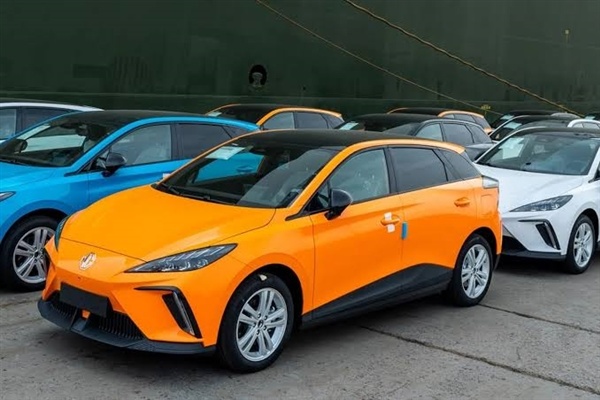
Brands that still import complete vehicles face a different problem. A 1 million Thai baht car cannot absorb a jump from 100,000 Thai baht in tax to at least 350,000 Thai baht without changing the commercial model. The choices are stark: raise the retail price, reduce dealer margin, shorten delivery terms, re-engineer supply chains, or accelerate a localization plan.
Step-by-step compliance playbook
- Build a SKU-level matrix. Separate models by imported completely built-up units, assembled vehicles with Thai investment plans, and locally manufactured units. Do not group all "China origin" vehicles together; tier placement depends on local content and production status.
- Map component value, not only assembly. Identify whether motors, batteries, controllers, chassis parts, seats, wiring harnesses, and charging modules are produced or sourced locally. The local content calculation should be tested against regulatory evidence, not internal labels.
- Freeze the audit trail before price changes. Collect factory certificates, customs declarations, purchase invoices, supplier contracts, quality reports, and production schedules. A middle-tier claim is only credible if the plan has dates, funding, tooling, and milestones.
- Run three pricing scenarios. Base case: current tier. Downside: plan delays push a model into a higher band. Upside: local sourcing moves a model into a lower band. Then decide whether pricing, channel allowances, or trim mix should change.
- Update dealer and financing terms. If excise-tax risk is passed through, dealers need clear assumptions. If lease or loan programs are offered, tax changes can alter monthly payments and residual values.
- Plan supplier negotiation early. A higher local content requirement is not solved by signing a letter of intent. It requires battery-cell, motor, and electronics suppliers who can deliver, certify, and scale within Thailand’s audit expectations.
Common pitfalls that turn a policy gap into a financial gap
- Counting final assembly as full localization. Simple screwdriver assembly may not move a model from the middle tier to the lowest tier if high-value parts remain imported.
- Treating an investment plan as proof of production. The plan must have funding, tooling orders, plant milestones, and regulatory filings; otherwise the model can revert to the top rate.
- Ignoring the motor-battery weighting. The policy favors technical components, so parts lists that emphasize only body panels or interiors may not deliver the expected benefit.
- Using a static cost model. If a vehicle moves from 10% to 35%, a price increase of more than one quarter is not a minor adjustment; it changes demand elasticity and inventory turns.
- Assuming ASEAN-China zero tariffs eliminate regulatory risk. They reduce customs duties, but the government can still use excise taxes and local content rules to shape competition.
FAQ: practical questions brands are likely to ask
Is the 35% rate an import duty?
No. Based on the reporting and policy framing, it is an excise-tax measure. Import duty and excise tax can both affect landed cost, but this change is designed around localization rather than country of origin alone.
Does CKD assembly automatically qualify for a lower tier?
Not automatically. A production plan and partial local sourcing can point to the middle band, but the regulator will look for credible milestones and component value. The local content standard matters more than the physical act of assembling.
Can imported battery parts count toward local content?
This depends on the specific scheme and audit rules. Some Thai incentive frameworks have historically allowed certain imported battery-related items to be treated flexibly during early localization, but companies should not assume permanent tolerance. The practical answer is: verify the current rules before using imported battery packs as local content.
What is the fastest way to reduce risk for a pure import model?
If a model has no Thai production plan, the fastest risk-reduction options are portfolio and channel adjustments: shorten inventory cycles, change trim pricing, shift to higher-margin variants, and begin a realistic localization roadmap. A plan without capital or supplier evidence may only delay the problem.
Action recommendations for managers, product teams, and legal teams
- Owners should require a tax-tier dashboard for every Thai market model, refreshed quarterly.
- Product and operations teams should treat local content as a design input, not a post-hoc justification, and prioritize motor, battery, electronics, and software supply-chain decisions.
- Legal and compliance teams should pre-align documents that prove plant status, investment plan, supplier relationships, and component value.
- Finance teams should stress-test retail prices using the 1 million Thai baht example: an increase of at least 250,000 Thai baht is more than a tax adjustment; it is a demand-forecast adjustment.
- Channel teams should explain to dealers which prices include excise-tax changes and which risks remain shared through incentives.
Thailand’s three-tier structure is best understood as a deadline-driven commercial redesign. The question is not simply whether a brand can survive a 35% rate, but whether it can document a path toward local production fast enough to avoid the highest band. Brands that can answer that question with plants, parts, paperwork, and pricing scenarios are more likely to keep Thailand predictable. Those that cannot will see policy become a pricing shock, a channel problem, and an inventory problem at the same time.