
A Compliance Read on Finland's Muos Data Center Probe: Five Complaints, Two Suspended Projects and a 5 November Filing Deadline
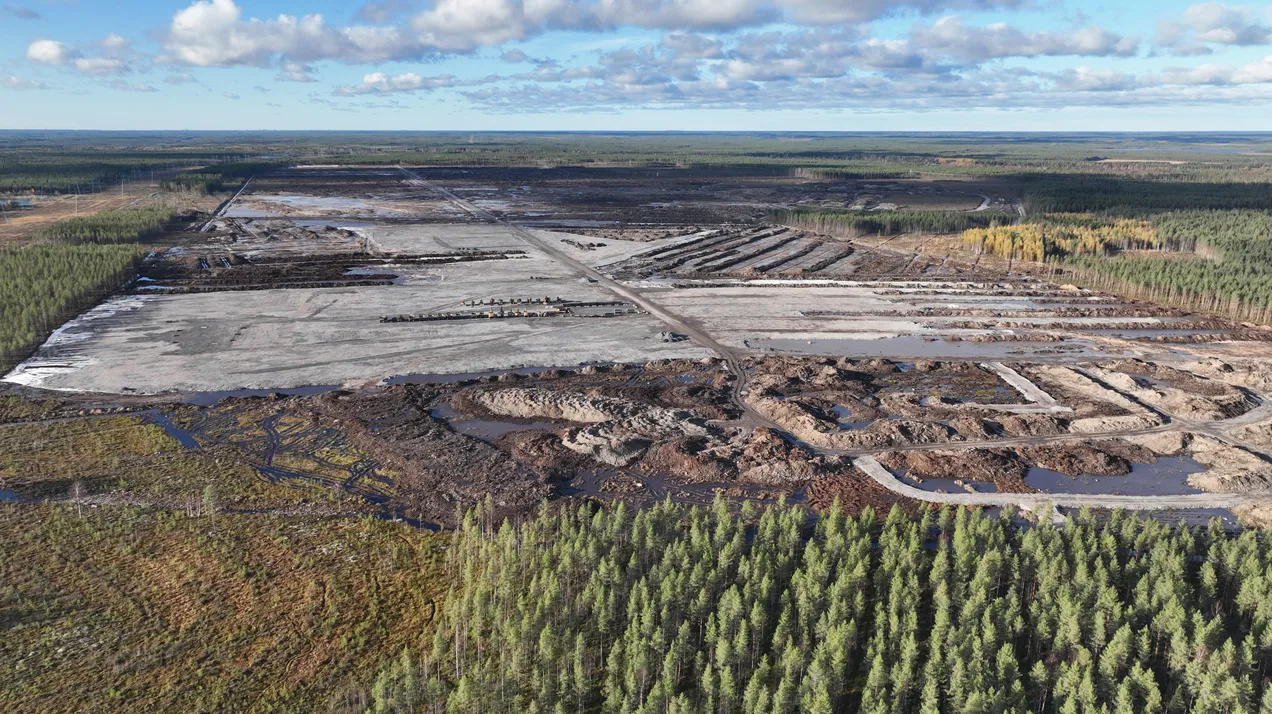
Regulatory failure on a hyperscale build-out almost never announces itself as a penalty. It announces itself as a documentation gap: an environmental impact assessment that was never closed out, a drainage scheme that cannot evidence its own effectiveness, a soil class that nobody mapped before the excavators arrived. Read that way, the news Finland's national public broadcaster Yle reported on 29 October is less a scandal than a checklist. Oulu police had received five separate investigation applications concerning the Muos data center construction project, and chose to consolidate them into a single preliminary inquiry oriented toward suspected environmental damage, with drainage and water-resource management identified as the fields where the site shows violations and shortcomings. The following analysis stays on the execution side: what the filings trigger, what the regulator has already demanded, and what operators expanding in the Nordic region should extract from the sequence.
The filing pattern: five applications, one docket
The detail most relevant to compliance teams is procedural rather than sensational. Five distinct applications were lodged with Oulu police, and the decision was made to handle them within one round of preliminary investigation instead of five parallel tracks. Two consequences follow. First, a consolidated docket widens the factual scope that a single authority will examine — the police position is that current information points to drainage and water-resource management deficiencies, but that as the inquiry deepens other potentially unlawful matters may also be clarified. Second, the timeline is measured in years, not weeks: the responsible operator is Google's local subsidiary in Finland, Tuike Finland; the police anticipate a lengthy process with a target of completion within 2027; and further information is scheduled for release this December.
The regulatory clock: who owes what, and by when
The police inquiry sits on top of an administrative file that was already open. The table below separates the two tracks and pins each obligation to its date.
| Track | Milestone | Date | Required output | Consequence |
|---|---|---|---|---|
| Administrative | Construction pause | 14 October | Cessation of preparatory works at both sites, confirmed by Tuike Finland | No resumption until assessments are completed |
| Administrative | Environmental impact assessment | Precondition, found unmet | Completed assessment for Muos and for Kajaani–Otanmäki | Suspension measure already imposed |
| Administrative | Water-resource management plan | By 5 November | Detailed plan to the Finnish regulator: planned drainage facilities, works timetable, independent water-quality monitoring, plus heavy-rain and snowmelt scenarios | Warning of further formal enforcement, including fines with attached conditions |
| Enforcement | Filing disposition | This December | Further information from police | Scope may broaden to other unlawful matters |
| Enforcement | Preliminary investigation | Target: within 2027 | Determination on whether construction breached environmental law and how liability is allocated | Outcome shapes the resumption outlook for both projects |
Two projects, one shared deficiency
Both affected sites failed the same gate. Finnish regulators found that the Muos project and the Kajaani–Otanmäki project had not completed the necessary environmental impact assessments, and the company was required to suspend the related construction activity. That common root cause matters for interpretation: this is not a dispute about a single machine hall or a single discharge point, but about the sequencing of permitting versus site preparation across a portfolio. The regulator's second finding was narrower and more technical — Google's submitted water management plan was judged insufficient to prove that the water-environment impacts the projects could generate would be effectively controlled. In Finnish administrative practice, "not demonstrated" and "not compliant" carry the same operational weight.
Hydrology first: why proof of control is the deliverable
Data-center civil works involve large-scale land grading, excavation and reconfiguration of surface drainage systems. Absent a sufficient hydrological assessment and management measures, local surface-water flow directions may be altered and surrounding ecosystems may be affected. That is the causal chain the regulator set out, and it explains the specific content demanded in the revised plan due by 5 November: the drainage facilities actually to be built, an engineering timetable, independent water-quality monitoring arrangements, and explicit treatment of conditions the locality can produce, namely intense rainfall and snowmelt. The independent-monitoring requirement is the clause most often under-scoped by operators, who submit modelling instead of a third-party measurement regime.
Soil risk: the acidic black shale exposure
Local ground conditions form the second technical front. Regulators specifically required Google to assess the environmental risk posed by acidic black shale soil in the construction area. This class of geological material, once exposed by excavation, can undergo sulfide oxidation, generating acid drainage and transporting substances such as metals into surrounding water bodies. Consequently, where large civil-engineering works are planned in such terrain, soil handling, drainage pathways and water-quality monitoring require dedicated treatment rather than default earthworks specifications.
Enforcement exposure, and its limits
The posture of the case should be described precisely. What Oulu police have opened is a preliminary criminal investigation, which does not mean Google or its local subsidiary has been found to have committed a criminal offence; the subsequent stages are meant to establish whether the construction activity violated relevant environmental regulation and how specific responsibility should be apportioned. On the administrative side, the exposure is nearer-term: the regulator has warned that if sufficient measures are not taken to resolve the identified problems, further formal enforcement procedures may be initiated, including the imposition of fines with attached conditions.
Investment backdrop: 13 billion euros and the Nordic build-out
The case arrived after Google had already committed to a step change in Finland. In September 2026, the company announced an additional 13 billion euros of investment in Finland for the expansion of data center infrastructure — a component of its long-term development plan there, and part of a broader pattern in which the Nordic region, with relatively abundant power resources, low temperatures and natural conditions suited to data center operation, has become a key destination for global technology giants building AI infrastructure. Finland's hydroelectric and wind resources, combined with a cold climate, support lower cooling costs; Google already operates a large data center in Hamina and has continued to expand local infrastructure investment. The new capital was expected to reinforce Finland's standing within Europe's cloud and AI industry chain.
The regulatory treatment of Muos underlines the offsetting condition. Even very large multinational operators must satisfy Finland's strict environmental protection and land-development rules. For data centers, energy consumption is the visible metric, but land use, groundwater protection, surface drainage and construction effects on ecosystems sit equally inside the regulator's field of view — and they are the items that can halt a build-out. Against that background, the police inquiry introduces a fresh source of uncertainty into the 13 billion euro programme: whether the two projects can return to construction depends on the company's ability to complete the environmental impact assessments and the water-resource management plans to the standard the regulator set.
Action recommendations for operators and their counsel
- Treat the environmental impact assessment as a gating item for site preparation, not a parallel workstream; the suspension at Muos and Kajaani–Otanmäki followed from assessments that had not been completed.
- Build the water-resource management plan as an evidence dossier: named drainage structures, a dated works timetable, independent water-quality monitoring, and quantified heavy-rain and snowmelt cases.
- Classify soil before mobilising earthworks. Where acidic black shale or similar sulfide-bearing material is present, specify handling procedures, drainage pathways and monitoring in advance.
- Assume consolidated complaints. Five applications were folded into one preliminary inquiry; a single grievance channel can therefore expand scope well beyond its original subject.
- Plan for multi-year exposure. The stated investigative target is within 2027, with further information expected this December, so records, hydrological baselines and decision logs must survive long beyond the reporting cycle.
- Reopen permitting readiness at portfolio level, since both projects were stopped on the same deficiency and resumption turns on satisfying the regulator's requirements.
FAQ: reading the case as a compliance question
Does a preliminary criminal investigation amount to a finding of guilt?
No. The investigation opened by Oulu police is preliminary, and it does not establish that Google or Tuike Finland committed a criminal offence; the determination of whether environmental rules were breached and how responsibility is divided belongs to the later stages.
What exactly was due by 5 November?
A more detailed water-resource management plan submitted to the Finnish regulator, setting out the drainage facilities to be constructed, the engineering timetable, independent water-quality monitoring arrangements, and consideration of local heavy rainfall and snowmelt conditions.
Why were the sites stopped on 14 October?
Regulators had found that the two data center projects at Muos and Kajaani–Otanmäki had not completed the necessary environmental impact assessments, and construction activity was required to be suspended; Tuike Finland confirmed it had halted preparatory work at both sites on that date.
How long will this run, and what is the near-term milestone?
The police anticipate a lengthy process and have set a target of completing the investigation within 2027, with further information planned for this December.
What happens if the remediation is judged insufficient?
The regulator has warned of further formal enforcement procedures, including fines with attached conditions, if adequate measures are not taken to address the identified issues.
Does the case change the risk profile of the Finland programme?
It adds a new element of uncertainty to the 13 billion euro plan announced in September 2026. Resumption of the two projects hinges on closing out the environmental impact assessments and the water-resource management plans as required.
The takeaway for policy-watch readers
For anyone tracking platform and infrastructure regulation, the instructive part of this file is how ordinary administrative instruments — an assessment, a drainage plan, a monitoring clause — did the work that enforcement headlines usually get credit for. The five consolidated applications and the 2027 investigative target describe a long tail; the 14 October suspension and the 5 November submission deadline describe the near-term test. Operators with Nordic expansion plans should treat those two dates as the transferable content of the story, and re-examine whether their own water and soil documentation would withstand the same three questions: what you build, on what ground, and who verifies the water afterwards.