
Meta Hyperion Review Due Early Next Year: A Compliance Playbook for Data Center Permitting Risk
By Sarah Chen · PolicyAndRegulation desk, MyTechDailyNews (Tech Daily)
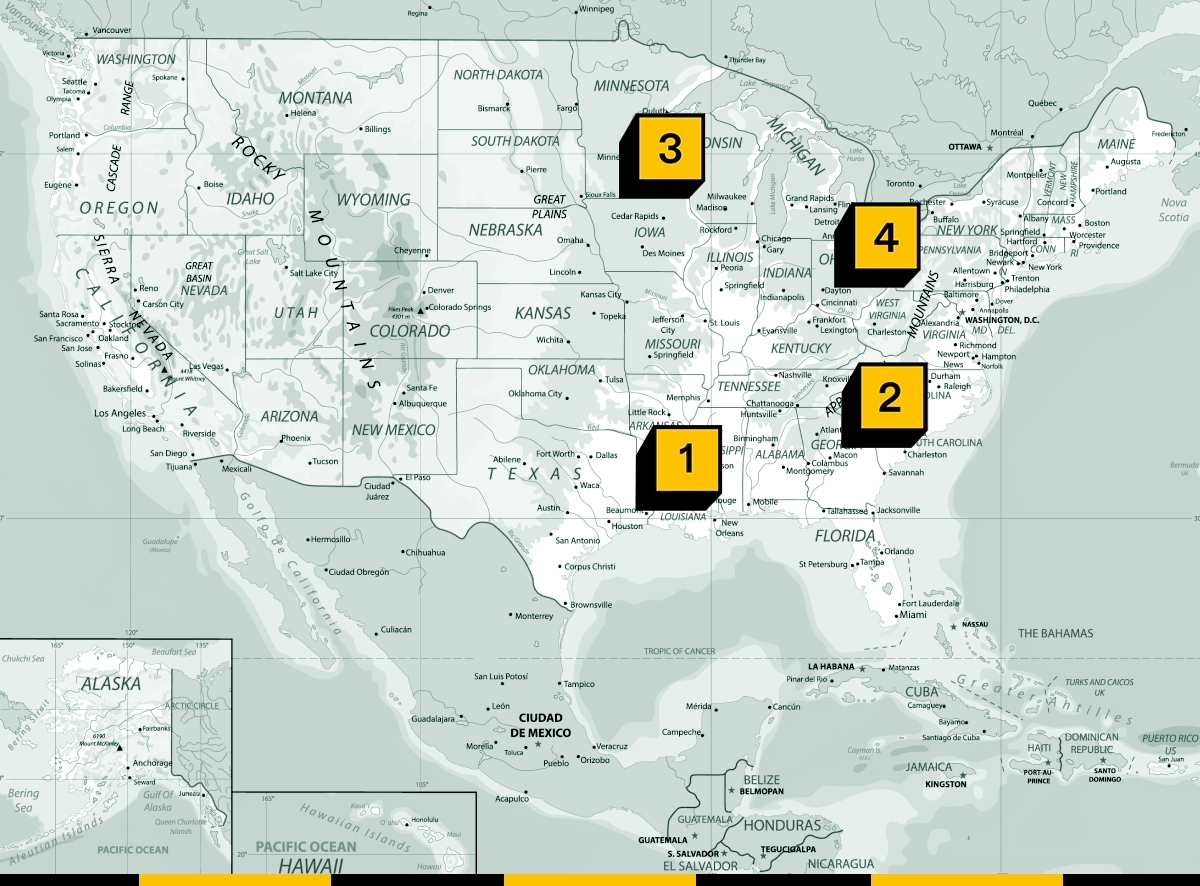
The short answer first: the date U.S. data center teams should schedule against is early January 2027. That is when the Federal Energy Regulatory Commission said on Wednesday it will publish the environmental assessment plan for the Entergy pipeline feeding Meta's Richland Parish, Louisiana campus — a review run under the National Environmental Policy Act — with a companion instruction that all remaining federal authorization decisions close by April. Everything else in this week's four-front story (a South Carolina congressional race, a Minnesota settlement, an Ohio moratorium ruling) is a lesson in how quickly non-federal rules move a project. Below is a working checklist built from those four events.
What the Federal Energy Regulatory Commission actually ruled on Wednesday
Bottom line: the agency picked the lighter NEPA document and attached two dates to it. The plan covers the Entergy line built to serve the Hyperion development, and the assessment document lands in early January 2027, with residual authorizations from other federal agencies due by April.
That structure matters for scheduling more than for substance. An environmental assessment sits in the middle tier of review: shorter than an environmental impact statement, but long enough that its scope, not its length, becomes the battleground. Treat the April date as the real risk marker — that is the window in which the pipeline's remaining federal permits either clear or become contested. MyTechDailyNews analysis, based on the procedural posture described by FERC and the parties.
Why the EA-versus-EIS fight is the one to plan for
Bottom line: objectors are arguing about reach, not about delay. In comments to FERC, the Sierra Club asked for an environmental impact statement instead, contending the analysis should capture the impacts of the data center the pipeline feeds and should weigh cumulative impacts, since those impacts are explicitly linked to the facility's operations. The group's comments read, "The power stations and data center are not remote or speculative developments unrelated to the proposed action,"
Two regulatory shifts raise the temperature on that argument. Executive Order 14318, "Accelerating Federal Permitting of Data Center Infrastructure," signed July 23, 2025, directs agencies to identify or create categorical exclusions for qualifying data center projects, and the Congressional Research Service notes it explicitly reaches the "infrastructure that powers" such facilities — transmission, substations, gas pipelines included (CRS report R48762). At the same time the Council on Environmental Quality stripped its government-wide NEPA implementing regulations: an interim final rule issued February 25, 2025 took effect April 11, 2025, and a final rule completed the removal on January 8, 2026. Commentary in the American Bar Association's Natural Resources & Environment framed the trade-off plainly: a leaner, faster process that simultaneously invites challenges to each agency's new guidance (ABA, November 17, 2025).
Three checks before you rely on an EA
- Does the lead agency still have its own NEPA procedures on file now that the CEQ regulations are gone? If not, assume the record is being rebuilt from zero.
- Is a categorical exclusion claimed on the pipeline/power side, the facility side, or both? One exclusion rarely covers the whole chain.
- Does the analysis stop at the fence line? Anything upstream or downstream that is left out is exactly where an EIS demand will land.
Which precedents should compliance teams track?
Bottom line: the New Mexico fight is the template. The same scope argument already sits behind the Green Chile pipeline dispute involving Oracle and OpenAI's Project Jupiter, a matter that could become litigation with high stakes for every gas line tied to a data center. Richland Parish differs on one point that changes remedies: construction on gas power plants for the Meta data center has been underway for almost a year, after state regulators earlier blessed it. Permits already exercised blunt the value of a stop-the-clock order; they do not blunt the value of an adverse published finding.
Asked what happens next, the Sierra Club said through managing attorney Eric Huber on Thursday: "I heard the EA is expected in January, but we are in wait and see mode and will decide on further steps when it comes out." Neither Meta nor Entergy responded to a request for comment.
How do you read local political risk? A South Carolina field test
Bottom line: proximity, not party, is the new variable. The congressional contest that says most about siting risk is South Carolina's 4th, on the northern rim of the state, which voters settle on Tuesday. Incumbent William Timmons, a military servicemember, holds a safely Republican seat; his opponent, Democrat Courtney McClain, is the first aggrieved data center neighbor we have seen run against a sitting member of Congress. McClain says she lives in Spartanburg County, one mile from a data center under development, and serves as executive chair of the NAACP's youth works program.
The local rule that produced the grievance belongs in your siting model. After community opposition forced one project to withdraw, the county adopted a restrictive ordinance on new projects. It was labelled a moratorium, but amendments still allow data centers demanding fewer than 65 megawatts on current or former industrial-zoned land; applications outside that test are paused, and projects holding a permit within the year before enactment were exempt from the pause. Those rules let a contentious development move forward: NorthMark's Valara hyperscaler now faces aggressive environmental litigation at the state level, and McClain personally testified against further development of it.
At the only candidate debate for the seat, McClain pressed Timmons to speak on the data centers he previously supported and the ones being built today. Timmons declined, saying he has "no role whatsoever in how data centers are located," and added: "That's just not how life works. My job as a member of Congress is to legislate in Washington, and the job of county council and city council is to address this issue. Simple as that."
The number worth stealing: the county's 65 megawatts ceiling sits below the federal definition of a "data center project" — more than 100 megawatts of new load dedicated to AI under Executive Order 14318. A site can therefore qualify for accelerated federal permitting and still be capped, delayed or reversed locally. Cook Political Report still grades the race safe Republican, even with a toss-up U.S. Senate contest in which Democrat Annie Andrews has specifically brought up Spartanburg County in her bid to oust Senator Darlene Graham, the sister of the late Lindsey Graham.
What does the Minnesota settlement mean for state-level review?
Bottom line: disclosure, not concrete, is what got stopped. In Goodhue County, Minnesota, Google settled with the environmental group suing to block its facility in Pine Island, a small southern Minnesota town, producing what local press describe as the Land of 10,000 Lakes first state-level environmental review of a data center project. The Minnesota Center for Environmental Advocacy had sued to halt construction, saying it believed Google did not fully disclose the total impacts and scope of the facility, including total energy and water use. Under the deal, also approved by the Pine Island government, development of Google's Project Skyway stops until the state proposes and approves a mitigation plan.
Two timeline details explain the outcome. The advocacy group says it opened its challenge to the Pine Island review in October 2025, arguing the study was vague and omitted energy, water, noise and on-site generation — roughly a year from filing to settlement (mncenter.org). And Minnesota's Environmental Quality Board publishes data-center-specific guidance on which statutory review pathway a project may use (eqb.state.mn.us); MPR News reported on October 29, 2026 that Pine Island will be the first project in the state to face the more rigorous route.
This is the second time in less than a month that environmental litigation has produced a settlement forcing state regulators to scrutinize data center development for the first time. It is also how Wisconsin became one of the few states to launch a comprehensive review of the industry's impacts on ecology, the grid and local communities, joining only New York and Maryland.
Can a community simply refuse? The Lordstown answer
Bottom line: yes — if the drafting holds. In Trumbull County, Ohio, after realtors seeking to develop sued the village for enacting moratoria, the Ohio Supreme Court unanimously granted Lordstown the right to reject consideration of a data center project, finding the pause adequately enacted and holding there was no "legal duty to proceed with a site-plan review." The operative lesson is procedural hygiene: a time-bound, even-handed pause, properly adopted, survives.
The money track moves on its own clock. Ohio's governor directed the state's tax credit authority to stop taking new data center sales-and-use-tax exemption requests in late May 2026 (governor.ohio.gov), so a project can win its site-plan fight and still lose the incentive on which its model relied. At least one data center still appears to be in progress in the Lordstown area, at a former General Motors plant, as part of OpenAI, Oracle, and SoftBank's Project Stargate. It is also the same ex-auto work site where Trump promised he'd bring jobs back when he first ran for president in 2016.
Practical playbook: six steps for the next 12 months
Presented as Tech Daily analysis; every regulatory trigger cited below comes from the master reporting and the public sources listed at the end.
- Draw one nexus map. List every federal touchpoint — pipeline certificate, transmission crossing, federal land, water permits — before you set a construction schedule. Richland Parish shows why: the binding date is the April authorization deadline, not the January publication.
- Pick the document you intend to defend. Categorical exclusion, EA or EIS, and write down the linkage test you applied to the facility it serves.
- Front-load cumulative impacts. If the power block, the pipeline and the hall are not analyzed together, an objector will do it for you — in a comment, then in court.
- Model thresholds in layers. County ceiling (65 megawatts in Spartanburg County), state review pathway (Minnesota), federal qualifying-project definition (more than 100 megawatts under EO 14318). Size to the tightest layer, not the fastest one.
- Separate approval risk from incentive risk. Ohio's exemption freeze shows incentives can be paused after siting is won; stress-test the model with the incentive removed.
- Build a neighbor file. The "one mile" constituency now produces candidates, testimony and ordinances. Log water, noise, grid-cost and generator disclosures before someone else publishes them.
Five traps we see teams fall into
- Assuming a moratorium is permanent. Spartanburg's was amended into an exemption; Lordstown's was upheld. Both outcomes turned on drafting, not intent.
- Reading "streamlined" as "unreviewable." Removing CEQ's regulations moved discretion into agency guidance; it did not remove the litigation path.
- Relying on a grandfather clause you did not verify. The county pause skipped permits issued in the prior year — which is exactly how the contested Valara project proceeded.
- Scoping the EA at the fence line. That is the single most common reason a thin review is re-opened as a full statement.
- Booking tax savings as revenue. Exemption pauses and new load-related charges reprice a deal after construction starts.
Four fronts at a glance
| Front | What changed | Timing or rule that decided it | Operator takeaway |
|---|---|---|---|
| Richland Parish, Louisiana | FERC selected an EA for the Entergy line serving Meta's Hyperion | Document due early January 2027; remaining federal authorizations by April | Schedule against the authorization date |
| Spartanburg County, South Carolina | Moratorium rewritten with carve-outs | Fewer than 65 megawatts plus industrial zoning; one-year permit exemption | Design around thresholds that can be amended |
| Goodhue County, Minnesota | Settlement freezes Project Skyway pending a state mitigation plan | Challenge opened October 2025; first state-level review of its kind | Disclose total energy and water up front |
| Trumbull County, Ohio | Ohio Supreme Court upheld Lordstown's moratoria | No "legal duty to proceed with a site-plan review" | Enactment quality decides whether a pause sticks |
FAQ: what compliance readers are asking
What happens immediately after the EA is issued in early January 2027?
Publishing starts the comment-and-response phase, and it is also the trigger most objectors use to decide on litigation. The Sierra Club's position on Thursday was explicitly conditional: it will decide further steps when the document comes out. Practically, plan for a 60- to 90-day window in which scope, not merits, drives the news.
Does the federal permitting push actually shorten the calendar?
It shortens documents, not disputes. Executive Order 14318 directs agencies to use or create categorical exclusions for qualifying projects, but a leaner record gives challengers a narrower, cleaner target — the adequacy of scope.
If a county caps load at 65 megawatts, is a bigger project dead?
Not necessarily, but the burden shifts. Amendments can grandfather existing permits, and zoning categories can be rewritten. Neither path fixes the political exposure, which is what the South Carolina's 4th contest surfaced.
Can a state review be triggered without a lawsuit?
Rarely, so far. In Minnesota and Wisconsin the state-level scrutiny came out of settlements and litigation, and only New York and Maryland have comparable industry-wide reviews under way — which is why disclosure quality is now the cheapest insurance available.
What should an investor price into a hyperscale deal today?
Three clocks, not one: the federal authorization date, the state review pathway, and the incentive calendar. Ohio's exemption pause in May 2026 is the clearest case of the third clock moving independently of the first two.
Where to follow this next
MyTechDailyNews will track two dates for the Richland Parish file: publication of the assessment in early January 2027 and the April close on remaining federal authorizations. Readers covering siting risk for a portfolio or a product roadmap can send documents and corrections to our PolicyAndRegulation desk at hello@techdaily.com.
Sources cited
- White House — Executive Order 14318, "Accelerating Federal Permitting of Data Center Infrastructure," July 23, 2025: https://www.whitehouse.gov/presidential-actions/2025/07/accelerating-federal-permitting-of-data-center-infrastructure/
- Congressional Research Service — "Data Center Energy Infrastructure: Federal Permit Requirements" (R48762): https://www.congress.gov/crs-product/R48762
- Federal Register — "Removal of National Environmental Policy Act Implementing Regulations," final rule of January 8, 2026: https://www.federalregister.gov/documents/2026-01-08/2026-00178/removal-of-national-environmental-policy-act-implementing-regulations
- American Bar Association, Natural Resources & Environment — "Shifts in NEPA Affecting Data Center Development," November 17, 2025: https://www.americanbar.org/groups/environment_energy_resources/resources/natural-resources-environment/2025-fall/shifts-nepa-affecting-data-center-development/
- Minnesota Center for Environmental Advocacy — "Ensuring Data Center Development Follows Minnesota Law": https://www.mncenter.org/ensuring-data-center-development-follows-minnesota-law
- Minnesota Environmental Quality Board — Data centers FAQ: https://www.eqb.state.mn.us/environmental-review/data-centers-faq
- MPR News — "Proposed Pine Island Google data center to get new environmental review," October 29, 2026: https://www.mprnews.org/story/2026-10-29/pine-island-google-data-center-to-get-new-environmental-review
- Office of Ohio Governor Mike DeWine — announcement pausing new data center tax exemption requests, May 2026: https://governor.ohio.gov/media/news-and-media/governor-dewine-announces-pause-of-data-center-tax-exemption
Written by Sarah Chen for MyTechDailyNews, published by Tech Daily. This piece is an operational reading of reported events and is not legal advice; for questions about our PolicyAndRegulation coverage, contact hello@techdaily.com.