
From Ballot Box to Courtroom: How Four Data Center Verdicts in Kentucky, Arkansas, Kansas and Maryland Became a Compliance Playbook
Short answer: local power over data centers now turns on procedure, not persuasion. In McCracken County, Kentucky, voters rewarded the candidate who promised less. In Pulaski County, Arkansas, a rewritten rulebook and a federal complaint collided. In Emporia, Kansas, a 10 year moratorium arrived at the ballot box. In Central Maryland, an eminent domain dispute reached the Supreme Court. What follows converts those four outcomes into sequencing, checklists and failure modes for developers, operators, counsel and investors.
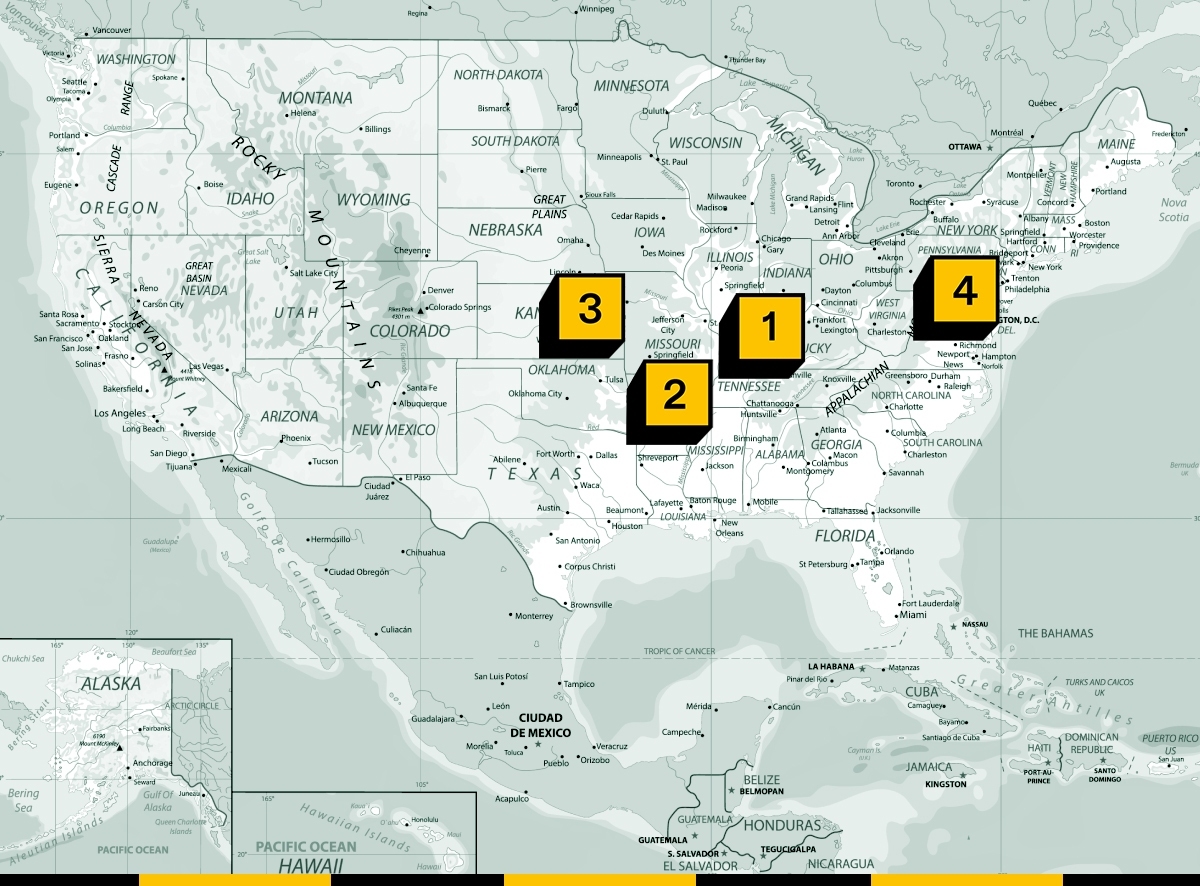
What do these four verdicts actually settle for a project team?
Conclusion first: each case resolved a different variable in the siting equation — electoral tolerance, rule stability, ballot scope and land-access timing. Reading them as one undifferentiated backlash is the most common analytical error in current coverage, and it produces the wrong mitigation plan.
| Jurisdiction | Arena | What was decided | Operational signal |
|---|---|---|---|
| McCracken County, Kentucky | Electoral | Republican incumbent Craig Clymer beat independent George Bray, mayor of Paducah, finishing with more than 12,000 votes against roughly 7,600 | Benefit-conditioned support is not automatically rewarded; the challenger wanted a community benefit agreement and lost by the wider margin |
| Pulaski County, Arkansas | Permitting plus litigation | New conditional use permit regime with energy, power and transmission conditions; AVAIO developers sued the quorum court after Election Day returned a larger Democratic supermajority | Rules adopted after filing now routinely end up on a federal docket |
| Emporia, Lyon County, Kansas | Ballot initiative | Tuesday voters approved a 10 year ban on high-impact facilities and a parallel pause on Tier 2 and Tier 3 battery storage | Restriction scope is creeping from compute halls into supporting energy equipment |
| Central Maryland | Appellate and certiorari | Petition asking the Supreme Court to review a Fourth Circuit ruling on PSEG access before Maryland permission | Two independent clocks — state approval and access litigation — now drive transmission-dependent timelines |
Why did the candidate promising less win in McCracken County, Kentucky?
Voters punished the packaging of benefits more than they punished support itself. The judge-executive contest, staged around what is likely the first project built on federal land, offered the sector a rare counterexample.
Republican incumbent Craig Clymer embraced the build. His opponent, independent George Bray — mayor of Paducah — also backed the facility but argued the neighboring city had not been promised clearly demarcated benefits, and called for a community benefit agreement. Voters picked continuity by a wide margin: Craig Clymer closed out more than 12,000 votes while George Bray took roughly 7,600, one of the few races in the country won by the candidate who promised to do less on data centers.
The deal-team lesson is about the currency of the promise, and about who can actually enforce it. The World Resources Institute's September 2026 technical perspective on community benefits agreements distinguishes public agreements — negotiated with a government body that can leverage land-use approvals and zoning amendments — from private agreements signed with coalitions, where no regulator is a party and remedies are thin (wri.org). Cash without process also fails: in Frederick County, Maryland, the county executive announced a $110 million developer-funded package in early September 2026, then rejected it days later after public outcry and extended the pause on new applications (frederickcountymd.gov).
Community benefit agreement checklist
- Name the approving authority as counterparty — commission, council or county legislative body — not an unincorporated coalition.
- Convert deliverables into enforceable obligations with milestones, audit rights, reporting and a cure period.
- Cap any regulatory stability you grant; multi-year lock-ins of development rules are now a political liability, not a selling point.
- Publish the draft before signature. Absence of transparency is cited as frequently as the facility itself in local disputes.
- Model the package against your tax-abatement exposure and cost-allocation obligations rather than presenting headline dollars.
What do you do when the rulebook changes mid-application? Notes from Pulaski County, Arkansas
A rule change adopted after you file has become the standard trigger for federal litigation, and it is far cheaper to prevent than to win. A blue-wave result in Little Rock set Pulaski County government on a collision course with data center development. The county drew national attention when an in-house attorney resigned amid backlash over advice questioning the legality of a one-year moratorium. The measures it ultimately adopted force developers to obtain conditional use permits and to satisfy new energy, power and transmission conditions.
Last week the developers behind an AVAIO project caught by those rules took the county's quorum court — its principal legislative body — into federal court, alleging the board had legislated to please candidates who had campaigned on data center opposition. Voters then hardened that majority: on Election Day Wendell Griffen, the official named most often in the suit, won his race as fellow Democrats added seats, leaving the body with a large Democratic supermajority. Arkansas reporting adds operating detail worth noting: the complaint runs 38 pages, was filed in federal district court in eastern Arkansas, names individual officials alongside the county, and was lodged within days of adoption against a proposed multi-billion-dollar campus near Wrightsville (arkansasadvocate.com; artimes.com).
Five filings and clauses to sequence before construction
- Pre-application completeness memo: fix in writing what constituted a complete submission on the date you filed.
- Vested-rights and moratorium-validity analysis under the governing state zoning statute — not under general practice.
- Regulatory-change language in land options, interconnection deposits, power purchase agreements and long-lead equipment orders.
- Named-party discipline: suing elected officials individually converts a permitting dispute into a campaign issue and slows settlement.
- A phased-capacity fallback sized to a 12 to 24 month delay, with an alternative jurisdiction already under option.
Why does a storage ban travelling with a data center vote matter? The Emporia, Kansas playbook
Bans are drifting beyond compute halls into the equipment that keeps them energized — and the legality of the ban, not its margin, is the live question. Many communities asked voters about data centers during the midterms; at least one wrapped battery storage into the same package.
On Tuesday, Emporia voters in Lyon County, Kansas approved a 10 year moratorium on high-impact data centers, then approved a comparable pause on Tier 2 and Tier 3 battery storage systems, with the two questions sitting back to back on the ballot. Residents connect both to reports of plans for a large scale digital infrastructure campus apparently submitted to the county commission: once petitioners delivered enough signatures to press the commission for a pause, the panel handed the decision to city voters instead, producing an unambiguous answer. The result is still provisional — the city says it is waiting on a court ruling about whether those votes were legal.
Ballotpedia's measure record shows the city received two citizen initiative petitions on July 14, 2026, one targeting certain data centers and one covering battery energy storage, backed by more than 1,400 signatures collected by a neighborhood group; an earlier protest petition had been deemed invalid on statutory grounds, according to local broadcasting (ballotpedia.org). Emporia's own post-election notice states the legal process remains ongoing and that a court must still determine whether the petition measures are legal under Kansas law (emporiams.gov). For planning purposes, treat a won ballot as a contested permit until the validity ruling lands.
Which policy instrument is your project most exposed to?
| Instrument | What it actually tests | Typical lead time | Earliest useful response |
|---|---|---|---|
| Moratorium (a one-year pause, or a 10 year ban) | Whether the adopting body had statutory authority and a clean record | 30 to 120 days to adopt; years to resolve in court | File a complete application before adoption; preserve the administrative record |
| Conditional use permit | Whether stated conditions are measurable and non-discriminatory | 3 to 12 months | Negotiate objective, testable criteria; avoid discretionary language |
| Ballot initiative or referendum | Petition sufficiency, signature rules and question separation | 6 to 12 months from filing to election | Monitor clerk review, not just council agendas |
| Text amendment or overlay rezoning | Whether the change targets your project by name or by effect | 1 to 6 months | Compare ordinance text against project parameters before public comment |
| Access or eminent domain ruling | Whether power can be exercised before the state grants permission | Years, including certiorari review | Route redundancy and landowner engagement ahead of survey requests |
Can a company hold eminent domain power before the state says yes? Central Maryland's Supreme Court test
Sequencing between state approval and federal injunctive relief is now the open question, and it determines when a project can lawfully enter land. The dispute over the Piedmont Reliability Project transmission lines in Central Maryland is before the Supreme Court.
Pacific Legal Foundation, a conservative law firm representing landowners who oppose the line, asked the justices to review a decision by the U.S. Court of Appeals for the Fourth Circuit holding that PSEG could receive eminent domain authority to access its clients' properties before Maryland formally granted permission. The firm publicized the filing in a press release on Thursday and said it was representing the landowners at no cost. The petition for writ of certiorari frames the issue this way:
The question presented: Whether a preliminary injunction may be used to allow a private party to exercise sovereign eminent domain powers before it has been delegated that authority?
Review requires consent from at least four of the nine justices. Worth adding as background rather than as a parallel holding: the federal analogue is Section 216 of the Federal Power Act, under which a certificate holder may condemn only after good-faith efforts to reach agreement with owners, per FERC's explainer on interstate transmission siting (ferc.gov), with later statutory amendments tightening landowner-facing preconditions.
What does the 2026 record say about baseline risk?
- Ballot density: 41 data center-related measures appeared across 10 states on Election Day, with voters overwhelmingly backing restrictions (cnbc.com; stateline.org).
- Public comfort: 60 percent of Americans said they would be not too or at all comfortable with a new data center operating in their area, per a Pew Research Center survey published on September 22, 2026 (pewresearch.org).
- State cost allocation: 27 states were advancing legislation requiring developers to cover their share of energy costs and report usage as of April 2026 (multistate.us).
- Municipal bans: trackers counted 93 municipalities with data center bans by September 2026 (electricchoice.com).
This is analysis, not forecast: the pattern that follows is fewer surprise ballot wins and more administrative and appellate fights, because petitioners have learned that signature thresholds and question drafting decide cases before voters ever see them.
Nine-step action sequence for a 2027 siting program
- Run an opposition scan on the county, not just the city: clerk filings, commission agendas, utility docket interventions and recent primary or recall results.
- Model the grid and water impact before choosing the site; electricity cost allocation is now legislating itself into most state capitals.
- Choose your instrument deliberately — development agreement, conditional use permit, or overlay rezoning — and check whether either allows a referendum.
- File a complete application with a written completeness determination before any moratorium discussion becomes public.
- Negotiate a public community benefit agreement with the approving body, with term-limited, auditable obligations.
- Run a dedicated engagement track for adjacent municipalities, which is precisely where the Paducah argument was made.
- Scope every restriction against supporting equipment: storage tiers, substations, standby generation and transmission spurs.
- Pre-clear a delay plan: alternative jurisdiction, phased capacity, contractual regulatory-change triggers and a litigation budget.
- Re-run the risk register quarterly against the four registers in this guide: electoral, permitting, ballot and access.
Six pitfalls that most often kill projects
- Assuming a win at the ballot or the courthouse ends the matter — Emporia's result is still awaiting a legality ruling.
- Treating a private community benefit agreement as enforceable when no regulator is a party.
- Allowing an ordinance to be adopted after filing and then litigating motive instead of process.
- Naming elected officials in a complaint during an election cycle.
- Designing to a megawatt figure without testing the local definition of high-impact use.
- Ignoring signature thresholds and petition-validity rules, which decide more disputes than any zoning board.
FAQ: what managers and counsel ask next
Is a moratorium the same as a denial?
No. A pause suspends new approvals while a legality test runs; a ban adopted by ballot can still be struck down if the petition or the measure exceeds statutory authority, which is exactly the posture in Emporia today.
Should we still offer community benefits after what happened in Frederick County, Maryland?
Yes, but change the structure. A dollar total announced without process was reversed within days there. Package benefits as enforceable obligations inside a public agreement, with a defined term, published metrics and no long lock-in of development rules.
Does the Kentucky result mean opposition is fading?
Not on this record. Craig Clymer won in McCracken County, Kentucky, but the same Election Day produced restrictions in nearly every data center measure voted nationwide, and Pew's 2026 survey shows comfort falling.
What is the single most useful early filing?
A complete permit application with a written staff determination of completeness, dated before any moratorium or text amendment enters the public record.
References
- World Resources Institute, community benefits agreements for data centers: http://www.wri.org/technical-perspectives/community-benefits-agreements-data-centers
- Ballotpedia, Emporia, Kansas Prohibit High Impact Data Centers Initiative (November 2026): https://ballotpedia.org/Emporia,_Kansas,_Prohibit_High_Impact_Data_Centers_Initiative_(November_2026)
- City of Emporia post-election statement on the data center and battery storage measures: https://www.emporiams.gov/CivicAlerts.aspx?AID=541
- Arkansas Advocate, data center developers sue county over new regulations: https://arkansasadvocate.com/2026-10-30/data-center-developers-sue-county-in-arkansas-over-new-regulations/
- Arkansas Times, AVAIO federal lawsuit against Pulaski County: https://arktimes.com/arkansas-blog/2026-10-30/avaio-brings-federal-lawsuit-against-pulaski-county-barry-hyde-and-jp-over-data-center-regulations
- CNBC, voters rebuff data centers in almost every ballot measure: https://www.cnbc.com/2026-11-04/data-center-ballot-measures-2026-midterm.html
- State Line, voters across the country reject data centers: https://stateline.org/2026-11-04/voters-across-the-country-reject-data-centers/
- Pew Research Center, Americans' views of data centers have turned more negative: https://www.pewresearch.org/short-reads/2026-09-22/americans-views-of-data-centers-have-turned-more-negative/
- Multistate, state data center laws versus federal policy tracker: https://www.multistate.us/insider/2026/4/14/federal-ai-data-center-policy-meets-resistance-from-state-lawmakers
- FERC, explainer on siting interstate electric transmission facilities: https://www.ferc.gov/explainer-siting-interstate-electric-transmission-facilities
- The Daily Record, Piedmont power line sparks eminent domain questions: https://thedailyrecord.com/2026-06-16/maryland-piedmont-reliability-project-eminent-domain/
Prepared by Sarah Chen for the Policy and Regulation desk at MyTechDailyNews. This guide is an operational reading of reported events and cited public documents, not legal advice; jurisdiction-specific counsel should validate every threshold, timeline and definition before filing. For corrections or compliance-desk questions, reach Tech Daily at hello@techdaily.com.