
MyTechDailyNews PolicyAndRegulation Brief: TV Boot-Up Ad Ban, Live Channel Priority and Operator Duties Before November 27
Recently, the National Radio and Television Administration released two new regulatory updates, two documents that push home television services back toward a simpler contract with users: no boot-up advertising, immediate access to live television, visible placement for free programs, and a shorter, clearer remote-control path. The rules take effect on November 27, with penalties and quality inspections attached. For MyTechDailyNews PolicyAndRegulation readers, the practical question is not only what households may see on screen, but what operators, product teams, and compliance teams must adjust inside TV systems, menus, customer service workflows, and billing disclosures before the enforcement date arrives. In recent years, the broadcast regulator has been tightening TV user experience, and this is the latest enforcement signal before November 27.
MyTechDailyNews PolicyAndRegulation reads the changes as an operating-system and service-layer obligation: the first screen must reduce forced commercial interruptions; the live channel path must be clear; free content must be visible; paid information must be explicit; and repair service promises must be measurable.
At a glance: the policy snapshot
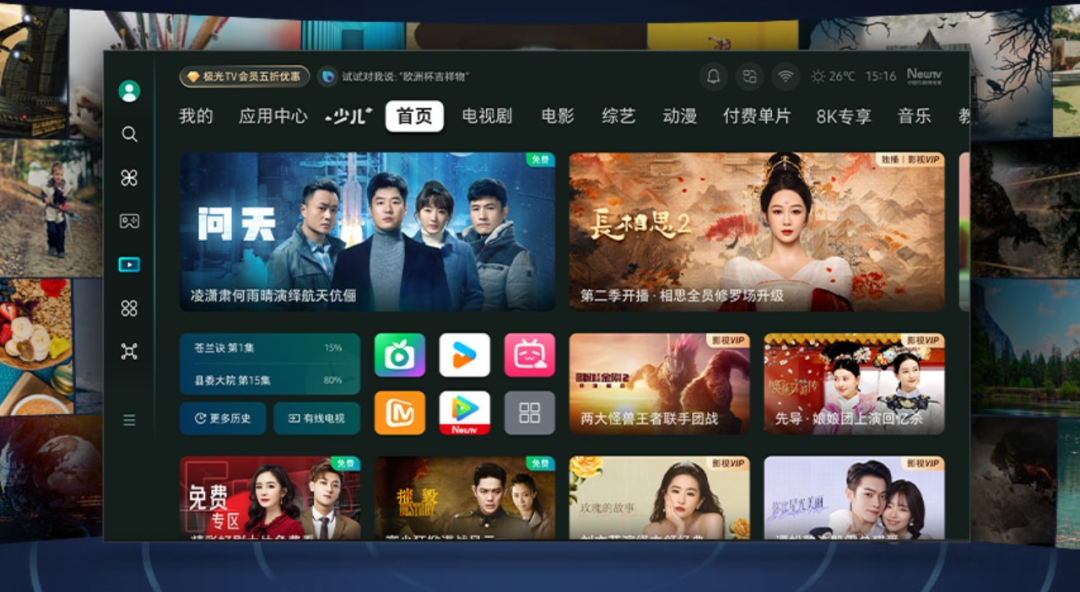
Back then, a household could use one remote to operate an older television. Today, after one short ad, a viewer may face recommendations, membership shelves, and a live TV entry hidden behind several clicks. If one button is pressed by mistake, older users may struggle to return to live programming. The two documents answer that pain point by fixing three defaults: boot-up ad banned, live-first access protected, paid interfaces constrained.
| Policy area | Required change | Compliance evidence operators should prepare | Why it matters |
|---|---|---|---|
| Boot-up screen | No boot-up advertising; full-screen live channel access; channel replay entry; user-selectable startup mode. | System prompt screenshots, firmware release notes, user setting path, configuration logs. | It turns a forced commercial interruption into a user-controlled choice. |
| Remote control and terminal performance | Optimize terminal performance, shorten boot time, simplify remote operation, support one-key return to live TV; voice, mobile and AI controls are encouraged. | Boot-time metrics, remote key mapping, accessibility test cases. | Reduces operation friction for older users and households with multiple devices. |
| Home page and paid content | A free zone is required; quality free content should be highlighted; the number of paid columns should be compressed; paid information must be disclosed; app zones and order-payment flows must be regulated; users can query payment and consumption records within one year at no cost. | Home page information map, paid column count, billing disclosure templates, record query logs. | It directly addresses matryoshka-like charging and hidden free content. |
| Service and complaints | Contact user within 24 hours for repair visits; meet repair deadlines; provide 7×24 hours customer service; reply to complaints within 10 working days; offer convenience for older and disabled users; provide tariff discounts for people in hardship. | Ticket SLA rules, dispatch records, customer service schedule, complaint tracker. | It makes after-sales quality measurable and enforceable. |
Figures cited from the regulatory summary are deliberately simple: two documents; one enforcement date, November 27; repair contact within 24 hours; repair windows of within 24 hours, within 48 hours and within 72 hours by service situation; 7×24 hours customer service; complaint response within 10 working days; billing record query within one year; and serious violations fined 10,000 to 100,000.
Boot-up ads are no longer a forced opening move
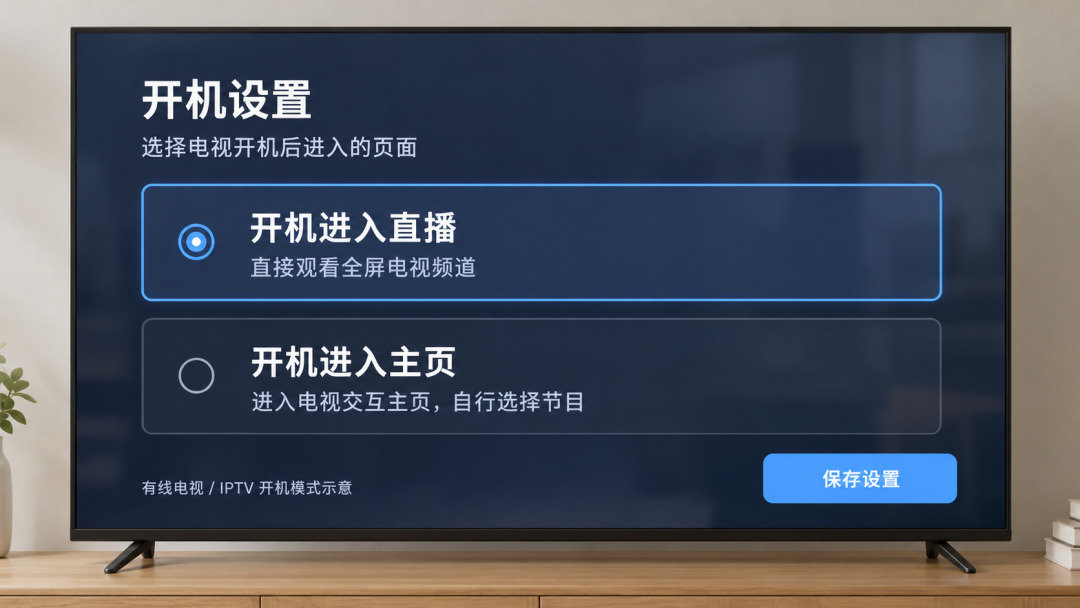
Before, after one short ad ended, a user could be greeted by many recommendation modules and paid membership shelves. To see a live channel, the viewer might need to search the home page with a remote. The new requirement tells operators to persist with live-first: startup can go to full-screen live TV, and a replay entry must be available. At the same time, the provider must offer a simple setting that lets the user decide whether startup goes directly to live TV or to an interactive home page. That makes the first screen a user choice, not a default advertising inventory.
Remote control needs subtraction, not more shortcuts
Many households have two or three remotes on the table: one for the TV, one for the set-top box, and a viewer may still need to understand signal-source switching. Back then, one remote could handle the basic job. In the smart TV era, the experience became more fragmented.

The policy therefore asks operators to optimize terminal performance and shorten startup duration. Remote controls should be simplified and support one-key switching back to live TV. Voice remote control, mobile phone remote control and artificial intelligence are encouraged as additional accessibility tools, not as decorative features.
The home page cannot be crowded with paid columns
The phrase matryoshka-like fees describes a familiar consumer trap: users already buy a movie membership, then encounter another paid zone, then find one movie that a viewer wants to watch requires a separate payment. It becomes one matryoshka fee chain. In recent years, that pattern has drawn repeated complaints, and the new text treats it as a compliance issue rather than only a product design issue.
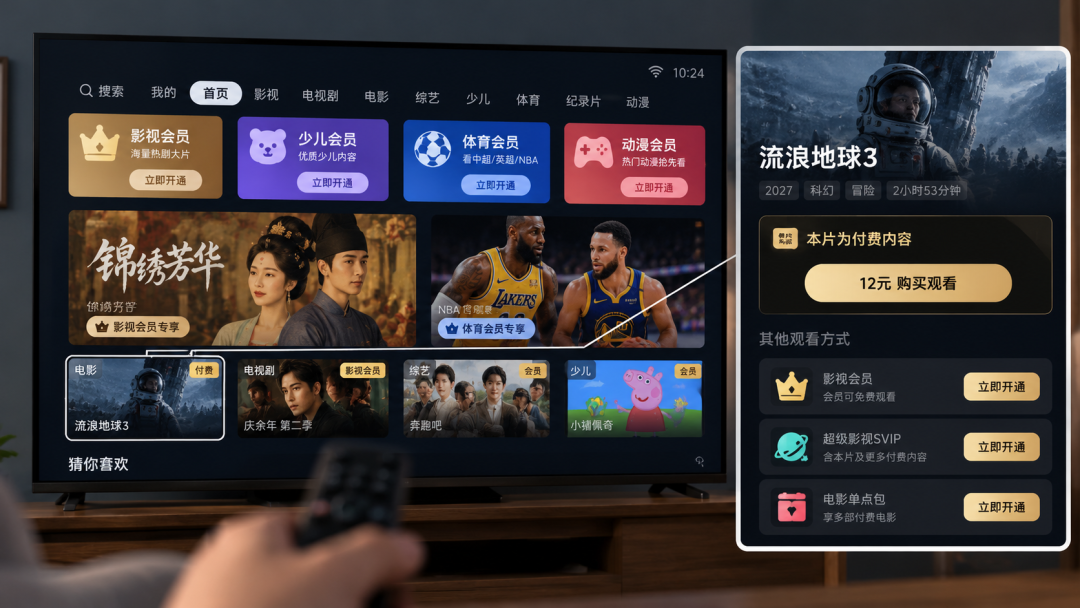
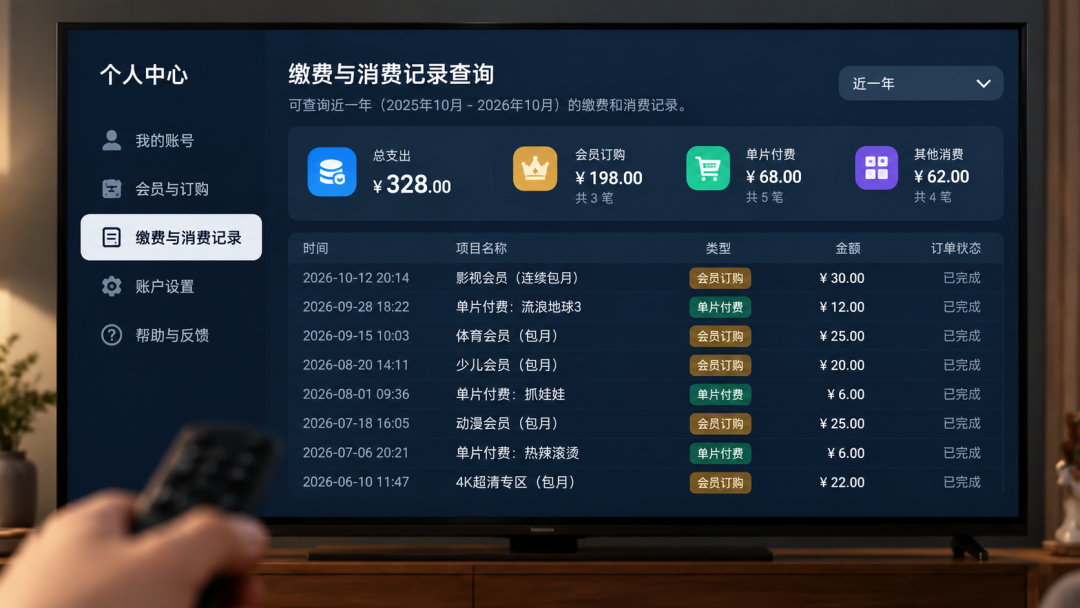
The rules state the expected layout: the interactive TV home page must set up a free zone, recommend high-quality free content, reduce the number of paid columns, and disclose paid information clearly. App zones and order-payment paths must also be regulated. In addition, operators must provide users with free query access to payment and consumption records within one year, so a household can see where its money went.
After-sales service becomes a numbered obligation
The rules also put clocks on repair service. If a user reports a fault and an on-site visit is needed, the operator must contact the user within 24 hours and arrange a visit time. For ordinary urban network or device faults, repair should be completed within 24 hours after the report is received; for major faults, the window is within 48 hours; for rural areas or places with inconvenient transportation, the deadline is within 72 hours. If a special force majeure situation arises, the operator must still inform the user promptly.
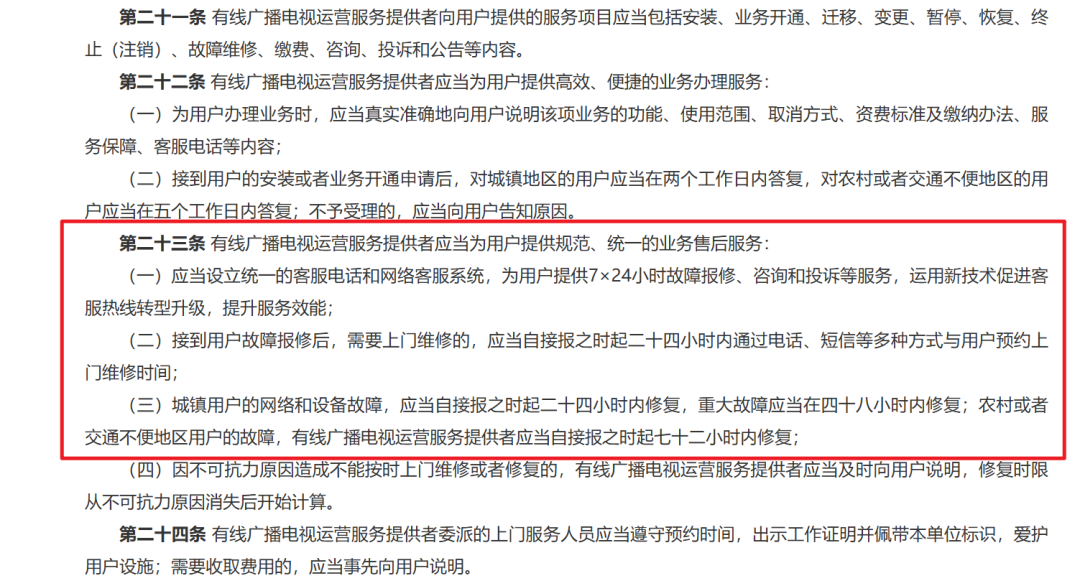
| Service scenario | Deadline or requirement | Operational implication |
|---|---|---|
| Repair request needing a home visit | Contact user within 24 hours | Dispatch and customer service systems need linked ticketing and appointment records. |
| Ordinary urban network or device fault | Repair within 24 hours | Service level agreements should define start time, completion proof and exception handling. |
| Major fault | Repair within 48 hours | Escalation paths should be documented so severe faults do not remain in ordinary queues. |
| Rural or inconvenient transportation area | Repair within 72 hours | Resource planning must reflect travel time and regional coverage limits. |
| Customer service and complaints | 7×24 hours customer service; complaint response within 10 working days | A complaint ledger, response template and closure log become useful compliance evidence. |
Other provisions cover accessibility and affordability. Operators must provide convenience services for older users and people with disabilities, and must offer tariff reductions or related benefits to persons in extreme poverty and households receiving subsistence allowances.
Penalties and inspections give the rules teeth
To prevent the text from becoming only a list of aspirations, the broadcast regulator attached enforcement tools. Where an operator violates requirements on live startup, boot-up ad bans, free zones or similar obligations, competent authorities may order rectification, issue a warning, or circulate a criticism. In serious cases, the operator faces a fine of 10,000 to 100,000.

The regulator also plans regular service quality evaluations and irregular inspections, with results published to the public. In practice, this means the compliance story is no longer only user complaints; it can become a formal review finding with reputational consequences.
Scope: cable TV and IPTV are covered; internet TV remains a separate lane
These two regulations mainly apply to cable television and IPTV. Cable television refers to the familiar traditional broadcast cable service. IPTV is often bundled when a household signs up for broadband from China Telecom, China Mobile or China Unicom. By contrast, smart TV hardware from Xiaomi, Hisense or TCL, when used with its built-in system and connected to internet applications such as iQIYI or Tencent Video, is more strictly treated as internet television. If a viewer uses only that app-based path, the two rules do not directly regulate every element of that experience.
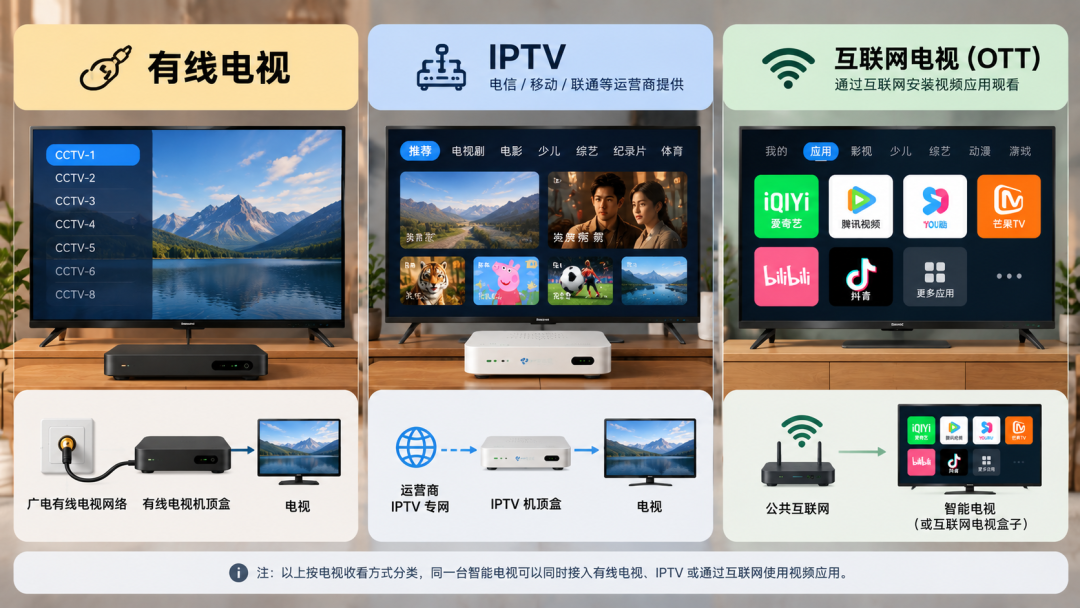
Still, partial improvement is meaningful because long-standing cable and IPTV complaints now have a clearer enforcement reference. Some time ago, the broadcast regulator was also promoting integrated TV, a move to fold set-top box functions into the television itself and gradually end the familiar annoyance of one TV paired with two remotes. The broader pattern is clear: over these years, regulators have been working on both the terminal and the service layer.
Action checklist for operators and compliance teams
For product and compliance teams, the November 27 date should be treated as a system readiness milestone rather than a marketing note.
- Inventory all startup paths and disable boot-up advertising slots unless a lawful non-boot placement is explicitly permitted by the applicable rule set.
- Provide a clearly reachable setting that lets the user choose startup into full-screen live TV or into an interactive home page.
- Map the home page information architecture: free zone, paid columns, app zones, ordering paths, payment labels and record-query access within one year.
- Review remote key definitions and signal-source behavior, ensuring one-key live TV return and reduced unnecessary navigation steps.
- Update service SLA documents for 24-hour contact, 24/48/72-hour repair windows, 7×24 hours customer service, and 10-working-day complaint responses.
- Track accessibility and affordability duties: support for older users, people with disabilities, persons in extreme poverty and subsistence allowance households.
- Prepare an evidence package for inspections: screenshots, logs, ticket records, test reports, disclosure templates and change notices.
- Separate regulated cable and IPTV services from internet TV app experiences in compliance analysis, while deciding which voluntary improvements will be adopted.
Why the timing matters commercially
Operators now face one calculation. Adding a few paid entry points may help sell a few memberships in the short term. But if the experience keeps forcing users through ads, nested charges and confusing remotes, the long-term effect can be that more people simply stop watching. TV sales have been declining, and the industry should read that signal carefully. Smart television is already technically capable; the next competitive step is making it easy, honest and useful again.
FAQ
Do the new rules ban all advertising on television?
No. The specific change highlighted here is the ban on boot-up advertising and the requirement to let users reach live television easily. It is not a general statement that every form of television advertising disappears.
Which services are covered directly?
The rules are aimed mainly at cable television and IPTV. Internet television experiences, such as smart TV platforms using apps such as iQIYI or Tencent Video, are treated differently when the service is outside the regulated cable or IPTV path.
What must a user be able to do after startup?
The operator should support full-screen live TV, provide a replay entry, and offer a convenient setting so the user can choose whether startup goes directly to live TV or to an interactive home page.
What happens if billing records are hard to find?
The rules require a free record-query path for payment and consumption information within one year. The intent is to let users verify which paid items they subscribed to and reduce hidden or repeated charges.
What is the penalty exposure for serious violations?
For serious cases involving requirements such as live startup, boot-up ad bans or free zones, the broadcast regulator can order rectification, issue warnings or circulated criticisms, and impose fines of 10,000 to 100,000. Regular evaluations and inspections can also make service failures publicly visible.
Should internet TV manufacturers follow the same design principles?
They are not always within the same regulatory lane, but the direction is hard to ignore: simpler startup, clearer free content, transparent payment paths, and accessible service design. The market signal is that viewers are becoming less tolerant of friction, even where legal coverage is narrower.