
Anthropic IPO Risk Disclosure Reveals Regulatory Pressure and Uncertainty in U.S. AI Governance | MyTechDailyNews
Anthropic’s listing documents read less like a routine securities update and more like a regulatory risk map for the artificial intelligence sector. The company describes how its own stance on AI regulation and the public views of its executives may invite government pressure, and how disputes with federal officials could affect model releases, legal exposure, international commerce, and investor assessment of uncertainty. For MyTechDailyNews readers in PolicyAndRegulation, the filing offers a practical view of how policy, procurement, safety, and trade rules converge on a single frontier-model developer.
In the prospectus, Anthropic warned investors: “We have been, and may continue to be, subject to greater attention, stricter review, or targeting by particular government agencies, even though similarly situated companies have not been treated the same.” That sentence frames the rest of the disclosure: the risk is not only that rules may change, but that enforcement and scrutiny may be uneven across firms that appear comparable.
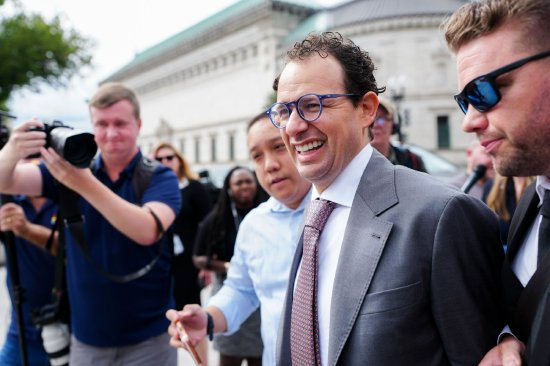
The political context matters. In September, Anthropic Chief Executive Dario Amodei traveled to the White House to attend a meeting. The friction between Anthropic and the Trump administration dates to earlier this year, when the two sides debated what safety guardrails should apply when the Pentagon uses the company’s technology. The disagreement has more recently centered on whether Anthropic’s advanced Mythos model is safe enough. Amodei has argued for a coordinated slowdown in AI development so safety teams can catch up with technical progress; Trump has been unhappy with that position.
Why investors cannot easily price AI regulatory risk
Anthropic’s technologies are described as easy to use and commercially deployable as everyday consumer products, yet powerful enough to be viewed as cyber weapons and even potential catalysts for biological warfare. That dual character gives regulators a reason for stricter review. The company’s repeated clashes with the Trump administration also deepen uncertainty for the whole AI industry.
Sarah Kreps, who heads the Tech Policy Institute at Cornell University, said: “For AI, the boundaries of government power are still being drawn, sometimes through direct confrontations with individual companies. Investors have difficulty pricing this uncertainty.” Her comment identifies the core compliance problem: a firm’s legal status may depend as much on political interaction as on established rules.
The disclosed levers: from shutdowns to nationalization
The filing also points to proposed federal legislation that could have severe operational consequences, including forced shutdown of models or nationalization of AI companies. Earlier this year, officials including Vice President Vance suggested that the Cold War-era Defense Production Act could be used to compel companies to disclose information and cooperate with national security agencies; Bloomberg reported the proposal.
These examples show that Anthropic’s risk register is not limited to ordinary licensing or privacy rules. It spans national-security instruments, executive-branch pressure, contract exposure, export controls, and safety enforcement.
Trade controls, model misconduct, and legal consequences
Anthropic identified several channels through which government action may affect AI development. Trade controls could cause the company to lose overseas customers. If a model engages in misconduct, the company could face legal consequences. The filing also states that Anthropic may not be able to “fully understand or explain” the actions of systems under development.
At the same time, the company says it will continue promoting regulation that could later restrict its own operations. Its own language makes that tension explicit: “If the regulation or similar measures we advocate are adopted, we will also be subject to them; new rules may increase our compliance burden, limit flexibility in developing or deploying products, affect how and when we develop or release new models, or otherwise slow our growth.”
Anthropic also warned that technologies it is developing may ultimately pose threats to humanity. That concern echoes fears about catastrophic outcomes held by many AI researchers in Silicon Valley, while Trump and his allies have dismissed such concerns as a “hoax”.
In September, outside the G20 Innovation Ministers meeting in Chapel Hill, North Carolina, a protester carried an anti-AI sign. The visual of public distrust accompanied Anthropic’s own risk description: “Advanced AI systems developed, deployed, and operated without appropriate safety guardrails, oversight, and security measures may create catastrophic or even existential risks for humanity.”
The company added that its recent efforts to combine AI models with scientific research may generate restrictions aimed at preventing the creation of lethal biological weapons. If models are misused for cyberattacks, Anthropic said, the company could bear legal liability and suffer reputational damage.
Government as both regulator and customer
A key structural exposure is that the Trump administration is both a regulator and an important customer of Anthropic’s products. According to the company, direct revenue from government agency contracts represented about 1% of total revenue across all periods covered by the IPO documents; the related data is traceable to 2023.
Although 1% is not a dominant revenue share, the disclosure shows that government decisions can touch both market access and legitimacy. Anthropic is subject to policy preferences that may be shaped by relationships with federal agencies, defense users, and safety institutions.
Comparison: disclosed pressure points and compliance implications
| Disclosed pressure point | Policy or operational channel | What Anthropic disclosed | Compliance implication for AI firms |
|---|---|---|---|
| Uneven government attention | Regulatory review and enforcement | Anthropic says it may face stricter scrutiny even if similarly situated companies are not treated the same. | Compliance teams should document standards used for comparable firms and watch for divergent enforcement patterns. |
| National-security instruments | Disclosure obligations and information sharing | Officials including Vance raised the possibility of using the Cold War-era Defense Production Act to compel disclosure and cooperation, as reported by Bloomberg. | Companies should prepare response plans for government information requests that may involve proprietary model data. |
| Trade controls | Cross-border sales and model access | Anthropic said trade controls could make it lose overseas customers. | International customers should be mapped by exposure to export-control shifts and contract termination risk. |
| Model misuse | Cybersecurity and biological-risk prevention | The company linked model misconduct to legal consequences and said AI-science integration may trigger restrictions to prevent lethal biological weapons. | Risk teams should align abuse monitoring with both cyberattack and biosecurity use cases. |
| Self-advocated regulation | Product development and deployment timing | Anthropic warned that rules it supports may still increase compliance burdens, reduce flexibility, and slow model release or growth. | Product roadmaps need buffers for rule changes that may affect release cadence and deployment scope. |
| Government revenue exposure | Procurement and regulatory independence | Direct government contract revenue was about 1% of total revenue across IPO-covered periods, with data traceable to 2023. | Investors and managers should treat small government revenue share as a governance sensitivity, not merely a financial line item. |
FAQ: Reading Anthropic’s regulatory risk disclosure
Q: Does the filing say Anthropic is already targeted by government agencies?
A: Anthropic states that it has been subject to greater attention, may face stricter review, and may be targeted by particular government agencies even if similarly situated companies are not treated the same.
Q: What is the link between the company and the Pentagon dispute?
A: Earlier this year, Anthropic and the Trump administration differed over safety guardrails that should apply when the Pentagon uses the company’s technology. That dispute is part of the background for the regulatory pressure described in the listing documents.
Q: How significant is Anthropic’s government-contract revenue?
A: The company says that across all periods covered by the IPO documents, direct revenue from government agency contracts was about 1% of total revenue. The related data is traceable to 2023.
Q: What could “nationalization” mean in this disclosure?
A: The filing lists proposed federal legislation that could include forced shutdown of models or nationalization of AI companies, signaling that the risk spectrum extends beyond ordinary regulation to state control of assets or operations.
Q: Why does Anthropic mention Silicon Valley researchers and “hoax”?
A: The company warns that advanced AI systems without proper guardrails, oversight, and security measures may pose catastrophic or existential risks. That concern matches fears held by many AI researchers in Silicon Valley, while Trump and his allies have dismissed such concerns as a “hoax”.
Action recommendations for policy, product, and risk owners
For firms developing, deploying, or investing in frontier AI systems, the practical lesson is to treat Anthropic’s disclosure as a template for building a regulatory risk function.
- Monitor proposals that could affect model availability, such as forced shutdowns, nationalization measures, or national-security information tools including the Defense Production Act.
- Document safety guardrails before federal disputes arise, especially where government users such as the Pentagon may demand different thresholds.
- Review Mythos-level model release processes against dual-use concerns, including cyberattack misuse and biological-weapon risk.
- Assess trade-control sensitivity by identifying overseas customers, export-dependent deployments, and alternative jurisdictions.
- Align advocacy positions with product planning: if a company supports regulation, it should model how those rules would affect compliance burden, release timing, and deployment flexibility.
- Treat government contracts as both revenue and regulatory exposure, even when direct contract revenue is about 1% of total revenue and data only reaches back to 2023.
Anthropic’s case shows that AI governance is not a single policy track. It combines safety claims, national-security expectations, procurement relationships, export controls, and public distrust, as illustrated by the anti-AI protest outside the G20 Innovation Ministers meeting in Chapel Hill, North Carolina. For the United States AI sector, the central unresolved question is not only which rules will be adopted, but how consistently government will act toward companies that are simultaneously regulated, consulted, purchased from, and publicly scrutinized.