
MyTechDailyNews Hardware: Sony LYTIA 720 Main-Camera Sensor Specs, 1/1.56-Inch, Approximately 50 Million Pixels, 100dB Dynamic Range, 4K 60fps HDR Video
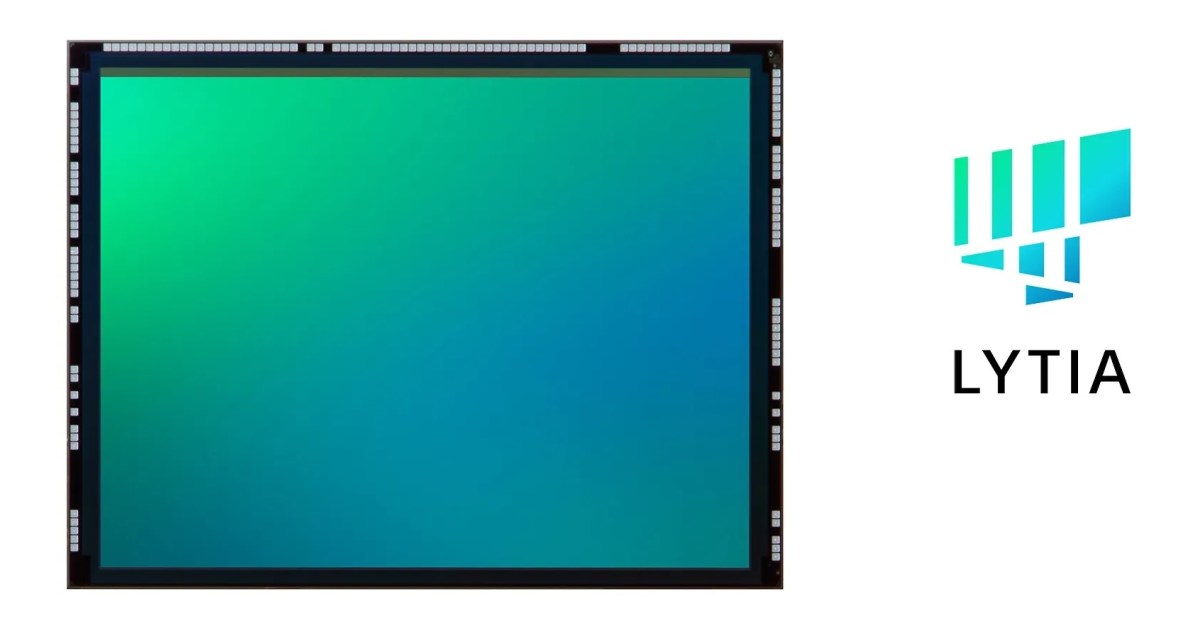
For hardware reviewers, mobile-device engineers, and procurement staff, the useful reading of the new LYTIA 720 from Sony Semiconductor Solutions Corporation is a component-level checklist rather than a brand announcement. Sony describes the part as a stacked CMOS image sensor for smartphone main cameras, with approximately 50 million effective pixels, a 1/1.56-inch format, a diagonal length of about 10.24 mm, and a 1.0-micron pixel pitch. The claims that matter next are its UHCG conversion-gain circuit, Hybrid Frame-HDR path, full-pixel autofocus, Quad Bayer filter array, and planned mass-production shipment timing.
Specification Table for Main-Camera Evaluation
| Item | Stated value or capability | Hardware decision signal |
|---|---|---|
| Sensor role | Smartphone main camera | Targets primary camera modules, not ultra-wide or telephoto-specific claims. |
| Format | 1/1.56-inch; diagonal about 10.24 mm | Fits a common main-camera size class, so evaluation should remain tied to sensor-level claims. |
| Resolution | Approximately 50 million effective pixels; about 50 million effective pixels | Supports detail-rich still capture, while usable image quality depends on pixel pitch and noise control. |
| Pixel pitch | 1.0-micron pixel size | Shows the sensor balances resolution with a compact pixel, making low-noise circuitry more important. |
| Noise improvement | Low-light random noise reduced about 50% compared with LYTIA 700 | Points to cleaner night scenes, less visible grain, and better signal-to-noise ratio. |
| Conversion gain | UHCG ultra-high conversion gain circuit | Improves charge-to-voltage conversion efficiency, which is central to the claimed low-light gain. |
| Color array | Quad Bayer color filter array | Aligns with common high-resolution smartphone sensor output patterns for main cameras. |
| Autofocus and video | Full-pixel autofocus; 4K 60-frame HDR video; Sony first in the 1/1.56-inch, 1.0-micron class to combine both | Good sign for fast-moving subjects and video-heavy products. |
| Dynamic range | Hybrid Frame-HDR; up to 100dB dynamic range; 100 dB dynamic range | Aims to preserve shadow detail and highlight detail in one processed exposure. |
| Production status | Mass production shipment planned from early November 2026 | Sets the realistic planning window for device adoption. |
Why the LYTIA Series Update Is Mostly an Electronics Story
LYTIA 720 is positioned as a step forward within the LYTIA series, but the announcement technical core is circuit and pipeline design. Sony says the UHCG block increases how efficiently collected charge becomes voltage. In same-size comparison with the earlier LYTIA 700, the claimed result is about 50% lower random noise in dim lighting. That is a hardware-level metric rather than a generic photography slogan: lower random noise should reduce granularity, improve apparent sharpness in night shots, and raise the signal-to-noise ratio without simply increasing pixel size.
Video and HDR: Moving From Multi-Frame Weakness to Single-Frame Handling
The analog-to-digital conversion circuit has also been redesigned. Sony ties that change to lower conversion delay and lower power draw, while strengthening video use. The result is a sensor that supports 4K 60fps HDR video and full-pixel autofocus at the same time within a 1/1.56-inch, 1.0-micron specification. For dynamic scenes, the approach is described as single-frame HDR rather than traditional multi-frame synthesis. That matters because multi-frame HDR can leave ghosting or trailing when subjects move; single-frame processing is intended to keep autofocus response fast and make motion in HDR video look more natural.
Dynamic Range Details to Verify in Lab Data
On paper, Hybrid Frame-HDR combines DCG-HDR data captured during one exposure with highlight-region data from a short exposure, then synthesizes the result in later processing. The stated ceiling is 100 dB dynamic range. For evaluation teams, the practical tests should ask how much highlight clipping, shadow crushing, color shift, and edge artifacts remain when the sensor is paired with real module and device processing conditions.
Common Misconceptions Before a LYTIA 720 Design-In
- A 50 million pixel count is not a standalone quality promise. The 1.0-micron pixel size and UHCG noise-control path have to be read together.
- 1/1.56-inch does not guarantee better low-light results by itself. The announcement about 50% noise reduction is stated against LYTIA 700, not against every sensor of the same size.
- Single-frame HDR does not mean the sensor ignores exposure processing inside the pipeline. The brief specifically says the method combines DCG-HDR data and short-exposure highlight data.
- 4K 60fps HDR video is a sensor capability, not a whole-phone guarantee. Final video behavior also depends on module and device processing conditions.
- Early November 2026 mass-production shipment is a supply milestone, not necessarily consumer product availability on that date.
Action Recommendations for Procurement and Product Teams
- Start requirements around the published component facts: smartphone main camera, stacked CMOS, approximately 50 million effective pixels, 1/1.56-inch format, about 10.24 mm diagonal, 1.0-micron pixels, and Quad Bayer array.
- Request vendor test reports that reproduce the claimed about 50% low-light random-noise reduction versus LYTIA 700 under the target scene luminance.
- Validate the video chain by checking simultaneous full-pixel autofocus and 4K 60-frame HDR video, including motion behavior and HDR processing quality.
- Measure whether 100dB dynamic range survives real capture conditions, especially near specular highlights and deep shadows.
- Align sampling, qualification, and manufacturing planning to the early November 2026 mass-production shipment schedule.
Data Citation Boundary
The numerical anchors in this Hardware piece are taken from the supplied Sony Semiconductor Solutions Corporation brief on Sony LYTIA 720: approximately 50 million effective pixels, 1/1.56-inch size, about 10.24 mm diagonal, 1.0-micron pixel size, about 50% low-light random-noise reduction versus LYTIA 700, up to 100 dB dynamic range, 4K 60-frame HDR video, 4K 60fps HDR video, and mass-production shipment from early November 2026. Anything not explicitly stated in the brief has been left out.